
Market Report · May 18, 2026

This market report covers trends, opportunities, and forecasts in the global tonometer market to 2031 by technology (applanation tonometry, rebound tonometers, indentation tonometers, and other technologies), end use industry (ophthalmic diagnostic centers, hospitals, and others), and region (North America, Europe, Asia Pacific, and the Rest of the World)
We'll send your sample report shortly.
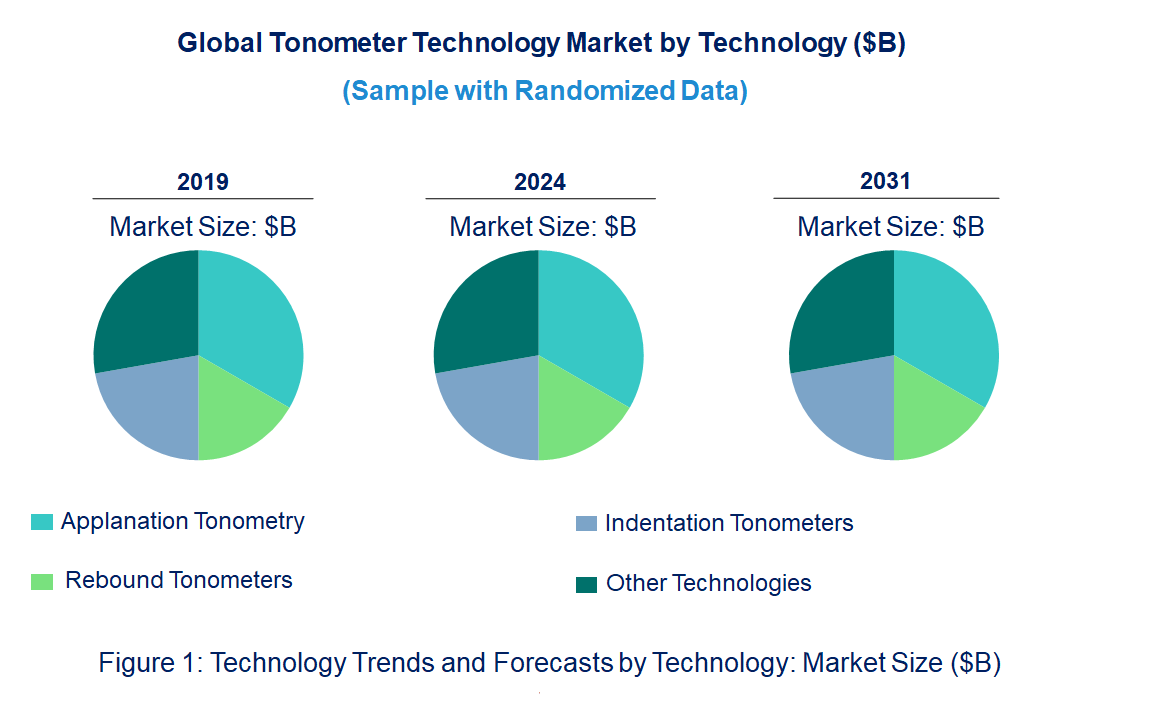
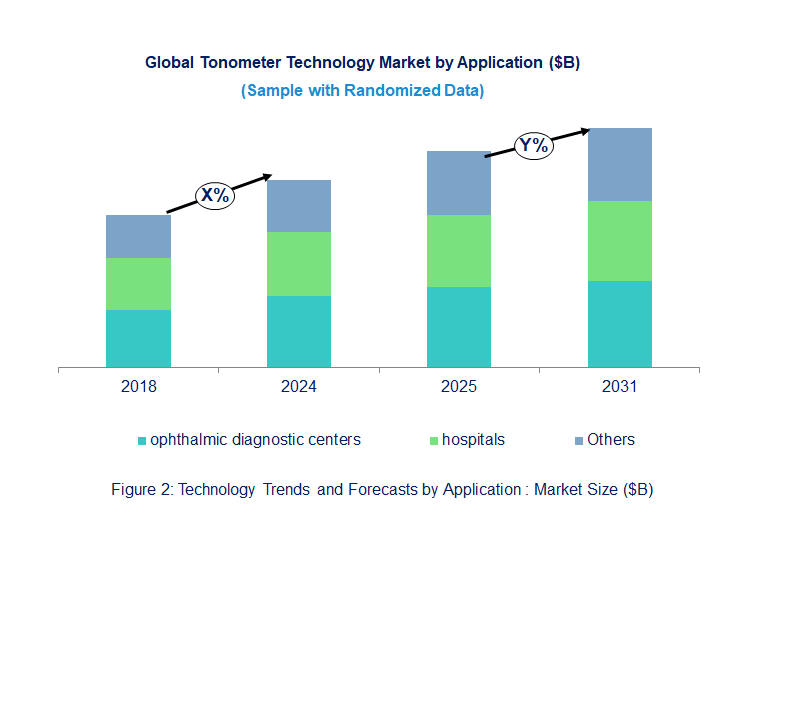
• Rising Adoption of Rebound Tonometers: Portable and easy-to-use, rebound tonometers are gaining popularity in both clinical and remote settings due to their minimal training requirements and patient-friendly operation without the need for anesthesia.
• Increased Preference for Non-Contact (Air Puff) Methods: As hygiene and infection control become more critical, especially post-COVID-19, non-contact tonometers are favored for their safety and speed in high-volume screening environments.
• Integration with Digital Health Systems: Modern tonometers now feature digital interfaces, Bluetooth, and cloud connectivity, enabling seamless data sharing with EHR systems and remote patient monitoring.
• Miniaturization and Portability: Compact and handheld devices are being developed to facilitate home monitoring and mobile diagnostics, expanding access to eye care in rural and underserved regions.
• Focus on Patient Comfort and Automation: Next-generation tonometers are designed with improved ergonomics, automated alignment, and AI-driven measurement validation, reducing operator dependency and increasing throughput. These technology trends are reshaping the Tonometer Market by prioritizing patient comfort, diagnostic speed, and data integration. The shift toward rebound and non-contact technologies, alongside portable, connected devices, is supporting broader screening efforts, especially in aging populations, and enhancing the overall quality and accessibility of ophthalmic care.
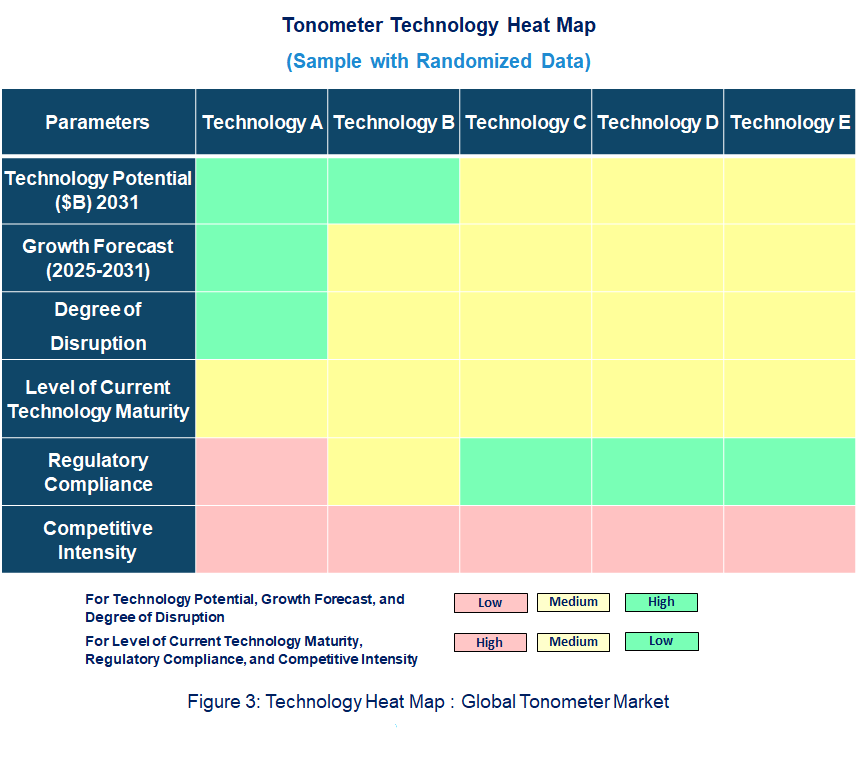
• Technology Potential: The tonometer market holds strong technology potential driven by the global rise in glaucoma and intraocular pressure (IOP)-related conditions. Advancements in optical sensors, AI-driven measurements, and digital connectivity are expanding the scope of tonometry beyond traditional clinical settings. Modern tonometers are now capable of delivering highly accurate, user-friendly, and non-invasive IOP assessments, making them suitable for both professional and at-home use. Emerging technologies such as smartphone integration and cloud-based data tracking further enhance monitoring capabilities, positioning tonometers as vital tools in preventive eye care and chronic disease management.
• Degree of Disruption: The market is experiencing a moderate to high degree of disruption, particularly due to the shift from applanation and indentation tonometry to rebound and non-contact techniques. These newer technologies eliminate the need for topical anesthesia, reduce infection risk, and offer more comfortable experiences for patients. The introduction of portable, battery-operated devices has opened new markets for personal and remote eye pressure monitoring, challenging the dominance of traditional clinic-based methods. Digital tonometers equipped with wireless data transmission and automated analysis features are also transforming clinical workflows and patient engagement models.
• Technology Maturity: While applanation and indentation tonometers are considered mature technologies with decades of proven use, newer solutions like rebound tonometry and dynamic contour tonometry are still evolving. These innovations have shown strong clinical validation and increasing acceptance, but their full integration into standard care protocols is ongoing. Portability, ease of use, and digital compatibility are key attributes pushing newer models toward broader adoption. However, high-end features like AI-based analysis and home-use calibration tools are still in the early adoption phase, with further validation and clinician training required for widespread implementation.
• Regulatory Compliance: Tonometer technologies must comply with stringent global regulatory frameworks, including FDA approval in the U.S., CE marking in Europe, and local GCC health authority certifications. Compliance focuses on safety, accuracy, calibration consistency, and sterility—especially for devices used in clinical settings. For home-use and portable models, additional scrutiny applies regarding user-friendliness, self-calibration, and data privacy. Manufacturers must ensure alignment with ISO standards for ophthalmic equipment, such as ISO 8612 for tonometers. As digital features expand, compliance with data security regulations like GDPR and HIPAA becomes increasingly critical.
• Keeler Ltd. launched the D-KAT T applanation tonometer, a compact and portable device designed for quick and accurate intraocular pressure measurements.
• Topcon Corporation introduced the TRK-3 OMNIA, a 4-in-1 instrument combining refractometer, keratometer, non-contact tonometer, and pachymeter, streamlining clinical workflows.
• Icare Finland Oy developed the iCare HOME2 self-tonometer, enabling patients to monitor their intraocular pressure at home, enhancing glaucoma management.
• AMETEK Inc. (Reichert Inc.) unveiled the Tono-Vera tonometer, featuring the ActiView Positioning System for precise and objective intraocular pressure measurements.
• Reichert Inc. introduced the Reichert 7 non-contact tonometer, offering automated alignment and multiple measurement modes for improved patient comfort and efficiency.
• Increasing Prevalence of Eye Diseases: The rising incidence of eye conditions such as glaucoma and cataracts fuels the demand for tonometers, as early detection is crucial for effective management.
• Technological Advancements: Innovations in tonometer design, such as non-contact and portable devices, enhance patient comfort and accessibility, driving market growth.
• Aging Population: The growing elderly population increases the prevalence of age-related eye diseases, leading to higher demand for tonometry services.
• Rising Healthcare Awareness: Increased awareness about eye health and the importance of regular eye check-ups contribute to the adoption of tonometers.
• Government Initiatives: Supportive government policies and funding for eye care programs promote the use of tonometers in routine screenings. Challenges:
• High Cost of Advanced Devices: The expense associated with advanced tonometer technologies may limit their adoption in resource-constrained settings.
• Regulatory Hurdles: Compliance with stringent regulatory standards can delay product development and market entry.
• Lack of Skilled Professionals: The shortage of trained ophthalmic professionals may hinder the effective utilization of advanced tonometry devices.
• Technological Integration Issues: Challenges in integrating new tonometer technologies with existing healthcare infrastructure can impede adoption.
• Patient Reluctance: Some patients may be hesitant to adopt new tonometry methods due to unfamiliarity or perceived discomfort. The tonometer market is experiencing significant growth, driven by technological advancements and increasing demand for efficient eye care solutions. Key players are introducing innovative products to enhance diagnostic accuracy and patient comfort. However, challenges such as high costs, regulatory hurdles, and the need for skilled professionals must be addressed to fully capitalize on market opportunities.
• Keeler Ltd.
• Topcon Corporation
• Icare Finland Oy
• Ametek Inc.
• Reichert, Inc.
• Technology Readiness: Applanation tonometry is a highly mature and clinically validated technology used extensively in hospitals and diagnostic centers, despite procedural complexity. Rebound tonometers are also mature with high adoption in portable and home-use segments, supported by modern design and digital compatibility. Indentation tonometry is less mature by today’s standards, primarily used in legacy systems and training. Other technologies like air puff and dynamic contour are moderately mature, with increasing integration in smart diagnostics. Rebound and digital-based options lead in competitive positioning due to versatility and patient-centric features, while regulatory compliance remains critical for all to ensure accuracy, hygiene, and patient safety.
• Disruption Potential: Applanation tonometry, the longstanding standard, has limited disruption potential today due to its clinical complexity and need for anesthesia. Rebound tonometers present high disruption by offering ease of use, portability, and no need for anesthetics, enabling both clinical and home settings. Indentation tonometers, while historically significant, now hold low disruption potential due to invasiveness and outdated methodology. Other technologies, including non-contact (air puff) and dynamic contour tonometry, offer moderate to high disruption through improved patient comfort, speed, and digital integration. The trend toward automation, digital connectivity, and self-monitoring is rapidly reshaping market dynamics.
• Competitive Intensity & Regulatory Compliance: Applanation tonometry faces moderate competitive intensity with entrenched players and a strong clinical base, but increasing regulatory scrutiny over sterilization and calibration. Rebound tonometers experience high competitive intensity due to growing demand and innovation, requiring strict compliance with safety and performance standards. Indentation tonometers face low competition but also low market relevance. Other technologies like air puff and contour tonometry are regulated for patient safety and accuracy, with moderate competition. Regulatory frameworks such as FDA and CE mark govern all segments, with newer technologies facing evolving compliance related to usability and digital health integration.
• Applanation Tonometry
• Rebound Tonometers
• Indentation Tonometers
• Other Technologies
• ophthalmic diagnostic centers
• hospitals
• Others
• North America
• Europe
• Asia Pacific
• The Rest of the World
• Latest Developments and Innovations in the Tonometer Technologies
• Companies / Ecosystems
• Strategic Opportunities by Technology Type


Choose a license that fits your team. Instant PDF delivery.
Prices exclude taxes. Instant delivery. Custom licensing available on request.
Market Report · May 18, 2026
Market Report · May 18, 2026
Market Report · May 18, 2026
Trusted partner for strategic intelligence and business growth


Receive a complimentary market analysis tailored to your industry. Our analysts will identify key growth opportunities and competitive dynamics specific to your business.

Market size, growth rate, and key trend analysis for your specific sector.

Top competitor positioning and market share analysis.

Strategic recommendations backed by data-driven insights.
Get curated market intelligence and competitive moves straight to your inbox.
By subscribing, you agree to receive our monthly insights. Unsubscribe anytime.
Receive a complimentary market analysis tailored to your industry. Our analysts will identify key growth opportunities and competitive dynamics specific to your business.
Market size, growth rate, and key trend analysis for your specific sector.
Top competitor positioning and market share analysis.
Strategic recommendations backed by data-driven insights.
Get curated market intelligence, emerging trends, and competitive moves straight to your inbox each month.
By subscribing, you agree to receive our monthly insights. Unsubscribe anytime.
We'll send your sample report shortly.