
Market Report · May 18, 2026

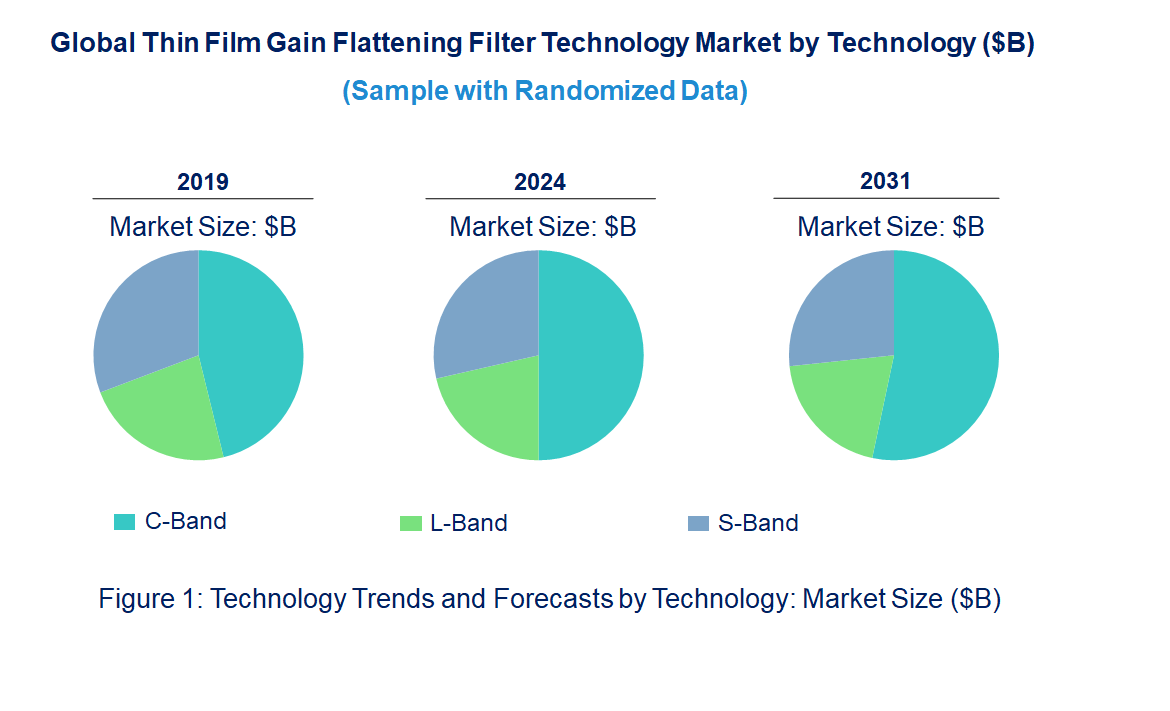
This market report covers trends, opportunities, and forecasts in the global thin film gain flattening filter market to 2031 by technology (c-band, l-band, and s-band), application (communication, optical fiber amplifier, and others), and region (North America, Europe, Asia Pacific, and the Rest of the World)
We'll send your sample report shortly.
![Thin Film Gain Flattening Filter Market Trend and Forecast by Application [Value from 2019 to 2031]:](https://lucintel.com/images/Thin-Film-Gain-Flattening-Filter-Technology-Market-Segment.png "Thin Film Gain Flattening Filter Market Trend and Forecast by Application [Value from 2019 to 2031]:")
• Advances in Thin-Film Deposition Technologies: The market is increasingly adopting advanced thin-film deposition techniques such as sputtering and vapor deposition. These techniques offer higher precision in creating thin films with customized properties, leading to better performance and reliability of gain flattening filters. This shift enables manufacturers to create filters that cover a broader range of wavelengths, making them usable in several bands like C-Band, L-Band, and S-Band.
• Integration of Photonic Crystals and Nano-Structured Materials: There is a trend toward using photonic crystals and nano-structured materials in gain flattening filters. These materials improve the performance of filters by allowing greater control over light propagation and reducing signal loss. Filters have become more compact and efficient due to these advanced materials, which is important for meeting the demands of modern communication systems, especially those used in optical fiber amplifiers.
• Miniaturization and Compact Design: The miniaturization drive in thin film gain flattening filter is another emerging trend in the market. Compact communication systems demand small, fully integrated filters that do not compromise performance while ensuring a space-efficient fit for environments. More compact gain flattening filters are driving the growth of high-density optical communication networks, enabling better scalability and increased data density.
• Customization for Specific Applications: There is increasing demand for custom gain flattening filters designed for specific applications. Manufacturers are increasingly providing filters tailored for particular industries such as telecommunications, optical fiber amplifiers, and medical imaging. Customizing filters for different frequency bands or performance requirements enables companies to meet the precise needs of their customers, resulting in improved system performance and efficiency.
• Sustainability and Eco-Friendly Manufacturing: Sustainability is gaining more recognition in the thin film gain flattening filter market due to rising environmental concerns. Companies have moved toward green manufacturing processes and the use of eco-friendly materials to reduce waste and energy consumption. The growing demand for green technology filters that provide better performance while reducing environmental impact aligns with international sustainability goals. Emerging trends in the thin film gain flattening filter market are radically changing the industry. Developments in deposition technologies, integration of advanced materials, miniaturization, customization, and sustainability are driving innovation to meet the changing demands of optical communication systems. These trends will continue to grow and lead to more efficient, scalable, and environmentally friendly solutions, making thin film gain flattening filter a critical component in the future of high-performance communication systems.
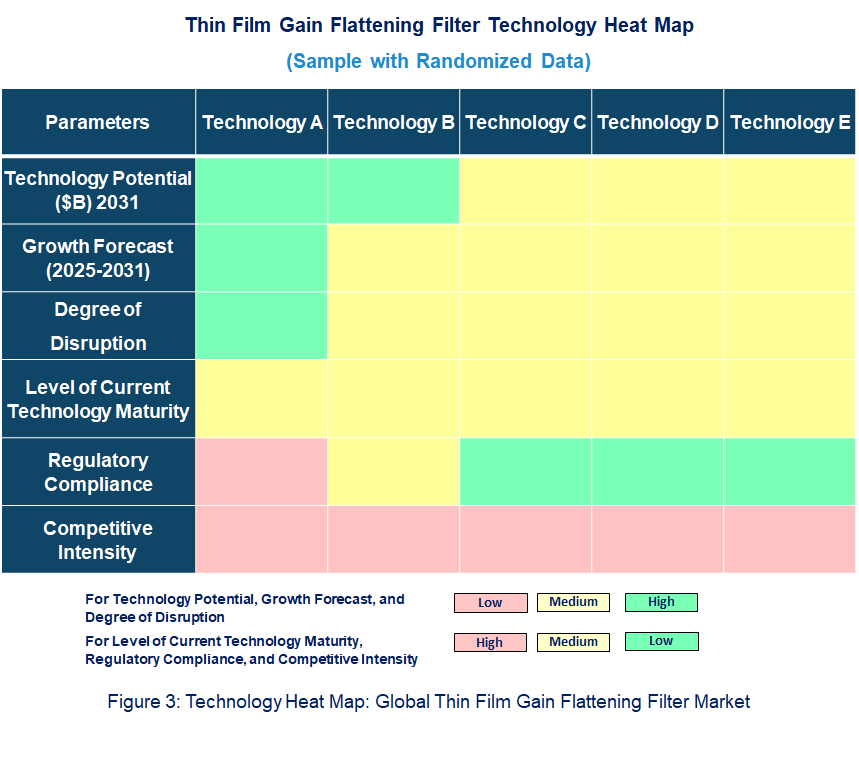
• Technology Potential: The technology potential of the thin film gain flattening filter is high, as it allows for the development of advanced filters with better performance and broader wavelength coverage. These filters are essential in optical communication, particularly for high-density networks and optical fiber amplifiers. The integration of materials like photonic crystals and nano-structured elements promises further enhancement in system efficiency.
• Degree of Disruption: The degree of disruption is moderate, as thin film gain flattening filter technology does not replace existing solutions but enhances their performance. By improving filter precision and minimizing signal loss, thin film gain flattening filter technologies contribute to the evolution of optical systems but are more of an incremental improvement than a complete disruption.
• Level of Current Technology Maturity: The current technology maturity is intermediate. While thin-film deposition techniques like sputtering and vapor deposition are well-established, the market continues to evolve with new materials and more integrated solutions. Further optimization is expected, especially in compact designs and specific application customization.
• Regulatory Compliance: Regulatory compliance is critical in the thin film gain flattening filter market, particularly concerning environmental and safety standards. As demand grows for eco-friendly solutions, manufacturers must adhere to regulations on energy efficiency, waste reduction, and sustainable manufacturing processes.
• Lumentum Operations: Lumentum has expanded its portfolio in optical components by integrating advanced thin-film deposition technologies. The work on gain flattening filters for optical amplifiers has improved the data-carrying capacity of optical communication systems while increasing the quality of optical signals. Their focus on compact and efficient solutions has enabled them to become a one-stop shop for high-performance optical solutions.
• AC Photonics: AC Photonics has been dedicated to delivering customizable gain flattening filters that meet the specific needs of clients in telecommunications and medical imaging. Their continuous innovation in thin-film coating techniques has improved the precision of their filters, ensuring superior performance across multiple frequency bands, including the C-Band and L-Band.
• DiCon Fiberoptics: DiCon Fiberoptics has developed high-performance thin film gain flattening filters for fiber-optic systems, focusing on low-loss and high-precision filters. Their technological advancements in nano-coating and photonic crystal integration have reduced signal degradation and enhanced system efficiency, providing more reliable and compact solutions for high-density communication networks.
• Browave: Browave has excelled in thin-film filter production for high-power optical applications. By emphasizing customization and integration, Browave has improved communication systems that operate within the highest performance parameters. Their thin-film materials have been optimized for numerous applications related to optical fiber amplification.
• Boston Applied Technologies: Boston Applied Technologies has contributed to the market by improving the manufacturing processes of thin-film filters using precision deposition techniques. Their work on developing eco-friendly and sustainable materials for thin film gain flattening filters has catered to the increasing demand for green technologies, offering solutions that meet both performance and environmental standards.
• Lightwaves2020: Lightwaves2020 has focused on high-performance filters using advanced thin-film deposition technologies. Their work in developing filters for dense wavelength division multiplexing systems has improved network efficiency and data transmission quality, addressing the growing need for high-capacity communication networks in modern optical systems. These developments by key players are collectively driving the thin film gain flattening filter market forward, making it more efficient, scalable, and adaptable to the needs of next-generation optical communication systems.
• Technological Advancements: Continuous innovation in thin-film deposition technologies, including sputtering and vapor deposition, is a major driver. These advancements allow for better precision in manufacturing thin film gain flattening filters, enhancing their efficiency and performance. The ability to produce customized filters for various wavelength ranges helps improve the functionality of optical communication systems.
• Increasing Demand for Optical Communication Systems: With the growing need for high-speed communication, particularly in telecommunications and data centers, there is a rising demand for efficient optical filters. Thin film gain flattening filters improve signal quality and increase data transmission rates, making them essential for modern optical systems such as fiber optic amplifiers and dense wavelength division multiplexing.
• Miniaturization of Communication Devices: Compact, space-efficient communication devices require even smaller, more integrated thin film gain flattening filters. The small size of the filters has reduced the system's size without compromising performance. This makes compact filters indispensable for implementing high-density networks and small-scale optical communication systems.
• Customization and Application-Specific Filters: The growing demand for custom-designed thin film gain flattening filters is driven by industries seeking more tailored solutions. Filters designed for specific frequency bands or applications, such as medical imaging and aerospace, are in demand. Customization allows manufacturers to meet precise performance and efficiency standards, driving market growth. Challenges in the thin film gain flattening filter market are:
• Regulatory and Environmental Challenges: One of the major challenges is compliance with environmental regulations and standards. The production of thin-film filters often involves materials and processes that can be harmful to the environment. Manufacturers must adopt eco-friendly production techniques to meet sustainability goals and reduce their environmental footprint.
• High Production Costs: The cost of developing and manufacturing high-quality thin film gain flattening filters remains a significant challenge. Advanced deposition techniques and customizations add to production costs, which can limit the market's accessibility, particularly for small-scale manufacturers. Reducing production costs while maintaining high performance is crucial for market growth. The thin film gain flattening filter market is experiencing strong growth due to technological advancements, increasing demand for optical communication systems, miniaturization trends, and the rise of custom solutions. However, regulatory pressures and high production costs are challenges that need to be addressed to ensure sustained market growth. These growth opportunities are reshaping the thin film gain flattening filter market by making it more efficient, adaptable, and aligned with modern communication needs.
• Lumentum Operations
• AC Photonics
• DiCon Fiberoptics
• Browave
• Boston Applied Technologies
• Lightwaves2020
• Technology Readiness by Technology Type of C-Band, L-Band, and S-Band for thin film gain flattening filter Market: The technology readiness of C-Band, L-Band, and S-Band for Thin Film Gain Flattening Filter ( thin film gain flattening filter) applications varies based on their respective uses and maturity. C-Band technology is highly mature, with well-established applications in satellite communications and optical amplification systems, making it the most competitive in the market. L-Band, commonly used in mobile and GPS communication, is also ready for large-scale implementation, with moderate competition driven by demand in telecommunications. S-Band technology, though less widespread, is ready for deployment in specialized applications such as radar systems and weather monitoring. Competitive intensity varies across these technologies, with C-Band and L-Band facing intense competition, while S-Band operates in more niche sectors. Regulatory compliance is an essential factor for each, with C-Band and L-Band requiring adherence to stringent telecommunications and broadcast regulations, while S-Band often faces defense and aviation-specific rules. Key applications for each include long-distance communication and satellite systems (C-Band), mobile communication and GPS (L-Band), and radar and defense systems (S-Band). The evolving need for higher data rates, low signal loss, and eco-friendly technologies continues to drive innovation and readiness across these bands.
• Competitive Intensity and Regulatory Compliance of C-Band, L-Band, and S-Band Technologies for thin film gain flattening filter Market: The competitive intensity in the thin film gain flattening filter market for C-Band, L-Band, and S-Band technologies is influenced by the growing need for high-performance optical filters in telecommunications, satellite, and defense applications. The C-Band market is highly competitive due to its widespread use in long-range communication and satellite systems, driving demand for advanced filtering solutions. The L-Band market faces moderate competition, as it is primarily used in GPS and mobile networks, but remains crucial in these sectors. The S-Band, with applications in radar and weather systems, faces less competition but has significant niche applications. Regulatory compliance varies for each band: C-Band and L-Band technologies must adhere to strict telecommunications regulations, while S-Band technologies are often subject to defense and aviation regulations. Compliance with international standards and environmental guidelines is critical to market entry, requiring manufacturers to focus on sustainable and eco-friendly production practices to meet growing regulatory pressure. Overall, these technologies must navigate complex regulatory environments while competing to offer differentiated, high-quality solutions.
• Disruption Potential of C-Band, L-Band, and S-Band for Thin Film Gain Flattening Filter Market: The disruption potential of C-Band, L-Band, and S-Band technologies in the Thin Film Gain Flattening Filter ( thin film gain flattening filter) market lies in their ability to optimize signal performance across different communication systems. The C-Band is commonly used for satellite and long-distance communication, providing stable performance and higher data throughput. The L-Band, often employed for mobile communications and GPS systems, offers advantages in terms of lower signal attenuation and wider coverage. The S-Band, which supports radar and wireless communication applications, brings improved signal clarity with better interference resistance. The integration of thin film gain flattening filters in these bands improves efficiency by reducing signal distortion and enhancing bandwidth. As demand for high-speed communication networks grows, these technologies are positioned to disrupt traditional communication infrastructure by enabling more efficient, higher-capacity systems. The move towards more compact designs, driven by advancements in thin-film deposition technologies, accelerates their potential. The distinct capabilities of each band contribute to a more versatile and resilient optical communication system, poised to reshape the market.
• C-Band
• L-Band
• S-Band
• Communication
• Optical Fiber Amplifier
• Others
• North America
• Europe
• Asia Pacific
• The Rest of the World
• Latest Developments and Innovations in the Thin Film Gain Flattening Filter Technologies
• Companies / Ecosystems
• Strategic Opportunities by Technology Type


Choose a license that fits your team. Instant PDF delivery.
Prices exclude taxes. Instant delivery. Custom licensing available on request.
Market Report · May 18, 2026
Market Report · May 18, 2026
Market Report · May 18, 2026
Trusted partner for strategic intelligence and business growth


Receive a complimentary market analysis tailored to your industry. Our analysts will identify key growth opportunities and competitive dynamics specific to your business.

Market size, growth rate, and key trend analysis for your specific sector.

Top competitor positioning and market share analysis.

Strategic recommendations backed by data-driven insights.
Get curated market intelligence and competitive moves straight to your inbox.
By subscribing, you agree to receive our monthly insights. Unsubscribe anytime.
Receive a complimentary market analysis tailored to your industry. Our analysts will identify key growth opportunities and competitive dynamics specific to your business.
Market size, growth rate, and key trend analysis for your specific sector.
Top competitor positioning and market share analysis.
Strategic recommendations backed by data-driven insights.
Get curated market intelligence, emerging trends, and competitive moves straight to your inbox each month.
By subscribing, you agree to receive our monthly insights. Unsubscribe anytime.
We'll send your sample report shortly.