
Market Report · May 18, 2026

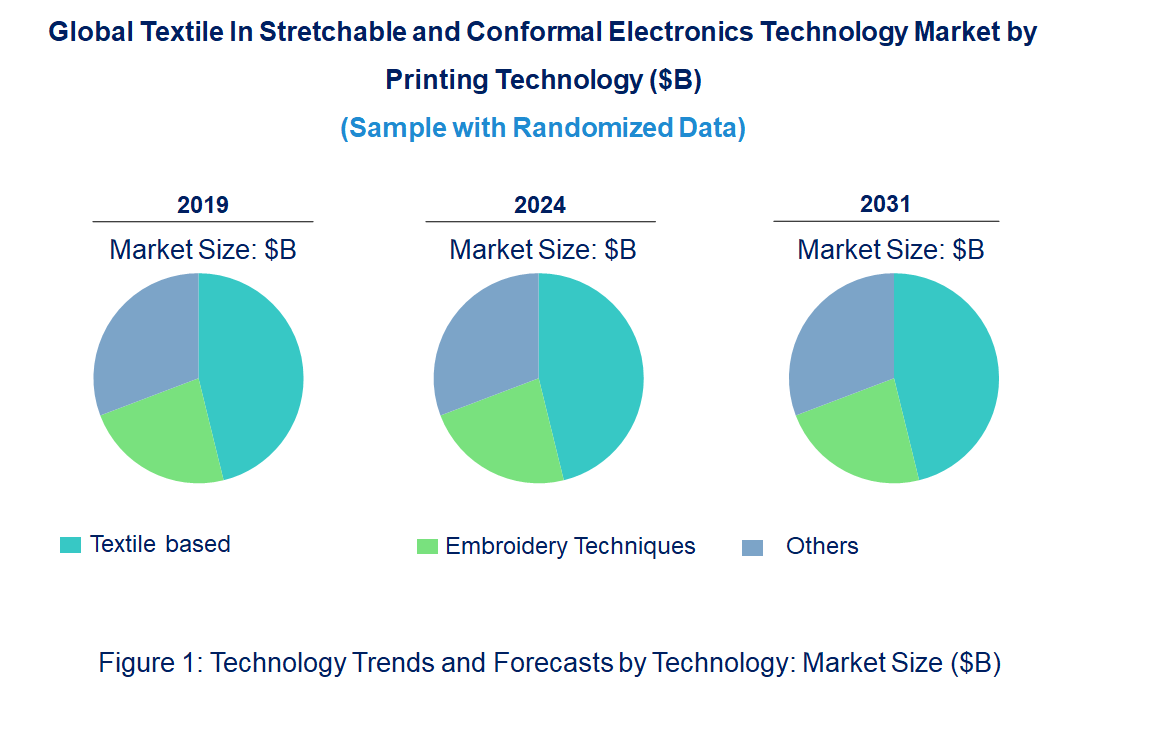
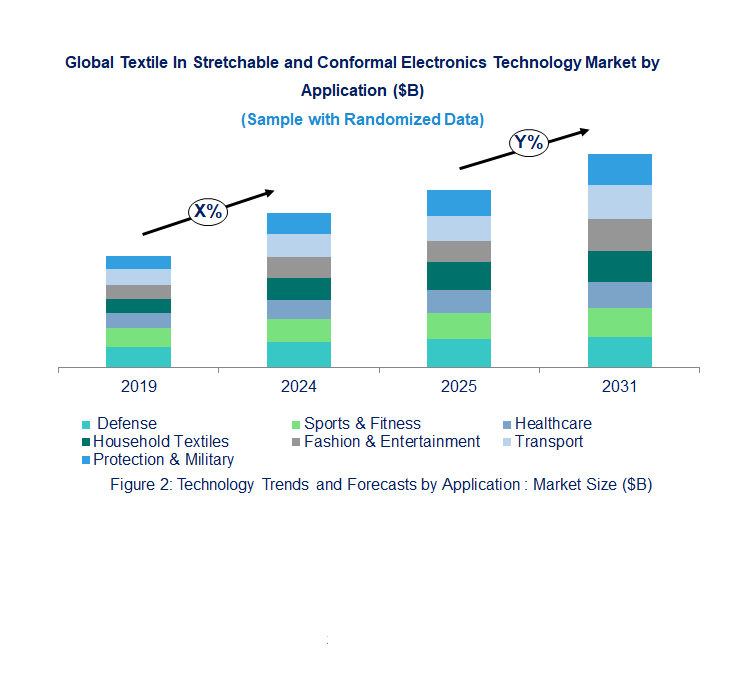
This market report covers trends, opportunities, and forecasts in the global textile in stretchable and conformal electronics market to 2031 by printing technology (textile based, embroidery techniques, and others), application (defense, sports & fitness, healthcare, household textiles, fashion & entertainment, transport, protection & military, architecture, and others), and region (North America, Europe, Asia Pacific, and the Rest of the World)
We'll send your sample report shortly.
• Integration of Electronics into Everyday Clothing: The integration of electronics into textiles for everyday applications is becoming increasingly popular. Smart fabrics with sensors and conductive materials are being more widely used in the fashion and sports industries, providing real-time data for health monitoring and performance tracking.
• Advancements in Conductive Ink and Printing Technologies: The use of advanced conductive inks and printing techniques is revolutionizing the manufacturing of stretchable and conformal electronics. These technologies enable precise and scalable production of flexible, lightweight electronics that can be embedded directly into textiles, making them more versatile and cost-effective.
• Wearable Health Monitoring Systems: The healthcare industry is witnessing significant changes due to the increased adoption of wearable health monitoring systems. Wearable electronics incorporated into clothing can monitor heart rate, respiration, and body temperature in real-time, providing useful information to patients and healthcare professionals.
• Smart Sportswear: Smart sportswear is trending with the goal of performance and fitness tracking. Stretchable electronics in clothing collect biometric data such as muscle activity and body movement, which are transferred to wearable devices or smartphones for detailed analysis of athletic performance.
• Sustainability and Eco-friendly Materials: With growing environmental concerns, there is an increasing shift toward sustainable and eco-friendly materials in textile electronics. Biodegradable or recyclable electronic components and fabrics are being developed to address the need for sustainable production practices in both the textile and electronics industries. This shift of the textile in stretchable and conformal electronics market is set to redefine the market with changes in design innovations, enhancing user experience, and diversifying the real applications of smart textiles.
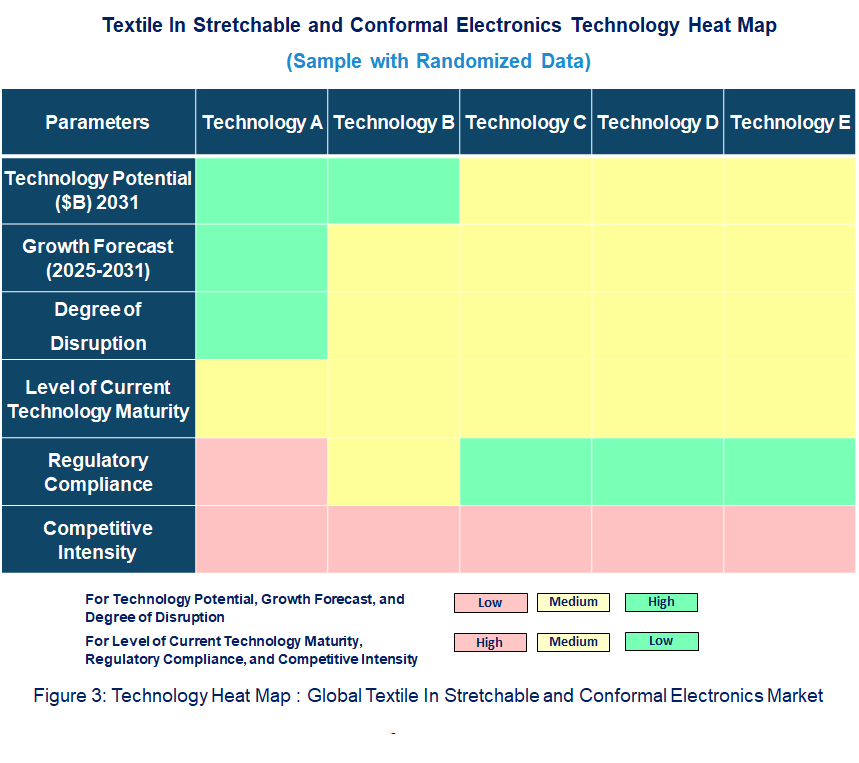
• Technology Potential: The potential for printing technology is high due to the growing demand for flexible, lightweight, and wearable electronic devices. Advances in inkjet printing, screen printing, and roll-to-roll printing technologies are enabling the production of conductive inks and stretchable materials that can be directly printed onto textiles, opening up opportunities for smart fabrics that monitor vital signs, track movement, and interact with other devices.
• Degree of Disruption: The degree of disruption is moderate to high. Printed electronics are replacing traditional methods such as sewing or conventional wiring to integrate electronics into textiles in a much more integrated, scalable, and cost-effective manner. This technology will revolutionize healthcare, sports, and fashion by seamlessly integrating electronics into daily clothing.
• Current Technology Maturity: Printing technology for textiles is still in the development phase, from early to middle stages. Some applications, such as fitness trackers and health monitoring shirts, are currently in use, but mass adoption will require solutions to scalability challenges, material durability, and integration.
• Regulatory Compliance: This technology must adhere to safety and environmental regulations, particularly concerning material toxicity and electrical safety. Compliance with standards like IEC and ISO ensures that these stretchable and conformal electronics are safe for consumers, especially in wearable applications.
• Carré Technologies: Carré Technologies has introduced innovations in wearable textile electronics with a focus on health-monitoring clothing. Their smart fabrics incorporate sensors that track the wearer’s vital signs, such as heart rate, body temperature, and muscle activity, providing healthcare providers and patients with real-time, non-invasive health data.
• Chronolife: Chronolife has developed a unique approach to wearable health monitoring by creating textile-based biosensors. Their intelligent wearable solutions integrate stretchable electronics that continuously monitor vital signs such as respiration and heart rate, sending data to healthcare professionals to enhance patient care through proactive monitoring.
• E.I. du Pont de Nemours (DuPont): DuPont is a leader in material innovation, manufacturing advanced conductive fabrics and films for integration into smart textiles. Their stretchable electronic components are used in a wide range of applications, from healthcare monitoring to sports and fitness, providing greater flexibility and durability.
• Interactive Wear: Interactive Wear is a pioneer in wearable technology for smart clothing used in defense and safety applications. Their products include intelligent garments equipped with sensors for environmental monitoring, providing real-time feedback on temperature, humidity, and heart rate, which is especially useful for military personnel and first responders.
• Mitsufuji: Mitsufuji has developed high-performance textiles that integrate stretchable electronics for applications in healthcare and sports. Their smart garments contain stretch sensors that monitor body movements, muscle activity, and overall performance, promoting the use of smart textiles in athletic training and rehabilitation. These developments indicate the increasing commercialization of textile-based stretchable and conformal electronics and their growing presence in industries such as healthcare, defense, and sports.
• Increased Demand for Wearable Health Technologies: With a greater focus on health and wellness, wearable health-monitoring solutions are in high demand. Smart textiles with embedded sensors provide valuable real-time data that enhances patient care, promotes early diagnosis, and supports personal health management.
• Advancements in Textile Printing and Conductive Materials: Advances in conductive inks, printing technologies, and textile fabrication are enabling the production of more efficient and cost-effective stretchable electronics. This allows manufacturers to scale the production of smart fabrics that are flexible, durable, and adaptable to various applications, especially in consumer products and healthcare.
• Rising Demand for Smart Wearables and Fashion Tech: The increasing popularity of smart wearables and fashion tech has led to the adoption of smart textiles and electronics by the fashion industry. Innovations such as interactive clothing and wearable technology are merging functionality with aesthetics, opening new revenue streams for companies in both the fashion and electronics industries.
• Rising Demand for Eco-friendly and Sustainable Smart Textiles: Consumer and manufacturer awareness regarding environmental issues has increased the demand for sustainable materials in textile electronics. Companies incorporating eco-friendly materials, like biodegradable electronics or recyclable fabrics, are gaining traction in the market. Challenges of Textile in Stretchable and Conformal Electronics market include:
• Complex Manufacturing Processes: Stretchable and conformal electronics manufacturing involves advanced processes that are often complex and costly. Developing scalable, cost-effective methods for integrating electronics into textiles without compromising quality or performance remains a significant challenge for manufacturers.
• Durability and Reliability of Textile Electronics: Stretchable and conformal electronics must maintain their functions over time, even after extensive wear and washing. One of the key issues hindering the widespread adoption of smart textiles is the development of reliable and durable electronic components that can withstand everyday use.
• Integration with Existing Infrastructure and Systems: Integrating smart textiles with existing electronic systems, health monitoring platforms, and data management infrastructure is a complex task. Standardization of the technology and compatibility with existing networks remain significant challenges in the development and commercialization of textile-based electronics. The drivers and challenges of textiles in the stretchable and conformal electronics market are dynamic. While significant growth opportunities exist due to advancements in technology and consumer demand for smart textiles, success will depend on overcoming challenges related to production, durability, and integration into existing products.
• Carré Technologies
• Chronolife
• E.I. Du Pont De Nemours
• Interactive Wear
• Mitsufuji
• Technology Readiness by Type in Textile-based Stretchable Electronics Market: Technology readiness for textile-based electronics is growing with increasing maturity. Solutions like conductive yarns and fabrics are already used in commercial applications such as sportswear and healthcare garments. Embroidery techniques are well-developed, providing a secure method for embedding electronics in fabrics by stitching conductive threads to create sensors and circuits. These technologies are ripe for integration into a host of wearables, including heart rate monitors, motion sensors, and smart fabrics for healthcare monitoring. Other emerging technologies, such as printed electronics and conductive ink printing, could potentially make textile-based stretchable electronics more scalable and efficient. As more players enter the market, competition is increasing, driving innovation in materials, manufacturing processes, and product design. Regulatory compliance is especially important in the healthcare sector, where medical-grade wearable devices must meet safety and performance standards. Examples of applications include health monitoring, fitness tracking, military uniforms, consumer electronics, and the continued growth of multifunctional, flexible, and comfortable smart textiles.
• Competitive Intensity and Regulatory Compliance in Textile-based Stretchable Electronics Market: Competitive intensity in the textile-based stretchable and conformal electronics market is rising as several technologies, such as textile-based, embroidery techniques, and conductive ink printing, compete to meet the demand for wearable electronics and smart textiles. Companies are racing to develop cost-effective, durable, and flexible solutions for applications like health monitoring, fitness tracking, and integrated communication systems. Regulatory compliance is essential to ensure safety and reliability, particularly in the healthcare and sportswear sectors. Stretchable and conformal electronics must meet standards on skin safety, electrical conductivity, and durability. Regulatory frameworks like IEC and RoHS are crucial to ensuring these products meet environmental and safety standards. With the rise of the smart textiles and wearable devices market, companies must address technological challenges while remaining competitive and compliant with regulations.
• Disruption Potential of Textile-based and Embroidery Technologies in Stretchable and Conformal Electronics Market: Technologies like textile-based and embroidery techniques hold high disruption potential in the stretchable and conformal electronics market, enabling electronic functions to be directly incorporated into fabrics. These technologies offer flexibility for sportswear, health monitoring, and military uniform applications. They can stitch conductive threads accurately onto fabrics, helping develop flexible circuits and sensors that resist bending and stretching. These innovations will cause market disruptions by merging electronics with comfort, fashion, and functionality, and by seamlessly integrating into everyday products. Other emerging methods, such as printed electronics and conductive inks, further expand the scope of stretchable and conformal electronics in smart textiles. As demand for wearable devices, healthcare monitoring, and IoT-enabled garments grows, these technologies will drive significant change in industries like fashion, healthcare, and consumer electronics.
• Textile based
• Embroidery Techniques
• Others
• Defense
• Sports & Fitness
• Healthcare
• Household Textiles
• Fashion & Entertainment
• Transport
• Protection & Military
• North America
• Europe
• Asia Pacific
• The Rest of the World
• Latest Developments and Innovations in the Textile In Stretchable and Conformal Electronics Technologies
• Companies / Ecosystems
• Strategic Opportunities by Technology Type


Choose a license that fits your team. Instant PDF delivery.
Prices exclude taxes. Instant delivery. Custom licensing available on request.
Market Report · May 18, 2026
Market Report · May 18, 2026
Market Report · May 18, 2026
Trusted partner for strategic intelligence and business growth


Receive a complimentary market analysis tailored to your industry. Our analysts will identify key growth opportunities and competitive dynamics specific to your business.

Market size, growth rate, and key trend analysis for your specific sector.

Top competitor positioning and market share analysis.

Strategic recommendations backed by data-driven insights.
Get curated market intelligence and competitive moves straight to your inbox.
By subscribing, you agree to receive our monthly insights. Unsubscribe anytime.
Receive a complimentary market analysis tailored to your industry. Our analysts will identify key growth opportunities and competitive dynamics specific to your business.
Market size, growth rate, and key trend analysis for your specific sector.
Top competitor positioning and market share analysis.
Strategic recommendations backed by data-driven insights.
Get curated market intelligence, emerging trends, and competitive moves straight to your inbox each month.
By subscribing, you agree to receive our monthly insights. Unsubscribe anytime.
We'll send your sample report shortly.