
Market Report · July 15, 2026

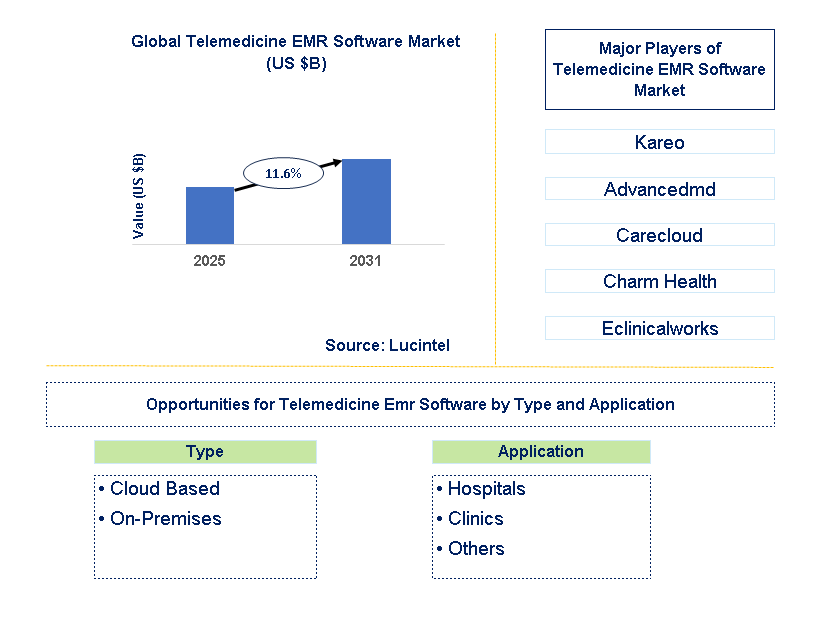
Key data points: The growth forecast = 11.6% annually for the next 7 years. Scroll below to get more insights. This market report covers Trends, opportunity and forecast in telemedicine EMR software market to 2031 by type (cloud based and on-premises), application (hospitals, clinics, and others), and region (North America, Europe, Asia Pacific, and the Rest of the World)
We'll send your sample report shortly.
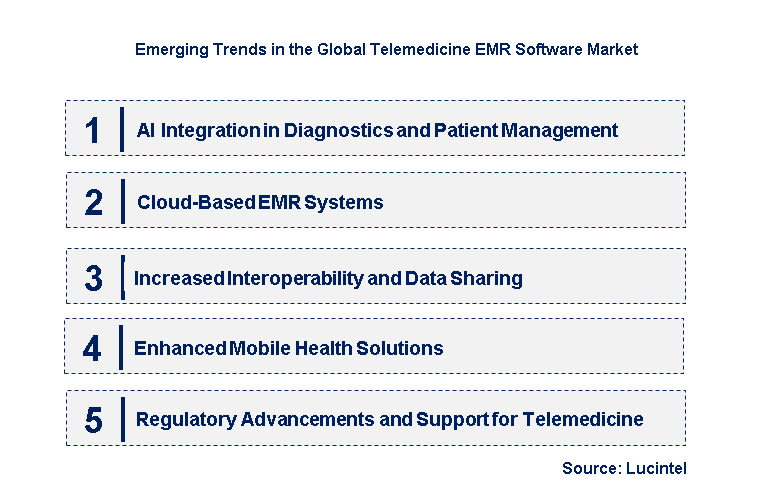
• AI Integration in Diagnostics and Patient Management: AI technologies are revolutionizing the telemedicine EMR market by automating diagnoses, predicting patient health trends, and streamlining administrative tasks. AI can analyze large datasets, identifying patterns and providing insights that help clinicians make informed decisions. For example, AI-based systems can assist with diagnostic imaging, allowing faster and more accurate readings of medical data. As the AI capabilities improve, telemedicine platforms are becoming smarter, supporting both healthcare providers and patients in managing care more efficiently.
• Cloud-Based EMR Systems: Cloud computing has become a core component of the telemedicine EMR market, enabling scalable, flexible, and cost-effective solutions. Cloud-based systems allow healthcare providers to store vast amounts of patient data securely, while offering easy access across multiple platforms. These systems also facilitate real-time data sharing between doctors, specialists, and patients, making telemedicine more effective and responsive. The cloud’s scalability allows healthcare providers to expand their services rapidly, which is particularly beneficial during health crises like the COVID-19 pandemic.
• Increased Interoperability and Data Sharing: Interoperability is a key trend in telemedicine EMR software, as it ensures seamless communication between different healthcare systems and devices. This is essential for improving patient care, especially when patients consult multiple healthcare providers. EMR systems are increasingly being designed to communicate with a variety of platforms, including wearable devices, diagnostic tools, and other EMR systems. This trend helps ensure that patient data is up-to-date and accessible to all relevant healthcare providers, leading to better coordination and more informed decision-making.
• Enhanced Mobile Health Solutions: Mobile health (health) solutions are playing a crucial role in the telemedicine EMR software market. With the increasing use of smartphones and mobile devices, patients and healthcare providers are leveraging mobile apps to manage health information, schedule appointments, and access telehealth services. These mobile solutions enable healthcare delivery beyond traditional settings, enhancing accessibility, particularly in remote or underserved areas. Mobile EMR platforms allow for better patient monitoring, follow-ups, and remote consultations, reducing the need for in-person visits.
• Regulatory Advancements and Support for Telemedicine: The regulatory landscape surrounding telemedicine EMR software is evolving as governments recognize the importance of remote healthcare solutions. In many regions, governments have introduced regulations to standardize telemedicine practices, ensuring patient safety and privacy. For instance, the U.S. and EU have implemented regulations to encourage telemedicine adoption while ensuring compliance with health data protection laws. Regulatory support is helping streamline the process for integrating telemedicine EMR systems into mainstream healthcare services, boosting adoption rates and improving patient trust. These emerging trends AI integration, cloud adoption, interoperability, mobile health solutions, and regulatory advancements are reshaping the telemedicine EMR software market. They are making remote healthcare more efficient, accessible, and patient-centered, while enhancing the accuracy and reliability of medical data management.
• AI and Machine Learning Integration: AI and machine learning are being integrated into telemedicine EMR systems to automate data analysis, improve diagnostics, and enhance clinical decision-making. These technologies can process vast amounts of patient data and offer predictive analytics, helping healthcare providers to make better decisions faster. AI algorithms are also being used to improve the accuracy of diagnostic tools, enabling telemedicine platforms to deliver smarter healthcare solutions.
• Expansion of Cloud-Based Solutions: Cloud-based EMR systems are increasingly popular due to their flexibility and scalability. Cloud solutions allow healthcare providers to store large amounts of patient data securely and provide access across various devices and locations. This is particularly important in telemedicine, where patients may be located remotely. The rise of cloud-based EMR systems is enabling healthcare providers to extend their reach, improve collaboration, and enhance patient care.
• Growth in Mobile Health Integration: Mobile health applications have seen substantial growth, with telemedicine EMR systems increasingly incorporating mobile solutions for greater accessibility. These apps allow patients to manage their health, schedule consultations, and access medical records directly from their smartphones. Mobile integration is enhancing patient engagement and improving healthcare delivery, particularly in underserved and remote areas where traditional healthcare infrastructure is limited.
• Increased Focus on Data Security and Privacy: With the rise of telemedicine comes a heightened focus on data security and privacy. Healthcare providers and developers are prioritizing the protection of sensitive patient data in compliance with regulations like HIPAA in the U.S. and GDPR in Europe. Advancements in encryption and secure cloud storage are helping ensure that patient information remains protected during virtual consultations and data exchanges.
• Government Support and Regulation: Governments are increasingly recognizing the importance of telemedicine and supporting its adoption through favorable policies. For example, the U.S. government has expanded reimbursement policies for telemedicine, while European countries are providing incentives for healthcare providers to adopt digital health solutions. These regulatory developments are creating a more conducive environment for the growth of telemedicine EMR software, encouraging more widespread adoption and investment in the sector. These recent developments AI integration, cloud adoption, mobile health solutions, data security, and government regulation are transforming the telemedicine EMR software market. As these technologies mature, they will continue to improve the quality of care, patient satisfaction, and operational efficiency in healthcare systems worldwide.
• Remote Patient Monitoring: Remote patient monitoring (RPM) is a key growth opportunity within telemedicine EMR software. With increasing chronic diseases and aging populations, RPM tools that allow healthcare providers to track patients’ health remotely are in high demand. Telemedicine EMR software integrates data from wearable devices, providing real-time updates on patient conditions. This allows for continuous monitoring of vital signs and the ability to adjust treatment plans promptly, leading to better patient outcomes and reduced hospital readmissions.
• Virtual Consultations: Virtual consultations are a core application of telemedicine EMR software, providing patients with the ability to consult healthcare providers remotely. This application is seeing growth, particularly in rural and underserved areas, where access to healthcare providers can be limited. Virtual consultations help reduce wait times, increase convenience for patients, and decrease the need for in-person visits. EMR software solutions tailored for telemedicine make it easier for providers to manage patient records, schedule appointments, and deliver care efficiently.
• Mobile Health (health): Mobile health applications are playing an increasing role in telemedicine, providing patients with easy access to healthcare services from their smartphones. Telemedicine EMR software integrated with health solutions is enabling remote consultations, health tracking, appointment scheduling, and patient education. This trend is helping improve patient engagement, especially in populations with limited access to healthcare facilities. The ability to manage health remotely through mobile apps enhances patient outcomes while streamlining healthcare delivery.
• Telepsychology and Tele psychiatry: Telepsychology and tele psychiatry are rapidly growing fields in telemedicine, with more patients seeking mental health services remotely. EMR software tailored for telehealth platforms can provide specialized tools to manage mental health records, treatment plans, and patient communication securely. The increased demand for mental health services, combined with the convenience of remote consultations, presents a significant opportunity for telemedicine EMR software to enhance care delivery and expand access to mental health professionals.
• Health Data Analytics and Reporting: Health data analytics is another growth area within telemedicine EMR software. As healthcare providers collect more data through telemedicine platforms, there is a growing need for analytics tools to process and derive insights from this information. Telemedicine EMR systems that integrate advanced analytics and reporting features can help healthcare providers optimize care delivery, identify trends, and predict patient needs. This application is especially valuable in public health initiatives and for improving clinical decision-making. These key growth opportunities remote patient monitoring, virtual consultations, mobile health, telepsychology, and data analytics are reshaping the telemedicine EMR software market. As the demand for these services grows, telemedicine platforms will continue to evolve, offering innovative solutions to improve patient care and healthcare efficiency.
• Kareo
• Advancedmd
• Carecloud
• Charm Health
• Eclinicalworks
• Modernizing Medicine
• Athenahealth
• Drchrono
• Prognocis Her (Bizmatics)
• Epic
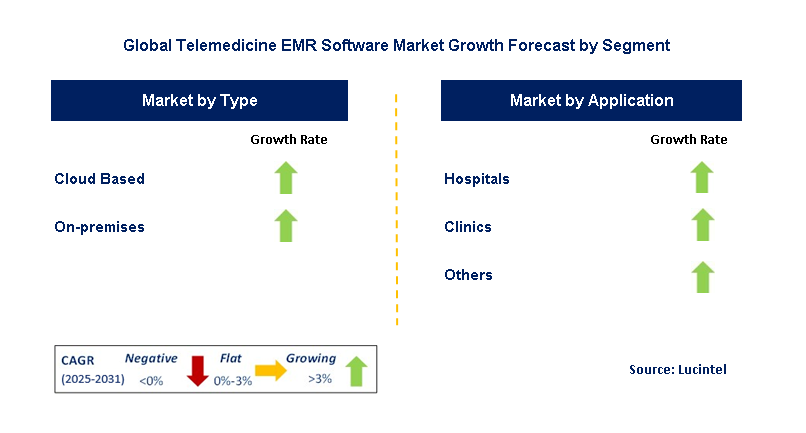
• Cloud Based
• On-Premises
• Hospitals
• Clinics
• Others
• North America
• Europe
• Asia Pacific
• The Rest of the World
• United States: In the U.S., telemedicine EMR software is seeing exponential growth as healthcare providers continue to integrate remote patient monitoring and digital health solutions. The U.S. government has supported these efforts through initiatives like the 21st Century Cures Act and the expansion of reimbursement policies for telehealth services. The adoption of cloud-based solutions and AI-driven EMR software is on the rise, improving workflow efficiency and reducing administrative burdens. Additionally, the focus is shifting toward interoperability, with increasing efforts to enable seamless data sharing across various platforms.
• China: China’s telemedicine EMR software market is evolving rapidly, driven by the government’s focus on expanding healthcare access to rural areas and the increasing need for medical services. With a population of over 1.4 billion, telemedicine provides an essential tool for improving healthcare delivery. The market is heavily supported by the Chinese government’s policy reforms, including the implementation of health information exchanges and the promotion of digital health. Furthermore, Chinese companies are integrating advanced AI and machine learning into their telemedicine EMR systems, enhancing diagnostics and patient management.
• Germany: Germany is progressing in the digitalization of its healthcare system, with telemedicine EMR software being an integral part of this transformation. The country has recently passed the Digital Healthcare Act, which encourages the use of digital health tools and platforms. As part of this initiative, telemedicine and EMR software are being widely implemented, particularly in rural regions where access to healthcare is limited. German providers are increasingly adopting cloud-based solutions, and integration with patient-centered care systems is enhancing efficiency. There’s also a growing focus on data privacy and security due to stringent EU regulations like the GDPR.
• India: India’s telemedicine EMR software market is witnessing rapid expansion, driven by the country’s large, diverse population and the rise in chronic diseases. The Indian government is actively promoting telemedicine through initiatives such as the Telemedicine Practice Guidelines and the National Health Stack. These efforts are enhancing healthcare accessibility in underserved areas. The adoption of mobile-based EMR software is growing, especially in rural regions, where smartphones are becoming key tools for medical consultations and patient record management. AI and machine learning are being used to enhance diagnostics and predictive analytics in the country.
• Japan: Japan’s telemedicine EMR software market is advancing as the country faces a rapidly aging population and rising healthcare demands. Telemedicine adoption has accelerated due to the COVID-19 pandemic, and Japan’s government is enhancing telehealth infrastructure to support aging citizens. The market is also benefiting from Japan’s highly developed healthcare IT infrastructure, which is enabling seamless integration of EMR systems with telemedicine platforms. Japanese companies are focusing on developing user-friendly systems that prioritize security and ease of use, especially for elderly patients, as well as integrating AI for improved clinical decision-making.


• Kareo
• Advancedmd
• Carecloud
• Charm Health
• Eclinicalworks
• Modernizing Medicine
• Athenahealth
• Drchrono
• Prognocis Her (Bizmatics)
• Epic Q5. Which telemedicine EMR software market segment will be the largest in future? Answer: Lucintel forecasts that cloud based is expected to witness higher growth over the forecast period due to scalability, cost-effectiveness, remote accessibility, and ease of updates. Q6. In telemedicine EMR software market, which region is expected to be the largest in next 5 years? Answer: North America is expected to witness the highest growth over the forecast period due to increased telemedicine adoption, technological advancements. Q7. Do we receive customization in this report? Answer: Yes, Lucintel provides 10% customization without any additional cost.


Choose a license that fits your team. Instant PDF delivery.
Prices exclude taxes. Instant delivery. Custom licensing available on request.
Market Report · July 15, 2026
Market Report · June 26, 2026
Market Report · June 24, 2026
Trusted partner for strategic intelligence and business growth


Receive a complimentary market analysis tailored to your industry. Our analysts will identify key growth opportunities and competitive dynamics specific to your business.

Market size, growth rate, and key trend analysis for your specific sector.

Top competitor positioning and market share analysis.

Strategic recommendations backed by data-driven insights.
Get curated market intelligence and competitive moves straight to your inbox.
By subscribing, you agree to receive our monthly insights. Unsubscribe anytime.
Receive a complimentary market analysis tailored to your industry. Our analysts will identify key growth opportunities and competitive dynamics specific to your business.
Market size, growth rate, and key trend analysis for your specific sector.
Top competitor positioning and market share analysis.
Strategic recommendations backed by data-driven insights.
Get curated market intelligence, emerging trends, and competitive moves straight to your inbox each month.
By subscribing, you agree to receive our monthly insights. Unsubscribe anytime.
We'll send your sample report shortly.