
Market Report · July 15, 2026

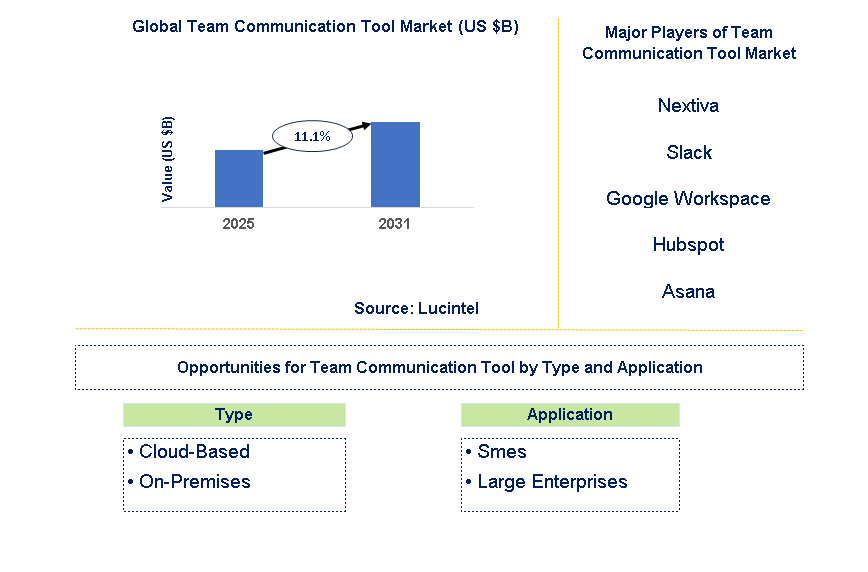
Key data points: The growth forecast = 11.1% annually for the next 7 years. Scroll below to get more insights. This market report covers Trends, opportunity and forecast in team communication tool market to 2031 by type (cloud-based and on-premises), application (SMEs and large enterprises), and region (North America, Europe, Asia Pacific, and the Rest of the World)
We'll send your sample report shortly.
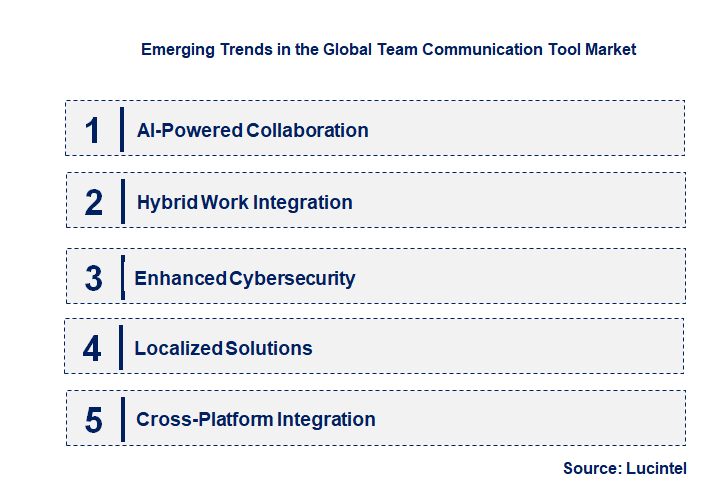
• AI-Powered Collaboration: AI is playing a pivotal role in transforming team communication tools by automating tasks and enhancing team collaboration. AI-driven features like real-time transcription, sentiment analysis, and task automation are becoming essential for improving communication. These technologies can increase productivity, especially in remote work environments, by offering personalized support and reducing the time spent on repetitive tasks. Additionally, AI-driven chatbots are helping teams stay organized by handling routine queries and providing quick solutions to common problems.
• Hybrid Work Integration: As hybrid work models continue to dominate the workforce, communication tools are increasingly designed to support both in-office and remote team members. Features such as virtual meeting rooms, advanced scheduling capabilities, and seamless transition between in-person and virtual environments are becoming standard. This trend reflects the need for tools that support collaboration regardless of location, ensuring that employees can remain connected and productive no matter where they are working. Tools designed for hybrid work models are essential for maintaining flexibility and efficiency in modern work environments.
• Enhanced Cybersecurity: With the rise in remote work and the growing reliance on digital communication tools, cybersecurity has become a top priority for businesses. Enhanced security features like end-to-end encryption, multi-factor authentication, and blockchain-based file sharing are being integrated into team communication tools to protect sensitive data. Companies are increasingly focused on ensuring that their communication platforms comply with data privacy regulations, such as GDPR, HIPAA, and CCPA. This trend reflects the growing importance of securing communication channels in a digitally-driven world where data breaches and cyberattacks are becoming more prevalent.
• Localized Solutions: As businesses expand globally, there is an increasing demand for team communication tools that cater to regional needs. Localization features such as multilingual support, region-specific compliance, and cultural adaptability are becoming more common. Companies are seeking tools that can accommodate their diverse international teams, ensuring smooth communication across borders. This trend reflects the growing need for communication tools that not only support different languages but also adapt to local business practices and regulatory requirements.
• Cross-Platform Integration: Team communication tools are no longer standalone solutions but are increasingly being integrated with other business software and applications. Cross-platform integration allows teams to seamlessly collaborate by linking their communication tools with project management, file sharing, and customer relationship management (CRM) systems. This trend is driven by the need for streamlined workflows, as businesses look for ways to increase efficiency and reduce time spent switching between different platforms. By enabling better interoperability, communication tools are becoming a central hub for managing various aspects of work. These emerging trends are revolutionizing how teams communicate, collaborate, and manage their workflows. The shift towards AI, enhanced security, hybrid work models, and localized solutions is reshaping the team communication tool market and pushing the boundaries of what these tools can offer to modern businesses.
• AI-Driven Features: One of the most significant developments in the team communication tool market is the integration of AI technologies. Features like real-time transcription, sentiment analysis, and automated task management are now standard in many tools. These AI-powered capabilities improve team collaboration and efficiency, especially in remote work environments. Additionally, AI-driven chatbots and assistants enhance user experience by providing real-time assistance and managing routine tasks, reducing manual effort, and freeing up time for more strategic activities.
• Blockchain Integration: Blockchain technology is becoming a key feature in team communication tools, particularly for secure data sharing and file management. By leveraging blockchain, companies can ensure data integrity, traceability, and transparency, which is especially important in industries that handle sensitive information. Blockchain integration also improves security by offering decentralized solutions that protect against unauthorized access and data breaches. This development is particularly beneficial for businesses in regulated sectors like finance, healthcare, and legal services.
• Smart Hardware Integration: Team communication tools are increasingly being integrated with smart hardware such as virtual assistants, smart displays, and IoT devices. These integrations enhance communication by enabling voice commands, seamless collaboration, and real-time notifications. In addition, smart displays allow for better visual collaboration during virtual meetings, and virtual assistants automate routine tasks, helping teams stay organized and focused. This development is driving the adoption of communication tools in industries like manufacturing and logistics, where real-time monitoring and data sharing are crucial.
• Privacy Compliance: With the increasing importance of data privacy, team communication tools are focusing on complying with regulations like GDPR, HIPAA, and CCPA. Developers are incorporating features such as end-to-end encryption, secure file sharing, and user access controls to ensure that communication remains private and secure. These features are essential for businesses in sectors such as healthcare, finance, and government, where data security is paramount. By meeting these privacy standards, communication tools are gaining the trust of users and ensuring compliance with global regulations.
• Industry-Specific Solutions: Communication tools are becoming more tailored to the needs of specific industries. Platforms are being developed to address the unique challenges faced by sectors like healthcare, education, and government. For example, in healthcare, tools are being designed to ensure compliance with HIPAA, while in education, virtual classrooms and collaboration features are being integrated. These industry-specific solutions help organizations overcome sector-specific barriers and improve communication, collaboration, and productivity. The key developments in the team communication tool market reflect the growing demand for smarter, more secure, and customizable solutions. These advancements are enabling businesses to work more efficiently, collaborate more effectively, and meet the evolving needs of their industries. As the market continues to grow, these developments will further enhance the value of communication tools in modern workplaces.
• Healthcare Collaboration: The healthcare industry is increasingly adopting team communication tools to streamline collaboration among medical professionals, manage patient information, and comply with privacy regulations like HIPAA. These tools help facilitate secure communication and ensure compliance with industry standards, making them essential for improving patient care and operational efficiency. With the rise of telemedicine and virtual consultations, there is a growing demand for tools that provide secure, real-time communication between healthcare providers and patients.
• Education Platforms: Education is another key area where team communication tools are seeing rapid growth. With the shift to online and hybrid learning, educational institutions are adopting communication tools to support virtual classrooms, real-time collaboration, and seamless student-teacher interaction. These tools offer features like screen sharing, video conferencing, and document collaboration, which enhance the learning experience. As education continues to evolve digitally, there will be increasing demand for tools that cater to the needs of teachers, students, and administrators alike.
• Government Use: Government agencies increasingly adopt team communication tools for secure data sharing, policy discussions, and interdepartmental collaboration. These tools help improve transparency, efficiency, and decision-making within government organizations. The growing need for safe communication channels, especially in light of increasing cyber threats, is driving demand for communication tools that comply with strict regulations and offer high levels of security. Additionally, these tools enable government agencies to better serve the public by improving communication and coordination.
• Retail and Logistics: Retailers and logistics companies are leveraging team communication tools to improve collaboration across supply chains, manage inventory, and enhance customer service. With the rise of e-commerce and the demand for fast, efficient delivery, these tools play a crucial role in ensuring seamless communication between various departments and external partners. Features like real-time tracking, inventory management, and order processing integration are making team communication tools essential for improving operational efficiency in the retail and logistics sectors.
• Remote Training and Onboarding: As more businesses embrace remote work, there is a growing need for tools that support virtual training and onboarding processes. Communication tools with AI-powered training modules, video tutorials, and real-time collaboration features can help new employees integrate quickly into remote teams. These tools not only reduce the time and cost associated with in-person training but also provide a more personalized, engaging experience for employees. The increasing adoption of remote work is driving the demand for tools that facilitate smooth onboarding and continuous employee development. These growth opportunities highlight the expanding role of team communication tools in various industries. By focusing on sector-specific solutions and addressing the unique needs of each market, companies can drive innovation, improve efficiency, and meet the growing demand for secure, scalable communication solutions. As these opportunities unfold, the team communication tool market is poised for significant expansion and transformation.
• Nextiva
• Slack
• Google Workspace
• Hubspot
• Asana
• Ringcentral
• Microsoft Teams
• Zoom
• Chanty
• Ryver
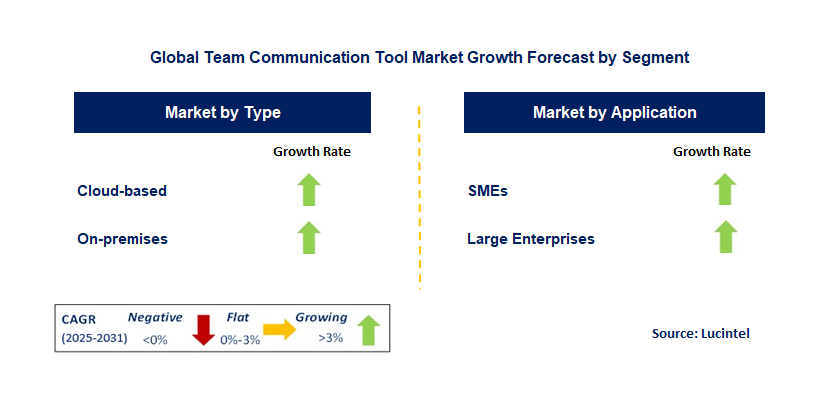
• Cloud-Based
• On-Premises
• SMEs
• Large Enterprises
• North America
• Europe
• Asia Pacific
• The Rest of the World
• United States: In the U.S., major players like Slack, Microsoft Teams, and Zoom continue to dominate the market with new features aimed at improving team collaboration. Recent updates include AI-powered features such as real-time transcription, sentiment analysis, and the automation of repetitive tasks. Additionally, stronger security measures, including enhanced encryption and compliance with industry standards, are being implemented to protect user data. Furthermore, the healthcare and education sectors are seeing tailored solutions to ensure compliance with HIPAA and FERPA regulations.
• China: The Chinese communication tools are evolving rapidly, with platforms like WeChat Work and DingTalk integrating AI-driven features and focusing on blockchain technology for secure file sharing. These tools are becoming increasingly popular for their seamless integration with enterprise applications and their ability to meet local regulatory requirements. As China pushes for digital transformation across industries, these platforms also offer multilingual capabilities, addressing the growing demand for cross-border communication. Additionally, the Chinese government’s push for a digital economy has further accelerated the adoption of team communication tools across various sectors.
• Germany: Germany has seen a strong focus on data privacy, particularly due to the strict requirements of the General Data Protection Regulation (GDPR). Team communication tools in the country are increasingly prioritizing user privacy and secure data management. Platforms like Wire and TeamViewer are offering end-to-end encryption to ensure the confidentiality of communications. In addition, Germany is seeing innovations in quantum encryption and advanced cybersecurity features to protect sensitive information. This commitment to security is contributing to the growing trust and adoption of these tools in the region, particularly in industries like finance and healthcare.
• India: In India, team communication tools like Zoho Cliq and Flock have gained traction due to their affordability and mobile-first approach. With the rise of remote work in the country, these tools are becoming essential for businesses looking to streamline communication and increase productivity. The growing demand for AI-driven chatbots, real-time analytics, and multilingual support has spurred local startups to develop customized solutions that cater to the specific needs of Indian businesses. Furthermore, government initiatives promoting digital literacy and e-governance are helping drive the adoption of these tools in various sectors.
• Japan: The Japanese team communication market is characterized by tools like Chatwork, which emphasize user-friendliness and integration with existing enterprise systems. These tools cater to the unique work culture in Japan, where collaboration and efficiency are highly valued. Recent innovations include the integration of AI for workflow automation and project management. Japan’s strict regulatory environment has also played a role in shaping the development of these tools, with companies ensuring compliance with local data protection laws. As Japan continues to embrace digital transformation, there is an increasing focus on creating solutions that enhance productivity while adhering to privacy and security regulations.


• Nextiva
• Slack
• Google Workspace
• Hubspot
• Asana
• Ringcentral
• Microsoft Teams
• Zoom
• Chanty
• Ryver Q5. Which team communication tool market segment will be the largest in future? Answer: Lucintel forecasts that cloud-based is expected to witness higher growth over the forecast period. Q6. In team communication tool market, which region is expected to be the largest in next 5 years? Answer: APAC is expected to witness the highest growth over the forecast period. Q7. Do we receive customization in this report? Answer: Yes, Lucintel provides 10% customization without any additional cost.


Choose a license that fits your team. Instant PDF delivery.
Prices exclude taxes. Instant delivery. Custom licensing available on request.
Market Report · July 15, 2026
Market Report · June 26, 2026
Market Report · June 24, 2026
Trusted partner for strategic intelligence and business growth


Receive a complimentary market analysis tailored to your industry. Our analysts will identify key growth opportunities and competitive dynamics specific to your business.

Market size, growth rate, and key trend analysis for your specific sector.

Top competitor positioning and market share analysis.

Strategic recommendations backed by data-driven insights.
Get curated market intelligence and competitive moves straight to your inbox.
By subscribing, you agree to receive our monthly insights. Unsubscribe anytime.
Receive a complimentary market analysis tailored to your industry. Our analysts will identify key growth opportunities and competitive dynamics specific to your business.
Market size, growth rate, and key trend analysis for your specific sector.
Top competitor positioning and market share analysis.
Strategic recommendations backed by data-driven insights.
Get curated market intelligence, emerging trends, and competitive moves straight to your inbox each month.
By subscribing, you agree to receive our monthly insights. Unsubscribe anytime.
We'll send your sample report shortly.