
Market Report · July 15, 2026

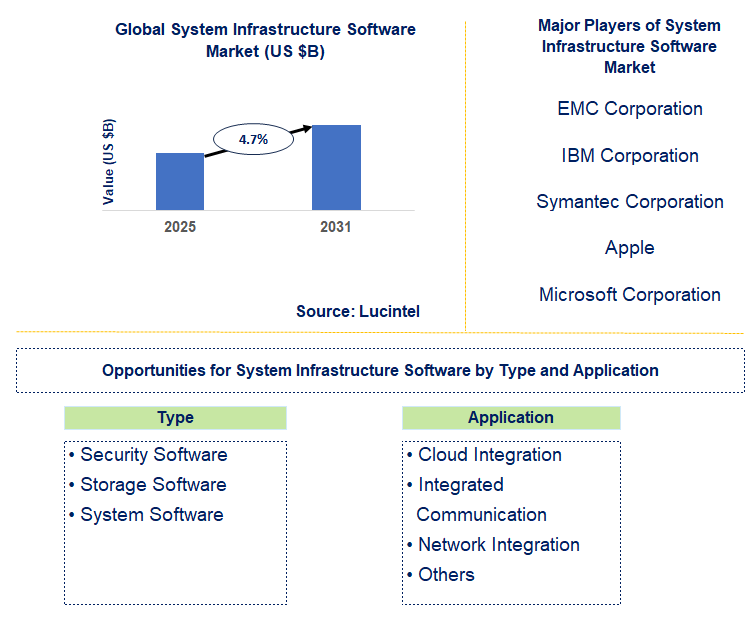
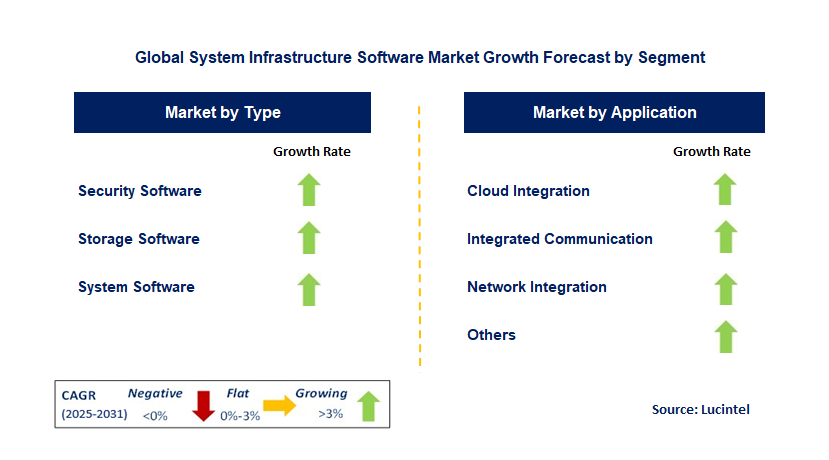
Key data points: The growth forecast = 4.7% annually for the next 7 years. Scroll below to get more insights. This market report covers Trends, opportunity and forecast in system infrastructure software market to 2031 by type (security software, storage software, and system software), application (cloud integration, integrated communication, network integration, and others), and region (North America, Europe, Asia Pacific, and the Rest of the World)
We'll send your sample report shortly.
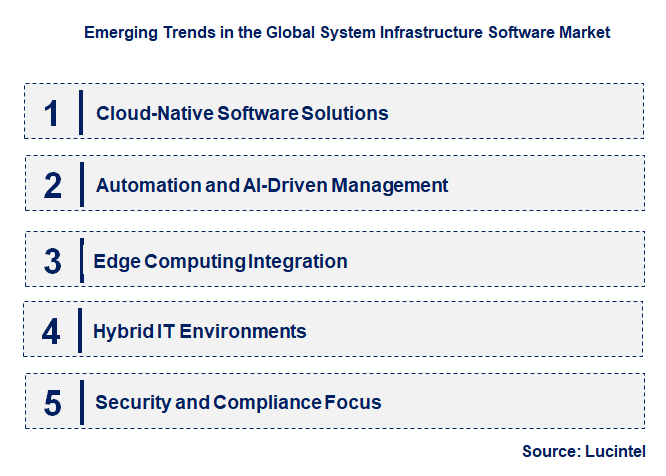
• Cloud-Native Software Solutions: Cloud-based infrastructure software is becoming increasingly popular due to its flexibility and scalability. Cloud-native software allows businesses to manage and optimize their infrastructure remotely and more efficiently. This shift towards the cloud is transforming how enterprises deploy and maintain their systems, leading to cost savings and improved performance.
• Automation and AI-Driven Management: The integration of AI and automation technologies into system infrastructure software is a major trend. AI-driven management tools can predict and address issues before they cause system failures. Automation reduces manual intervention, allowing IT teams to focus on strategic tasks, increasing operational efficiency, and ensuring the continuous availability of systems.
• Edge Computing Integration: As the Internet of Things (IoT) and connected devices proliferate, there is a growing need for edge computing solutions that process data closer to the source. System infrastructure software is increasingly being designed to support edge computing, enabling faster data processing and reducing latency. This trend is essential for industries relying on real-time data.
• Hybrid IT Environments: Many businesses are moving towards hybrid IT environments, combining on-premises infrastructure with cloud-based systems. Software solutions that manage hybrid systems are gaining popularity, as they provide organizations with greater flexibility and better control over their infrastructure. This trend is driven by the need for scalability and cost efficiency.
• Security and Compliance Focus: With growing concerns about cybersecurity, system infrastructure software is being developed with advanced security features to protect sensitive data and ensure compliance with regulatory standards. As data privacy laws become stricter globally, software providers are focusing on integrating security and compliance tools into their infrastructure management solutions. The trends in the system infrastructure software market, including cloud-native solutions, AI-driven management, edge computing, hybrid environments, and enhanced security, are reshaping how businesses optimize and secure their IT infrastructures. As these trends continue to develop, they are setting the stage for a more agile, efficient, and secure IT landscape.
• Cloud-Based Infrastructure Management: Cloud-based system infrastructure software has become a major development, enabling businesses to scale their IT operations efficiently. Cloud solutions offer enhanced flexibility, cost savings, and seamless integration with other cloud services. This development is allowing businesses to deploy and manage their systems without significant investment in on-premises hardware.
• AI-Driven Automation Software: AI and machine learning are being integrated into system infrastructure software to automate processes and improve system performance. AI-powered tools can analyze large volumes of data to identify inefficiencies and predict potential issues, enhancing system reliability. Automation is also reducing human error and minimizing downtime, resulting in more streamlined operations.
• Virtualization and Containerization Tools: Virtualization and containerization technologies are becoming increasingly popular in the system infrastructure software market. These tools enable businesses to run multiple applications on a single physical machine, improving resource utilization and reducing infrastructure costs. Virtualization also enhances scalability, enabling companies to adjust their IT resources as needed quickly.
• Enhanced Security Features: As cybersecurity threats grow, system infrastructure software developers are focusing on incorporating advanced security features into their solutions. These features include real-time threat detection, encryption, and compliance tools. Enhanced security capabilities are essential for safeguarding sensitive data and ensuring the integrity of business operations.
• Integration of Edge Computing: System infrastructure software is increasingly incorporating edge computing to process data closer to the source, reducing latency and improving performance. This integration supports industries that require real-time data processing, such as manufacturing, logistics, and healthcare, enabling faster decision-making and more efficient operations. The key developments in the system infrastructure software market—cloud management, AI-driven automation, virtualization, enhanced security, and edge computing integration—are transforming the way organizations manage and optimize their IT infrastructure. These innovations are setting new standards for flexibility, efficiency, and security in system management.
• Cloud Infrastructure Management: As cloud adoption grows, there is a significant opportunity for software solutions that streamline cloud infrastructure management. Businesses are seeking software that helps them manage hybrid cloud environments, optimize resources, and improve security. This growth opportunity is particularly strong among organizations transitioning to the cloud.
• Automation Software Solutions: The demand for automation tools that improve system efficiency is on the rise. Businesses are increasingly looking for software that automates tasks such as patch management, system monitoring, and troubleshooting. Automation solutions can reduce labor costs and increase system uptime, presenting a major growth opportunity in the market.
• Edge Computing Software: With the expansion of IoT and connected devices, there is a growing need for edge computing software that processes data locally and reduces latency. Companies providing edge computing solutions are capitalizing on this trend, offering software tools that help businesses deploy and manage edge infrastructure.
• Security and Compliance Solutions: As data privacy concerns grow, there is a strong opportunity for software solutions that provide enhanced security and ensure compliance with regulations such as GDPR and CCPA. Security software that protects against cyber threats and data breaches is in high demand, particularly in regulated industries.
• AI and Analytics-Driven Infrastructure Software: AI and data analytics are transforming how businesses manage and optimize their IT systems. AI-driven infrastructure software helps organizations predict performance issues, optimize resource allocation, and improve decision-making. This market opportunity is especially relevant for businesses looking to leverage data-driven insights to enhance operations. The growth opportunities in the system infrastructure software market—cloud management, automation, edge computing, security, and AI-driven solutions—are reshaping how businesses optimize and secure their IT environments. These opportunities provide software developers with significant potential to expand their market presence and meet the evolving needs of their customers.
• EMC Corporation
• IBM Corporation
• Symantec Corporation
• Apple
• Microsoft Corporation
• Security Software
• Storage Software
• System Software
• Cloud Integration
• Integrated Communication
• Network Integration
• Others
• North America
• Europe
• Asia Pacific
• The Rest of the World
• United States: The U.S. is leading the way in adopting advanced system infrastructure software solutions, particularly in cloud computing and virtualization. Companies are increasingly using software for automation, system management, and monitoring. This shift towards cloud-native technologies enables organizations to scale rapidly and improve system efficiency. AI and machine learning are also being integrated into infrastructure management to optimize performance.
• China: China has been ramping up its efforts to strengthen its system infrastructure software capabilities. The focus has been on developing cloud platforms and software for managing large-scale data centers and supporting the growing digital economy. Government policies have also encouraged domestic companies to develop advanced system management tools, reducing reliance on foreign software solutions and boosting local innovation.
• Germany: Germany has seen a rise in system infrastructure software innovations focused on enterprise resource planning (ERP) and integrated system management tools. The adoption of cloud computing and automation software is accelerating across industries, making operations more efficient. Germany's strong manufacturing sector also contributes to the demand for specialized software that enhances productivity and optimizes production systems.
• India: India has witnessed significant growth in the system infrastructure software market due to the rapid digitization of its economy. Enterprises are increasingly adopting software solutions to manage cloud-based operations, automate processes, and enhance data security. With the rise of startups and SMEs, there is a growing demand for affordable, scalable system infrastructure software tailored to the local market.
• Japan: Japan is focusing on building next-generation system infrastructure through software solutions that promote automation, efficiency, and integration. The country is heavily investing in cloud computing and AI-based software tools to streamline infrastructure management. As industries, including manufacturing and finance, shift towards digitalization, the demand for advanced system infrastructure software continues to rise.


• EMC Corporation
• IBM Corporation
• Symantec Corporation
• Apple
• Microsoft Corporation Q5. Which system infrastructure software market segment will be the largest in future? Answer: Lucintel forecasts that system software is expected to witness the highest growth over the forecast period. Q6. In system infrastructure software market, which region is expected to be the largest in next 5 years? Answer: APAC is expected to witness the highest growth over the forecast period. Q7. Do we receive customization in this report? Answer: Yes, Lucintel provides 10% customization without any additional cost.


Choose a license that fits your team. Instant PDF delivery.
Prices exclude taxes. Instant delivery. Custom licensing available on request.
Market Report · July 15, 2026
Market Report · June 26, 2026
Market Report · June 24, 2026
Trusted partner for strategic intelligence and business growth


Receive a complimentary market analysis tailored to your industry. Our analysts will identify key growth opportunities and competitive dynamics specific to your business.

Market size, growth rate, and key trend analysis for your specific sector.

Top competitor positioning and market share analysis.

Strategic recommendations backed by data-driven insights.
Get curated market intelligence and competitive moves straight to your inbox.
By subscribing, you agree to receive our monthly insights. Unsubscribe anytime.
Receive a complimentary market analysis tailored to your industry. Our analysts will identify key growth opportunities and competitive dynamics specific to your business.
Market size, growth rate, and key trend analysis for your specific sector.
Top competitor positioning and market share analysis.
Strategic recommendations backed by data-driven insights.
Get curated market intelligence, emerging trends, and competitive moves straight to your inbox each month.
By subscribing, you agree to receive our monthly insights. Unsubscribe anytime.
We'll send your sample report shortly.