
Market Report · May 16, 2026

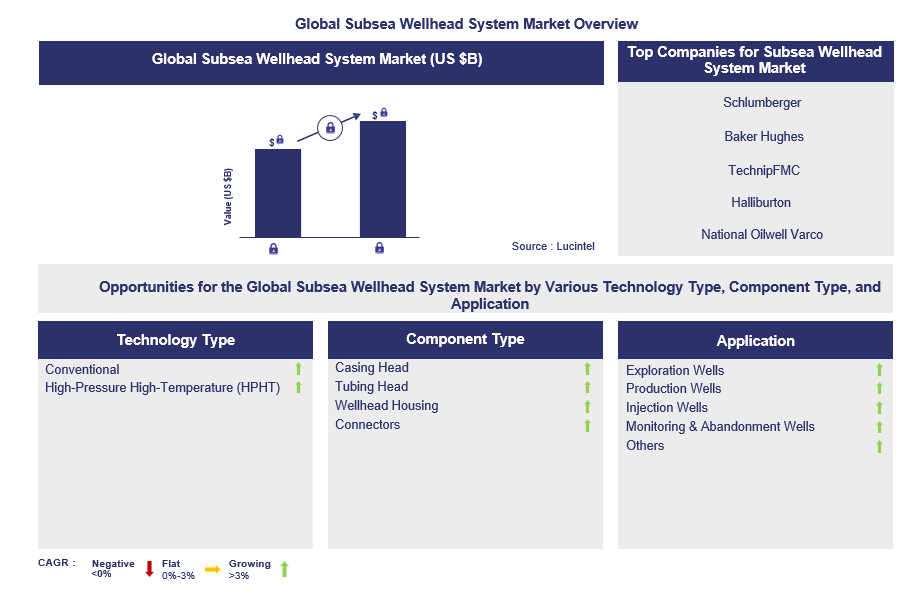
Key data points: The market size in 2031 = $36.8 billion, growth forecast = 6.1% annually for the next 7 years. Scroll below to get more insights. This market report covers trends, opportunities, and forecasts in the global subsea wellhead system market to 2031 by technology type (conventional and high-pressure high-temperature (HPHT)), component type (casing head, tubing head, wellhead housing, and connectors), application (exploration wells, production wells, injection wells, monitoring & abandonment wells, and others), and region (North America, Europe, Asia Pacific, and the Rest of the World)
We'll send your sample report shortly.
• Lucintel forecasts that, within the technology type category, high-pressure high-temperature (HPHT) is expected to witness the higher growth over the forecast period due to increased exploration and production activities in deepwater and ultra-deepwater regions.
• In terms of regions, APAC will remain the largest region over the forecast period due to considerable increase in exploration efforts as a result of government support for encouraging domestic energy production from renewable sources like solar and wind power, particularly for oil resources offshore China and India. Gain valuable insights for your business decisions with our comprehensive 150+ page report.
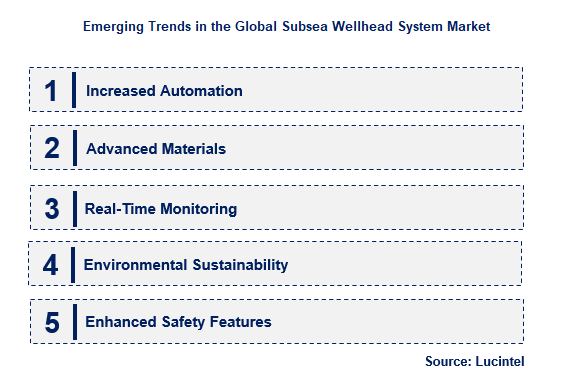
• Increased Automation: Subsea technology expert McVay (2015) notes that there is growing interest in automating subsea wellhead systems due to the operational advantages gained from improved efficiency and safety. Some systems do not require human presence at underwater sites as long as external resources are available. This helps enhance performance and reduce operational costs.
• Advanced Materials: There is a shift toward the invention of advanced materials that can handle very high underwater pressure and temperature conditions. These materials protect and enhance the capability of subsea wells, allowing them to be used for long durations without wearing out.
• Real-Time Monitoring: Operational procedures in subsea wellhead operations are improving through real-time connections and analytics. In addition to basic monitoring, enhanced sensors and systems facilitate condition-based maintenance through diagnostics and predictions of future system performance and potential problems.
• Environmental Sustainability: Steps aimed at mitigating previous activities’ environmental impact remain a focus as more attention is given to the wellhead systems employed underwater. With the application of renewable technological advancements, offshore operations are designed to have the least possible effect on the environment, allowing nations to comfortably rely on energy resources.
• Enhanced Safety Features: The fight against hazards and risks in all areas has not excluded those tasked with designing and building subsea wellheads. Assuring that advanced safety features are incorporated in the design stages of subsea wellhead systems is a priority. There are more fail-safe options, better leak prevention systems, and response mechanisms to abnormal operational conditions. Factors such as the growing level of automation, the use of advanced materials, continuous monitoring, attention to environmental concerns, and safety improvements are having significant impacts on the subsea wellhead system market. These trends are enhancing the effectiveness, dependability, and safety of the systems, promising to change the outlook of the sector.
• Improved Real-Time Monitoring: With the integration of better real-time monitoring systems into subsea wellhead operations, managing subsea activities has become more manageable. The use of enhanced data analytics and sensor technologies makes it easier to manage performance and proactively address issues.
• Non-Conventional Technology: More focus is being directed toward the use of technology-friendly subsea wellhead systems. Such features include designs that minimize or eliminate elements to ensure strict regulations are adhered to and that offshore operations remain environmentally sustainable.
• Enhancement of Material Technologies: The development of new materials with better resistance to high-stress underwater conditions helps improve the life of subsea wellhead systems. These materials enable extended maintenance programs and enhance system operational reliability.
• Automation Integration: In recent years, increased automation in subsea wellhead systems has improved operations and eliminated the need for human involvement. By undertaking missions that would typically be performed by people, automated systems increase efficiency and operational reliability in difficult underwater conditions.
• Safety Enhancements: New safety measures have been introduced, such as additional fail-safes and better leak detection systems for subsea wellhead systems. This is important for resolving safety issues and assuring safety under operating pressures by introducing safety barriers. Further developments, such as advanced real-time monitoring systems, eco-friendly strategies for improving efficiency, enhanced material technologies, increased automation, and safety upgrades, are factors that have improved the performance of subsea wellhead systems. Such innovations are enhancing system performance, reliability, and sustainability.
• Deepwater Exploration: Expanding modalities for deepwater exploration presents a viable growth opportunity. The latest advanced subsea wellhead systems developed for the deep sea can facilitate new offshore drilling operations and meet the growing demand for virgin resources.
• Integration with Renewable Energy Sources: High growth is expected from the integration of subsea wellhead systems with offshore wind farm projects. These systems support hatchback activities and contribute to the quest for green energy.
• Improved Maintenance Services: Another key growth area is the provision of advanced maintenance services for subsea wellhead systems. Clients can be attracted by services such as real-time monitoring and resource synchronization aimed at reducing operational risks.
• Technical Innovations: Companies investing in technical innovations like automation and new materials will gain a competitive advantage in the subsea market. High-speed technologies can improve system performance, meeting the needs of end users seeking high-performing solutions.
• Growth in Emerging Markets: There is growth potential by venturing into emerging markets with developing offshore oil and gas industries. Importing and deploying solutions developed and manufactured abroad will capture new market sectors and foster growth. Strategic opportunities for growth in the subsea wellhead system market include deepwater exploration, integration with wind power, providing maintenance services, technological advancements, and entering new emerging markets. These opportunities offer prospects for market growth and technological advancement.
• Technological Advancements: Newer technologies that enhance productivity and improve the efficiency of subsea wellhead systems, such as automation and new materials, are driving market growth. These advancements enhance system performance, efficiency, and safety, making subsea operations more effective.
• Increasing Offshore Exploration: The growing demand for offshore oil and gas resources drives the need for advanced subsea wellhead systems. Increased exploration activities in deepwater and ultra-deepwater areas contribute to market growth.
• Environmental Regulations: With increasing environmental awareness, there are more opportunities to develop subsea wellhead systems that meet international standards. Companies are adopting environmentally friendly strategies using technologies that meet regulatory requirements.
• Enhanced Safety Standards: Efforts to improve safety in subsea activities have led to the increased deployment of new safety features in wellhead systems. These improvements help eliminate risks and ensure reliability in extreme environments.
• Renewable Energy Development: Offshore wind farm projects are facilitating the integration of subsea wellhead systems, opening up new growth opportunities. This supports sustainable energy solutions and broadens market applications. Challenges in the subsea wellhead system market are:
• High Costs: The development and maintenance of subsea wellhead systems involve high costs, including material, technological, and operational expenses. These costs impact profitability and investment potential.
• Complexity of Operations: Subsea wellhead systems and operations pose challenges in installation, maintenance, and troubleshooting. Proper maintenance requires specialized expertise and technology.
• Regulatory Factors: Navigating the complex regulations in different countries creates hurdles. The need to meet varying standards impacts production and market penetration. The subsea wellhead system market is influenced by technological developments, offshore activities, regulatory frameworks, safety improvements, and renewable energy advancements. On the other hand, high costs, operational complexities, and the need to comply with regulations pose challenges to market growth and opportunities.
• Schlumberger
• Baker Hughes
• TechnipFMC
• Halliburton
• National Oilwell Varco
• GE Oil & Gas
• Aker Solutions
• Conventional
• High-Pressure High-Temperature (HPHT)
• Casing Head
• Tubing Head
• Wellhead Housing
• Connectors
• Exploration Wells
• Production Wells
• Injection Wells
• Monitoring & Abandonment Wells
• Others
• North America
• Europe
• Asia Pacific
• The Rest of the World
• US: The subsea wellhead systems market is showing encouraging growth in the U.S., and efforts have been made to raise operational safety and efficiency standards. New technology solutions such as improved real-time monitoring systems and advanced corrosion-resistant materials capable of withstanding extreme underwater conditions are being incorporated. The growth is driven by rising offshore activities, drilling both on and underwater, and modernization in technologies, which are expanding to new geographies such as deep-water basins.
• China: Driven by the expanding offshore oil and gas industry, China is developing more subsea wellhead systems. Recent changes include the introduction of more sophisticated offshore products and systems that are less prone to breakdowns and require fewer repairs. China’s investment strategy focuses primarily on bringing technology home and eliminating the need for foreign equipment from other countries.
• Germany: Germany is targeting improved efficiency and sustainability for its subsea wellhead systems. The latest trend in the development of wellhead systems is the introduction of eco-friendly technologies, accompanied by advanced monitoring technologies to reduce environmental effects. Germany’s emphasis includes improving the longevity of systems and ensuring compliance with newer policies on stringent environmental standards, with a focus on green energy usage and efficient resource utilization.
• India: India has aggressively participated in the subsea wellhead market, especially in increasing its offshore exploration capabilities. Trends include advancements in technologies aimed at determining system performance and efficiency, even in extremely adverse conditions. The nation is focusing on local production and joint ventures to reduce costs and gain knowledge of the technology.
• Japan: Japan is quite active in subsea wellhead systems design and construction, placing geotechnical engineering and operational safety at the forefront of priorities. Important milestones in development include improving control systems and using enhanced materials to enable operations in deep-sea environments. These developments place Japan at the cutting edge of the subsea industry, as the country addresses the needs posed by deep-sea minerals exploration and associated technologies.


• Schlumberger
• Baker Hughes
• TechnipFMC
• Halliburton
• National Oilwell Varco
• GE Oil & Gas
• Aker Solutions Q6. Which subsea wellhead system market segment will be the largest in future? Answer: Lucintel forecasts that high-pressure high-temperature (HPHT) is expected to witness the higher growth over the forecast period due to increased exploration and production activities in deepwater and ultra-deepwater regions. Q7. In subsea wellhead system market, which region is expected to be the largest in next 5 years? Answer: APAC will remain the largest region over the forecast period due to considerable increase in exploration efforts as a result of government support for encouraging domestic energy production from renewable sources like solar and wind power, particularly for oil resources offshore China and India. Q.8 Do we receive customization in this report? Answer: Yes, Lucintel provides 10% customization without any additional cost.


Choose a license that fits your team. Instant PDF delivery.
Prices exclude taxes. Instant delivery. Custom licensing available on request.
Market Report · May 16, 2026
Market Report · May 16, 2026
Market Report · May 16, 2026
Trusted partner for strategic intelligence and business growth


Receive a complimentary market analysis tailored to your industry. Our analysts will identify key growth opportunities and competitive dynamics specific to your business.

Market size, growth rate, and key trend analysis for your specific sector.

Top competitor positioning and market share analysis.

Strategic recommendations backed by data-driven insights.
Get curated market intelligence and competitive moves straight to your inbox.
By subscribing, you agree to receive our monthly insights. Unsubscribe anytime.
Receive a complimentary market analysis tailored to your industry. Our analysts will identify key growth opportunities and competitive dynamics specific to your business.
Market size, growth rate, and key trend analysis for your specific sector.
Top competitor positioning and market share analysis.
Strategic recommendations backed by data-driven insights.
Get curated market intelligence, emerging trends, and competitive moves straight to your inbox each month.
By subscribing, you agree to receive our monthly insights. Unsubscribe anytime.
We'll send your sample report shortly.