
Market Report · July 20, 2026

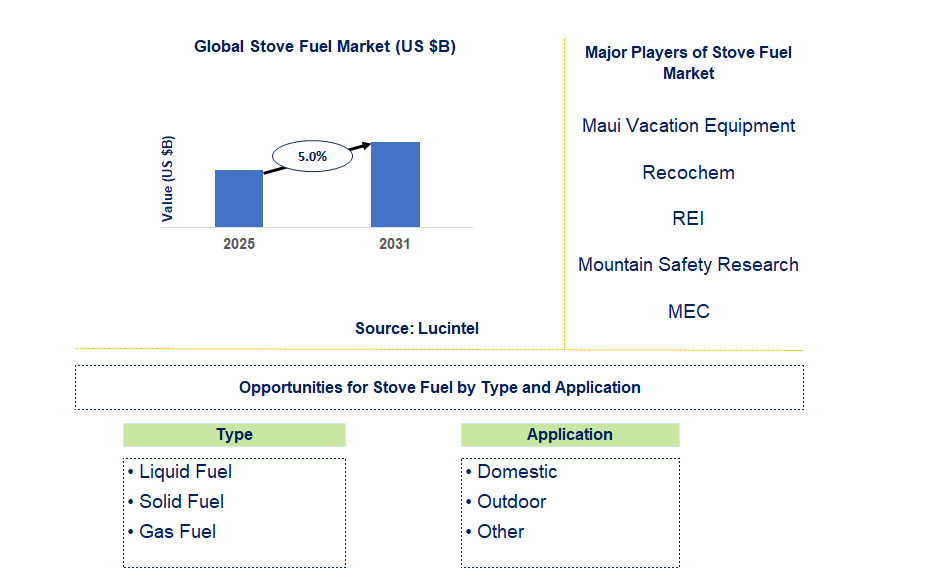
Key data points: The growth forecast = 5.0% annually for the next 7 years. Scroll below to get more insights. This market report covers trends, opportunities and forecasts in stove fuel market to 2031 by type (liquid fuel, solid fuel, and gas fuel), application (domestic, outdoor, and other), and region (North America, Europe, Asia Pacific, and the Rest of the World)
We'll send your sample report shortly.
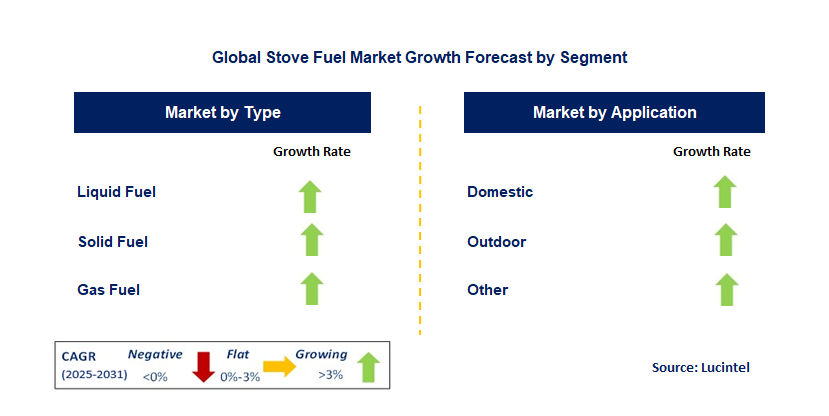
• Lucintel forecasts that, within the type category, gas fuel is expected to witness the highest growth over the forecast period.
• Within the application category, domestic is expected to witness higher growth.
• In terms of region, APAC is expected to witness the highest growth over the forecast period due to a large population and rapid urbanization in the region. Gain valuable insights for your business decisions with our comprehensive 150+ page report. Sample figures with some insights are shown below.
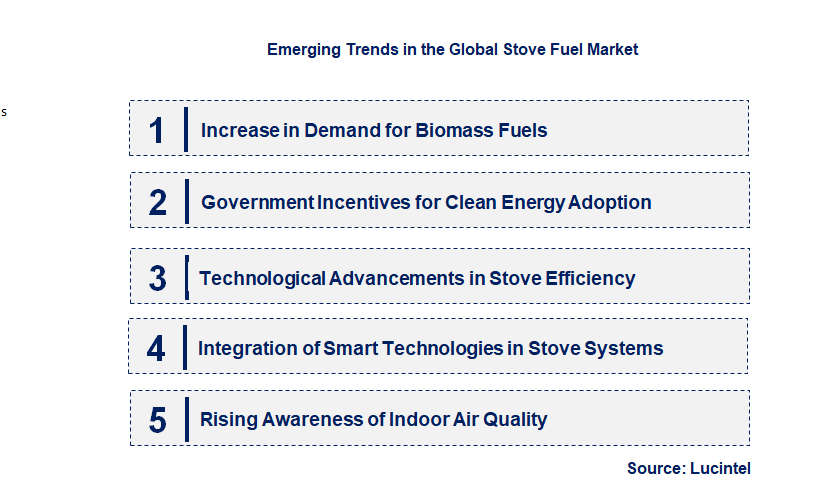
• Increase in Demand for Biomass Fuels: Biomass fuels, particularly wood pellets, are becoming a popular choice due to their renewable nature and lower emissions compared to traditional fossil fuels. The growth of biomass technology, including pellet stoves and biomass boilers, is facilitating the widespread adoption of these fuels. With a global push towards reducing carbon footprints, biomass fuels are gaining traction in both residential and industrial applications. These fuels offer a sustainable alternative to fossil fuels, helping meet energy needs while supporting environmental goals.
• Government Incentives for Clean Energy Adoption: Governments worldwide are implementing policies and providing incentives to encourage the use of clean energy sources in the stove fuel market. Tax credits, subsidies, and rebates for biofuel stove installations are becoming more common. These incentives make cleaner fuels more affordable, promoting their adoption across residential, commercial, and industrial sectors. This trend is particularly strong in regions like Europe and North America, where regulatory frameworks support sustainability and the transition to renewable energy.
• Technological Advancements in Stove Efficiency: Innovations in stove technology are driving the development of more efficient, cleaner-burning stoves. Advanced combustion systems, such as pellet stoves and wood-burning boilers, are helping reduce fuel consumption and emissions. Improved stove designs enable more precise temperature control and heat distribution, enhancing overall efficiency. These advancements are encouraging consumers to opt for high-efficiency stoves, which reduce energy costs and minimize the environmental impact of heating systems.
• Integration of Smart Technologies in Stove Systems: Smart stoves equipped with sensors, Wi-Fi connectivity, and automated controls are gaining popularity. These stoves allow users to monitor and adjust stove settings remotely, improving convenience and optimizing fuel usage. Smart stove systems can also provide real-time performance data, helping users make more informed decisions about fuel consumption and efficiency. This trend is particularly appealing to tech-savvy consumers and households seeking enhanced comfort and energy management in their heating systems.
• Rising Awareness of Indoor Air Quality: The growing awareness of indoor air pollution and its impact on health is fueling the demand for cleaner stove fuels. Traditional fuels like coal and firewood contribute to high levels of particulate matter, which can lead to respiratory issues. As concerns about health and well-being increase, consumers are turning to cleaner alternatives like LPG, natural gas, and biomass fuels that produce fewer harmful emissions. This trend is shaping the market, particularly in countries with high rates of indoor air pollution. These trends are reshaping the stove fuel market, driving demand for cleaner, more efficient fuels and technologies that support sustainability, health, and energy efficiency. As environmental concerns grow, these trends are likely to influence future developments in the sector.
• Advancements in Biomass Pellet Technology: The development of advanced biomass pellet technology has improved the quality and efficiency of wood pellets used in stoves and boilers. Innovations in pellet production, including the use of different feedstocks and advanced pelletizing techniques, have enhanced fuel performance and lowered production costs. These improvements make biomass pellets a more attractive and cost-effective option for heating systems, driving demand for this type of stove fuel across residential and industrial sectors.
• Government Support for Clean Cooking Fuels: Governments in many countries are launching initiatives to promote the use of clean cooking fuels, such as LPG and natural gas. Programs like India’s Pradhan Mantri Ujjwala Yojana (PMUY) provide subsidies and financial assistance to low-income families for LPG connections. These efforts are accelerating the adoption of cleaner stove fuels, improving air quality, and reducing dependence on traditional biomass fuels like firewood and charcoal, particularly in developing countries.
• Shift Towards Natural Gas and LPG in Residential Heating: The adoption of natural gas and LPG for residential heating is increasing, especially in urban areas, due to the convenience, efficiency, and lower emissions associated with these fuels. The growing availability of natural gas infrastructure and improvements in LPG distribution systems are making these fuels more accessible and affordable. This shift is contributing to the decline in the use of traditional, polluting fuels like coal and firewood in residential heating applications.
• Adoption of Multi-fuel Stoves: Multi-fuel stoves, which allow users to burn various types of fuel, including wood, pellets, and coal, are becoming more popular. These versatile stoves offer increased flexibility and convenience, enabling users to choose the most cost-effective or available fuel. As consumers seek more adaptable and sustainable heating solutions, multi-fuel stoves are gaining traction, particularly in regions with fluctuating fuel prices and supply concerns.
• Growth of Biofuel Research and Development: Ongoing research and development in biofuels, including advanced solid fuels and biogas, are enhancing the range of stove fuel options available in the market. Innovations in biofuel production technologies are making these fuels more affordable, efficient, and environmentally friendly. As the demand for renewable energy grows, these developments are contributing to the evolution of the stove fuel market, expanding the use of biofuels in residential, commercial, and industrial applications. These developments are driving significant changes in the stove fuel market, fostering innovation and the transition toward more sustainable and efficient heating solutions. As these trends evolve, the market is expected to see further growth and transformation.
• Expansion of Biofuel Adoption in Residential Heating: The growing demand for sustainable energy solutions is creating significant opportunities for the expansion of biofuels in residential heating. Biofuels like wood pellets and biomass briquettes are becoming increasingly popular due to their low environmental impact and renewable nature. Companies can tap into this market by offering efficient and affordable biofuel options, catering to consumers seeking cleaner alternatives to traditional fossil fuels.
• Development of Smart Stove Systems: The integration of smart technologies in stove systems is an emerging opportunity in the stove fuel market. Smart stoves allow users to control and optimize fuel consumption through smartphone apps and remote controls. As consumers become more interested in energy management and home automation, there is significant potential for growth in the smart stove segment. Manufacturers can capitalize on this trend by developing and marketing intelligent stove solutions that improve efficiency and enhance user convenience.
• Growth in Commercial and Industrial Biomass Heating: Biomass heating systems, which utilize wood chips, pellets, and other organic materials, are gaining popularity in commercial and industrial applications due to their cost-effectiveness and low environmental impact. The growing emphasis on corporate sustainability goals and reducing carbon footprints is encouraging businesses to adopt biomass heating solutions. Companies in the stove fuel market can target this growing sector by providing high-efficiency biomass stoves and heating systems designed for commercial and industrial use.
• Increase in Adoption of LPG for Rural Households: In many developing countries, the shift toward cleaner cooking fuels like LPG is creating substantial growth opportunities. Governments and organizations are promoting LPG as a healthier alternative to traditional biomass fuels, improving air quality and reducing health risks. The adoption of LPG in rural households is expected to grow significantly, and stove fuel manufacturers can seize this opportunity by expanding their distribution networks and providing affordable, efficient LPG stoves to underserved regions.
• Investment in Advanced Stove Fuel Production Technologies: Investment in research and development of advanced stove fuel production technologies, such as biofuels and solid fuels, presents a significant growth opportunity in the market. Innovations that enhance fuel efficiency, reduce emissions, and lower production costs can drive the growth of cleaner stove fuel options. Manufacturers that invest in these technologies and offer superior fuel products will be well-positioned to capture a larger share of the growing global market for sustainable stove fuels. These strategic growth opportunities are driving the evolution of the stove fuel market, helping companies adapt to changing consumer preferences and global sustainability trends.
• Maui Vacation Equipment Rentals
• Recochem
• REI
• Mountain Safety Research
• MEC
• Liquid Fuel
• Solid Fuel
• Gas Fuel
• Domestic
• Outdoor
• Other
• North America
• Europe
• Asia Pacific
• The Rest of the World
• United States: In the United States, the stove fuel market is undergoing a shift toward cleaner and more efficient fuels, particularly in rural and remote areas. Wood pellets, compressed sawdust, and other biomass fuels are becoming increasingly popular as more sustainable alternatives to traditional heating methods. Government incentives for renewable energy and green technologies have spurred innovation in stove fuel production. Additionally, with a growing emphasis on reducing carbon footprints, the U.S. market is seeing more adoption of high-efficiency pellet stoves and biofuels. These developments contribute to a shift away from fossil fuels, supporting the nation’s environmental goals.
• China: China is a major player in the stove fuel market, with an increasing focus on using renewable and low-emission fuels due to concerns over air pollution. The demand for clean and affordable cooking fuels, such as liquefied petroleum gas (LPG) and biomass pellets, has surged in rural and urban areas. The Chinese government has implemented policies to encourage the use of cleaner stove fuels to reduce health risks and environmental pollution. Furthermore, China’s growing commitment to reducing carbon emissions is driving the innovation of eco-friendly stove fuel options, including advanced solid fuels and gasification technologies.
• Germany: Germany is embracing renewable energy sources and prioritizing the use of sustainable stove fuels, such as wood pellets and biogas, to meet the country’s energy transition goals. The demand for cleaner stove fuels has increased due to high environmental awareness and strong government support for sustainable practices. In line with the European Union’s renewable energy directives, Germany has incentivized the installation of pellet stoves and wood-burning appliances. The market is also seeing innovations in multi-fuel stoves and advanced biomass heating systems, which are improving efficiency and reducing emissions, contributing to Germany’s commitment to carbon neutrality.
• India: In India, the stove fuel market is largely shaped by the demand for affordable and efficient fuels in rural households. The government is promoting the use of liquefied petroleum gas (LPG) as a cleaner cooking fuel, reducing the reliance on traditional biomass fuels like firewood and coal. With a growing population and urbanization, there is increasing pressure to find clean alternatives that reduce indoor air pollution and improve health. The Indian government has launched initiatives such as the Pradhan Mantri Ujjwala Yojana (PMUY), which aims to provide LPG connections to low-income families, driving the market for cleaner fuels.
• Japan: Japan is transitioning towards more sustainable and energy-efficient stove fuels, with an emphasis on biofuels and natural gas. Given its limited natural resources, Japan is exploring alternative fuel sources, including biomass, to diversify its energy mix. The use of high-efficiency wood pellets, wood chips, and other biomass fuels in residential heating systems is gaining traction, particularly in rural areas. Additionally, Japan’s government is supporting the development of clean energy technologies to reduce dependence on imported fossil fuels and to meet its carbon-neutral targets. These efforts are reshaping Japan’s stove fuel market by emphasizing energy efficiency and sustainability.


• Maui Vacation Equipment Rentals
• Recochem
• REI
• Mountain Safety Research
• MEC Q5. Which stove fuel market segment will be the largest in future? Answer: Lucintel forecasts that, within the type category, gas fuel is expected to witness the highest growth over the forecast period. Q6. In stove fuel market, which region is expected to be the largest in next 5 years? Answer: In terms of region, APAC is expected to witness the highest growth over the forecast period due to large population and rapid urbanization in the region. Q7. Do we receive customization in this report? Answer: Yes, Lucintel provides 10% customization without any additional cost.


Choose a license that fits your team. Instant PDF delivery.
Prices exclude taxes. Instant delivery. Custom licensing available on request.
Market Report · July 20, 2026
Market Report · July 20, 2026
Market Report · July 20, 2026
Trusted partner for strategic intelligence and business growth


Receive a complimentary market analysis tailored to your industry. Our analysts will identify key growth opportunities and competitive dynamics specific to your business.

Market size, growth rate, and key trend analysis for your specific sector.

Top competitor positioning and market share analysis.

Strategic recommendations backed by data-driven insights.
Get curated market intelligence and competitive moves straight to your inbox.
By subscribing, you agree to receive our monthly insights. Unsubscribe anytime.
Receive a complimentary market analysis tailored to your industry. Our analysts will identify key growth opportunities and competitive dynamics specific to your business.
Market size, growth rate, and key trend analysis for your specific sector.
Top competitor positioning and market share analysis.
Strategic recommendations backed by data-driven insights.
Get curated market intelligence, emerging trends, and competitive moves straight to your inbox each month.
By subscribing, you agree to receive our monthly insights. Unsubscribe anytime.
We'll send your sample report shortly.