
Market Report · July 15, 2026

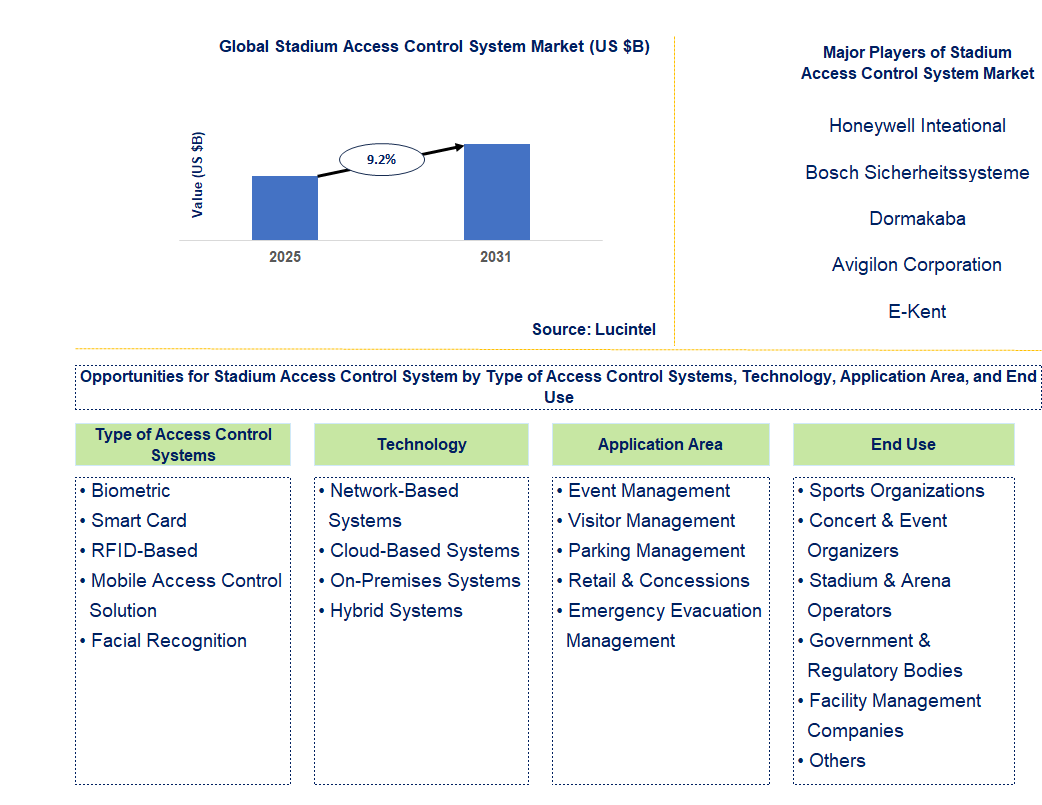
Key data points: The growth forecast = 9.2% annually for the next 7 years. Scroll below to get more insights. This market report covers trends, opportunities and forecasts in stadium access control system market to 2031 by type of access control systems (biometric, smart card, RFID-based, mobile access control solution, and facial recognition), technology (network-based systems, cloud-based systems, on-premises systems, and hybrid systems), application area (event management, visitor management, parking management, retail & concessions, and emergency evacuation management), end use (sports organizations, concert & event organizers, stadium & arena operators, government & regulatory bodies, facility management companies, and others), and region (North America, Europe, Asia Pacific, and the Rest of the World)
We'll send your sample report shortly.
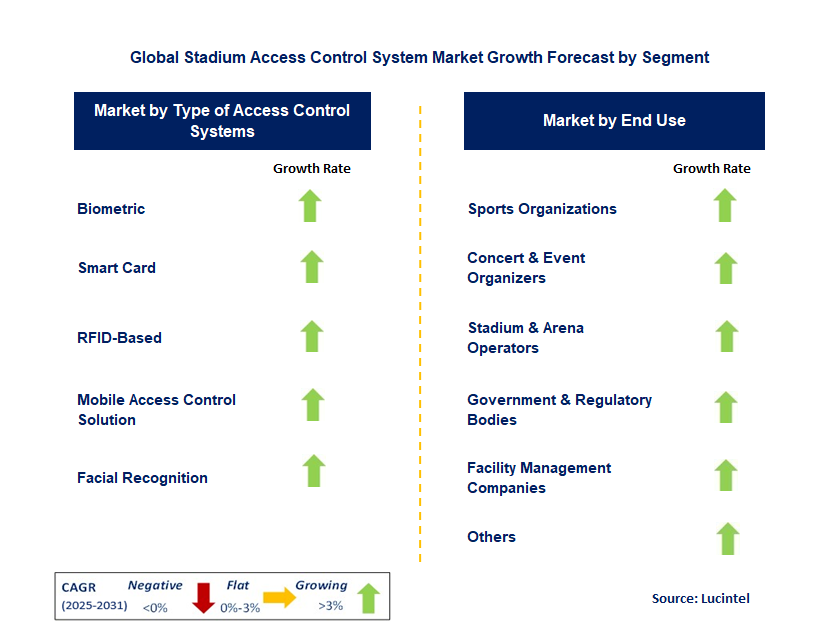
• Lucintel forecasts that, within the type of access control systems category, biometric is expected to witness the highest growth over the forecast period.
• Within the end use category, sports organization is expected to witness the highest growth.
• In terms of region, APAC is expected to witness the highest growth over the forecast period. Gain valuable insights for your business decisions with our comprehensive 150+ page report. Sample figures with some insights are shown below.
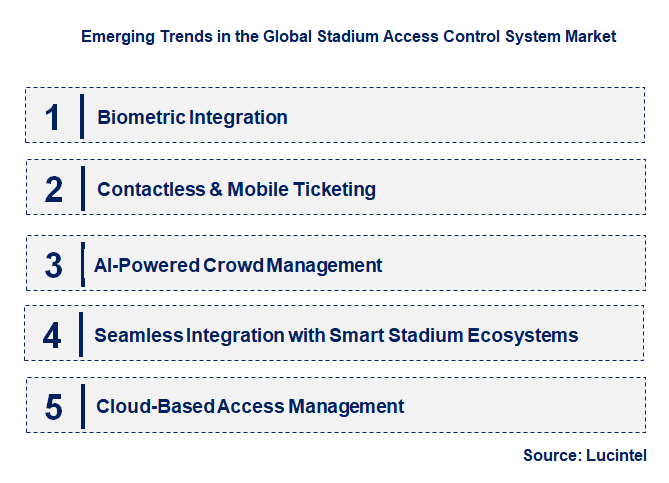
• Biometric Integration: This trend involves using biometric data, such as facial recognition or fingerprint scanning, for seamless and highly secure entry. It eliminates the need for physical tickets, reduces fraud, speeds up entry lines, and enhances security by providing accurate identification of attendees, improving the overall fan experience.
• Contactless & Mobile Ticketing: The shift towards mobile-based and contactless ticketing solutions is a major trend. Fans can use their smartphones or smartwatches for entry, minimizing physical contact and queue times. This also allows for dynamic ticket management, personalized offers, and improved data collection for venues.
• AI-Powered Crowd Management: Artificial intelligence is being integrated to analyze real-time data from access points and surveillance cameras to predict and manage crowd flows. AI helps identify potential bottlenecks, detect suspicious activities, and optimize resource allocation, significantly enhancing public safety and operational efficiency within the stadium.
• Seamless Integration with Smart Stadium Ecosystems: Access control systems are increasingly becoming part of a larger smart stadium ecosystem, integrating with ticketing, concession payments, loyalty programs, and security cameras. This holistic approach provides a unified platform for managing all aspects of the fan journey and stadium operations, improving efficiency and data insights.
• Cloud-Based Access Management: The adoption of cloud-based platforms for managing access control systems offers greater flexibility, scalability, and remote management capabilities. Cloud solutions reduce on-premise hardware requirements, simplify system updates, and provide real-time data analytics, making access control more adaptable and cost-effective for venues. These trends are significantly reshaping the stadium access control system market by prioritizing frictionless entry, bolstering security with advanced identification methods, optimizing crowd flow through intelligent analytics, and fostering a truly integrated and personalized experience for event attendees.
• Biometric Authentication Adoption: A significant development is the growing integration of biometric authentication methods, particularly facial recognition and fingerprint scanning, into stadium access control systems. This enhances security, speeds up entry, and reduces fraudulent access, leading to a more efficient and secure fan experience.
• Rise of Contactless Solutions: The market has seen a rapid rise in contactless entry solutions, including QR code scanning, NFC-enabled mobile ticketing, and digital wallet integration. This minimizes physical contact, reduces queues, and improves hygiene, aligning with post-pandemic safety protocols and enhancing convenience for attendees.
• AI-Powered Security Integration: Recent developments include the incorporation of Artificial Intelligence and machine learning into access control systems. AI is used for real-time crowd analytics, anomaly detection, and predictive security, allowing for proactive threat identification and more efficient management of large gatherings.
• Integrated Security Platforms: There is a strong trend towards developing comprehensive, integrated security platforms that combine access control with video surveillance, alarm systems, and emergency response protocols. This holistic approach provides a unified command center for enhanced security monitoring and rapid incident response.
• Smart Stadium Ecosystem Connectivity: Modern access control systems are increasingly designed for seamless integration within broader smart stadium ecosystems. This allows for data sharing with ticketing platforms, concession systems, and fan engagement apps, providing valuable insights for operational optimization and personalized fan experiences. These developments are profoundly impacting the stadium access control system market by elevating security standards, streamlining entry processes, improving operational efficiency through intelligent automation, and creating a more connected and engaging environment for spectators.
• Major Sporting Events: The continuous hosting of large-scale international sporting events (e.g., Olympics, FIFA World Cup) presents significant opportunities. Developing scalable, high-throughput access control solutions that can handle massive crowds and integrate with multi-layered security protocols offers substantial growth potential.
• Concerts and Entertainment Venues: Beyond sports, the growing live music and entertainment industry requires robust access control. Tailoring systems with advanced ticketing integration, VIP access management, and mobile entry solutions for concert arenas and entertainment complexes can tap into a rapidly expanding market.
• Multi-Purpose Arenas and Convention Centers: Many stadiums are multi-purpose venues hosting diverse events, from sports to conferences. Offering flexible access control systems that can be easily reconfigured for different event types, managing varying access levels, and integrating with diverse event management software creates a versatile growth avenue.
• Retrofit and Upgrade Projects: Older stadiums worldwide require modernizing their access control infrastructure to meet current security standards and fan expectations. Providing comprehensive retrofit solutions, including biometric upgrades, contactless reader installations, and software updates, offers a significant market for system integrators and technology providers.
• Data Analytics and Fan Experience Enhancement: Leveraging access control data for crowd analytics, personalized marketing, and loyalty programs presents a strategic opportunity. Developing platforms that not only secure entry but also provide actionable insights for improving fan experience, optimizing operations, and generating new revenue streams is crucial. These strategic growth opportunities are significantly impacting the stadium access control system market by driving innovation to cater to diverse venue needs, emphasizing integrated solutions for major events, and transforming security infrastructure into a tool for enhanced fan engagement and operational intelligence.
• Honeywell Inteational
• Bosch Sicherheitssysteme
• Dormakaba
• Avigilon Corporation
• E-Kent
• Biometric
• Smart Card
• RFID-Based
• Mobile Access Control Solution
• Facial Recognition
• Network-Based Systems
• Cloud-Based Systems
• On-Premises Systems
• Hybrid Systems
• North America
• Europe
• Asia Pacific
• The Rest of the World
• United States: The U.S. market is heavily investing in advanced security measures, driven by a strong focus on public safety. Recent developments include increased adoption of biometric access control, particularly facial recognition and touchless systems, to enhance security screenings and expedite entry, significantly improving efficiency and visitor flow at major events.
• China: China stadium access control market is rapidly expanding, fueled by massive investments in smart stadium infrastructure and the integration of AI-powered surveillance. Developments focus on leveraging advanced facial recognition and cloud-based access management to handle large crowds efficiently, ensuring robust security and seamless entry for numerous sporting and entertainment events.
• Germany: Germany market for stadium access control is characterized by a strong emphasis on integrating advanced security solutions with building management systems. Recent developments include comprehensive safety upgrades in major arenas incorporating networked video security, sophisticated access control, and efficient visitor management systems, reflecting a high standard for public safety.
• India: India stadium access control gates market is experiencing propelled growth due to escalating demand for enhanced security systems. Recent developments indicate a gradual shift towards biometric-based solutions alongside established card-based readers. Government sector initiatives and increasing awareness of security needs across various industries are driving the market.
• Japan: Japan stadium access control market is focused on highly efficient and contactless solutions, often integrating with existing smart stadium initiatives. Recent developments include projects utilizing Edge AI technology for optimizing communication loads from surveillance cameras and implementing globally recognized contactless self-scanning solutions to process frictionless entry.


• Honeywell Inteational
• Bosch Sicherheitssysteme
• Dormakaba
• Avigilon Corporation
• E-Kent Q5. Which stadium access control system market segment will be the largest in future? Answer: Lucintel forecasts that, within the type of access control systems category, biometric is expected to witness the highest growth over the forecast period. Q6. In stadium access control system market, which region is expected to be the largest in next 5 years? Answer: In terms of region, APAC is expected to witness the highest growth over the forecast period. Q7. Do we receive customization in this report? Answer: Yes, Lucintel provides 10% customization without any additional cost.


Choose a license that fits your team. Instant PDF delivery.
Prices exclude taxes. Instant delivery. Custom licensing available on request.
Market Report · July 15, 2026
Market Report · June 26, 2026
Market Report · June 24, 2026
Trusted partner for strategic intelligence and business growth


Receive a complimentary market analysis tailored to your industry. Our analysts will identify key growth opportunities and competitive dynamics specific to your business.

Market size, growth rate, and key trend analysis for your specific sector.

Top competitor positioning and market share analysis.

Strategic recommendations backed by data-driven insights.
Get curated market intelligence and competitive moves straight to your inbox.
By subscribing, you agree to receive our monthly insights. Unsubscribe anytime.
Receive a complimentary market analysis tailored to your industry. Our analysts will identify key growth opportunities and competitive dynamics specific to your business.
Market size, growth rate, and key trend analysis for your specific sector.
Top competitor positioning and market share analysis.
Strategic recommendations backed by data-driven insights.
Get curated market intelligence, emerging trends, and competitive moves straight to your inbox each month.
By subscribing, you agree to receive our monthly insights. Unsubscribe anytime.
We'll send your sample report shortly.