
Market Report · May 18, 2026

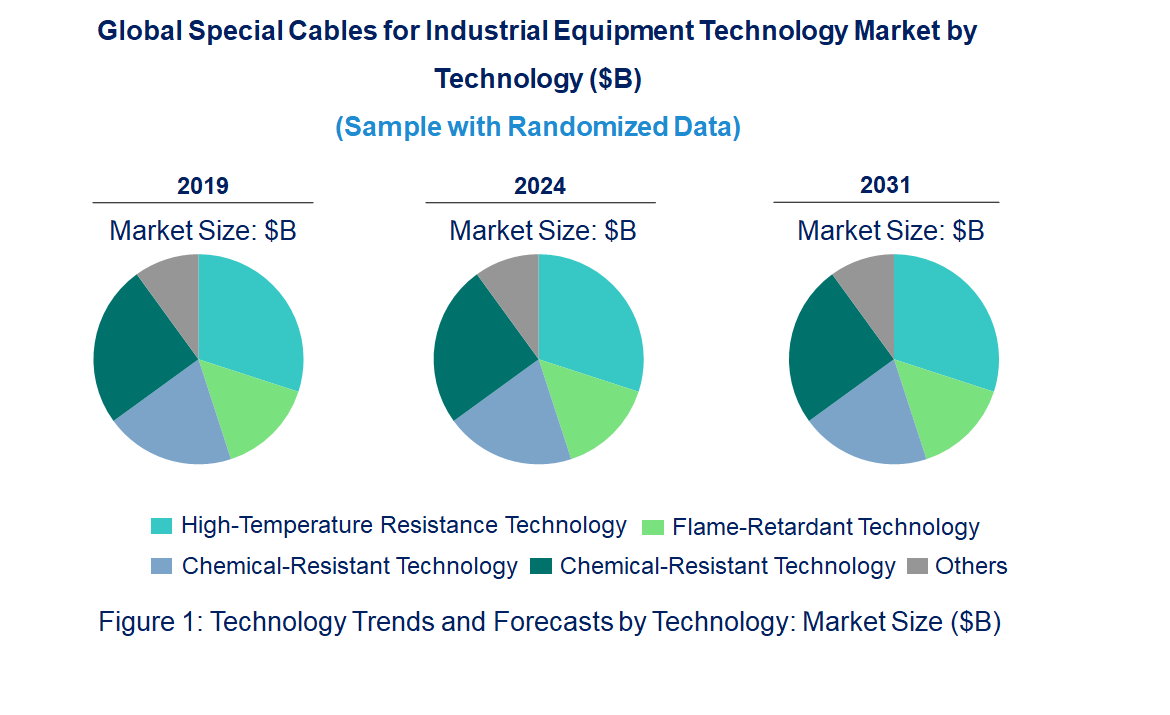
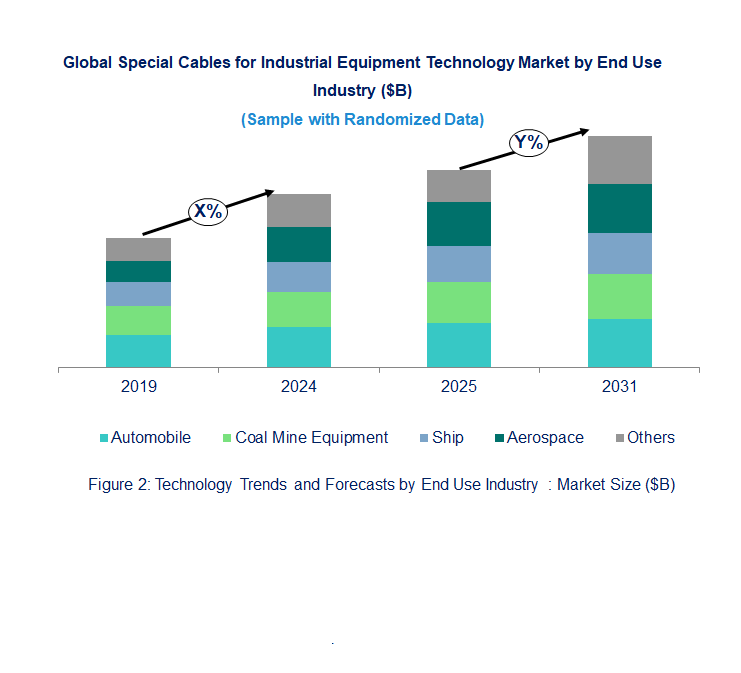
This market report covers trends, opportunities, and forecasts in the global special cables for industrial equipment market to 2031 by technology (high-temperature resistance technology, flame-retardant technology, chemical-resistant technology, flexible conductor technology, and others), end use industry (automobile, coal mine equipment, ship, aerospace, and others), and region (North America, Europe, Asia Pacific, and the Rest of the World)
We'll send your sample report shortly.
• Halogen-Free Flame Retardancy: A shift toward safer, environmentally friendly, halogen-free materials is addressing growing regulatory requirements for fire safety and reducing toxic emissions.
• High-Performance Materials: Adoption of high-temperature and chemical-resistant materials ensures reliability in extreme operational environments.
• Integration of Smart Features: Intelligent cables equipped with sensors for real-time data monitoring are gaining traction in industrial equipment.
• Customization for Industry-Specific Needs: Tailored designs, such as ultra-flexible cables for robotic applications and specialized coatings for coal mining, are addressing unique demands.
• Sustainability Focus: Increased emphasis on recyclable materials and energy-efficient manufacturing processes is shaping product development strategies. The emerging trends in the special cables for industrial equipment market are revolutionizing the industry, driving advancements in safety, durability, and environmental sustainability. The integration of halogen-free flame-retardant materials, high-performance coatings, smart cable technologies, and tailored solutions for specific industries highlights the market’s shift toward innovation and customization. These trends are not only meeting the increasing regulatory demands but also enhancing operational efficiency and reliability across applications.
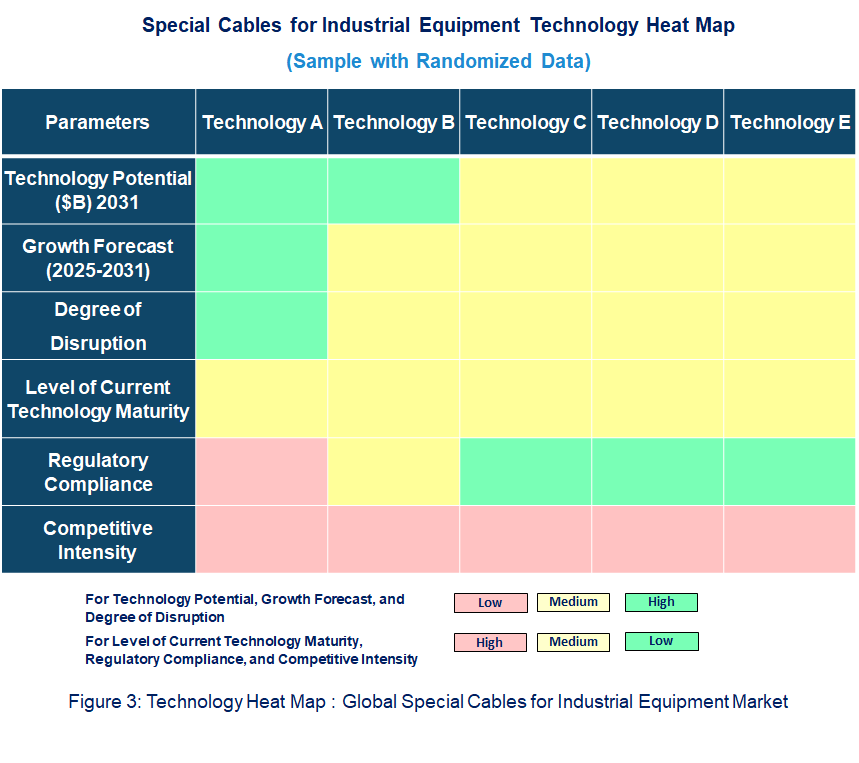
• Technology Potential: The technology potential in the special cables for industrial equipment market is significant, driven by advancements in material science, design, and smart integration. High-temperature resistance and flame-retardant technologies enhance operational safety, particularly in high-risk environments like coal mines and aerospace. Flexible conductor technology improves adaptability, enabling seamless usage in dynamic machinery, while chemical-resistant innovations address durability challenges in harsh industrial conditions.
• Degree of Disruption: The degree of disruption varies by technology. High-temperature and flame-retardant cables are moderately disruptive, as they replace legacy systems with safer, more efficient alternatives. In contrast, smart cables equipped with sensors for real-time monitoring have a high disruption potential, enabling predictive maintenance and reducing downtime, which transforms industrial processes.
• Technology Maturity: The level of current technology maturity is uneven. Flame-retardant and high-temperature cables are well-established, while innovations like smart cables and ultra-flexible conductors are in the growth phase, gradually gaining industry adoption.
• Regulatory compliance: Regulatory compliance is a critical driver in this market. Stringent safety standards and environmental regulations encourage the adoption of halogen-free, non-toxic materials and fire-resistant solutions. Compliance with international standards like ISO and IEC ensures global marketability, further accelerating technological advancements. These factors collectively position this market for sustained innovation and growth.
• Wilhelmsen: Wilhelmsen has introduced eco-friendly cables tailored for marine and industrial applications, focusing on reduced environmental impact and compliance with green shipping standards. This innovation supports sustainability while enhancing the company’s market position in sectors prioritizing eco-conscious solutions.
• Prysmian Group: Prysmian has launched a new range of highly durable cables optimized for industrial automation and robotics, offering improved flexibility and resistance to harsh conditions. These advancements cater to the growing demand for high-performance cables in automated manufacturing environments, positioning Prysmian as a leader in industrial cable innovation.
• Nexans: Nexans recently expanded its manufacturing capabilities with a new production line dedicated to advanced industrial cables. This development addresses the rising demand for specialized cables in critical sectors such as energy and infrastructure, reinforcing Nexans’ global market presence.
• NKT: NKT has unveiled high-voltage cables specifically designed for heavy industrial equipment, enabling enhanced power transmission efficiency. This innovation supports the electrification of heavy industries, aligning with global efforts to reduce carbon emissions and improve operational efficiency.
• Lapp Group: The Lapp Group introduced a modular cable design system for industrial equipment, enabling customized solutions for diverse applications. This approach enhances operational flexibility for customers while driving the adoption of Lapp’s advanced cable technologies in various industries.
• Gebauer&Griller: Gebauer&Griller has focused on developing lightweight, high-strength cables for industrial machinery, aiming to reduce equipment weight and energy consumption. These innovations align with market trends emphasizing energy efficiency and cost-effectiveness in industrial operations.
• Growing Industrial Automation: The rapid adoption of automation technologies across industries is driving demand for specialized cables that support robotic systems and advanced machinery. This trend is enhancing operational efficiency and reducing downtime.
• Sustainability Trends: With increasing emphasis on environmental sustainability, the demand for eco-friendly cables designed with recyclable materials and energy-efficient properties is on the rise, supporting global green initiatives.
• Technological Advancements: Innovations in cable materials and designs, such as lightweight, high-durability, and flexible cables, are expanding application possibilities in demanding industrial environments, boosting market growth.
• Expansion in Renewable Energy: The growing investment in renewable energy projects is driving demand for special cables that support wind, solar, and hydroelectric installations, enhancing energy transmission reliability.
• Infrastructure Modernization: Upgrades in industrial infrastructure across emerging and developed markets are increasing the need for advanced cabling solutions, driving market expansion. Challenges in the special cables for industrial equipment market are:
• High Costs of Specialized Cables: The development and manufacturing of special cables involve higher costs, which can limit adoption among small and medium-sized enterprises.
• Regulatory Compliance: Adhering to diverse regulatory standards across regions creates complexities for manufacturers, impacting product rollout and market penetration.
• Supply Chain Disruptions: Raw material shortages and geopolitical factors can disrupt the supply chain, affecting production timelines and market stability. The special cables for industrial equipment market is experiencing robust growth driven by automation, sustainability efforts, and technological advancements. Despite challenges like high costs and regulatory complexities, opportunities such as renewable energy integration and infrastructure modernization are significantly shaping the market’s future. These trends position the market for sustained expansion and innovation.
• Wilhelmsen, Prysmian Group
• Nexans
• Nkt
• Lapp Group
• Gebauer&Griller
• Technology Readiness: Technology readiness across special cable types reflects diverse levels of adoption. High-temperature resistance technology is mature, with proven applications in high-heat industrial environments under strict compliance with safety norms. Flame-retardant technology is highly advanced, with strong regulatory oversight, particularly in construction and heavy industries. Chemical-resistant technology is ready for deployment in harsh environments, meeting stringent chemical exposure standards. Flexible conductor technology is highly competitive and ready for integration in automation, robotics, and portable equipment under moderate regulatory scrutiny. Other technologies, including hybrid and smart cables, are in early development but hold potential for growth as industrial equipment becomes more connected and multifunctional, requiring regulatory frameworks to evolve accordingly.
• Disruption Potential: The disruption potential of technologies in the special cables for industrial equipment market is substantial. High-temperature resistance technology leads with applications in extreme environments like the steel and glass industries, ensuring durability and reliability. Flame-retardant technology is critical for safety in fire-prone industries, driving its high adoption potential. Chemical-resistant technology addresses needs in chemical processing and oil and gas industries, offering longevity in corrosive conditions. Flexible conductor technology caters to automation and robotics, where mobility and flexibility are essential. Other advancements, such as hybrid and multi-functional cables, are emerging to combine these features, enhancing their versatility and disruption potential across industrial applications.
• Competitive Intensity and Regulatory Compliance: Competitive intensity and regulatory compliance in the special cables market vary by technology. High-temperature resistance technology faces high competition as multiple players innovate for better thermal performance under stringent safety norms. Flame-retardant technology has intense competition due to its critical role in industrial safety and strict fire safety standards. Chemical-resistant technology has moderate competition, primarily driven by niche applications and the need to comply with environmental regulations on chemical exposure. Flexible conductor technology is highly competitive, driven by demand from automation and robotics, with evolving compliance for performance standards. Other technologies face moderate competition as they are still emerging, and regulatory frameworks are being developed to standardize their use.
• High-Temperature Resistance Technology
• Flame-Retardant Technology
• Chemical-Resistant Technology
• Flexible Conductor Technology
• Others
• Automobile
• Coal Mine Equipment
• Ship
• Aerospace
• Others
• North America
• Europe
• Asia Pacific
• The Rest of the World
• Latest Developments and Innovations in the Special Cables For Industrial Equipment Technologies
• Companies / Ecosystems
• Strategic Opportunities by Technology Type


Choose a license that fits your team. Instant PDF delivery.
Prices exclude taxes. Instant delivery. Custom licensing available on request.
Market Report · May 18, 2026
Market Report · May 18, 2026
Market Report · May 18, 2026
Trusted partner for strategic intelligence and business growth


Receive a complimentary market analysis tailored to your industry. Our analysts will identify key growth opportunities and competitive dynamics specific to your business.

Market size, growth rate, and key trend analysis for your specific sector.

Top competitor positioning and market share analysis.

Strategic recommendations backed by data-driven insights.
Get curated market intelligence and competitive moves straight to your inbox.
By subscribing, you agree to receive our monthly insights. Unsubscribe anytime.
Receive a complimentary market analysis tailored to your industry. Our analysts will identify key growth opportunities and competitive dynamics specific to your business.
Market size, growth rate, and key trend analysis for your specific sector.
Top competitor positioning and market share analysis.
Strategic recommendations backed by data-driven insights.
Get curated market intelligence, emerging trends, and competitive moves straight to your inbox each month.
By subscribing, you agree to receive our monthly insights. Unsubscribe anytime.
We'll send your sample report shortly.