
Market Report · July 15, 2026

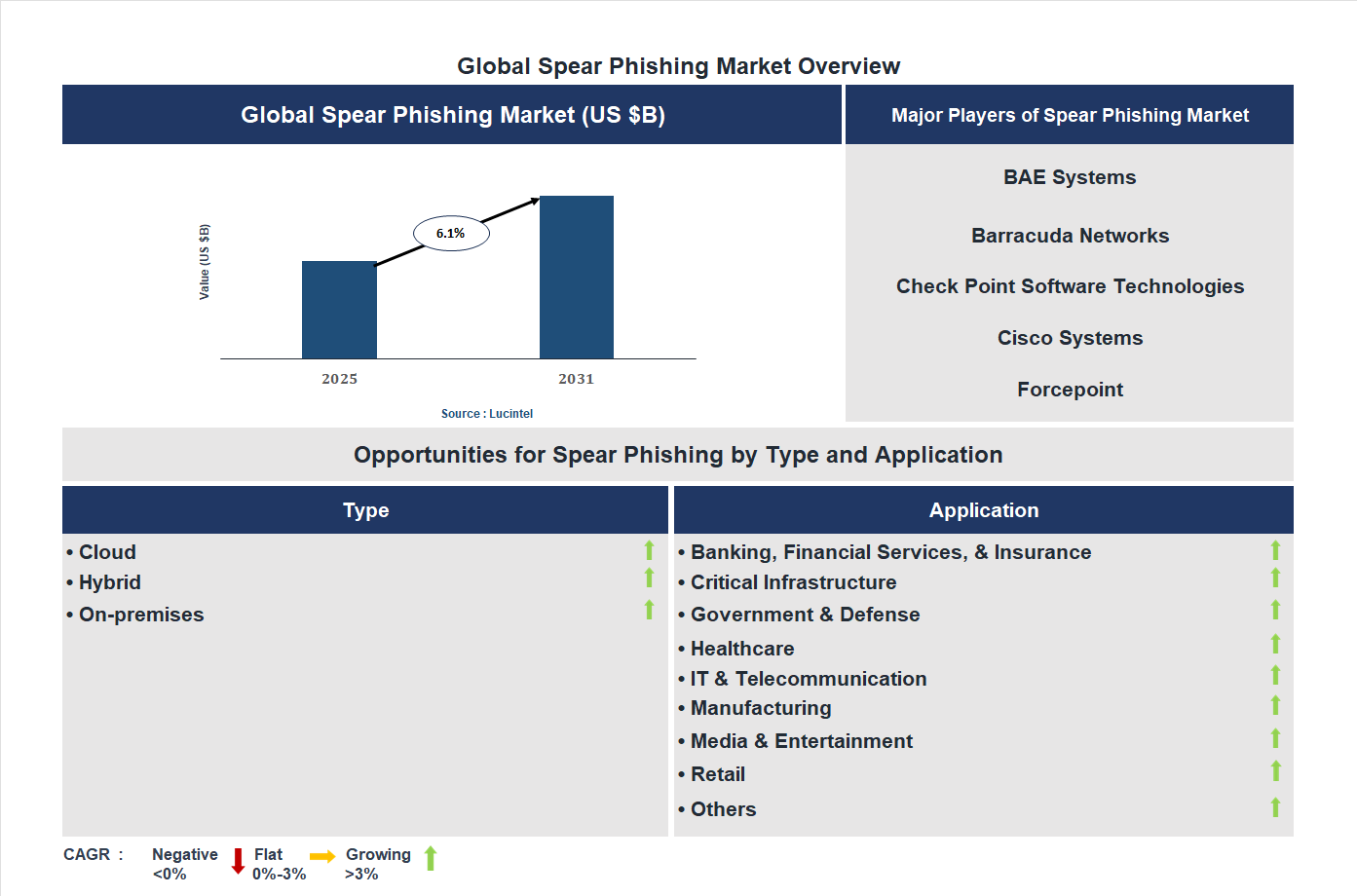
Key data points: The growth forecast = 6.1% annually for the next 7 years. Scroll below to get more insights. This market report covers trends, opportunities and forecasts in spear phishing market to 2031 by type (cloud, hybrid, and on-premises), application (banking, financial services, & insurance, critical infrastructure, government & defense, healthcare, IT & telecommunication, manufacturing, media & entertainment, retail, and others), and region (North America, Europe, Asia Pacific, and the Rest of the World)
We'll send your sample report shortly.
• Lucintel forecasts that, within the type category, cloud is expected to witness higher growth over the forecast period.
• Within the application category, healthcare is expected to witness the highest growth.
• In terms of region, APAC is expected to witness the highest growth over the forecast period. Gain valuable insights for your business decisions with our comprehensive 150+ page report. Sample figures with some insights are shown below.
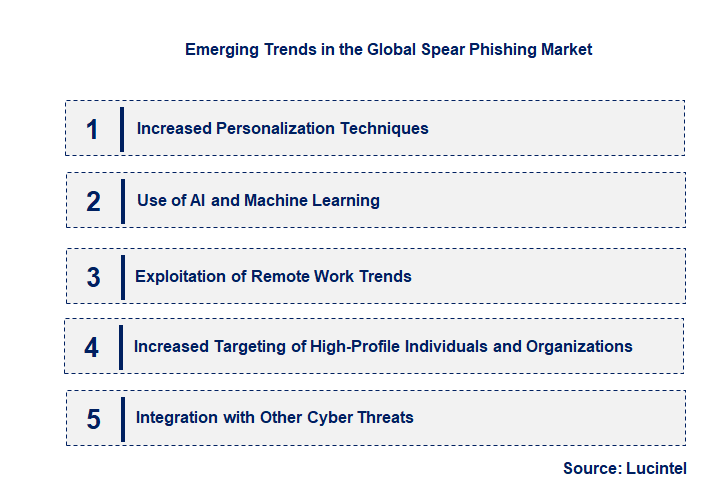
• Increased Personalization Techniques: Cybercriminals are leveraging advanced data analytics and social engineering to craft highly personalized spear phishing messages. By gathering detailed information about targets through social media, corporate websites, and data breaches, attackers create convincing emails that appear legitimate. This heightened level of personalization increases the success rate of attacks, making detection more challenging for traditional security measures. Organizations must adopt more sophisticated detection tools and employee training to counter these tailored threats effectively.
• Use of AI and Machine Learning: Attackers are increasingly deploying artificial intelligence and machine learning algorithms to automate and enhance spear phishing campaigns. These technologies enable the creation of more convincing fake messages, simulate human-like interactions, and adapt tactics based on target responses. AI-driven spear phishing can bypass conventional filters and deceive even vigilant users. Conversely, cybersecurity firms are also employing AI to identify and block such sophisticated attacks, leading to a technological arms race in threat detection and prevention.
• Exploitation of Remote Work Trends: The rise of remote work has expanded the attack surface for spear phishing. Cybercriminals exploit the increased reliance on digital communication tools, such as email and collaboration platforms, to target employees working outside traditional office environments. These attacks often involve impersonating trusted contacts or exploiting vulnerabilities in remote access systems. Organizations must strengthen remote security protocols, educate employees about targeted scams, and implement multi-factor authentication to mitigate these risks.
• Increased Targeting of High-Profile Individuals and Organizations: Attackers are focusing more on high-profile targets, including executives, government officials, and large corporations, due to the potential for significant impact and data access. These spear phishing campaigns often aim to steal sensitive information, commit financial fraud, or facilitate further cyber espionage. The high stakes involved have prompted organizations to prioritize targeted security measures, such as executive training and specialized monitoring, to protect their most valuable assets.
• Integration with Other Cyber Threats: Spear phishing is increasingly integrated with other cyber threats like malware, ransomware, and business email compromise (BEC). Attackers use spear phishing as an initial entry point to deploy malicious payloads or gain unauthorized access to networks. This convergence amplifies the potential damage and complicates detection efforts. Organizations need comprehensive security strategies that address multiple threat vectors simultaneously, including advanced email filtering, endpoint security, and incident response planning. In summary, these emerging trends are significantly reshaping the spear phishing market by making attacks more personalized, automated, and integrated with other cyber threats. As cybercriminals adopt new technologies and exploit current vulnerabilities, organizations must enhance their cybersecurity measures, invest in advanced detection tools, and foster a security-aware culture to defend against these sophisticated threats effectively.
• Increased Use of AI and Machine Learning: AI-driven tools now enable attackers to craft highly personalized spear phishing emails, increasing success rates. This development challenges traditional security measures, requiring organizations to adopt more advanced detection systems. The impact is a rise in sophisticated attacks that are harder to identify, prompting a need for AI-based defense solutions.
• Growth of Threat Intelligence Platforms: Enhanced threat intelligence platforms provide real-time data on emerging spear phishing tactics, enabling quicker response. These platforms help organizations identify and mitigate threats before they cause damage. Their adoption improves overall security posture and reduces the risk of successful attacks.
• Adoption of Multi-Factor Authentication (MFA): More organizations are implementing MFA to prevent unauthorized access even if credentials are compromised. MFA adds an extra security layer, significantly reducing the likelihood of successful spear phishing attacks. This development enhances overall cybersecurity resilience.
• Increased Regulatory and Compliance Measures: Governments and industry bodies are introducing stricter regulations to combat cyber threats, including spear phishing. Compliance requirements compel organizations to strengthen their security protocols. This trend drives market growth and encourages investment in advanced security solutions.
• Rise of Employee Awareness and Training Programs: Companies are investing more in employee training to recognize and prevent spear phishing attempts. Awareness programs reduce the likelihood of successful attacks by fostering a security-conscious culture. This development is crucial in complementing technological defenses. In summary, these developments are collectively strengthening the defense mechanisms against spear phishing attacks while also increasing the sophistication of attack methods. The market is witnessing rapid growth driven by technological innovation, regulatory pressures, and heightened awareness. Organizations are increasingly adopting comprehensive security strategies to mitigate risks, making the spear phishing market more dynamic and competitive.
• Financial Services: Enhanced Fraud Prevention : Financial institutions are investing in advanced detection tools to identify targeted spear phishing attacks, reducing financial losses and protecting customer assets. These solutions improve real-time threat identification, fostering trust and compliance with regulatory standards.
• Healthcare Sector: Protecting Sensitive Data : The healthcare industry is increasingly vulnerable to spear phishing aimed at patient data and research information. Implementing specialized security measures helps safeguard sensitive records, ensuring compliance with data privacy laws and maintaining patient trust.
• Government and Defense: Securing Critical Infrastructure : Governments are prioritizing the protection of critical infrastructure from targeted cyber threats. Strategic investments in threat intelligence and employee training help prevent breaches that could compromise national security.
• Retail and E-commerce: Customer Data Security : Retailers are focusing on securing customer payment and personal information from spear phishing attacks. Advanced authentication and monitoring systems enhance transaction security and customer confidence.
• Education Sector: Safeguarding Academic Data : Educational institutions are adopting tailored cybersecurity solutions to defend against targeted phishing campaigns aimed at students and staff. These efforts help protect intellectual property and institutional reputation. In summary, these growth opportunities are significantly impacting the spear phishing market by driving innovation and increasing demand for specialized security solutions across key sectors. As organizations recognize the importance of targeted defense strategies, the market is poised for continued expansion, fostering a more secure digital environment.
• Technological Advancements: The rapid development of AI, machine learning, and advanced threat detection tools enhances organizations ability to identify and mitigate spear phishing attacks. These innovations enable real-time analysis and proactive defense mechanisms, reducing the success rate of targeted attacks. As cybercriminals adopt sophisticated techniques, the need for equally advanced security solutions becomes critical, fueling market growth. Additionally, integration of automation and analytics improves incident response times, making spear phishing defenses more effective and appealing to enterprises seeking robust cybersecurity measures.
• Increasing Cybersecurity Spending: Organizations worldwide are escalating their cybersecurity budgets to combat the rising sophistication of cyber threats, including spear phishing. This increased investment reflects a growing awareness of the potential financial and reputational damages caused by targeted attacks. Governments and private sectors are allocating funds toward advanced security solutions, training, and awareness programs. The surge in cybersecurity spending directly correlates with market expansion, as vendors develop and offer comprehensive spear phishing prevention tools tailored to diverse organizational needs.
• Growing Incidence of Cyber Attacks: The frequency and complexity of cyberattacks, particularly spear phishing campaigns, are escalating globally. Cybercriminals target specific individuals or organizations to extract sensitive information, financial gains, or disrupt operations. This alarming trend compels organizations to adopt specialized security measures, thereby expanding the market. The increasing sophistication of attack vectors necessitates advanced detection and prevention solutions, which in turn drives innovation and market growth in spear phishing defense technologies.
• Regulatory and Compliance Pressures: Governments and industry bodies are implementing stringent regulations to protect sensitive data and ensure cybersecurity resilience. Regulations such as GDPR, HIPAA, and PCI DSS mandate organizations to adopt effective security measures, including spear phishing defenses. Compliance requirements compel organizations to invest in advanced security solutions, fostering market growth. Additionally, regulatory penalties for data breaches motivate organizations to prioritize spear phishing prevention, further fueling demand for specialized tools and services. The challenges facing this spear phishing market include:
• Evolving Cyber Threats: Cybercriminals continuously adapt their tactics, techniques, and procedures to bypass existing security measures. The rapid evolution of spear phishing methods, including the use of deepfake technology and AI-generated content, makes detection increasingly difficult. This dynamic threat landscape requires constant updates and innovations in security solutions, posing a significant challenge for vendors and organizations to stay ahead of attackers and maintain effective defenses.
• Lack of Awareness and Training: Many organizations and employees remain unaware of spear phishing tactics or lack proper training to recognize and respond to such attacks. Human error remains a critical vulnerability, often exploited by cybercriminals. The absence of comprehensive awareness programs hampers effective prevention, increasing the risk of successful attacks. Addressing this challenge requires ongoing education and training initiatives, which can be resource-intensive and difficult to implement uniformly across organizations.
• Regulatory Complexity and Compliance Costs: Navigating the complex landscape of cybersecurity regulations can be challenging for organizations, especially small and medium-sized enterprises. Ensuring compliance with multiple standards involves significant costs and resource allocation. Non-compliance can lead to hefty penalties and reputational damage. The evolving regulatory environment also demands continuous updates to security policies and practices, adding to operational burdens and complicating efforts to implement effective spear phishing defenses. In summary, the spear phishing market is driven by technological innovations, increased cybersecurity investments, rising attack incidences, and regulatory pressures. However, it faces challenges from evolving cyber threats, awareness gaps, and regulatory complexities. These factors collectively influence the markets growth trajectory, requiring stakeholders to adopt adaptive, innovative, and comprehensive strategies to effectively combat spear phishing threats. The overall impact is a dynamic and competitive landscape that demands continuous evolution in security solutions and awareness initiatives.
• BAE Systems
• Barracuda Networks
• Check Point Software Technologies
• Cisco Systems
• Forcepoint
• Greathorn
• Intel Security
• Microsoft
• Phishlabs
• Proofpoint
• Cloud
• Hybrid
• On-premises
• Banking, Financial Services, & Insurance
• Critical Infrastructure
• Government & Defense
• Healthcare
• IT & Telecommunication
• Manufacturing
• Media & Entertainment
• Retail
• Others
• North America
• Europe
• Asia Pacific
• The Rest of the World
• United States: The US has increased investment in advanced cybersecurity technologies, including AI-driven detection systems and threat intelligence sharing platforms. Federal agencies have launched new awareness campaigns to educate employees about spear phishing tactics. Regulatory bodies are updating cybersecurity standards for critical infrastructure and financial sectors, emphasizing proactive defense measures. Additionally, collaborations between government and private sectors aim to develop more resilient security frameworks. The US also sees growth in cybersecurity startups focusing on spear phishing prevention tools, reflecting a proactive industry response.
• China: China has intensified its cybersecurity regulations, mandating stricter security protocols for organizations vulnerable to spear phishing. The government has launched nationwide awareness initiatives and integrated AI-based monitoring systems to detect targeted attacks. Chinese tech firms are developing sophisticated email filtering and anomaly detection solutions tailored to local threat landscapes. There is also increased cooperation between government agencies and private companies to share threat intelligence and improve response times. Efforts are underway to enhance the cybersecurity workforce through specialized training programs, aiming to reduce successful spear phishing incidents.
• Germany: Germany has strengthened its cybersecurity legislation, requiring organizations to implement comprehensive security measures against spear phishing. The country has seen a rise in public-private partnerships focused on threat intelligence sharing and incident response. German cybersecurity firms are innovating with machine learning algorithms to identify and block spear phishing attempts more effectively. The government has also increased funding for research on behavioral analysis and user training to reduce human vulnerabilities. European Union directives are influencing national policies, promoting harmonized standards for cyber defense against targeted attacks.
• India: India is rapidly expanding its cybersecurity infrastructure, with government initiatives aimed at raising awareness and improving detection capabilities. The National Cyber Security Policy emphasizes protecting critical sectors from spear phishing attacks through advanced monitoring tools. Indian tech companies are developing localized solutions that incorporate regional language processing and behavioral analytics. The government has also launched training programs for cybersecurity professionals to address skill gaps. Public awareness campaigns are increasingly focusing on educating users about spear phishing tactics, aiming to reduce successful breaches across various sectors.
• Japan: Japan has advanced its cybersecurity framework by integrating AI and machine learning into threat detection systems. The government has increased funding for research on spear phishing attack patterns and defense mechanisms. Japanese organizations are adopting multi-factor authentication and enhanced email security protocols to prevent targeted attacks. There is a focus on international cooperation, with Japan participating in global cybersecurity alliances to share threat intelligence. Additionally, Japan emphasizes workforce development through specialized training programs to strengthen its cyber defense capabilities against spear phishing threats.


• BAE Systems
• Barracuda Networks
• Check Point Software Technologies
• Cisco Systems
• Forcepoint
• Greathorn
• Intel Security
• Microsoft
• Phishlabs
• Proofpoint Q5. Which spear phishing market segment will be the largest in future? Answer: Lucintel forecasts that, within the type category, cloud is expected to witness higher growth over the forecast period. Q6. In spear phishing market, which region is expected to be the largest in next 5 years? Answer: In terms of region, APAC is expected to witness the highest growth over the forecast period. Q7. Do we receive customization in this report? Answer: Yes, Lucintel provides 10% customization without any additional cost.


Choose a license that fits your team. Instant PDF delivery.
Prices exclude taxes. Instant delivery. Custom licensing available on request.
Market Report · July 15, 2026
Market Report · June 26, 2026
Market Report · June 24, 2026
Trusted partner for strategic intelligence and business growth


Receive a complimentary market analysis tailored to your industry. Our analysts will identify key growth opportunities and competitive dynamics specific to your business.

Market size, growth rate, and key trend analysis for your specific sector.

Top competitor positioning and market share analysis.

Strategic recommendations backed by data-driven insights.
Get curated market intelligence and competitive moves straight to your inbox.
By subscribing, you agree to receive our monthly insights. Unsubscribe anytime.
Receive a complimentary market analysis tailored to your industry. Our analysts will identify key growth opportunities and competitive dynamics specific to your business.
Market size, growth rate, and key trend analysis for your specific sector.
Top competitor positioning and market share analysis.
Strategic recommendations backed by data-driven insights.
Get curated market intelligence, emerging trends, and competitive moves straight to your inbox each month.
By subscribing, you agree to receive our monthly insights. Unsubscribe anytime.
We'll send your sample report shortly.