
Market Report · May 18, 2026

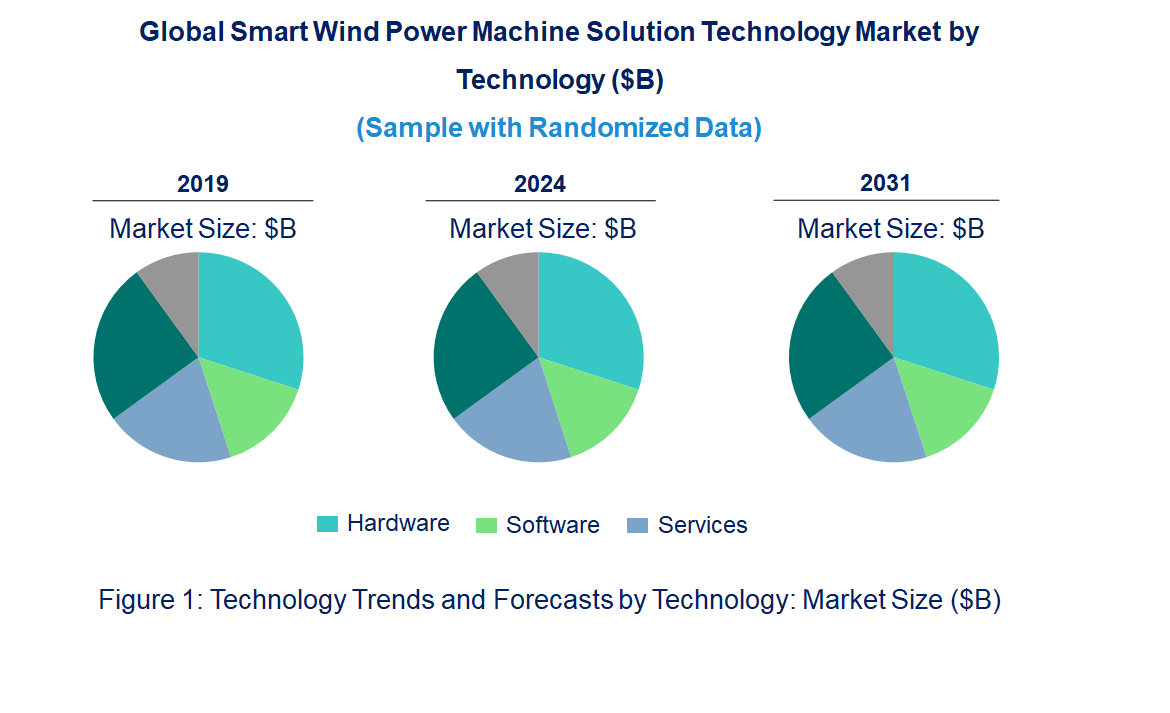
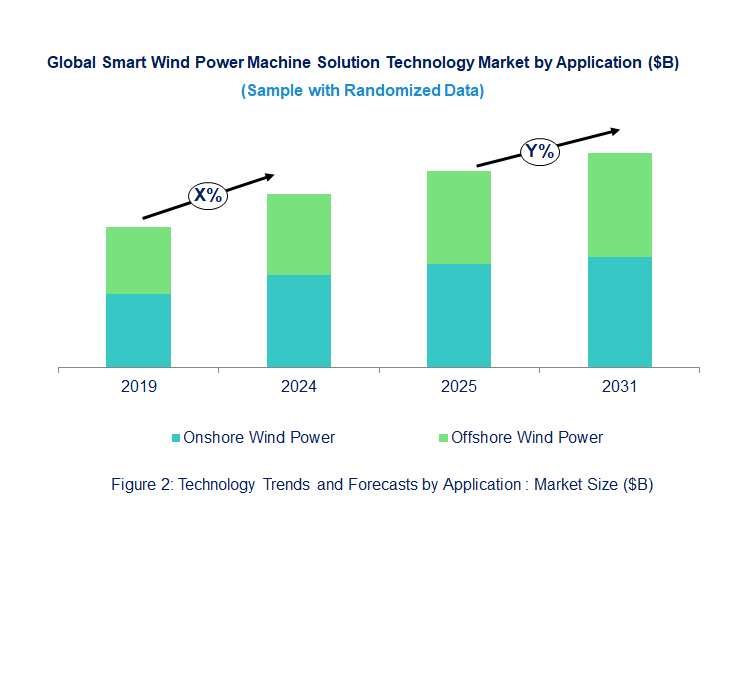
This market report covers trends, opportunities, and forecasts in the global smart wind power machine solution market to 2031 by technology (hardware, software, and services), application (onshore wind power and offshore wind power), and region (North America, Europe, Asia Pacific, and the Rest of the World)
We'll send your sample report shortly.
• AI-Powered Predictive Maintenance: Predictive analytics powered by machine learning minimizes downtime by forecasting failures before they occur, optimizing operational efficiency.
• IoT Integration: IoT-enabled sensors and devices provide real-time data for remote monitoring and control, ensuring seamless operation and improved turbine lifespan.
• Digital Twins: Digital twin technology is revolutionizing maintenance by creating virtual replicas of wind farms, enabling detailed simulations for enhanced performance and fault detection.
• Hybrid Energy Solutions: Combining wind power with solar and battery storage is becoming a viable option, ensuring a consistent energy supply and grid stability.
• Smart Blade Innovations: New materials and aerodynamic designs in turbine blades enhance power generation efficiency and adapt to varying wind conditions. These trends are reshaping the smart wind power machine solution market by increasing energy efficiency, reducing operational costs, and fostering sustainability. As technology matures, it continues to disrupt traditional methods, driving the sector toward a smarter, greener future.
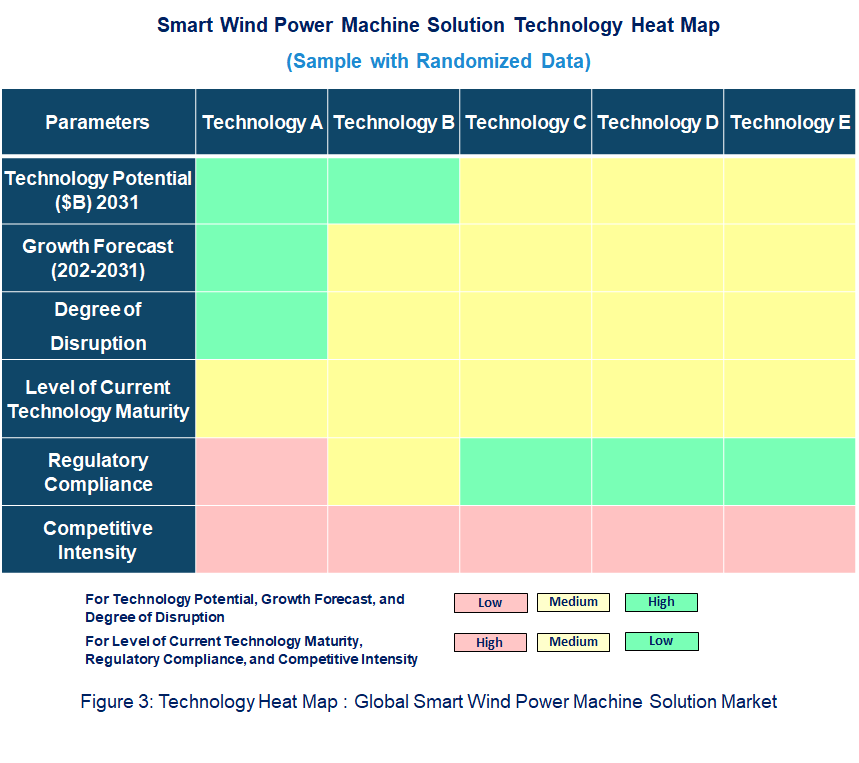
• Technology Potential: The smart wind power machine solution market has significant technology potential, with advancements in artificial intelligence (AI), internet of things (IoT), and advanced materials driving efficiency and performance. AI enables predictive maintenance, reducing downtime and costs, while IoT ensures seamless monitoring and optimization of wind farms. Innovations in turbine design and smart composites enhance energy generation and operational durability. These technologies hold the potential to transform wind power into a more reliable and scalable energy source.
• Degree of Disruption: The degree of disruption is moderate to high, as these technologies replace traditional systems with automated, data-driven solutions. IoT-based monitoring and AI-driven analytics challenge conventional maintenance and energy management practices. Additionally, aerodynamic blade designs and hybrid renewable setups are reshaping energy production strategies, requiring organizations to invest in training and infrastructure upgrades.
• Level of Current Technology Maturity: IoT and AI have reached an adoption phase with proven reliability in many projects, while emerging technologies like digital twins and hybrid systems are still in their early development stages. Smart materials for turbine construction are advancing but require further optimization.
• Regulatory Compliance: Regulatory compliance plays a critical role, especially for offshore projects, requiring adherence to environmental standards, safety protocols, and cybersecurity norms. Aligning with regulations ensures sustainable and responsible growth in this innovative market.
• Goldwind: Goldwind introduced its next-generation smart turbine, leveraging AI-driven predictive maintenance and advanced analytics. This innovation enhances operational efficiency and minimizes downtime, positioning the company as a leader in intelligent wind energy solutions.
• Envision Group: Envision Group launched a cloud-based energy management platform integrated with its wind turbines, enabling real-time monitoring and data-driven optimization. This advancement has bolstered its commitment to smart energy ecosystems.
• Ming Yang Smart Energy Group: Ming Yang unveiled a modular offshore wind turbine designed for harsh marine environments. Its scalable design ensures adaptability, reducing installation costs and advancing offshore wind potential.
• Zhejiang Windey: Zhejiang Windey developed a compact wind turbine with enhanced IoT capabilities, improving performance tracking and operational scalability, making it ideal for smaller-scale projects.
• Siemens Gamesa: Siemens introduced a hydrogen-enabled wind turbine prototype, enabling dual power generation and hydrogen production. This breakthrough aligns with the growing hydrogen economy.
• General Electric (GE): GE enhanced its Haliade-X turbine with augmented blade designs, improving energy capture and efficiency for large-scale installations. This reinforces GE’s competitive edge in offshore wind.
• Vestas: Vestas integrated predictive analytics software into its turbine systems, enabling proactive maintenance and extending the lifecycle of its turbines. This development reduces operational costs for customers.
• Renewable Energy Policies: Supportive global policies promote wind power adoption, providing significant market impetus. Governments are offering incentives, driving large-scale deployment of wind technologies.
• Digitalization and IoT Integration: Increasing adoption of IoT and AI enhances wind turbine performance monitoring and efficiency, reducing costs and boosting market growth.
• Offshore Wind Expansion: Growing investment in offshore wind farms, with technological advancements making these projects viable, supports market expansion.
• Sustainability Goals: Corporate and governmental commitments to net-zero targets are accelerating investments in smart wind power solutions, creating growth opportunities.
• Energy Storage Integration: Coupling wind power systems with advanced energy storage technologies enhances reliability and market appeal. Challenges in the smart wind power machine solution market are:
• High Capital Costs: Expensive turbine systems and installations hinder widespread adoption, particularly in developing economies.
• Grid Infrastructure Issues: Integration of wind power into existing grids requires substantial upgrades, posing technical and financial challenges.
• Regulatory and Environmental Constraints: Lengthy approval processes and ecological concerns slow down project timelines. The major drivers, including renewable energy policies, digitalization, and offshore wind expansion, are propelling the smart wind power machine solution market toward substantial growth. However, challenges such as high capital costs and grid infrastructure issues must be addressed to ensure long-term scalability and sustainability. Overcoming these hurdles will unlock the market’s full potential.
• Goldwind
• Envision Group
• Ming Yang Smart Energy Group
• Zhejiang Windey
• Simens
• Ge
• Technology Readiness by Technology Type: Hardware technologies are well-established, offering mature solutions like durable turbines and advanced sensors, with strong competition and strict compliance with energy efficiency and safety standards. Software solutions are rapidly evolving, with AI and cloud technologies enabling predictive maintenance, grid optimization, and data analytics, making them highly competitive but requiring adherence to data governance laws. Services, such as predictive maintenance and system optimization, exhibit moderate readiness but are critical for lifecycle management, ensuring competitive differentiation through customization and regulatory alignment. Key applications include energy forecasting, operational efficiency, and environmental impact reduction, with all technologies striving for balance between innovation, compliance, and market competitiveness.
• Disruption Potential of Technologies: The smart wind power machine solution market is driven by innovative disruptions in hardware, software, and services. Hardware advancements, such as IoT-enabled sensors and advanced turbines, improve efficiency and reduce maintenance costs. Software solutions, including AI-driven predictive analytics and digital twins, enable real-time monitoring and optimize energy output. Services like remote diagnostics and predictive maintenance streamline operations, reduce downtime, and enhance lifecycle management. Integration of these technologies fosters automation, scalability, and grid compatibility, revolutionizing renewable energy generation. Each technology contributes uniquely, with software and services adding flexibility and data-driven intelligence, while hardware ensures robust physical infrastructure for energy generation and transmission.
• Competitive Intensity and Regulatory Compliance: The smart wind power machine solution market experiences high competitive intensity across hardware, software, and services. Hardware manufacturers face stiff competition in designing efficient and durable components, adhering to rigorous safety and environmental standards. Software providers compete on innovation in AI, machine learning, and cloud integration, while ensuring compliance with data privacy regulations. Service providers, offering tailored maintenance and monitoring solutions, contend with market demand for cost-effectiveness and seamless integration. Regulatory compliance across these segments is stringent, encompassing renewable energy mandates, grid compatibility, and emissions standards. This fosters a competitive environment where players must innovate while meeting regulatory expectations.
• Hardware
• Software
• Services
• Onshore Wind Power
• Offshore Wind Power
• North America
• Europe
• Asia Pacific
• The Rest of the World
• Latest Developments and Innovations in the Smart Wind Power Machine Solution Technologies
• Companies / Ecosystems
• Strategic Opportunities by Technology Type


Choose a license that fits your team. Instant PDF delivery.
Prices exclude taxes. Instant delivery. Custom licensing available on request.
Market Report · May 18, 2026
Market Report · May 18, 2026
Market Report · May 18, 2026
Trusted partner for strategic intelligence and business growth


Receive a complimentary market analysis tailored to your industry. Our analysts will identify key growth opportunities and competitive dynamics specific to your business.

Market size, growth rate, and key trend analysis for your specific sector.

Top competitor positioning and market share analysis.

Strategic recommendations backed by data-driven insights.
Get curated market intelligence and competitive moves straight to your inbox.
By subscribing, you agree to receive our monthly insights. Unsubscribe anytime.
Receive a complimentary market analysis tailored to your industry. Our analysts will identify key growth opportunities and competitive dynamics specific to your business.
Market size, growth rate, and key trend analysis for your specific sector.
Top competitor positioning and market share analysis.
Strategic recommendations backed by data-driven insights.
Get curated market intelligence, emerging trends, and competitive moves straight to your inbox each month.
By subscribing, you agree to receive our monthly insights. Unsubscribe anytime.
We'll send your sample report shortly.