
Market Report · May 18, 2026

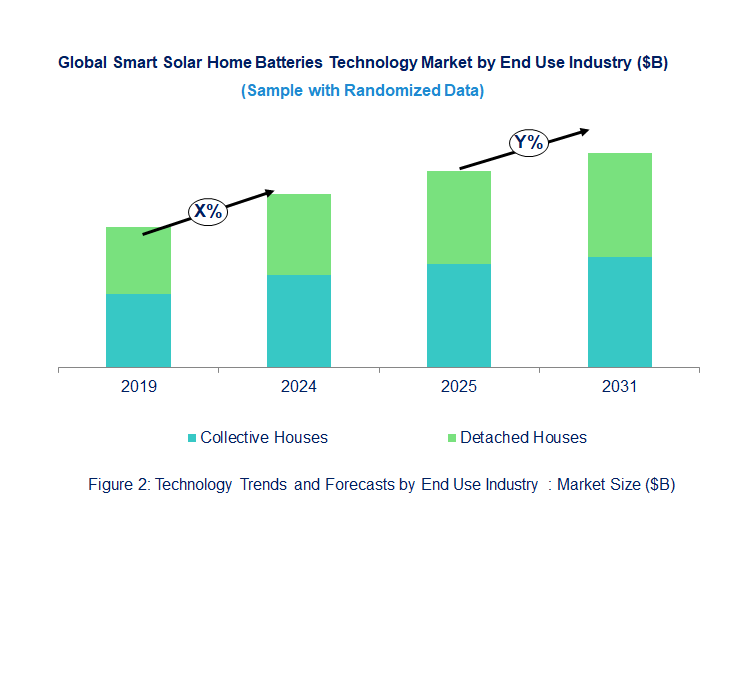
This market report covers trends, opportunities, and forecasts in the global smart solar home batteries market to 2031 by technology (lithium-ion battery, lead-acid battery, solid-state battery, flow battery, and others), end use industry (collective houses and detached houses), and region (North America, Europe, Asia Pacific, and the Rest of the World)
We'll send your sample report shortly.
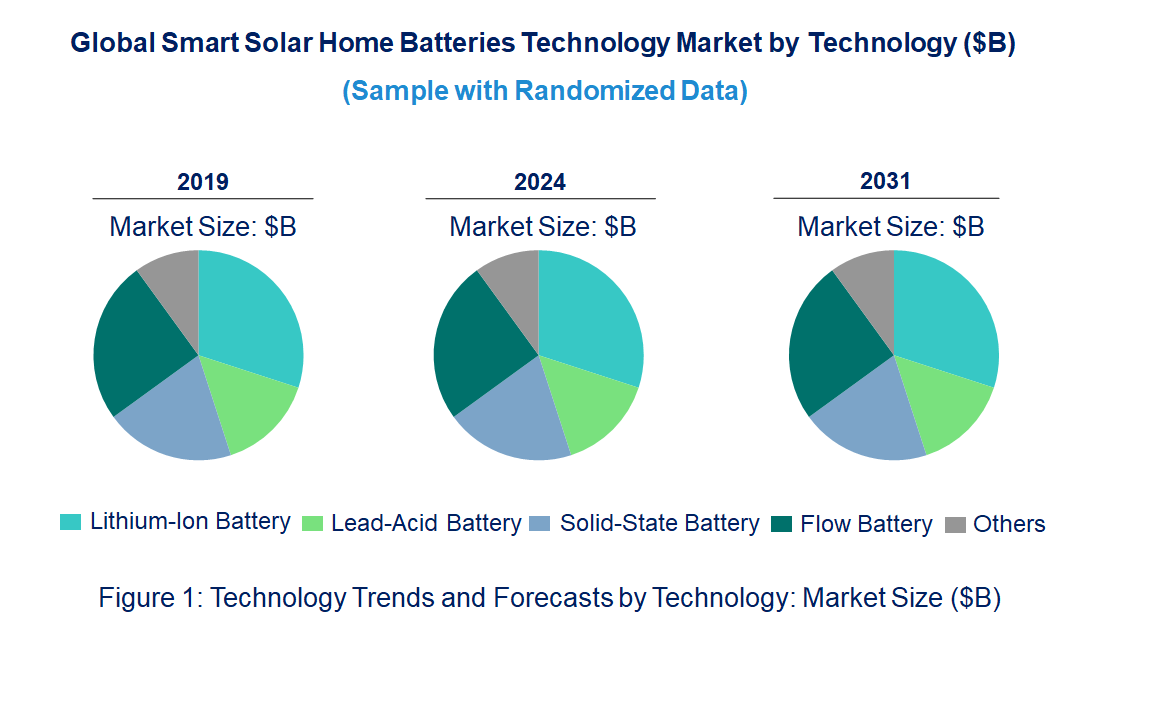
• Shift to Lithium-Ion Technology: Lithium-ion batteries are gaining dominance due to their superior energy density, longer lifespan, and reduced maintenance compared to lead-acid batteries, making them the preferred choice for solar home storage solutions.
• Rise of Solid-State Batteries: Solid-state batteries are emerging as the next-generation storage solution. With enhanced safety features, higher energy densities, and longer lifespans, they are expected to replace traditional lithium-ion batteries in the future.
• Integration with Smart Home Systems: Increasing integration with home automation systems allows homeowners to monitor and control their solar battery storage and energy usage, offering convenience and enhanced energy management.
• Cost Reductions and Energy Efficiency: Technological advancements in battery manufacturing processes are leading to reduced costs and increased energy efficiency, making smart solar home batteries more accessible to a broader consumer base.
• Focus on Sustainability and Eco-Friendly Materials: The industry is moving toward more sustainable materials and practices in the production of batteries, with a growing emphasis on recycling and reducing environmental impact. The emerging trends in the smart solar home batteries market reflect a significant transformation in how residential energy storage is approached. The shift from lead-acid to lithium-ion technology has already enhanced efficiency, lifespan, and cost-effectiveness, while the potential of solid-state batteries promises even greater improvements in energy storage and safety. Integration with smart home systems, advancements in energy efficiency, and a growing focus on sustainability are driving the market toward more intelligent and eco-friendly solutions.
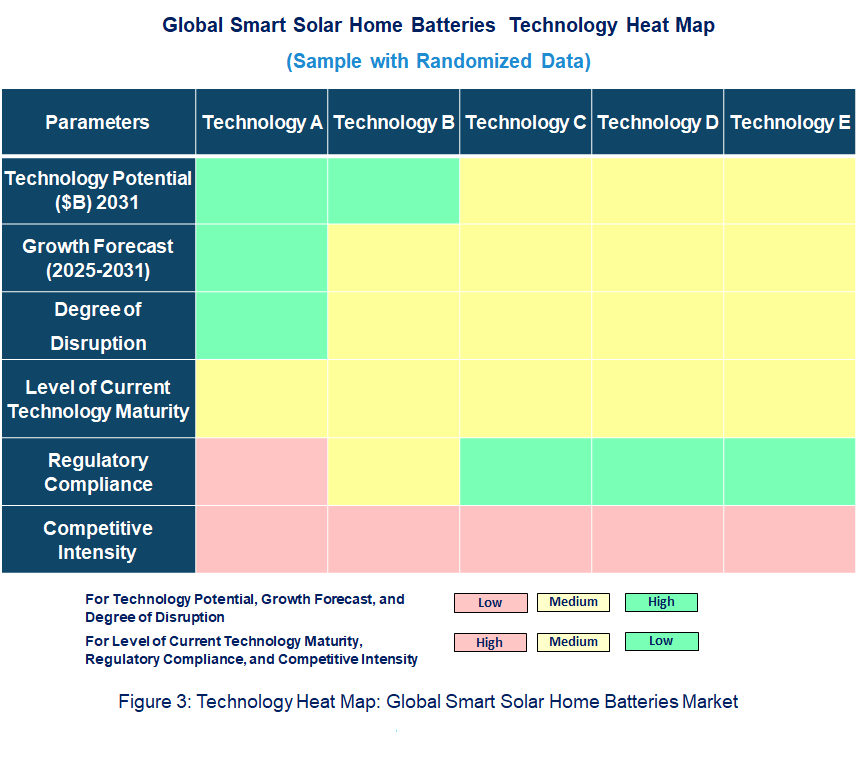
• Technology Potential: The smart solar home batteries market holds significant potential, especially with the transition to lithium-ion and solid-state batteries. As these technologies improve, they can increase the storage capacities and energy efficiency of solar energy systems, making them more reliable for residential use.
• Degree of Disruption: The market is undergoing moderate disruption, driven by the shift from lead-acid to lithium-ion batteries and the future potential of solid-state technologies. These changes offer increased performance and operational benefits, disrupting the traditional battery market.
• Level of Current Technology Maturity: Lithium-ion battery technology is well-established and mature, with widespread adoption in residential solar applications. Solid-state and flow batteries are still in early stages of commercialization, with significant potential for future growth.
• Regulatory Compliance: Compliance with environmental regulations is crucial for the continued growth of the market. Technologies such as lithium-ion batteries are becoming subject to stricter recycling and disposal standards, prompting manufacturers to innovate around eco-friendly and sustainable practices.
• Tesla: Tesla’s Powerwall 2 continues to dominate the market with its advanced storage capacity of 13.5 kWh, providing homeowners with reliable backup power. Tesla has also expanded its energy storage capabilities, incorporating AI to optimize energy consumption and reduce costs, solidifying its market position.
• LG Chem: LG Chem has advanced its RESU range, offering products with higher storage capacities and improved efficiency. Recent updates to the RESU 10H model include a more compact design and longer battery life, making it an appealing choice for residential solar energy solutions in both small and large homes.
• Sunnova: Sunnova has focused on making its solar battery solutions more affordable and accessible with subscription-based models, making it easier for homeowners to adopt energy storage solutions without hefty upfront costs. They’ve also increased partnerships to deploy smart solar systems nationwide.
• Sonnen Group: Sonnen has launched its innovative SonnenBatterie, which features smart grid connectivity and advanced storage technology. This development enables homeowners to store excess solar power and even share it with neighbors, creating microgrids that enhance local energy resilience.
• Enphase: Enphase’s Energy Management System integrates smart solar battery storage with advanced software. The company has introduced the Enphase IQ Battery, which works with the company’s microinverters, enabling homeowners to monitor and manage energy storage remotely through mobile apps.
• Electriq Power: Electriq Power has made significant strides in the market by combining energy storage with energy management. Their Electriq PowerPod is designed for both energy storage and monitoring, offering scalable options for homeowners looking to optimize solar energy consumption.
• Samsung: Samsung has introduced the Samsung Energy Storage System (ESS) for residential use, featuring highly efficient lithium-ion batteries. Their system provides seamless integration with solar panels, ensuring that excess solar energy is stored for later use, increasing energy independence for homeowners.
• Rising Demand for Renewable Energy: The increasing global shift toward renewable energy sources like solar power is one of the major drivers. Smart solar batteries play a crucial role in enhancing solar power consumption by storing excess energy, which can be used during periods without sunlight, making solar energy more reliable and efficient.
• Government Incentives and Rebates: Many governments worldwide are offering subsidies, tax credits, and rebates to encourage the adoption of renewable energy solutions. These incentives make the initial investment in smart solar batteries more affordable, driving their adoption among homeowners and promoting market growth.
• Technological Advancements in Battery Storage: Continuous innovation in battery technologies, including lithium-ion and solid-state batteries, has led to improvements in storage capacity, lifespan, and efficiency. These advancements are making smart solar home batteries more attractive to consumers, enhancing their market potential.
• Energy Independence and Cost Savings: With rising energy prices and grid dependency concerns, homeowners are increasingly seeking ways to reduce their reliance on utility companies. Smart solar batteries offer energy independence by enabling consumers to store solar energy for use during peak hours, leading to significant savings on electricity bills.
• Environmental Awareness and Sustainability: Growing awareness of environmental issues, such as climate change and the harmful effects of fossil fuels, is pushing consumers towards cleaner and greener alternatives. Smart solar batteries contribute to sustainable living by optimizing solar energy usage and reducing carbon footprints. Challenges in the smart solar home batteries Market are:
• High Initial Cost: The initial investment required for installing solar panels and smart solar batteries can be high, which may deter some homeowners from adopting the technology. Despite long-term savings, the upfront cost remains a significant barrier to market growth.
• Regulatory and Policy Uncertainty: While government incentives are driving market growth, changes in policies, regulations, and energy tariffs can create uncertainty in the market. Shifting regulations can impact the profitability of solar storage systems, especially in regions where the incentives may be reduced or eliminated.
• Technological Integration: Integrating solar batteries with existing solar panel systems and home energy management systems can be complex. The need for compatibility across different technologies and the challenges in system integration can slow down the widespread adoption of smart solar home batteries.
• Battery Recycling and Sustainability: As the adoption of smart solar batteries increases, so does the need for effective battery recycling solutions. The environmental impact of lithium-ion batteries and concerns regarding battery disposal and recycling may present challenges for the industry’s sustainability in the long run.
• Energy Storage Limitations: While advancements in battery technology have improved efficiency, there are still limitations in terms of storage capacity and performance, especially in residential applications. Inadequate storage during extended cloudy periods or at night can limit the effectiveness of solar batteries, hindering broader adoption. The smart solar home batteries market is driven by rising demand for renewable energy, technological innovations, and government incentives, but faces challenges such as high upfront costs, regulatory uncertainties, and energy storage limitations. Addressing these challenges while continuing to innovate in battery technologies will be crucial for sustaining market growth in the future.
• Tesla
• Lg Chem
• Sunnova
• Sonnen Group
• Enphase
• Electriq Power
• Technology Readiness: Lithium-ion batteries are highly mature, with widespread adoption and extensive research into improving performance and reducing costs. Lead-acid batteries are also well-established but face growing competition from more efficient technologies. Solid-state batteries are in the early stages of development, with significant research still needed for mass-market adoption, but they promise superior energy density and safety. Flow batteries are moderately ready, with successful trials and installations, but still require advancements in cost and scalability. Other technologies like sodium-ion and zinc-air are emerging, showing promise for future use, but are still in developmental stages. Competitive levels are highest for lithium-ion, followed by lead-acid, while emerging technologies like solid-state and flow batteries are still evolving in terms of market readiness and regulatory compliance.
• Competitive Intensity and Regulatory Compliance: Competitive intensity in the smart solar home batteries market varies by technology. Lithium-ion batteries dominate due to their widespread adoption, leading to high competition among major players. Lead-acid batteries remain cost-competitive in low-cost markets, though their performance limitations are reducing their market share. Solid-state batteries, while innovative, face lower competition at present due to their developmental stage, but they hold potential for future market shifts. Flow batteries, though still niche, offer distinct advantages for larger-scale applications, adding diversity to the competition. Regulatory compliance for each technology includes safety standards, efficiency certifications, and environmental impact assessments, with lithium-ion batteries facing the most stringent regulations due to widespread usage and safety concerns.
• Disruption Potential: The disruption potential of different technologies in the smart solar home batteries market is significant. Lithium-ion batteries, with their high energy density and efficiency, dominate the market and are expected to maintain their leadership due to advancements in cost reduction. Lead-acid batteries, though less efficient, remain competitive due to their lower upfront cost, especially in emerging markets. Solid-state batteries, with their promise of enhanced safety, energy density, and longevity, could disrupt the market in the future, though they are still in the development phase. Flow batteries, offering scalability and longer discharge durations, hold promise for larger residential applications, particularly in areas with variable solar generation. Other emerging technologies like sodium-ion and zinc-air batteries may further diversify the market by offering sustainable, cost-effective alternatives.
• Lithium-Ion Battery
• Lead-Acid Battery
• Solid-State Battery
• Flow Battery
• Others
• Collective Houses
• Detached Houses
• North America
• Europe
• Asia Pacific
• The Rest of the World
• Latest Developments and Innovations in the Smart Solar Home Batteries Technologies
• Companies / Ecosystems
• Strategic Opportunities by Technology Type


Choose a license that fits your team. Instant PDF delivery.
Prices exclude taxes. Instant delivery. Custom licensing available on request.
Market Report · May 18, 2026
Market Report · May 18, 2026
Market Report · May 18, 2026
Trusted partner for strategic intelligence and business growth


Receive a complimentary market analysis tailored to your industry. Our analysts will identify key growth opportunities and competitive dynamics specific to your business.

Market size, growth rate, and key trend analysis for your specific sector.

Top competitor positioning and market share analysis.

Strategic recommendations backed by data-driven insights.
Get curated market intelligence and competitive moves straight to your inbox.
By subscribing, you agree to receive our monthly insights. Unsubscribe anytime.
Receive a complimentary market analysis tailored to your industry. Our analysts will identify key growth opportunities and competitive dynamics specific to your business.
Market size, growth rate, and key trend analysis for your specific sector.
Top competitor positioning and market share analysis.
Strategic recommendations backed by data-driven insights.
Get curated market intelligence, emerging trends, and competitive moves straight to your inbox each month.
By subscribing, you agree to receive our monthly insights. Unsubscribe anytime.
We'll send your sample report shortly.