
Market Report · May 18, 2026

This market report covers trends, opportunities, and forecasts in the global smart home voice control market to 2031 by technology (amazon alexa, google assistant, apple siri, and others), application (home automation, security and surveillance, entertainment systems, and others), and region (North America, Europe, Asia Pacific, and the Rest of the World)
We'll send your sample report shortly.
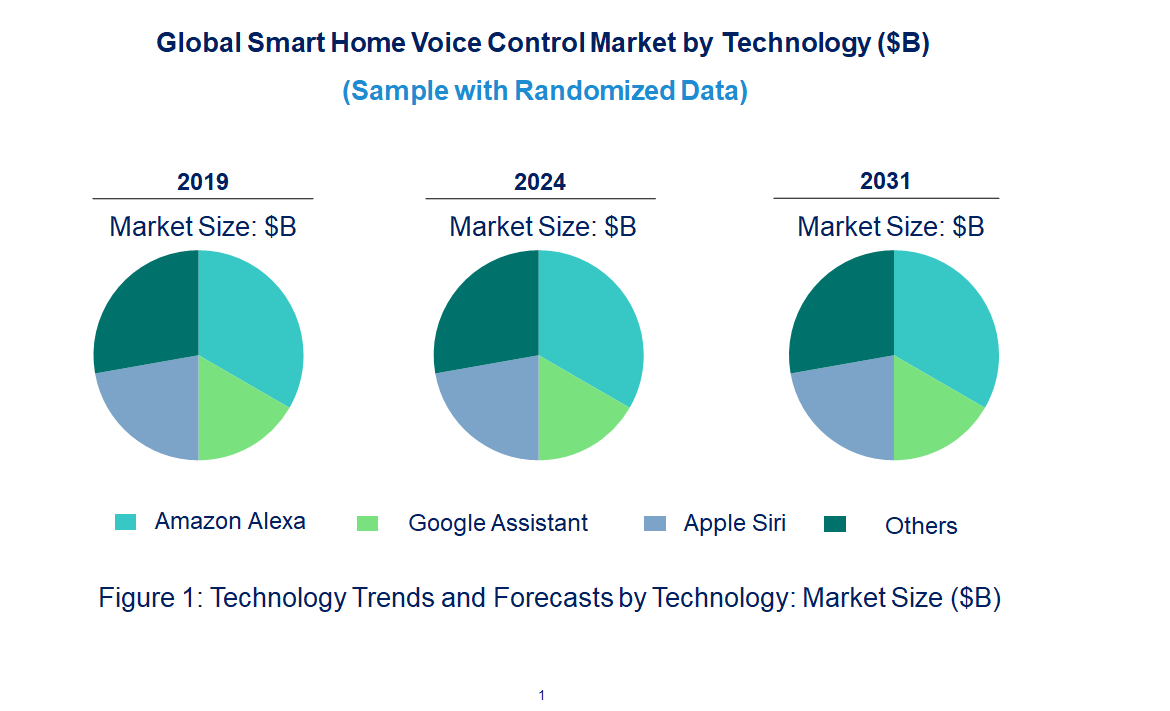
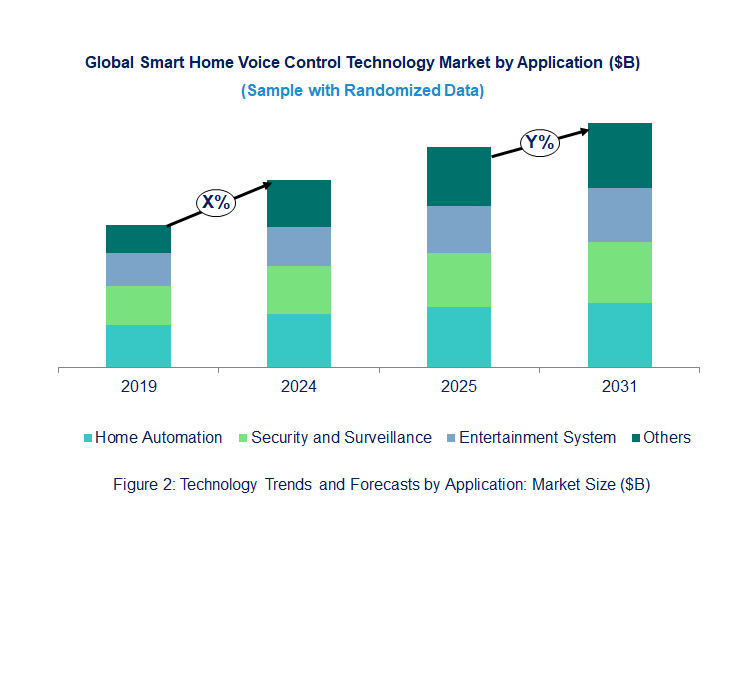
• Increased Integration with IoT Devices: Voice control is becoming more seamlessly integrated with IoT devices, enabling users to control a wide range of home appliances, from lights to refrigerators, with voice commands.
• AI-driven Personalization: Voice assistants are leveraging AI to learn user preferences, adapting responses and actions based on individual habits and routines for enhanced convenience.
• Multi-platform Compatibility: Voice assistants like Alexa, Google Assistant, and Siri are now becoming interoperable, enabling users to control smart devices from different brands using a single voice command platform.
• Security Enhancements: Voice control is being integrated into security systems for more advanced monitoring, such as using voice-activated surveillance and emergency alerts.
• Advanced Natural Language Processing (NLP): Voice assistants are increasingly equipped with sophisticated NLP, allowing for more conversational interactions and improving user experience. These trends are reshaping the smart home voice control market by providing more flexibility, control, and efficiency to users. As these technologies evolve, we can expect greater adoption and more personalized experiences in smart homes.
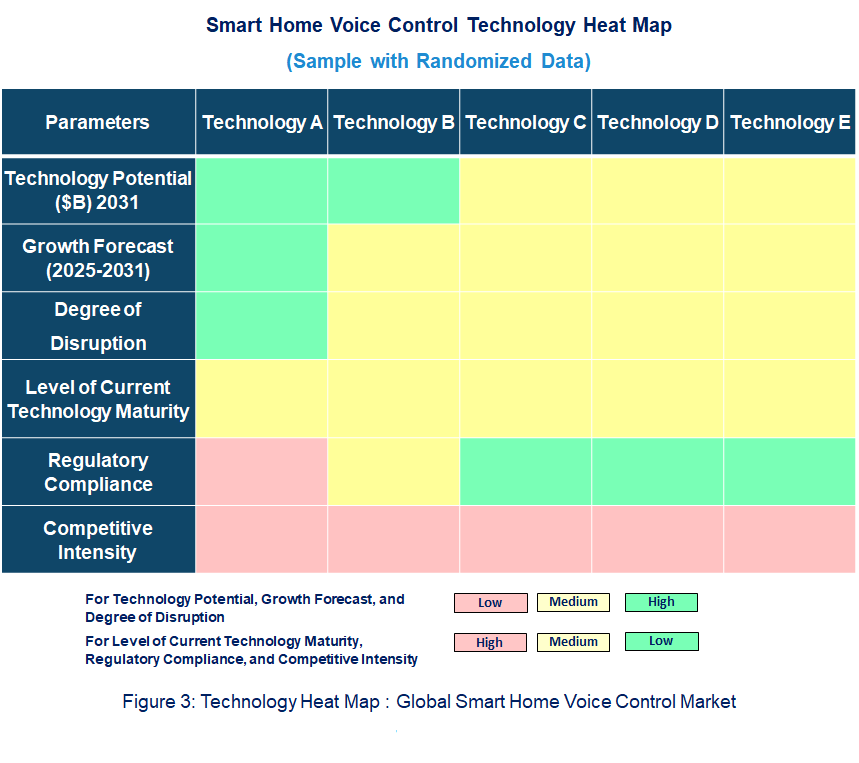
• Technology Potential: The potential of smart home voice control technology is immense, as it enables automation, enhances convenience, and offers improved accessibility for individuals with disabilities. With advancements in AI and machine learning, these systems can learn user preferences, providing a more personalized experience. They are expected to be integrated into a broader array of household devices, such as refrigerators, washing machines, and even kitchen appliances, further expanding their utility.
• Degree of Disruption: Voice control technology disrupts traditional ways of interacting with home devices, eliminating the need for physical buttons or screens. It simplifies tasks and enhances the overall user experience by providing hands-free operation. This disruption is particularly notable in home automation, security, and entertainment, where voice assistants streamline everyday tasks and enhance the interactivity of devices.
• Level of Current Technology Maturity: Smart home voice control technologies have reached a high level of maturity, with established players like Amazon, Google, and Apple offering reliable and robust solutions. However, challenges remain in terms of voice recognition accuracy, multilingual support, and data privacy. As the technology matures, these challenges will need to be addressed to ensure broader adoption and continued growth.
• Regulatory Compliance: With the growing concern over data privacy, smart home voice control technology must comply with stringent data protection regulations, such as GDPR and CCPA. Voice assistants collect vast amounts of user data, making regulatory compliance a critical focus. Companies in the market are adapting to these requirements by implementing robust data security measures, encryption, and providing users with more control over their data. Smart home voice control technology is poised for continued growth, offering enhanced convenience, personalization, and innovation. However, addressing issues such as data privacy and voice recognition will be key to fully realizing its potential.
• Amazon: With its Alexa ecosystem, Amazon continues to lead the market by integrating Alexa into various smart devices, enhancing home automation, security, and entertainment control. Amazon’s focus on improving voice recognition and expanding Alexa’s compatibility with third-party devices keeps it at the forefront.
• Google: Google Assistant has expanded its presence by focusing on more advanced AI capabilities, enabling more natural conversations. It is now deeply integrated into Google Home devices and various third-party products, making it a strong contender in both the home automation and entertainment sectors.
• Apple: Apple’s Siri remains a dominant player in voice-controlled smart homes, particularly with its integration into Apple’s HomeKit ecosystem. With a focus on security and privacy, Apple is positioning Siri as a trusted assistant for the modern smart home.
• Samsung: Through its SmartThings platform and Bixby voice assistant, Samsung is integrating voice control across a range of home appliances, TVs, and security systems, strengthening its presence in the smart home market.
• Sonos: Known for its high-quality sound systems, Sonos is enhancing voice control in its products by integrating Alexa and Google Assistant, allowing users to control music, volume, and other smart devices with voice commands. These companies continue to innovate and collaborate to provide a more unified and responsive voice-controlled experience, driving growth in the smart home voice control market.
• Growing Demand for Home Automation: As consumers increasingly seek convenience and energy efficiency, voice control in smart homes is becoming a must-have feature.
• Advancements in AI and NLP: The development of more advanced artificial intelligence and natural language processing technologies is improving voice recognition and personalization, making voice control more appealing.
• Integration with IoT Devices: The proliferation of IoT devices, which can be controlled through voice assistants, enhances the functionality and appeal of smart homes.
• Rising Popularity of Smart Speakers: The widespread adoption of smart speakers, such as Amazon Echo and Google Nest, is driving the growth of voice control in households. Challenges facing the global smart home voice control market are:
• Privacy and Security Concerns: As voice assistants collect and process personal data, privacy concerns remain a significant challenge for consumers.
• Fragmentation of Platforms: Despite advancements in compatibility, many smart home devices still face integration issues across different ecosystems, leading to user frustration.
• Technological Barriers: While AI and voice recognition are improving, there are still challenges around accurately interpreting diverse accents and languages, limiting global adoption. These drivers and challenges are transforming the smart home voice control market, pushing for further innovation while necessitating better privacy protection and platform interoperability.
• Amazon
• Apple
• Samsung
• Sonos
• Technology Readiness by Technology Type: The competitive level and regulatory compliance of different voice control technologies vary. Amazon Alexa is highly developed with robust ecosystem integration and is regulated for privacy and data security, especially in smart home devices. Google Assistant competes at a high level with superior AI-driven capabilities but faces similar regulatory scrutiny, particularly in the use of personal data. Apple Siri, while primarily focused on the Apple ecosystem, is well-integrated into its devices and meets strict regulatory standards for privacy and security. All technologies are advancing rapidly, and their readiness is supported by growing adoption and integration into diverse smart home applications, though the regulatory challenges around data privacy remain critical across all platforms.
• Competitive Intensity and Regulatory Compliance: The competitive intensity in the smart home voice control market is fierce, with key players like Amazon, Google, and Apple vying for dominance through advanced voice recognition and seamless integration into smart home devices. Regulatory compliance is a key factor, particularly around consumer data protection and privacy. All major players must comply with laws such as GDPR in Europe and CCPA in California, which focus on user data privacy and transparency. The competitive pressure is further intensified by constant innovation in voice recognition, AI, and device compatibility, while maintaining strict compliance with regulatory demands.
• Disruption Potential by Technology Type: Amazon Alexa, Google Assistant, and Apple Siri each have significant disruption potential in the smart home voice control market. Amazon Alexa drives home automation by creating a vast ecosystem of compatible devices, making voice control central to home operations. Google Assistant excels in AI, offering smarter and more personalized responses, elevating the user experience. Apple Siri focuses on seamless integration with Apple’s ecosystem, ensuring high-quality, secure interactions. These technologies collectively drive the shift from manual control to voice-driven automation in homes, disrupting traditional methods of interacting with appliances, security systems, and entertainment devices.
• Amazon Alexa
• Google Assistant
• Apple Siri
• Others
• Home Automation
• Security and Surveillance
• Entertainment Systems
• Others
• North America
• Europe
• Asia Pacific
• The Rest of the World
• Latest Developments and Innovations in the Smart Home Voice Control Technologies
• Companies / Ecosystems
• Strategic Opportunities by Technology Type


Choose a license that fits your team. Instant PDF delivery.
Prices exclude taxes. Instant delivery. Custom licensing available on request.
Market Report · May 18, 2026
Market Report · May 18, 2026
Market Report · May 18, 2026
Trusted partner for strategic intelligence and business growth


Receive a complimentary market analysis tailored to your industry. Our analysts will identify key growth opportunities and competitive dynamics specific to your business.

Market size, growth rate, and key trend analysis for your specific sector.

Top competitor positioning and market share analysis.

Strategic recommendations backed by data-driven insights.
Get curated market intelligence and competitive moves straight to your inbox.
By subscribing, you agree to receive our monthly insights. Unsubscribe anytime.
Receive a complimentary market analysis tailored to your industry. Our analysts will identify key growth opportunities and competitive dynamics specific to your business.
Market size, growth rate, and key trend analysis for your specific sector.
Top competitor positioning and market share analysis.
Strategic recommendations backed by data-driven insights.
Get curated market intelligence, emerging trends, and competitive moves straight to your inbox each month.
By subscribing, you agree to receive our monthly insights. Unsubscribe anytime.
We'll send your sample report shortly.