
Market Report · July 15, 2026

Trends, opportunity and forecast in sleep software market to 2031 by type (pay software and free software), application (sleep aid software, sleep recording software, and others), and region (North America, Europe, Asia Pacific, and the Rest of the World)
We'll send your sample report shortly.
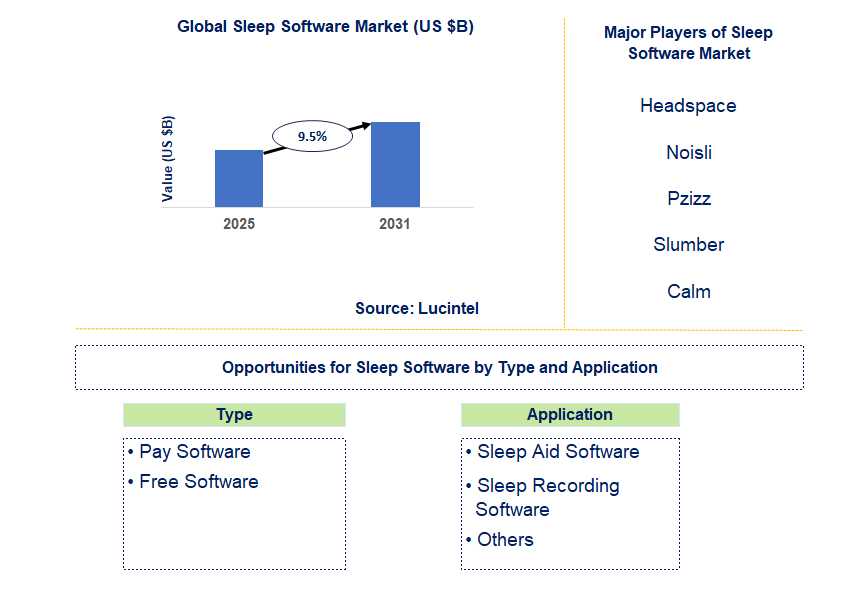
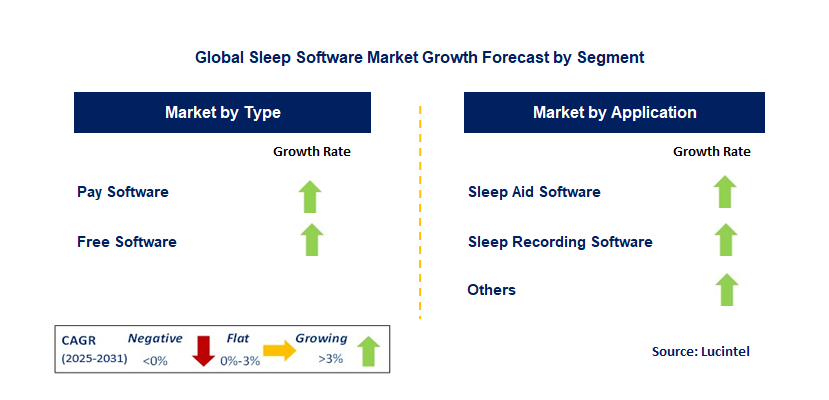
• Lucintel forecasts that free software is expected to witness higher growth over the forecast period due to especially with many mobile apps.
• Within this market, sleep recording software is expected to witness the higher growth due to it focuses on tracking and analyzing sleep patterns.
• North America is expected to witness the highest growth over the forecast period due to high awareness of sleep health. A more than 150-page report is developed to help in your business decisions. Sample figures with some insights are shown below.
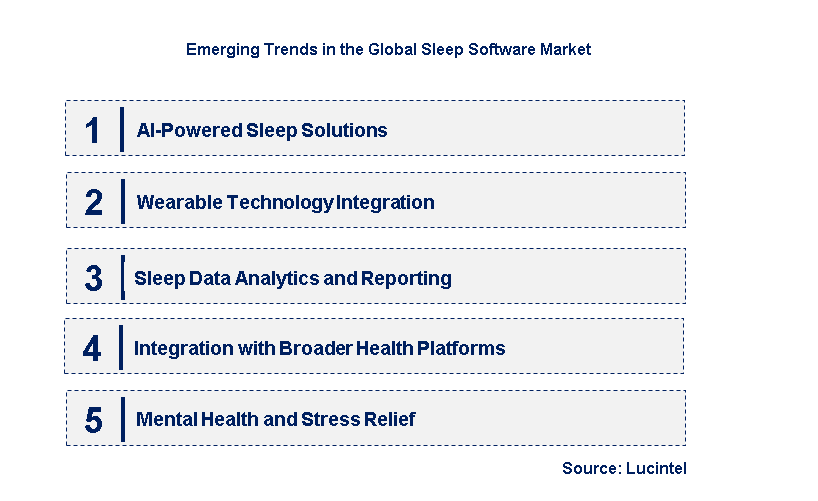
• AI-Powered Sleep Solutions: AI-based technologies in sleep software now allow personalized recommendations and insights according to an individual's sleep pattern. Solutions will scan the data related to sleep in real time and pick out abnormalities such as sleep apnea or irregular sleep cycles, which they will provide tips for correcting. The AI can improve the personalization and precision in managing sleep so that the users will be receiving their unique tips and adjustments on sleep routine. As AI becomes more advanced, sleep software will continue to provide increasingly accurate and customized sleep improvement strategies.
• Wearable Technology Integration: Wearable devices, such as fitness trackers and smartwatches, are increasingly integrated with sleep software, providing real-time data on sleep quality and health metrics. These devices track movement, heart rate, and sleep cycles, offering insights that can help users improve their sleep. Integration with sleep software allows users to track long-term trends in their sleep behavior and make appropriate adjustments in their routines. As wearables become more accurate and affordable, their integration with sleep software will continue to shape the market by offering better tracking and improved sleep solutions.
• Sleep Data Analytics and Reporting: The demand for detailed sleep data analytics is on the rise. Today, sleep software solutions offer reports on deep observation, which enables the user to understand what their sleep habits are, the factors that affects sleep, and areas that need improvement. The understanding of these states is increasingly used by health workers to diagnose and treat sleep disorders. Reporting tools also enable users to follow improvements over time, motivating users to continue healthy sleep habits. It's mainly because the ability to generate easy-to-understand, actionable reports is driving the adoption of sleep software, especially in clinical settings.
• Integration with Broader Health Platforms: Ever more, sleep software is being integrated with other health and wellness platforms to provide a holistic approach to health management. These integrations allow sleep data to be connected with other metrics-such as activity levels, nutrition, and mental health data-offering a comprehensive view of a user's health. By connecting sleep data with more general health management tools, it enables users to understand how lifestyle actions influence their sleep and vice versa. It is creating a more integrated and efficient ecosystem for health and wellness management.
• Mental Health and Stress Relief: Since sleep is linked to mental health, many sleep software solutions are now including features that help reduce stress and promote relaxation. These features include guided meditation, relaxation exercises, and sleep stories that are designed to improve sleep quality by calming the mind before bed. It is true that the sleep software is being utilized as part of mental wellness programs while stress levels continue to rise globally due to work pressure and lifestyle. The interest in mental health will keep driving innovations in the sleep software market, providing a more holistic approach to the users. New directions in the field of sleep software include AI-facilitated solutions, connectivity with wearable devices, improved analytics of data and emphasis on psychological health. New trends are guiding the consumers about sleep management while ensuring that people are provided more customized, evidence-based, and integrated solutions related to sleep management for better health and quality sleep. The development will continue going ahead in this line.
• AI and Machine Learning in Sleep Software: The integration of AI and machine learning into sleep software solutions has revolutionized the market by offering personalized sleep recommendations based on data analysis. These technologies help users identify sleep patterns and disruptions, such as sleep apnea, and provide insights to improve sleep quality. AI also enables predictive analytics, helping users anticipate sleep issues before they occur. This development is enhancing the user experience and the effectiveness of sleep software in promoting healthier sleep habits.
• Cloud-Based Sleep Tracking Solutions: Cloud-based sleep tracking solutions are gaining popularity, enabling the user to view their sleep data remotely and on multiple devices. This allows for long-term trend tracking in their sleep habits and monitoring progress over time. Additionally, cloud solutions offer more secure data storage and the potential for real-time data sharing with healthcare providers, thus enhancing the diagnostic and treatment process. The growth in the sleep software market is further driven by cloud-based solutions, which offer flexibility and accessibility.
• Integration of Wearable Devices and Sleep Software: These devices, such as fitness bands, smartwatches, and rings, are increasingly being integrated with sleep software in order to gain an all-inclusive overview of users' sleep patterns. These devices track various health metrics, including heart rate and movement, which are then analyzed by the software to provide insights on sleep quality. The growing popularity of wearable devices, coupled with advancements in sensor technology, is significantly impacting the sleep software market, driving the demand for more sophisticated tracking systems.
• Increased Focus on Mental Health and Wellness: Embracing the connection between sleep and mental health, sleep software solutions are now designed with features that reduce pressure and promote relaxation. Guided meditation, breathing exercises, and sleep stories are designed to wind down a user before bed. Thus, sleep software developers focus on both body and mind well-being as they seek to increase their services by addressing the need for users to seek more comprehensive solutions that improve the quality of sleep. This development is attracting a wider user base, including those keen on managing stress and mental wellness.
• Regulatory Compliance and Data Privacy: As the sleep software market grows, so also is the emphasis on regulatory compliance and data privacy. Sleep software usually gathers sensitive health-related data, so issues on compliance with data protection regulations are significant. Developers are implementing stronger encryption methods, privacy policies, and user consent processes to safeguard personal information. The emphasis on compliance and data security is essential for gaining user trust and ensuring long-term market growth, particularly in regions with strict data privacy laws. Recent developments within the sleep software market, with the integration of AI, cloud-based solutions, wearable devices, and a strong focus on mental health, propel innovation and growth in the sector. These changes are enhancing accuracy and effectiveness for sleep tracking and management, delivering users personalized insight and tools toward improving their quality of sleep.
• Wearable Devices for Monitoring Sleep: A large opportunity exists in the sleep software market regarding wearable devices to track sleep patterns. This category of device encompasses smartwatches and fitness trackers that could obtain information related to the quality of sleep, heart rate, and movement for a software system of sleep analysis for actionable insight. With increased customer interest in finding ways to better sleep, these wearable devices will form a big part of the sleep software system.
• Integration with Mental Health: As sleep and mental health are increasingly recognized as being related, integrating features with regard to mental well-being into sleep software offers an immense growth opportunity. All-inclusive solutions that integrate relaxation techniques, guided meditation, and exercises in stress management will appeal to an extensive set of customers seeking holistic health solutions. Therefore, sleep software integrating both physical and mental well-being will observe a surge in demand.
• Cloud-Based Solutions: Flexibility and scalability are more prominent advantages of cloud-based sleep software solutions, which makes them more appealing to consumers and businesses alike. Users can access their sleep data from wherever they are, track long-term trends, and share information with healthcare providers for better diagnostics. This is a pivotal growth opportunity because of the rapid uptake in cloud usage.
• Health Care and Clinical Application: A great opportunity for growth exists with the integration of sleep software into healthcare facilities like clinics and sleep centers. The tracking solutions related to sleep will help healthcare professionals in the diagnosis and management of sleep disorders such as sleep apnea and insomnia. With digital solutions gaining importance in the healthcare industry, sleep software will find an important role in enhancing patient outcomes and the treatment of sleep disorders.
• Personalized sleep coaching and recommendations: Personalized sleep coaching based on individual sleep data offers another promising growth opportunity in the market. Sleep software that uses AI and data analytics to provide tailored advice and recommendations can help users optimize their sleep hygiene and routines. This personalized approach is gaining popularity among consumers looking for customized solutions to improve their sleep quality. The sleep software market is influenced by various technological, economic, and regulatory factors. Key drivers include advancements in AI and wearable devices, while challenges revolve around data privacy concerns, high development costs, and the need for regulatory compliance. Understanding these drivers and challenges is crucial for companies looking to navigate the evolving landscape of the sleep software market.
• Headspace
• Noisli
• Pzizz
• Slumber
• Calm
• Tide
• Sleepiest
• Relaxio
• Relax Melodies
• Somnomedics
• Pay Software
• Free Software
• Sleep Aid Software
• Sleep Recording Software
• Others
• North America
• Europe
• Asia Pacific
• The Rest of the World
• United States: The sleep software market in the United States is growing rapidly as a result of the increased presence of sleep disorders and the demand for digital health solutions. Now, people make use of widely popular sleep-tracking apps and devices such as Fitbit and Oura Ring that help them know their sleep behavior and enhance it. The healthcare sector is also using sleep software to diagnose and treat sleep apnea and insomnia, among other personal wellness applications. Advancements in AI and machine learning are also gaining traction in the market, where software solutions can provide personalized recommendations based on an individual's sleep data.
• China: The market for sleep software in China is growing because of increased health awareness and a fast-growing middle class that is adopting digital wellness tools. Sleep tracking apps and devices, integrated with IoT and AI, are gaining popularity among consumers looking to manage their sleep health. The Chinese government has also placed a focus on mental and physical health, which is encouraging individuals to adopt sleep monitoring technologies. Additionally, the increased rate of urbanization and longer working hours has significantly increased sleep-related disorders, thus increasing the demand for sleep software solutions in the country.
• Germany: The sleep software market in Germany is growing as the country focuses heavily on health and wellness. Sleep-tracking technology in wellness and healthcare services is gaining popularity as consumers seek ways to optimize sleep quality. Sleep software applications are used for diagnosing and managing sleep disorders such as insomnia, sleep apnea, and narcolepsy. With a strong focus on digital health and the widespread adoption of IoT-enabled devices, Germany is a key player in the European sleep software market. The rise in workplace wellness initiatives is also fueling the demand for sleep solutions.
• India: India has a relatively developing sleep software market, and there is growing interest in this industry because of an increased awareness regarding sleep health and wellness. A developing digital health industry in the country offers ample opportunities for sleep software solutions addressing the needs of the population. Several sleep-tracking apps and devices are now introduced to solve most common sleep disorders, such as insomnia and low-quality sleep. More so, the growth in lifestyle diseases and stress-related disorders compels people to seek a remedy to improve the quality of sleep. As more and more digital adoption takes place, the Indian sleep software market is likely to surge rapidly over the next years.
• Japan: In Japan, the sleep software market is getting popular as there is a growth in people searching for better sleep health solutions. Sleep disorders such as sleep apnea are prevalent in the country, and thus there is a need for diagnostic and treatment tools. Japan has witnessed an increase in sleep tracking apps and wearables that help improve sleep quality, especially among the elderly. Moreover, Japan's highly advanced technology sector has enabled the development of AI-powered sleep solutions that give personalized feedback. These innovations are helping individuals manage their sleep patterns and promote better overall health.


• Headspace
• Noisli
• Pzizz
• Slumber
• Calm
• Tide
• Sleepiest
• Relaxio
• Relax Melodies
• Somnomedics Q5. Which sleep software market segment will be the largest in future? Answer: Lucintel forecasts that free software is expected to witness higher growth over the forecast period due to especially with many mobile apps. Q6. In sleep software market, which region is expected to be the largest in next 5 years? Answer: North America is expected to witness the highest growth over the forecast period due to high awareness of sleep health. Q7. Do we receive customization in this report? Answer: Yes, Lucintel provides 10% customization without any additional cost.


Choose a license that fits your team. Instant PDF delivery.
Prices exclude taxes. Instant delivery. Custom licensing available on request.
Market Report · July 15, 2026
Market Report · June 26, 2026
Market Report · June 24, 2026
Trusted partner for strategic intelligence and business growth


Receive a complimentary market analysis tailored to your industry. Our analysts will identify key growth opportunities and competitive dynamics specific to your business.

Market size, growth rate, and key trend analysis for your specific sector.

Top competitor positioning and market share analysis.

Strategic recommendations backed by data-driven insights.
Get curated market intelligence and competitive moves straight to your inbox.
By subscribing, you agree to receive our monthly insights. Unsubscribe anytime.
Receive a complimentary market analysis tailored to your industry. Our analysts will identify key growth opportunities and competitive dynamics specific to your business.
Market size, growth rate, and key trend analysis for your specific sector.
Top competitor positioning and market share analysis.
Strategic recommendations backed by data-driven insights.
Get curated market intelligence, emerging trends, and competitive moves straight to your inbox each month.
By subscribing, you agree to receive our monthly insights. Unsubscribe anytime.
We'll send your sample report shortly.