
Market Report · July 29, 2026

Key data points: The growth forecast = 17% annually for the next 7 years. Scroll below to get more insights. This market report covers trends, opportunities and forecasts in silicon nitride ceramic substrate market to 2031 by type (0.32mm SiN substrate and 0.25mm SiN substrate), application (automobile, traction & railway, PV & wind power, military & aerospace, industrial, and others), and region (North America, Europe, Asia Pacific, and the Rest of the World)
We'll send your sample report shortly.
• Lucintel forecasts that, within the type category, 0.25mm SiN substrate is expected to witness higher growth over the forecast period.
• Within the application category, automobile is expected to witness the highest growth.
• In terms of region, APAC is expected to witness the highest growth over the forecast period. Gain valuable insights for your business decisions with our comprehensive 150+ page report. Sample figures with some insights are shown below.

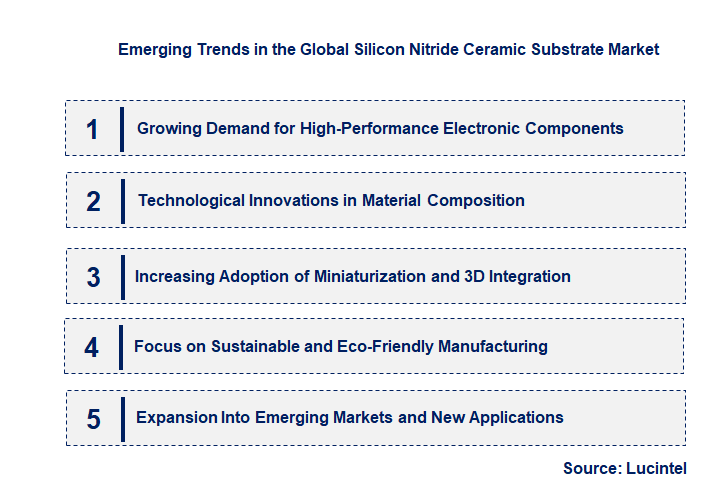
• Growing Demand for High-Performance Electronic Components: The increasing adoption of advanced electronics in consumer devices, automotive, and aerospace sectors is driving the need for silicon nitride substrates. These substrates offer excellent thermal stability, electrical insulation, and mechanical strength, making them ideal for high-power and high-frequency applications. As electronic devices become more compact and efficient, the demand for reliable, high-performance substrates is expected to surge, prompting manufacturers to innovate and expand production capacities.
• Technological Innovations in Material Composition: Researchers are developing new formulations of silicon nitride ceramics to enhance properties such as toughness, thermal conductivity, and corrosion resistance. These innovations enable substrates to withstand harsher environments and higher operational temperatures, broadening their application scope. Advances in processing techniques, like sintering and additive manufacturing, are also contributing to more precise and cost-effective production, which benefits end-users by providing tailored solutions for specific industry needs.
• Increasing Adoption of Miniaturization and 3D Integration: The trend toward miniaturization in electronics and the integration of 3D stacking technologies are fueling demand for smaller, more efficient substrates. Silicon nitride ceramics excellent thermal management and electrical insulation properties make them suitable for supporting densely packed electronic components. This trend is pushing manufacturers to develop thinner, more complex substrates that can accommodate the growing complexity of electronic circuits while maintaining performance and reliability.
• Focus on Sustainable and Eco-Friendly Manufacturing: Environmental concerns and regulatory pressures are prompting companies to adopt greener manufacturing practices. This includes reducing energy consumption during production, utilizing recyclable raw materials, and minimizing waste. The market is witnessing a shift toward sustainable sourcing and eco-friendly processing methods, which not only reduce environmental impact but also appeal to environmentally conscious consumers and clients, thereby influencing market growth and competitiveness.
• Expansion into Emerging Markets and New Applications: As developing regions increase their technological infrastructure, there is a rising demand for silicon nitride substrates in new applications such as renewable energy systems, electric vehicles, and medical devices. This expansion into emerging markets offers significant growth opportunities, encouraging companies to customize products for local needs and establish regional manufacturing facilities. Additionally, the diversification into new sectors is helping stabilize market growth amid fluctuations in traditional industries. In summary, these trends are collectively transforming the silicon nitride ceramic substrate market by fostering innovation, expanding application horizons, and emphasizing sustainability. They are enabling manufacturers to meet evolving industry demands, improve product performance, and gain competitive advantages in a dynamic global landscape.
• Technological Advancements in Manufacturing: New production techniques such as additive manufacturing and improved sintering processes have enhanced the quality and performance of silicon nitride ceramic substrates. These innovations reduce production costs and lead to more complex, high-precision components, boosting market competitiveness and expanding application scope.
• Rising Adoption in Electronics: The demand for high-performance electronic devices has increased the use of silicon nitride ceramic substrates due to their excellent thermal stability, electrical insulation, and mechanical strength. This trend has significantly expanded the market, especially in high-end consumer electronics and telecommunications.
• Expansion in Aerospace and Automotive Sectors: Silicon nitride ceramics are increasingly used in aerospace and automotive industries for engine components, sensors, and structural parts owing to their durability and heat resistance. This diversification has opened new revenue streams and driven market growth.
• Focus on Sustainability and Cost Reduction: Companies are investing in eco-friendly manufacturing processes and exploring alternative raw materials to reduce environmental impact and production costs. These efforts are making silicon nitride ceramic substrates more accessible and appealing to a broader customer base.
• Market Consolidation and Strategic Partnerships: Major players are forming alliances, mergers, and acquisitions to strengthen their market position, share technological expertise, and expand regional presence. This consolidation is fostering innovation and stabilizing market competition. In summary, these recent developments are propelling the silicon nitride ceramic substrate market toward rapid growth. Technological innovations, expanding applications, and strategic collaborations are enhancing product quality, reducing costs, and opening new markets. As industries increasingly rely on high-performance materials, the market is poised for sustained expansion, driven by ongoing research and global demand.
• Automotive Electronics: Enhanced durability and heat resistance drive adoption : Silicon nitride ceramic substrates are increasingly used in automotive electronics for their ability to withstand extreme temperatures and harsh conditions, improving vehicle safety and performance. This growth supports the development of electric vehicles and advanced driver-assistance systems, expanding market reach.
• Aerospace & Defense: High-performance requirements fuel demand : The aerospace and defense sectors require lightweight, heat-resistant materials for avionics and missile systems. Silicon nitride ceramics meet these needs, enabling the development of more reliable, high-performance components, thus opening new market segments.
• Power Electronics: Rising need for efficient thermal management : As power electronics become more prevalent in renewable energy and industrial applications, the demand for substrates that offer superior thermal conductivity increases. Silicon nitride ceramics provide effective heat dissipation, enhancing device efficiency and longevity.
• Consumer Electronics: Miniaturization and performance enhancement : The push for smaller, more powerful consumer devices drives the adoption of silicon nitride substrates. Their excellent electrical insulation and thermal stability support the development of compact, high-performance gadgets, expanding market opportunities.
• Medical Devices: Biocompatibility and durability : Silicon nitride ceramics are increasingly used in medical implants and diagnostic equipment due to their biocompatibility and durability. This growth opens avenues for advanced medical solutions that require reliable, long-lasting materials. In summary, these growth opportunities are significantly impacting the silicon nitride ceramic substrate market by expanding its application scope, enhancing product performance, and fostering innovation. As industries demand more resilient, efficient, and miniaturized components, the market is poised for sustained growth and technological advancement.
• Technological Innovation: The continuous development of advanced manufacturing techniques enhances the quality, performance, and reliability of silicon nitride ceramic substrates. Innovations such as improved sintering processes and material formulations enable substrates to withstand higher temperatures and mechanical stresses, making them suitable for high-end applications like aerospace, electronics, and automotive industries. These technological advancements reduce costs and expand application possibilities, fueling market growth.
• Growing Electronics Industry: The surge in demand for miniaturized, high-performance electronic devices drives the need for reliable substrates. Silicon nitride ceramics offer excellent thermal conductivity, electrical insulation, and mechanical strength, making them ideal for use in semiconductors, LED lighting, and power modules. As consumer electronics and industrial automation expand, the market for silicon nitride substrates benefits from increased adoption.
• Automotive Electrification: The shift towards electric vehicles (EVs) and hybrid electric vehicles (HEVs) significantly boosts demand for durable, heat-resistant substrates. Silicon nitride ceramics are crucial in power electronics, sensors, and battery management systems due to their ability to operate under extreme conditions. This trend supports the market’s expansion as automotive manufacturers seek reliable components to meet stringent safety and performance standards.
• Environmental Regulations and Sustainability: Stricter environmental policies encourage the adoption of materials that reduce energy consumption and emissions. Silicon nitride substrates, with their high thermal efficiency and durability, contribute to energy-efficient electronic systems. Regulatory pressures also promote the development of eco-friendly manufacturing processes, fostering market growth by aligning with global sustainability goals. The challenges in the silicon nitride ceramic substrate market are:
• High Production Costs: Manufacturing silicon nitride ceramic substrates involves complex, energy-intensive processes such as high-temperature sintering and precise material handling. These factors contribute to elevated production costs, which can hinder market penetration, especially in price-sensitive segments. Additionally, the need for specialized equipment and skilled labor further escalates expenses, impacting overall profitability and limiting widespread adoption.
• Supply Chain Disruptions: The market relies heavily on the availability of raw materials and specialized manufacturing components. Disruptions caused by geopolitical tensions, pandemics, or logistical issues can lead to shortages and delays, affecting production schedules and delivery timelines. Such uncertainties increase costs and reduce confidence among buyers, posing significant challenges to market stability and growth.
• Technological Compatibility and Integration: Integrating silicon nitride substrates into existing electronic systems requires compatibility with other materials and components. Challenges related to interface stability, thermal expansion mismatches, and manufacturing standardization can impede seamless adoption. Overcoming these technical barriers necessitates ongoing research and development, which can be resource-intensive and slow down market expansion. In summary, the silicon nitride ceramic substrate market is driven by technological advancements, industry demand for high-performance electronics, automotive electrification, and sustainability initiatives. However, high production costs, supply chain vulnerabilities, and integration challenges pose significant hurdles. These factors collectively influence market dynamics, requiring stakeholders to innovate continuously and adapt strategies to sustain growth. The interplay of these drivers and challenges will shape the future landscape, determining the pace and scope of market expansion in the coming years.
• Nittera
• Denka
• Proterial
• MARUWA
• Kyocera
• Japan Fine Ceramics
• Weihai Yuanhuan
• Sinoma Advanced Nitride Ceramics
• Jiangsu Fulehua Semiconductor Technology
• Boson Material
• 0.32mm SiN Substrate
• 0.25mm SiN Substrate
• Automobile
• Traction & Railway
• PV & Wind Power
• Military & Aerospace
• Industrial
• Others
• North America
• Europe
• Asia Pacific
• The Rest of the World
• United States: The U.S. market has seen substantial innovation in silicon nitride ceramic substrates, driven by the automotive and aerospace sectors. Leading companies are investing in R&D to develop high-temperature resistant and more durable materials. The adoption of these substrates in electric vehicles and advanced electronics is accelerating, supported by government initiatives promoting clean energy and technological innovation. Additionally, the U.S. is witnessing increased collaborations between academia and industry to improve manufacturing processes and material performance, further strengthening its market position.
• China: China remains a dominant player in the silicon nitride ceramic substrate market, with rapid industrial growth and government support fueling expansion. The focus is on developing cost-effective, high-quality substrates for consumer electronics, telecommunications, and automotive applications. Chinese manufacturers are adopting advanced manufacturing techniques to improve product quality and reduce costs. The market is also benefiting from increased domestic demand for electric vehicles and 5G infrastructure, which require high-performance substrates. Strategic investments and technological advancements are expected to sustain Chinas competitive edge in this sector.
• Germany: Germanys market is characterized by a strong emphasis on high-precision manufacturing and innovation. The country is leveraging its expertise in engineering and materials science to develop advanced silicon nitride substrates for aerospace, automotive, and industrial applications. German companies are focusing on improving thermal stability and mechanical strength of substrates to meet stringent quality standards. The integration of Industry 4.0 practices is enhancing production efficiency and customization capabilities. Germanys commitment to sustainability is also driving research into environmentally friendly manufacturing processes and recyclable materials within this market.
• India: The Indian market is emerging as a significant player, with increasing investments in electronics manufacturing and infrastructure development. The focus is on developing affordable, high-quality silicon nitride substrates to support the growing demand for consumer electronics, telecommunications, and automotive components. Government initiatives aimed at promoting Make in India and digital transformation are boosting local production capabilities. Indian companies are collaborating with international firms to adopt advanced technologies and expand their market share. The market is expected to grow steadily as demand for high-performance electronic components continues to rise.
• Japan: Japan maintains a strong presence in the silicon nitride ceramic substrate market, driven by its advanced technological base and focus on innovation. The country is specializing in high-temperature resistant and highly durable substrates for use in semiconductors, aerospace, and automotive industries. Japanese firms are investing in R&D to develop next-generation materials with enhanced electrical and thermal properties. The integration of automation and smart manufacturing techniques is improving production efficiency. Japans emphasis on quality and reliability continues to position it as a key player in the global market, with ongoing efforts to develop environmentally sustainable manufacturing processes.


• Nittera
• Denka
• Proterial
• MARUWA
• Kyocera
• Japan Fine Ceramics
• Weihai Yuanhuan
• Sinoma Advanced Nitride Ceramics
• Jiangsu Fulehua Semiconductor Technology
• Boson Material Q5. Which silicon nitride ceramic substrate market segment will be the largest in future? Answer: Lucintel forecasts that, within the type category, 0.25mm SiN substrate is expected to witness higher growth over the forecast period. Q6. In silicon nitride ceramic substrate market, which region is expected to be the largest in next 5 years? Answer: In terms of region, APAC is expected to witness the highest growth over the forecast period. Q7. Do we receive customization in this report? Answer: Yes, Lucintel provides 10% customization without any additional cost.


Choose a license that fits your team. Instant PDF delivery.
Prices exclude taxes. Instant delivery. Custom licensing available on request.
Market Report · July 29, 2026
Market Report · July 20, 2026
Market Report · July 20, 2026
Trusted partner for strategic intelligence and business growth


Receive a complimentary market analysis tailored to your industry. Our analysts will identify key growth opportunities and competitive dynamics specific to your business.

Market size, growth rate, and key trend analysis for your specific sector.

Top competitor positioning and market share analysis.

Strategic recommendations backed by data-driven insights.
Get curated market intelligence and competitive moves straight to your inbox.
By subscribing, you agree to receive our monthly insights. Unsubscribe anytime.
Receive a complimentary market analysis tailored to your industry. Our analysts will identify key growth opportunities and competitive dynamics specific to your business.
Market size, growth rate, and key trend analysis for your specific sector.
Top competitor positioning and market share analysis.
Strategic recommendations backed by data-driven insights.
Get curated market intelligence, emerging trends, and competitive moves straight to your inbox each month.
By subscribing, you agree to receive our monthly insights. Unsubscribe anytime.
We'll send your sample report shortly.