
Market Report · July 24, 2026

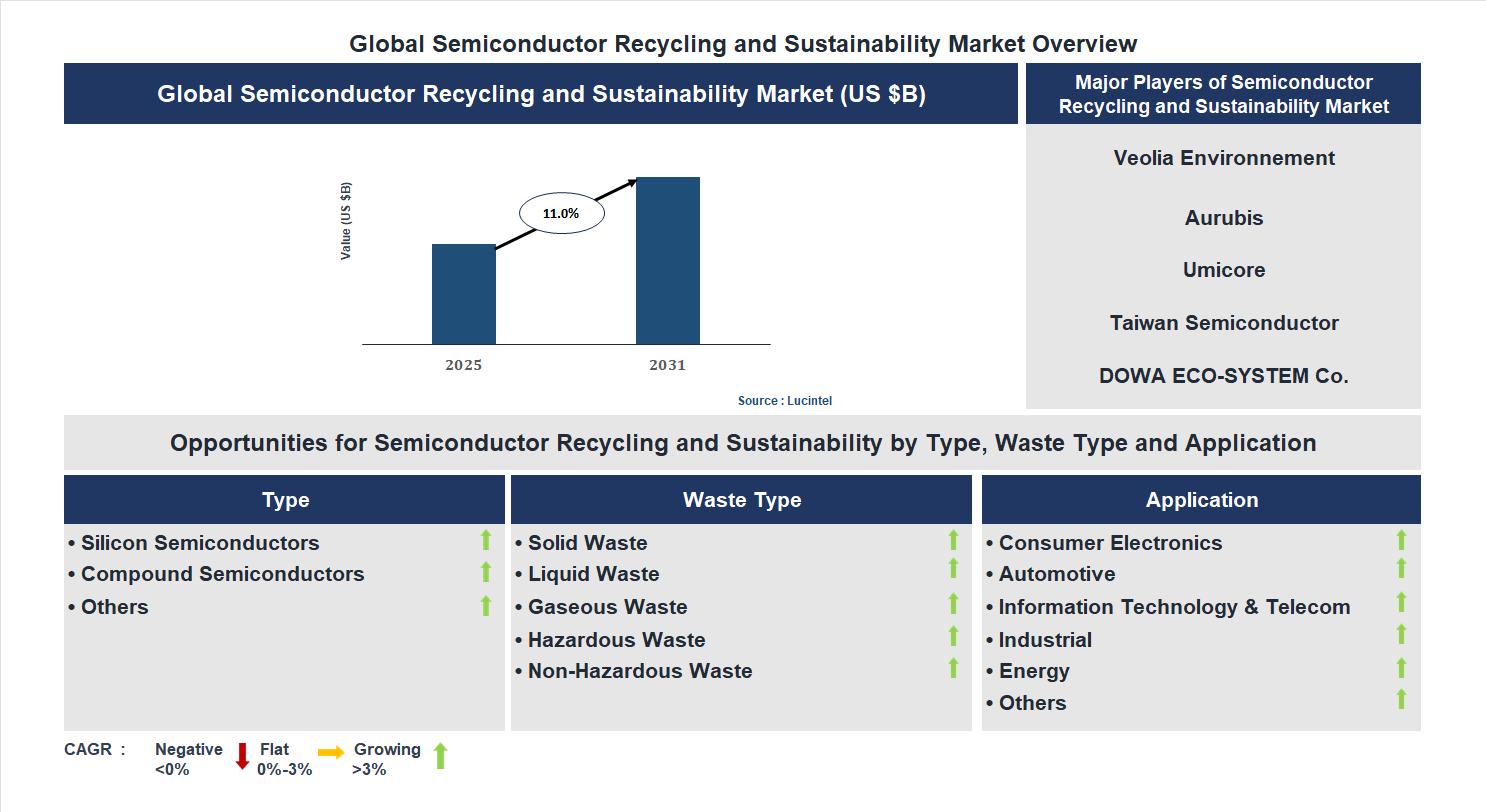
Key data points: The growth forecast = 11% annually for the next 7 years. Scroll below to get more insights. This market report covers trends, opportunities and forecasts in semiconductor recycling and sustainability market to 2031 by type (silicon semiconductors, compound semiconductors, and others), waste type (solid waste, liquid waste, gaseous waste, hazardous waste, and non-hazardous waste), application (consumer electronics, automotive, information technology & telecom, industrial, energy, and others), and region (North America, Europe, Asia Pacific, and the Rest of the World)
We'll send your sample report shortly.
• Lucintel forecasts that, within the type category, silicon semiconductor is expected to witness higher growth over the forecast period.
• Within the application category, automotive is expected to witness the highest growth.
• In terms of region, APAC is expected to witness the highest growth over the forecast period. Gain valuable insights for your business decisions with our comprehensive 150+ page report. Sample figures with some insights are shown below.
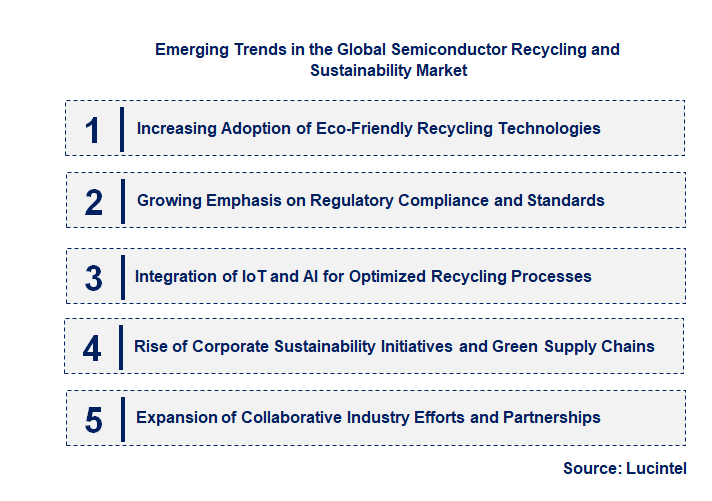
• Increasing adoption of eco-friendly recycling technologies: Companies like samsung and apple are investing in advanced recycling methods that recover valuable materials efficiently. These technologies reduce environmental impact by minimizing hazardous waste and conserving resources. Innovations such as chemical and mechanical recycling processes enable the recovery of rare metals like gold, palladium, and copper, which are critical for semiconductor manufacturing. This trend not only supports sustainability goals but also helps companies reduce costs and dependency on raw material imports, fostering a circular economy within the industry.
• Growing emphasis on regulatory compliance and standards: Governments worldwide are implementing stricter regulations on electronic waste disposal and recycling practices. Companies such as intel and tsmc are adapting by aligning their operations with international standards like e-waste directives and environmental certifications. Compliance ensures legal adherence, reduces penalties, and enhances corporate reputation. It also encourages transparency and accountability in supply chains. This trend drives innovation in recycling processes and promotes sustainable practices across the industry, ultimately fostering a more responsible semiconductor ecosystem.
• Integration of IoT and AI for optimized recycling processes: Firms like nvidia and qualcomm are leveraging Internet of Things (IoT) sensors and artificial intelligence (AI) algorithms to monitor and optimize recycling operations. These technologies enable real-time tracking of materials, improve sorting accuracy, and enhance process efficiency. AI-driven analytics help identify the most valuable materials for recovery, reducing waste and energy consumption. This integration results in smarter recycling facilities that are more cost-effective and environmentally friendly, accelerating the adoption of sustainable practices in semiconductor waste management.
• Rise of corporate sustainability initiatives and green supply chains: Major players such as samsung and apple are committing to ambitious sustainability targets, including zero-waste goals and renewable energy use. They are establishing green supply chains that prioritize recycled materials and environmentally responsible sourcing. These initiatives improve brand image, meet consumer demand for eco-friendly products, and reduce overall environmental impact. The trend encourages suppliers and partners to adopt sustainable practices, fostering industry-wide change. As a result, sustainability becomes a core component of corporate strategy, influencing product design, manufacturing, and recycling processes.
• Expansion of collaborative industry efforts and partnerships: Companies like tsmc and intel are forming alliances with recyclers, research institutions, and environmental organizations to develop standardized recycling protocols and share best practices. These collaborations facilitate knowledge exchange, technological innovation, and resource pooling. Industry consortia and public-private partnerships are crucial for scaling sustainable recycling solutions and influencing policy development. This collective approach accelerates market growth, enhances technological capabilities, and promotes a unified commitment to sustainability, ultimately transforming the semiconductor recycling landscape into a more resilient and environmentally conscious sector. In summary, these emerging trends are fundamentally reshaping the semiconductor recycling and sustainability market by fostering innovation, ensuring regulatory compliance, and promoting collaborative efforts. They are driving the industry toward more sustainable, efficient, and responsible practices, which are essential for meeting environmental challenges and supporting long-term growth in the semiconductor sector.
• Adoption of Advanced Recycling Technologies: companies like ams and samsung are implementing cutting-edge processes such as chemical and thermal recycling, which significantly improve material recovery rates and purity. This innovation reduces reliance on virgin materials, lowers costs, and minimizes environmental footprint, thereby enhancing sustainability credentials and supply chain resilience.
• Regulatory and Policy Changes: governments worldwide are introducing stricter regulations on e-waste management and resource recycling. For instance, the European Union’s Circular Economy Action Plan mandates increased recycling targets, compelling companies to adopt more sustainable practices. These policies accelerate market growth by incentivizing investment in recycling infrastructure and technology.
• Strategic Partnerships and Collaborations: industry players are forming alliances to develop comprehensive recycling solutions. collaborations between companies like intel and ecoATM facilitate the collection and refurbishment of used semiconductors, promoting circularity. Such partnerships enhance technological capabilities, expand recycling networks, and foster innovation, ultimately strengthening market competitiveness.
• Investment in Sustainable Infrastructure: venture capital and corporate investments are fueling the development of specialized recycling facilities. firms like texas instruments are investing in state-of-the-art plants equipped with automation and AI to optimize material recovery. This infrastructure expansion boosts capacity, efficiency, and scalability, supporting the market’s long-term growth.
• Rising Consumer and Corporate Demand for Sustainability: end-users and OEMs are increasingly prioritizing eco-friendly products. brands like apple and dell are integrating recycled materials into their devices, driven by consumer preferences and corporate social responsibility goals. This demand encourages manufacturers to adopt sustainable sourcing and recycling practices, further propelling market expansion. In summary, these recent developments are significantly transforming the semiconductor recycling and sustainability market by fostering technological innovation, regulatory compliance, strategic collaborations, infrastructure growth, and heightened demand for sustainable products. Collectively, they are driving the market toward a more sustainable, efficient, and resilient future, with substantial economic and environmental benefits.
• Advanced Material Recovery: This involves developing innovative processes to efficiently extract valuable materials from semiconductor waste, reducing reliance on virgin resources. It enhances sustainability by minimizing environmental impact and lowering production costs, attracting manufacturers seeking eco-friendly solutions.
• Eco-friendly Manufacturing Processes: Implementing greener manufacturing techniques reduces waste and energy consumption. This not only complies with regulations but also appeals to environmentally conscious consumers, boosting brand reputation and market share for companies adopting sustainable practices.
• Circular Economy Models: Promoting reuse, refurbishment, and recycling of semiconductor components supports a circular economy. This approach decreases waste and resource consumption, fostering long-term cost savings and sustainability for industry players.
• Regulatory Compliance and Certification: As governments impose stricter environmental regulations, companies investing in compliant recycling and sustainability practices gain competitive advantages. Certifications serve as proof of commitment, opening new market opportunities and enhancing brand credibility.
• Integration of IoT and AI in Recycling: Leveraging IoT and AI technologies optimizes recycling processes, improves material sorting accuracy, and reduces operational costs. This technological integration accelerates recycling efficiency and supports scalable, sustainable solutions. In summary, these growth opportunities are significantly impacting the semiconductor recycling and sustainability market by fostering innovation, reducing environmental footprints, and enabling companies to meet regulatory and consumer demands. As a result, the market is poised for substantial expansion, driven by sustainable practices and technological advancements.
• Technological Innovation: The development of advanced recycling technologies, such as chemical and mechanical processes, enables efficient recovery of rare and precious metals from electronic waste. These innovations reduce dependency on virgin raw materials, lower production costs, and minimize environmental impact. As technology progresses, recycling becomes more cost-effective and scalable, encouraging industry adoption. Moreover, innovations in material separation and purification improve the quality of recovered materials, making them suitable for reuse in semiconductor manufacturing. This technological evolution supports sustainability goals and enhances supply chain resilience, fostering long-term market growth.
• Increasing Environmental Regulations: Governments worldwide are implementing stricter environmental policies aimed at reducing electronic waste and promoting recycling. Regulations such as the European Union’s Waste Electrical and Electronic Equipment (WEEE) Directive and similar policies in North America and Asia mandate responsible disposal and recycling practices. These regulations incentivize semiconductor companies to adopt sustainable practices, invest in recycling infrastructure, and comply with environmental standards. Non-compliance can result in hefty fines and reputational damage, compelling industry players to prioritize sustainability. Consequently, regulatory pressures are a significant driver for market expansion and innovation in recycling technologies.
• Rising Demand for Sustainable Supply Chains: The global push towards sustainability has heightened awareness among semiconductor manufacturers about resource conservation and ethical sourcing. Recycling electronic waste helps secure a steady supply of critical materials like gold, palladium, and rare earth elements, reducing reliance on environmentally damaging mining activities. Companies are increasingly integrating recycling into their supply chain strategies to enhance resource efficiency, reduce costs, and meet consumer expectations for environmentally responsible products. This shift not only supports corporate social responsibility initiatives but also mitigates risks associated with resource scarcity, thereby driving market growth.
• Economic Benefits and Cost Savings: Recycling semiconductor materials offers significant economic advantages by reducing raw material procurement costs and minimizing waste disposal expenses. Recovering valuable metals from electronic waste can be more cost-effective than mining new resources, especially amid rising raw material prices. Additionally, recycling processes can generate revenue through the sale of recovered materials, creating new profit streams for companies. These economic incentives motivate semiconductor firms to invest in recycling infrastructure and adopt sustainable practices, ultimately contributing to a more resilient and cost-efficient supply chain.
• Growing Consumer and Industry Awareness: Increasing awareness among consumers and industry stakeholders about environmental issues and sustainability benefits is fueling demand for eco-friendly products. Semiconductor companies are responding by adopting greener manufacturing practices and promoting their sustainability initiatives. This consumer-driven demand influences industry standards and encourages companies to prioritize recycling and sustainable sourcing. As awareness continues to grow, market players are compelled to innovate and improve recycling processes to meet environmental expectations, thereby fostering a competitive advantage and expanding market opportunities. The challenges facing this semiconductor recycling and sustainability market include:
• High Recycling Costs: Implementing advanced recycling technologies involves substantial capital investment and operational expenses. The complexity of semiconductor materials and the need for specialized equipment increase costs, which can hinder widespread adoption, especially among smaller players. Additionally, the recovery process may not always be economically viable if the value of recovered materials is low or market prices fluctuate. These high costs pose a significant barrier to scaling recycling efforts and limit the overall growth of the market, requiring innovative solutions to improve cost efficiency.
• Technological Limitations: Despite advancements, current recycling technologies face limitations in efficiency, recovery rates, and purity of recovered materials. Some materials are difficult to separate or recover without contamination, reducing their usability in manufacturing. The rapid pace of technological change in semiconductors also means recycling processes must continually evolve to handle new materials and designs. These technological challenges can delay implementation, increase costs, and restrict the quality of recycled materials, impacting the overall sustainability and profitability of recycling initiatives.
• Regulatory and Standardization Challenges: While regulations promote recycling, inconsistent standards across regions create complexities for global companies. Variations in compliance requirements, certification processes, and enforcement can hinder cross-border recycling efforts and supply chain integration. Additionally, the lack of universally accepted standards for recycled materials can affect their acceptance in manufacturing, limiting market growth. Navigating these regulatory landscapes requires significant resources and expertise, posing a challenge for companies aiming to expand their recycling operations internationally. In summary, the semiconductor recycling and sustainability market is driven by technological innovations, regulatory pressures, economic incentives, and increasing sustainability awareness. However, high costs, technological limitations, and regulatory inconsistencies present notable challenges. These factors collectively influence the market’s growth trajectory, requiring strategic investments and collaborative efforts to overcome barriers. As industry stakeholders adapt to these drivers and challenges, the market is poised for sustainable expansion, contributing to resource conservation and environmental protection while supporting technological progress and economic resilience.
• Veolia Environnement
• Aurubis
• Umicore
• Taiwan Semiconductor
• DOWA ECO-SYSTEM Co.
• Silicon Semiconductors
• Compound Semiconductors
• Others
• Solid Waste
• Liquid Waste
• Gaseous Waste
• Hazardous Waste
• Non-Hazardous Waste
• Consumer Electronics
• Automotive
• Information Technology & Telecom
• Industrial
• Energy
• Others
• North America
• Europe
• Asia Pacific
• The Rest of the World
• United States, recent developments include the expansion of recycling programs by companies like ams and texas instruments, focusing on recovering rare materials from electronic waste. The government has introduced new regulations encouraging sustainable practices, and research institutions are developing advanced recycling technologies to improve efficiency and reduce costs. Industry collaborations aim to create a circular economy for semiconductor materials, fostering innovation and environmental responsibility.
• China has made significant investments in semiconductor recycling infrastructure, with companies such as smic and china resources recycling leading initiatives to recover valuable metals from electronic waste. The government’s policies promote sustainable development and support the growth of domestic recycling industries. Recent advancements include the deployment of automated recycling facilities and the integration of AI-driven sorting systems to enhance material recovery rates, aligning with China’s broader goals of technological self-sufficiency.
• Germany is at the forefront of sustainable semiconductor practices, with companies like infineon and rohm implementing eco-friendly manufacturing processes and recycling initiatives. The country’s strict environmental regulations have driven innovation in waste management and resource recovery. Recent developments include the adoption of circular economy models and investments in research to develop biodegradable materials and more efficient recycling techniques, reinforcing Germany’s leadership in sustainable electronics.
• India has seen rapid growth in semiconductor recycling efforts, with companies such as vedanta and tata group establishing recycling plants to address the rising electronic waste. The government has introduced policies to promote sustainable electronics manufacturing and recycling. Recent advancements include the adoption of environmentally friendly recycling methods and public-private partnerships aimed at creating a robust e-waste management ecosystem, supporting India’s goal of sustainable industrial growth.
• Japan continues to innovate in semiconductor recycling, with firms like sony and renesas focusing on reducing environmental impact through advanced recycling technologies. The country’s stringent environmental standards and commitment to sustainability have led to the development of efficient recovery processes for rare and precious metals. Recent initiatives include the integration of IoT and AI in recycling systems to optimize resource recovery and minimize waste, positioning Japan as a leader in sustainable electronics manufacturing.


• Veolia Environnement
• Aurubis
• Umicore
• Taiwan Semiconductor
• DOWA ECO-SYSTEM Co. Q5. Which semiconductor recycling and sustainability market segment will be the largest in future? Answer: Lucintel forecasts that, within the type category, silicon semiconductor is expected to witness higher growth over the forecast period. Q6. In semiconductor recycling and sustainability market, which region is expected to be the largest in next 5 years? Answer: In terms of region, APAC is expected to witness the highest growth over the forecast period. Q7. Do we receive customization in this report? Answer: Yes, Lucintel provides 10% customization without any additional cost.


Choose a license that fits your team. Instant PDF delivery.
Prices exclude taxes. Instant delivery. Custom licensing available on request.
Market Report · July 24, 2026
Market Report · July 20, 2026
Market Report · July 20, 2026
Trusted partner for strategic intelligence and business growth


Receive a complimentary market analysis tailored to your industry. Our analysts will identify key growth opportunities and competitive dynamics specific to your business.

Market size, growth rate, and key trend analysis for your specific sector.

Top competitor positioning and market share analysis.

Strategic recommendations backed by data-driven insights.
Get curated market intelligence and competitive moves straight to your inbox.
By subscribing, you agree to receive our monthly insights. Unsubscribe anytime.
Receive a complimentary market analysis tailored to your industry. Our analysts will identify key growth opportunities and competitive dynamics specific to your business.
Market size, growth rate, and key trend analysis for your specific sector.
Top competitor positioning and market share analysis.
Strategic recommendations backed by data-driven insights.
Get curated market intelligence, emerging trends, and competitive moves straight to your inbox each month.
By subscribing, you agree to receive our monthly insights. Unsubscribe anytime.
We'll send your sample report shortly.