
Market Report · May 18, 2026

This market report covers trends, opportunities, and forecasts in the global semiconductor gas filter market to 2031 by technology (membrane filtration technology, activated carbon filtration, ceramic filtration technology, ion exchange technology, others), end use industry (in-line filters, gasket filters), and region (North America, Europe, Asia Pacific, and the Rest of the World)
We'll send your sample report shortly.
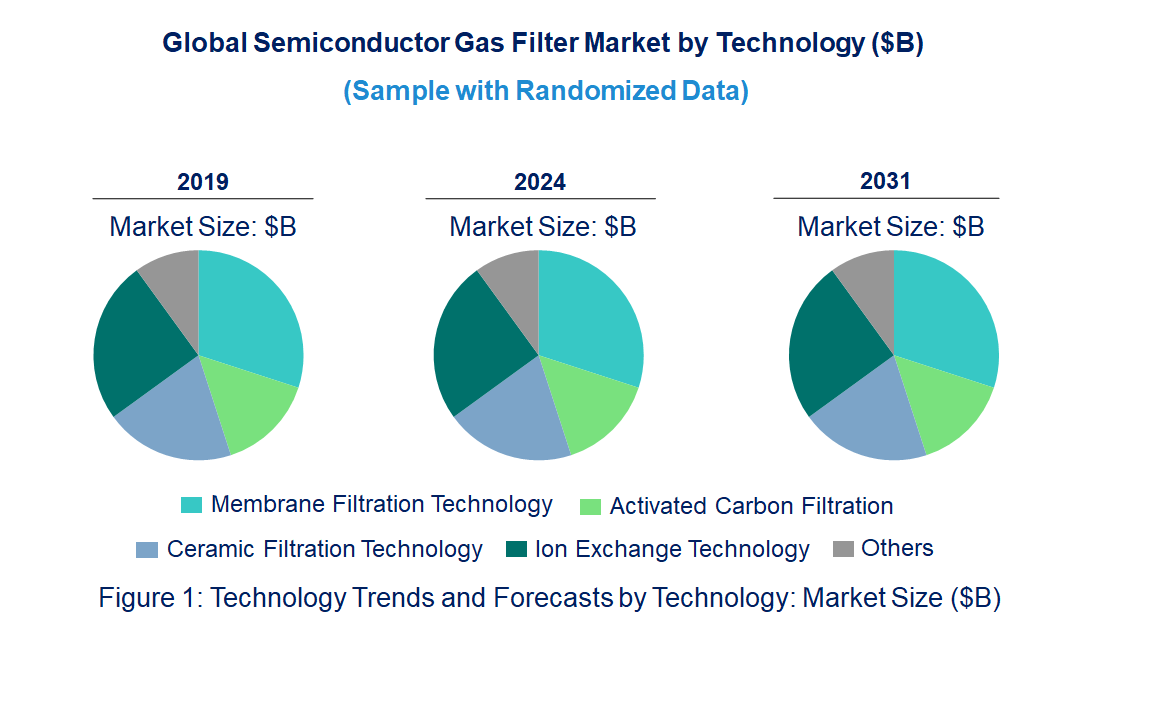
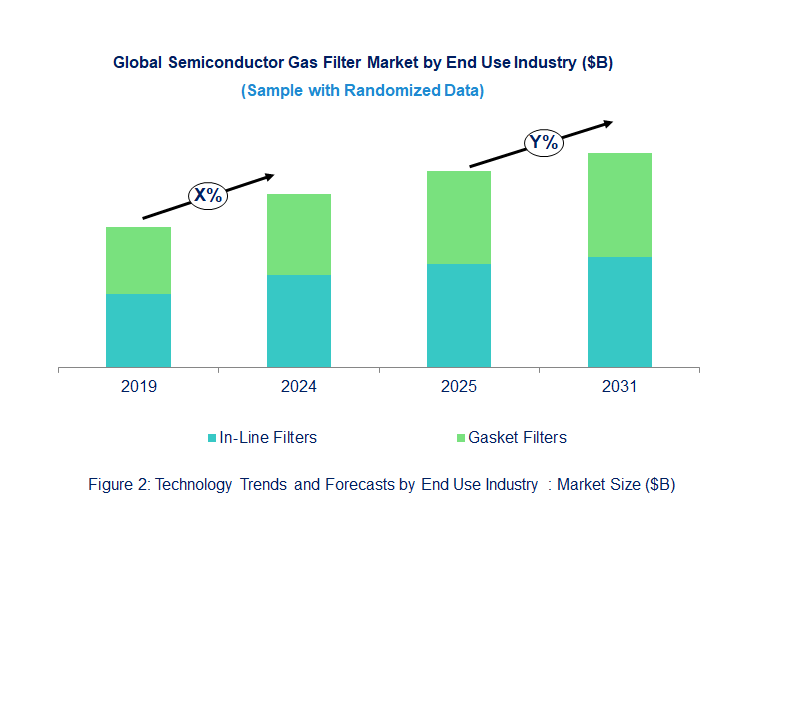
• Advancement in Membrane Filtration Technology: Membrane filtration technology has gained momentum in recent years as it offers superior filtration efficiency, particularly for high-purity applications. This technology allows for the removal of submicron particles, which is crucial in semiconductor fabrication. Its ability to provide a more consistent and uniform filtration performance compared to traditional methods makes it an increasingly popular choice in semiconductor gas filtration.
• Shift toward Sustainable and Eco-friendly Filtration Solutions: Environmental sustainability is becoming a central concern in semiconductor manufacturing. There is a growing trend toward developing filtration solutions that minimize waste and reduce energy consumption. Technologies such as ceramic filters and activated carbon filters are being improved for reusability and energy efficiency, helping companies meet stricter environmental regulations while also improving operational cost-effectiveness.
• Integration of Smart and IoT-enabled Filters: With the rise of the Industrial Internet of Things (IIoT), there is an increasing demand for intelligent, sensor-equipped gas filters. These filters can monitor the performance of the filtration system in real-time, detect potential issues before they occur, and optimize filtration processes automatically. The integration of data analytics with semiconductor gas filtration helps improve the system’s reliability and reduce maintenance costs, while also ensuring higher purity levels in semiconductor production.
• Increase in Demand for High-Efficiency In-Line Filters: In-line filters are gaining preference due to their ability to integrate directly into the semiconductor manufacturing process, minimizing downtime and space requirements. These filters are capable of handling large volumes of gases while maintaining optimal filtration performance, making them ideal for the high-volume, high-precision needs of semiconductor fabs. Their efficiency in removing contaminants from the gas stream ensures the production of high-quality semiconductors.
• Customization and Specialized Filters for Niche Applications: As the semiconductor industry continues to diversify with the advent of new technologies like 5G, AI, and autonomous systems, there is a rising demand for custom-designed gas filters tailored to specific needs. Filters that are optimized for particular gases or contaminants, such as hydrogen or chlorine, are becoming more common. These specialized filters offer improved performance and longevity in niche applications, providing manufacturers with the precision required for advanced semiconductor production. These emerging trends in the semiconductor gas filter market reflect a broader shift toward more efficient, sustainable, and technologically advanced solutions. As manufacturers continue to push the boundaries of semiconductor technology, the demand for high-performance filtration systems that can support these innovations grows. From the development of smarter, more efficient filters to the increasing emphasis on environmental sustainability, these trends are helping to shape the future of semiconductor production, ensuring that the market keeps pace with the industry's ever-evolving needs.
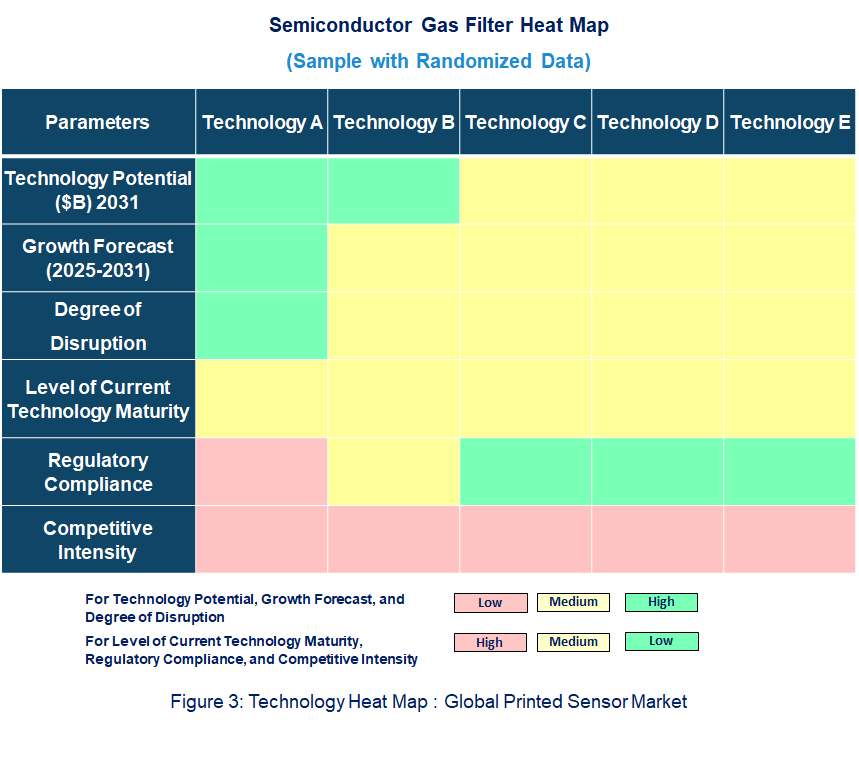
• Technology Potential: The semiconductor gas filter market is vast, as advanced filtration technologies play a critical role in ensuring the purity of gases used in semiconductor manufacturing. Innovations such as membrane filtration, ion exchange, and ceramic filtration technologies offer significant improvements in filtration efficiency, enabling higher-quality semiconductor production.
• Degree of Disruption: The market is experiencing notable shifts with emerging technologies. These disruptions primarily come from the transition to more efficient, sustainable, and automated filtration solutions. As new filtration methods emerge, traditional systems like activated carbon filters face challenges in maintaining competitiveness.
• Technology Maturity: The semiconductor gas filter market varies. While basic filtration methods like activated carbon filtration are well-established, newer technologies such as membrane and ion exchange filtration are still maturing but are gaining widespread adoption due to their higher efficiency and performance.
• Regulatory Compliance: Environmental concerns are associated with semiconductor manufacturing. Filters must meet strict regulations regarding waste disposal, energy efficiency, and air quality standards, ensuring that semiconductor production remains sustainable and environmentally responsible.
• Entegris, Inc.: Entegris has secured up to 75 million dollars in funding under the United States CHIPS and Science Act to develop a new facility in Colorado Springs. This facility will focus on producing liquid filter membranes and Front Opening Unified Pods (FOUPs) for semiconductor wafer transport. The second phase will expand into advanced liquid filters, purifiers, and fluid handling solutions, supporting major clients such as Intel, TSMC, Micron, and GlobalFoundries.
• Parker-Hannifin Corporation: Parker-Hannifin continues to innovate in the semiconductor gas filtration market by developing advanced filtration solutions that enhance the purity and efficiency of gases used in semiconductor manufacturing. Their products are designed to meet the stringent requirements of the semiconductor industry, ensuring high performance and reliability.
• Pall Corporation: Pall Corporation has invested over 100 million dollars in a new manufacturing facility in Singapore to produce cutting-edge filtration solutions for next-generation semiconductor manufacturing nodes. This facility focuses on lithography and wet-etch filtration, purification, and separation solutions, aiming to meet the high demand for advanced node solutions in semiconductor manufacturing.
• Merck KGaA: Merck KGaA anticipates up to 8 percent currency-adjusted operating earnings growth in 2025, driven by strong demand for semiconductor chemicals and laboratory equipment used in biotech drug production. The company forecast suggests adjusted EBITDA for 2025 will be between 6.1 billion euros (6.6 billion dollars) and 6.6 billion euros, compared to 6.07 billion euros in 2024.
• Porvair Filtration Group: Porvair Filtration Group has launched the GasPro TEM-2260 series filters, specifically designed for the filtration of semiconductor gases when ultra-high flow rates are required. These filters feature a PTFE membrane and a polypropylene-supported cartridge enclosed in a 316L stainless steel electropolished welded housing, delivering 0.003-micron particle retention where high flow rates are necessary and space is limited. These developments underscore the semiconductor industry commitment to advancing filtration technologies to meet the evolving demands of modern manufacturing processes. From securing substantial investments to launching innovative products, these companies are playing pivotal roles in enhancing the efficiency, sustainability, and reliability of semiconductor gas filtration systems. As the industry progresses, continued innovation and collaboration will be essential in addressing the challenges and opportunities in semiconductor manufacturing.
• Rising Demand for High-Purity Gases in Semiconductor Manufacturing: The push for smaller, more powerful chips has increased the demand for ultra-clean gases. Advanced filtration systems are essential to remove even trace contaminants, ensuring product yield and process integrity.
• Expansion of Semiconductor Fabs and Foundries Globally: The global buildout of semiconductor fabs, especially in Asia and North America, is driving massive demand for gas filtration solutions. New facilities require cutting-edge filters to meet next-generation manufacturing requirements.
• Adoption of IoT and Automation in Manufacturing Processes: Smart filtration systems embedded with sensors and real-time monitoring capabilities help optimize operations and predict maintenance needs, improving uptime and reducing operational costs.
• Regulatory Pressure for Environmental Compliance: Stricter environmental and safety regulations are pushing manufacturers to adopt cleaner, energy-efficient filtration technologies that reduce emissions and waste, creating new opportunities for eco-friendly filter solutions.
• R and D Investments in Nanofiltration and Advanced Materials: Continued innovation in materials science, such as PTFE and advanced ceramics, is enabling the development of filters with higher efficiency, longer lifespans, and lower maintenance, addressing the need for precision and reliability. Challenges in the semiconductor gas filter market are:
• High Costs of Advanced Filtration Systems: Cutting-edge gas filters involve significant upfront investment and operating costs, making adoption difficult for smaller players or in price-sensitive regions.
• Complexity in Integrating Filters into Existing Processes: Integrating new filtration technologies into legacy systems can disrupt production and require costly reengineering, slowing the adoption rate.
• Stringent Performance Standards: Meeting the ultra-high purity standards set by semiconductor manufacturers and regulators adds pressure on filter producers to ensure flawless performance, limiting flexibility in material choice and design. The growth of the semiconductor gas filter market is being driven by the need for cleaner production environments, fueled by advanced chip manufacturing trends. While high costs and integration challenges exist, the surge in global fab expansions, environmental focus, and smart technologies continues to generate significant opportunities, reshaping the filtration landscape.
• Entegris, Inc.
• Parker-Hannifin Corporation
• Pall Corporation
• Merck Kgaa
• Porvair Filtration Group
• Technology Readiness, Competitive Level, Regulatory Compliance, and Key Applications by Technology Type: Membrane filtration technology, highly competitive, with strict regulatory adherence; essential in front-end semiconductor gas and chemical delivery systems. Activated carbon filtration is moderately competitive, used for organic vapor control in supporting systems. Ceramic filtration Technology is TRL 8, with growing competition in harsh environments; key in high-temperature gas lines and corrosive gas filtration. Ion exchange technology is moderately competitive and tightly regulated, especially where ionic purity is critical in specialty gas filtration. Other technologies (e.g., plasma or advanced nanomaterials) are emerging in competitiveness, with evolving compliance standards, applied in next-gen node fabs and ultra-high-purity (UHP) pipelines. Each technology aligns with specific application niches, where readiness and regulatory fit directly impact adoption in semiconductor manufacturing environments.
• Disruption Potential of Technologies for Semiconductor Gas Filter Technology: Membrane filtration technology shows high disruption potential due to its precision in removing sub-micron particles and chemical contaminants, which is vital in semiconductor fabrication. Activated carbon filtration offers moderate disruption, particularly for organic vapor removal, but is limited by its saturation and regeneration requirements. Ceramic filtration technology is highly disruptive in high-temperature and chemically aggressive environments due to its durability and fine filtration. Ion exchange technology is moderately disruptive, primarily in gas purification processes that require ionic contaminant removal. Other emerging technologies, such as plasma-based purification or nanomaterial-enhanced filters, hold niche but growing disruption potential due to extreme purity demands in advanced node semiconductor manufacturing. Overall, disruption is driven by compatibility with ultra-clean environments, scalability, and filter longevity, with membrane and ceramic filters leading the evolution of gas filtration systems in fabs.
• Competitive Intensity and Regulatory Compliance of Technologies for Semiconductor Gas Filter Technology: Membrane and ceramic filtration technologies face high competitive intensity due to their critical role in ensuring ultrapure gas standards for chip production. Activated carbon filtration is less competitive but sees steady demand in niche purification applications. Ion Exchange Technology has moderate competition, often integrated into hybrid systems. Emerging filtration technologies are attracting attention from innovators and startups, raising the competitive bar. Regulatory compliance is stringent across all technologies, with standards like SEMI F61 and ISO cleanliness specifications guiding materials, performance, and purity. Membrane and ceramic filters must meet tight particulate and chemical leaching limits. Activated carbon systems face compliance related to desorption risks and maintenance intervals. Ion exchange must avoid introducing ionic contaminants, especially in front-end fabrication processes. Compliance and competition are driven by the industry's demand for zero-defect, contamination-free environments.
• Membrane Filtration Technology
• Activated Carbon Filtration
• Ceramic Filtration Technology
• Ion Exchange Technology
• Others
• In-Line Filters
• Gasket Filters
• North America
• Europe
• Asia Pacific
• The Rest of the World
• Latest Developments and Innovations in the Semiconductor Gas Filter Technologies
• Companies / Ecosystems
• Strategic Opportunities by Technology Type


Choose a license that fits your team. Instant PDF delivery.
Prices exclude taxes. Instant delivery. Custom licensing available on request.
Market Report · May 18, 2026
Market Report · May 18, 2026
Market Report · May 18, 2026
Trusted partner for strategic intelligence and business growth


Receive a complimentary market analysis tailored to your industry. Our analysts will identify key growth opportunities and competitive dynamics specific to your business.

Market size, growth rate, and key trend analysis for your specific sector.

Top competitor positioning and market share analysis.

Strategic recommendations backed by data-driven insights.
Get curated market intelligence and competitive moves straight to your inbox.
By subscribing, you agree to receive our monthly insights. Unsubscribe anytime.
Receive a complimentary market analysis tailored to your industry. Our analysts will identify key growth opportunities and competitive dynamics specific to your business.
Market size, growth rate, and key trend analysis for your specific sector.
Top competitor positioning and market share analysis.
Strategic recommendations backed by data-driven insights.
Get curated market intelligence, emerging trends, and competitive moves straight to your inbox each month.
By subscribing, you agree to receive our monthly insights. Unsubscribe anytime.
We'll send your sample report shortly.