
Market Report · May 18, 2026

This market report covers trends, opportunities, and forecasts in the global self-learning neuro-chip market to 2031 by technology (image recognition, signal recognition, and data mining), application (artificial intelligence, automation and control systems, internet of things, medical, intelligent transportation systems, and others), and region (North America, Europe, Asia Pacific, and the Rest of the World)
We'll send your sample report shortly.
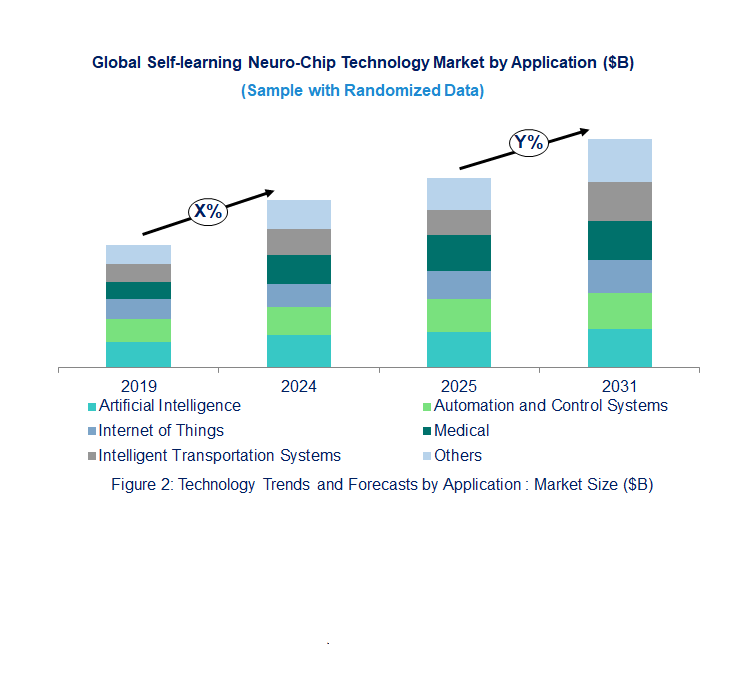
• Adaptive On-Chip Training: On-device adaptive training is gaining prominence, where chips can learn in real-time rather than just relying on pre-trained models. This enhances responsiveness and adaptability in dynamic environments.
• Energy-Efficient Neuromorphic Design: Energy-efficient neuromorphic architectures are gaining importance, mimicking the brain's efficiency. These designs reduce power consumption while maintaining high performance, which is very important for portable and IoT applications.
• Scalable Hybrid Hardware-Software Integration: Hybrid integration of hardware and software allows for more scalable self-learning models. This, in turn, allows for faster updating and more seamless scalability, key for large-scale deployment into industrial and consumer electronics.
• Advanced Real-Time Inference Capabilities: Improvements in the real-time inference processing allow neuro-chips to make instant decisions. A very impactful trend in areas requiring the quickest response times, from autonomous vehicles to robotics, is being observed.
• Enhanced Security Integration: The embedding of advanced encryption and secure learning algorithms into neuro-chips, to directly ensure data integrity, privacy, and protection in such fields as healthcare and financial technology, is emphasized. These technology trends reform self-learning neuro-chip development into enhancing adaptability, energy efficiency, scalability, and real-time decision-making, coupled with higher security. The latter leads to innovations in other sectors of life, like intelligent consumer equipment, more robust automotive applications, or advanced industrial developments, as self-learning neuro-chips become a building block for AI shortly.
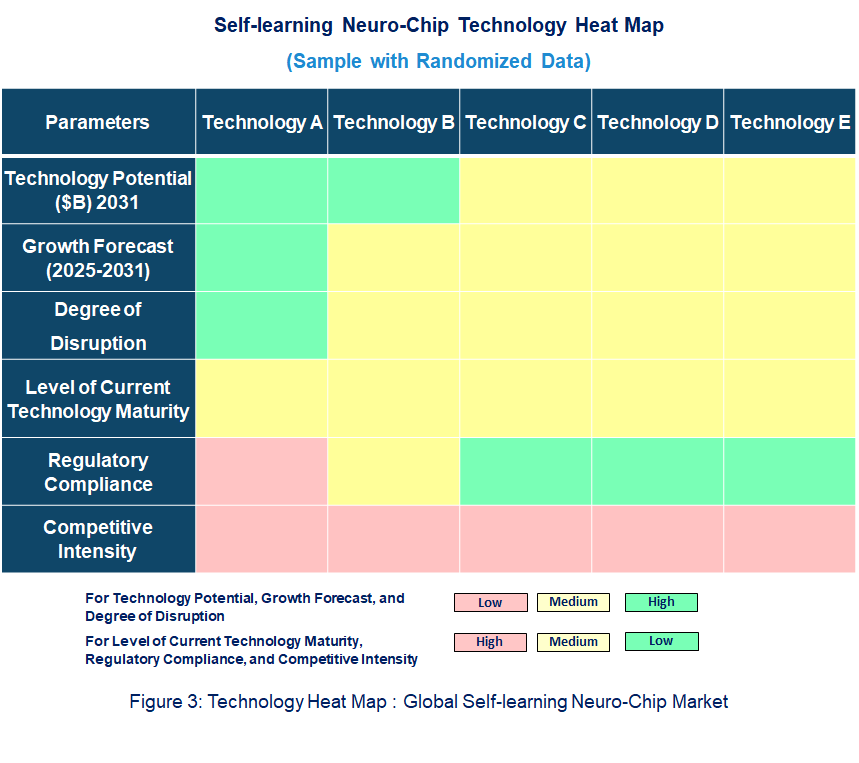
• Technology Potential: The integration of on-device self-learning capabilities reduces dependency on cloud computing, ensuring faster processing and lower latency. Such chips offer enhanced adaptability, capable of learning in real-time, which improves responsiveness across dynamic environments. It also allows for seamless integration across a wide array of applications.
• Degree of Disruption: Self-learning neuro-chip technology disrupts the traditional paradigms of AI. It shifts from cloud-centric models to local, real-time processing. It eliminates the latency issues, reduces communication costs, and enhances privacy by processing data on-chip instead of relying on external infrastructure.
• Technology Maturity: Currently, the technology is in an advanced development stage with companies implementing adaptive learning models and neuromorphic architectures. Although not yet ubiquitous, prototypes and early market implementations demonstrate its effectiveness in applications requiring speed and low energy consumption.
• Regulatory Compliance: Compliance with regulations, such as data protection like GDPR and security certifications in ISO, is one important aspect. Industries related to automotive and healthcare need highly regulated safety and reliability, requiring chips to meet performance and considerations on ethical AI.
• Intel: Intel has been a pioneer in creating self-learning neuro-chips optimized for edge computing and data centers. Their neuromorphic architecture is based on real-time processing and energy efficiency, hence focused on applications requiring low-latency decision-making, such as IoT devices and AI-driven automation.
• IBM: IBM focuses on neuromorphic computing and self-learning algorithms; they integrate advanced cognitive capabilities onto compact hardware. These developments are targeted towards boosting the speed of data processing in areas such as health and smart infrastructure, where adaptation is key.
• NVIDIA: NVIDIA is pushing the limits of self-learning neuro-chip integration using powerful GPUs and dedicated AI processing units. Its innovations focus on accelerating deep learning training and inference, particularly in applications in AI research, autonomous vehicles, and real-time computer vision.
• Qualcomm Technologies: Qualcomm's self-learning chips are optimized for mobile and wearable devices, focusing on energy efficiency and real-time processing. It makes advanced AI features accessible on smartphones and connected devices with lower latency.
• Samsung: Samsung can embed self-learning algorithms within consumer electronics and smart devices. They focus their innovations on making voice recognition, adaptive interfaces, and real-time user interaction possible through the technology of embedded AI.
• Google: Google uses Tensor Processing Units (TPUs), with self-learning technology, in providing cloud AI services as well as on-device processing. These guarantee faster inference times as well as scalability for applications in real-time.
• Xilinx: Xilinx is focused on the adaptive neuro-chip technology for specialized applications in the telecom and industrial markets. FPGAs are used in real-time signal processing and edge AI solutions.
• Microsoft: Neuro-chip capabilities are integrated in the self-learning mode by Microsoft into its Azure AI ecosystem, ensuring cloud and edge integration. Their technology emphasis is on real-time machine learning processing, scalability, and enterprise applications.
• Amazon Web Services (AWS): AWS launched proprietary-designed AI chips in the name of Inferentia, aimed at accelerating cloud inference. Self-learning technology of theirs reduces latency and costs with cost-effective improvement of the infrastructure of cloud infrastructure.
• Micron Technology: Self learning technology in memory and storage from Micron enables optimizations that focus on the edge and server applications, enabling efficient use of energy while also making data for AI access with extremely high speeds. With these technological breakthroughs across leading players, self-learning capabilities are directly integrated onto chips to enable faster, scalable, and energy-efficient AI applications in multiple sectors.
• Increased Demand for Edge Computing: The increasing use of edge devices across industries necessitates self-learning neuro-chips that can make decisions in real-time, without the use of cloud processing. It helps to enhance response times, reduce latency, and optimize network bandwidth, thereby increasing demand for more efficient edge hardware.
• AI Integration: Embedding machine learning directly onto chips allows the seamless incorporation of AI in consumer electronics, automotive, and industrial equipment. It enables real-time analysis and decision-making, which improves the intelligence and functionality of a system across sectors.
• Focus on Energy Efficiency: Self-learning neuro-chips are designed to optimize energy consumption, which is crucial in battery-powered applications like IoT and wearables. Such a focus on energy efficiency reduces operational costs and environmental impact.
• Demand for Scalability in Data Centers: Organizations are embracing self-learning neuro-chip technology in data centers to enhance computational speed and scalability. These chips process large amounts of data with lower latency and operational expenses.
• Tailor-made AI Solutions for Specific Applications: Self-learning chips are being increasingly customized for specific fields, such as healthcare diagnostics, autonomous vehicles, and robotics, ensuring that performance and efficiency are tailored to the specific needs of the industry. Challenges
• Complexity in Design and Manufacturing: Self-learning neuro-chips are inherently complex due to their need to mimic the structure and function of the human brain. Designing these chips involves creating intricate circuits that can replicate neural networks and adapt over time to new data inputs, which requires highly sophisticated manufacturing techniques.
• High Energy Consumption: While self-learning neuro-chips are designed to optimize computation and learning processes, the power required to operate these chips, particularly during intense learning phases, can be significant. As the chips simulate neural networks that require vast amounts of data processing, energy consumption becomes a major concern. Advances in self-learning neuro-chip technology are propelled by the necessity of real-time AI processing, energy efficiency, and scalable computing solutions in many sectors. These opportunities are changing the landscape of the market by pushing boundaries in edge computing, specialized AI applications, and sustainable, cost-effective hardware development.
• Intel
• IBM
• Nvidia
• Qualcomm Technologies
• Samsung
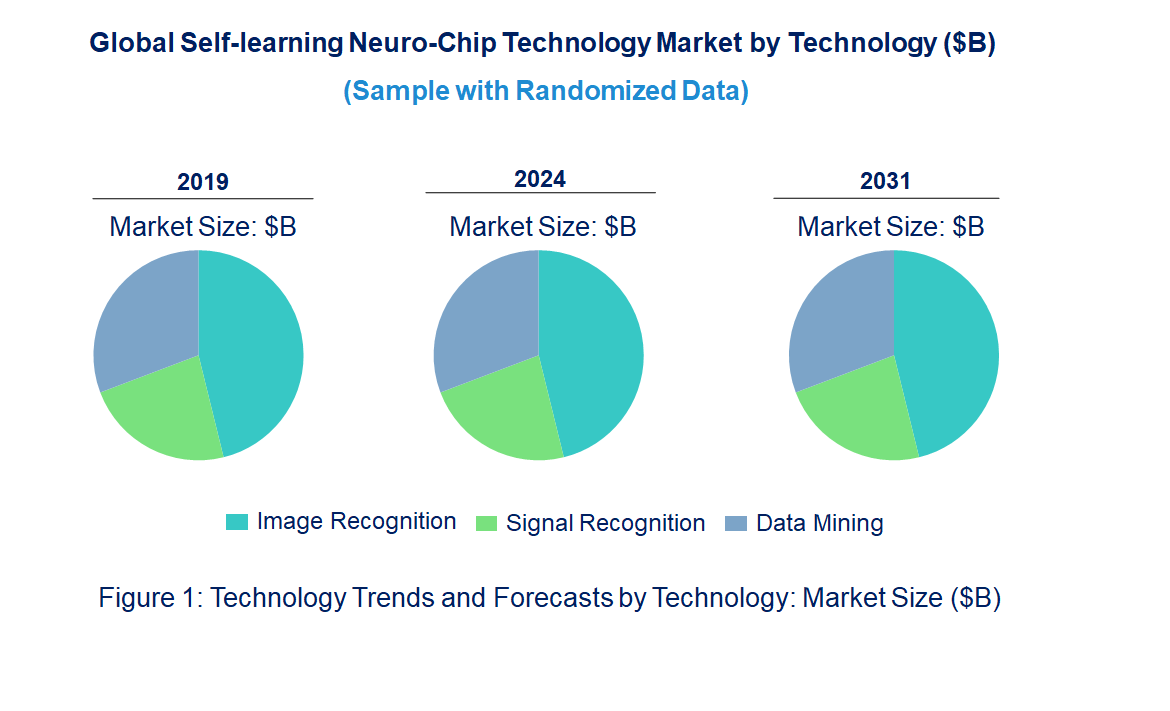
• Technology Readiness and Key Applications: Image recognition technology is mature in fields such as medical imaging, autonomous vehicles, and security systems, with applications ranging from diagnostics to object detection. Signal recognition is increasingly deployed in industrial automation, healthcare, and consumer electronics, enhancing real-time monitoring and predictive maintenance. Data mining technology has achieved substantial maturity across business intelligence and analytics, supporting applications in marketing, finance, and e-commerce. Image recognition is outstanding at visual processing and pattern recognition, which is useful in robotics and smart cameras. Signal recognition supports voice control, environmental monitoring, and industrial machinery diagnostics. Data mining algorithms process large datasets that power recommendation engines, customer insights, and predictive forecasting. These technologies also come together in hybrid applications; for example, signal recognition and data mining combined support IoT sensor analytics. Machine learning integration further boosts all three technologies to provide better accuracy and decision-making capabilities. In consumer electronics, image recognition in real-time enables augmented reality applications and optimizes audio processing by recognizing the signals. Data mining stays at the center of marketing analytics and personalized advertising. All these improvements ensure that these technologies scale well and are versatile across all healthcare, automotive, retail, and AI-driven enterprises.
• Competitive Intensity and Regulatory Compliance: Image recognition, signal recognition, and data mining technologies experience intense competition due to continuous innovation and significant investment from tech giants like Google, Intel, and IBM. Image recognition solutions compete in fields requiring high processing accuracy, such as facial recognition and autonomous driving. Signal recognition technologies contend with applications in industrial automation and telecommunications, where real-time performance is critical. Data mining is a highly competitive business, as companies are competing to create algorithms that deliver greater insights with faster processing. Regulation compliance is a common aspect of these technologies. For image recognition, it needs to be highly compliant with the strict privacy and facial recognition laws to avoid legal issues. The signal recognition solutions often adhere to safety and environmental regulations in the industrial and automotive sectors. Data Mining is highly scrutinized in laws like GDPR, which would require significant privacy protection along with greater transparency. The greater the demand for ethical AI, the pressure to be transparent through algorithms; businesses have to meet competitive performance by balancing compliance with accountability. Companies invest massively in R&D to retain leadership while the regulatory landscape holds within which their technologies must meet even industry and legal standards.
• Disruption Potential of Various Technologies: Image recognition, signal recognition, and data mining have significant disruption potential in almost every industry. Image recognition in health care and autonomous vehicles helps achieve accurate diagnostics and detect objects. Signal recognition enriches applications in IoT, telecom, and predictive maintenance. Data mining provides businesses with actionable insights in huge datasets, thereby revolutionizing decision-making in marketing, finance, and e-commerce. As these technologies advance with AI and machine learning, they become seamless on devices and in real-time processing. This allows for opportunities for edge computing, reducing the dependence on cloud infrastructure. At the same time, better data privacy and encryption enhance the security that companies need. The application of these technologies in consumer electronics and wearable devices accelerates personalization and user experience. The application of signal recognition allows automation and robotics to automatically recognize motion as well as environmental control. Businesses using data mining have optimized operations and improved forecasting. As a result, these technologies collectively drive efficiency, cost-cutting, and innovation. In summary, its disruptive potential impacts sectors as varied as healthcare, manufacturing, retail, and AI-driven services.
• Image Recognition
• Signal Recognition
• Data Mining
• Artificial Intelligence
• Automation and Control Systems
• Internet of Things
• Medical
• Intelligent Transportation Systems
• Others
• North America
• Europe
• Asia Pacific
• The Rest of the World
• Latest Developments and Innovations in the Self-learning Neuro-Chip Technologies
• Companies / Ecosystems
• Strategic Opportunities by Technology Type


Choose a license that fits your team. Instant PDF delivery.
Prices exclude taxes. Instant delivery. Custom licensing available on request.
Market Report · May 18, 2026
Market Report · May 18, 2026
Market Report · May 18, 2026
Trusted partner for strategic intelligence and business growth


Receive a complimentary market analysis tailored to your industry. Our analysts will identify key growth opportunities and competitive dynamics specific to your business.

Market size, growth rate, and key trend analysis for your specific sector.

Top competitor positioning and market share analysis.

Strategic recommendations backed by data-driven insights.
Get curated market intelligence and competitive moves straight to your inbox.
By subscribing, you agree to receive our monthly insights. Unsubscribe anytime.
Receive a complimentary market analysis tailored to your industry. Our analysts will identify key growth opportunities and competitive dynamics specific to your business.
Market size, growth rate, and key trend analysis for your specific sector.
Top competitor positioning and market share analysis.
Strategic recommendations backed by data-driven insights.
Get curated market intelligence, emerging trends, and competitive moves straight to your inbox each month.
By subscribing, you agree to receive our monthly insights. Unsubscribe anytime.
We'll send your sample report shortly.