
Market Report · July 22, 2026

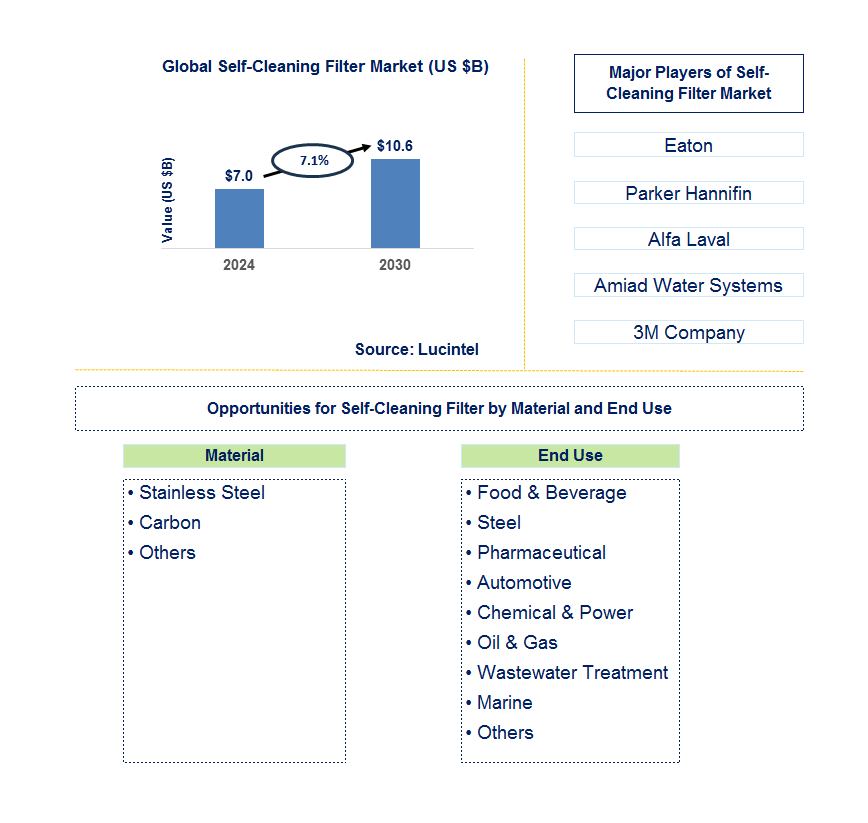
Key data points: The market size in 2030 = $10.6 billion, growth forecast = 7.1% annually for the next 6 years. Scroll below to get more insights. This market report covers trends, opportunities, and forecasts in the global self-cleaning filter market to 2030 by material (stainless steel, carbon, and others), end use (food & beverage, steel, pharmaceutical, automotive, chemical & power, oil & gas, wastewater treatment, marine, and others), and region (North America, Europe, Asia Pacific, and the Rest of the World)
We'll send your sample report shortly.
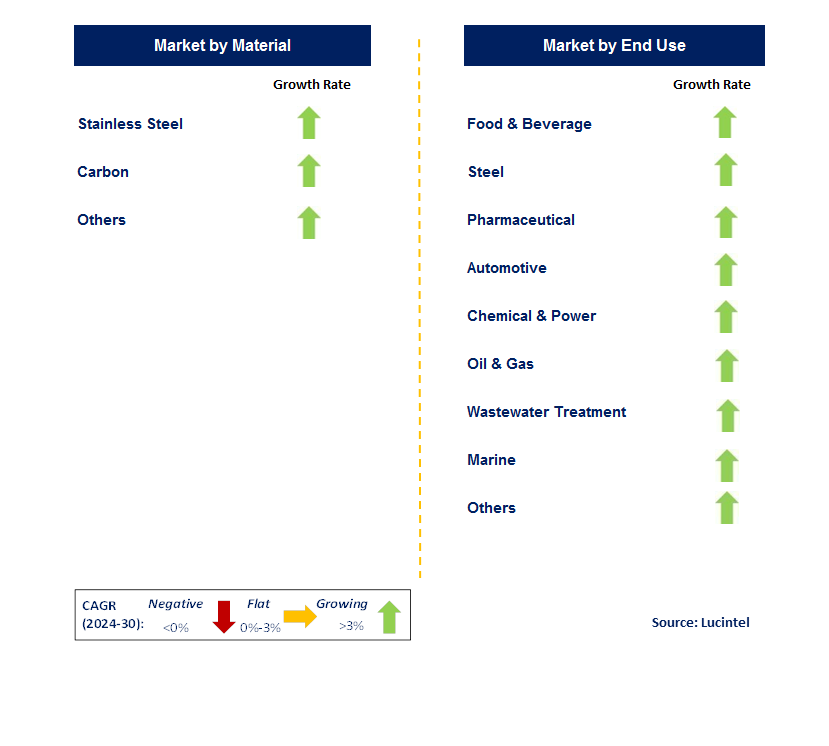
• Lucintel forecasts that, within the material category, stainless steel is expected to witness the highest growth over the forecast period because of the outstanding resistance to corrosion in an aerated water setting, resistance to chemicals and high pressure, longevity, and dependability.
• In terms of region, APAC is expected to witness the highest growth over the forecast period due to growing regional infrastructure development and industrialization. Gain valuable insights for your business decisions with our comprehensive 150+ page report.
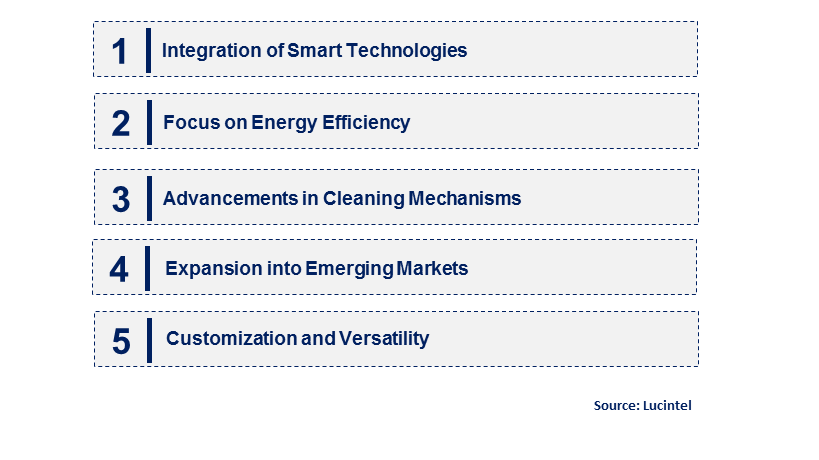
• Integration of Smart Technologies: It has become common for IoT (Internet of Things) and smart technologies to be included as part of self-cleaning filters. This integration enables users to monitor and control filters remotely, providing real-time information about the filter’s performance and maintenance requirements. These smart filters can facilitate predictive maintenance and cleaner cycle optimization, leading to improved operational efficiency and reduced downtime.
• Focus on Energy Efficiency: Increased attention is being paid to energy-efficient self-cleaning filters. Manufacturers are now developing filters that consume less power during their cleaning processes. This shift is driven by escalating energy costs and measures aimed at reducing environmental pollution, making the adoption of sustainable filtration solutions more attractive.
• Advancements in Cleaning Mechanisms: Recent developments have enhanced the mechanisms of self-cleaning filters, introducing new improvements. Ultrasonic systems, among others like backflushing systems, have been implemented for better cleaning, reducing the need for frequent manual maintenance. These advances lead to longer lifespans for the filters and more efficient filtration.
• Expansion into Emerging Markets: Demand for self-cleaning filters is increasing in emerging markets due to industrialization and infrastructure development. Water treatment, HVAC systems, and industrial processes are attracting more capital investments, thus demanding reliable, low-maintenance filtration solutions offered by manufacturers targeting these regions through localized product offerings.
• Customization and Versatility: In the search for more customizable and versatile products, there is growing interest in self-cleaning filters. Manufacturers have responded by developing filters that suit unique application environments, meeting diverse industry demands. As a result of this customization, adaptability will enhance optimal performance across different locations. The integration of intelligent technologies, emphasis on energy efficiency, advancements in cleaning mechanisms, expansion into emerging markets, and customization are some of the current shifts shaping the self-cleaning filter market. Such trends promote innovation while enhancing performance and extending market opportunities.
• Introduction of IoT-Enabled Filters: The latest self-cleaning filters now come with IoT features that allow users to operate them remotely. This enables users to access real-time information about their operations and facilitates predictive maintenance. In certain sectors where monitoring and optimization are crucial for performance, IoT-enabled filters have become a necessity.
• Advancements in Cleaning Technologies: Integrating ultrasonic cleaning systems into self-cleaning filters has improved their efficiency while reducing manual maintenance frequency. New technologies, such as ultrasonic cleaning systems and electrostatic cleaning systems, enhance cleaning effectiveness by requiring less frequent manual intervention. Improved cleaning mechanisms promote longer lifespans of filters, thus enhancing filtration efficiency.
• Development of Energy-Efficient Filters: Manufacturers are introducing energy-efficient self-cleaning filters. During cleaning cycles, these filters consume less power compared to others, thereby improving overall energy consumption. This trend can be traced back to increasing regulatory requirements coupled with rising demand for sustainable solutions in the market today.
• Expansion of Product Offerings: The range of products available on the market has increased considerably concerning self-cleaning filters. Numerous new products cater to diverse applications, including water treatment, HVAC systems, and industrial processes, thereby providing customers with more options and customized solutions targeting specific areas where required services are needed.
• Emphasis on Durable Materials: Advances in materials science have led to more robust and dependable self-cleaning filters. New materials provide improved resistance against abrasion, corrosion, and harsh environments, which enhance filter performance, extend service life, and make filters better suited for demanding applications. The self-cleaning filter market is impacted by recent developments such as IoT-enabled filters, advancements in cleaning technologies, energy-efficient designs, expanded product offerings, and durable materials. These innovations improve filter performance, efficiency, and adaptability, thereby driving market growth and meeting evolving industrial needs.
• Growth in Water Treatment Applications: There is an increasing demand for self-cleaning filters used in water treatment due to the need for efficient filtration systems that require low maintenance costs. This presents an opportunity to develop filters for municipal wastewater treatment plants, as well as those designed for residential areas and industrial usage.
• Expansion in HVAC Systems: The use of self-cleaning filters within HVAC systems is growing due to industries’ ambitions to enhance air quality and reduce maintenance costs. In this regard, the development of air filtering systems that can be fitted into different types of heating, ventilation, and air conditioning (HVAC) arrangements presents opportunities.
• Adoption in Industrial Processes: Self-cleaning filters are becoming essential in industrial processes where high levels of particulate matter are present. For instance, manufacturing industries dealing with metal cutting fluids or mining companies employing extractive metallurgy techniques require vast quantities of filtered fluid at high flow rates, especially when conventional static filtration solutions cannot meet these needs.
• Innovation in Energy-Efficient Filters: The drive toward energy efficiency provides opportunities for developing self-cleaning filters that consume less power and have improved energy performance. In this case, developers should focus on producing filters that comply with energy consumption laws and regulations established by governing bodies to ensure sustainability in different areas of application.
• Expansion into Emerging Markets: Infrastructure and industrial development have grown at a tremendous pace in recent years in emerging markets, particularly in regions such as Asia and Africa. This implies that filter manufacturers can enter these economies by creating region-specific self-cleaning filtering systems that meet all regional needs and legal requirements. Among the strategic growth opportunities in the self-cleaning filter market are the increasing applications in water treatment, HVAC system expansion, adoption for industrial purposes, innovation of energy-efficient filters, and venturing into emerging markets. These prospects lead to market expansion, enabling further innovation and progress.
• Technological Advancements: Advanced cleaning mechanisms and smart features used in filtration technology, such as improved cleaning techniques, are driving the market forward. This transformation allows for the mass production of filters that still perform effectively across most industrial sectors.
• Increasing Demand for Efficient Solutions: There is an increasing need for efficient, low-maintenance filtration solutions, leading to greater demand for self-cleaning filters. Production facilities, such as water treatment plants and air conditioning units (HVAC), require high-quality fluid flow devices that operate under these conditions, as opposed to conventional static filtration methods, especially when dealing with large amounts of filtered fluids at high flow rates due to operational downtime and maintenance costs.
• Focus on Sustainability: Government regulations, along with rising consumer preference for sustainable solutions, have compelled filter manufacturers to produce eco-friendly self-cleaning filters that are energy-efficient. This growing interest in environmental sustainability has led to the emergence of new products, such as energy-efficient "green" filters, which comply with new standards set by regulatory bodies.
• Industrial and Infrastructure Project Expansions: Booming industrial and infrastructure projects, especially in developing nations, have led to an increased need for reliable filtration solutions. Self-cleaning filters are increasingly applied in contexts that require high performance and durability.
• Material Science Advancement: The capabilities of self-cleaning filters are enhanced through the development of durable materials with high performance. These new materials also offer improved resistance to harsh conditions, which extends the filter’s lifespan. Challenges in the self-cleaning filter market include:
• Expensive Initiatives: In some industries, the price tags attached to advanced self-cleaning filters may be unaffordable. Manufacturers struggle to balance cost, innovation, and top performance.
• Regulatory Compliance: Complying with diverse regulations, such as filter performance standards and environmental issues, is complex and expensive. Manufacturers must adhere to regulatory frameworks to gain market access.
• Market Competition: Market dynamics are affected by fierce competition from both local and international manufacturers. To stay ahead in the industry, companies must continuously innovate or differentiate their existing products. Technological advancements, increased demand for efficiency, emphasis on sustainability, expansion into industrial projects, and the development of more efficient materials all influence the self-cleaning filter market. However, growth within the market requires addressing challenges such as the initially high costs incurred during the acquisition of self-cleaning filters (SCFs) and regulatory compliance, as well as competition from rival companies employing similar technologies or manufacturing methods.
• Eaton
• Parker Hannifin
• Alfa Laval
• Amiad Water Systems
• 3M Company
• Baleen Filters
• The Dow Chemical Company
• Oxford Filtration
• Pall
• Cummins
• Stainless Steel
• Carbon
• Others
• Food & Beverage
• Steel
• Pharmaceutical
• Automotive
• Chemical & Power
• Oil & Gas
• Wastewater Treatment
• Marine
• Others
• North America
• Europe
• Asia Pacific
• The Rest of the World
• United States: In the U.S.A, the self-cleaning filter market is moving forward with a focus on embedding smart technologies and enhancing efficiency. The development of filters featuring IoT capabilities that allow remote monitoring and control is part of this integration, aimed at improving maintenance management and operational efficiency. In addition, there is a trend toward designing filters for high-flow applications and environmentally regulatory-compliant designs, reflecting the country's dedication to sustainable industrial practices.
• Chinese: The self-cleaning filter market in China is quickly growing due to improvements in manufacturing technology alongside increased adoption by industrial sectors. Chinese manufacturers concentrate on advanced cleaning mechanisms that reduce downtime costs for expensive filters. Additionally, investments in infrastructure projects drive the growth of this market, which requires reliable filtration solutions. Innovations in the material composition and designs used for making filters have led to improved performance standards and durability necessary for the expanding industrial base.
• Germany: Technological innovation and high quality have characterized Germany's self-cleaning filter market. Some recent achievements include the use of advanced materials and designs that can increase the endurance life of a filter while maintaining its cleaning effectiveness. In addition to producing energy-efficient filters, German manufacturers also endeavor to create environmentally friendly options. Moreover, when it comes to maintaining a minimized total cost of operation (TCO), more industries are integrating automatic self-cleaning filters into their production lines, leading to lower operational expenses.
• Indian: Industrialization coupled with infrastructural development has fueled the Indian self-cleaning filter market. There are new filters suitable for use in a variety of applications, such as water treatment and HVAC systems, among others. Indian manufacturers concentrate on developing cost-effective filters that meet the specifications of expanding industries. It is important to highlight the need for durable and reliable filtration solutions that can withstand harsh environments within this category.
• Japan: Japan’s self-cleaning filter market is driven by technology and precision engineering. The latest developments have seen the use of advanced materials and cleaning techniques that improve the performance and durability of filters. Similarly, Japanese manufacturers continue to innovate filters that are efficient and consume less energy. This market has experienced increased adoption in high-tech industries and critical applications where there is a need for reliability and performance objectives must be met. As Japan strives to maintain its innovative edge, it continues to design sophisticated self-cleaning filters.


• Eaton
• Parker Hannifin
• Alfa Laval
• Amiad Water Systems
• 3M Company
• Baleen Filters
• The Dow Chemical Company
• Oxford Filtration
• Pall
• Cummins Q6. Which self-cleaning filter market segment will be the largest in future? Answer: Lucintel forecasts that stainless steel is expected to witness the highest growth over the forecast period because of the outstanding resistance to corrosion in an aerated water setting, resistance to chemicals and high pressure, longevity, and dependability. Q7. In self-cleaning filter market, which region is expected to be the largest in next 5 years? Answer: APAC is expected to witness highest growth over the forecast period due to growing regional infrastructure development and industrialization. Q.8 Do we receive customization in this report? Answer: Yes, Lucintel provides 10% customization without any additional cost.


Choose a license that fits your team. Instant PDF delivery.
Prices exclude taxes. Instant delivery. Custom licensing available on request.
Market Report · July 22, 2026
Market Report · July 22, 2026
Market Report · July 22, 2026
Trusted partner for strategic intelligence and business growth


Receive a complimentary market analysis tailored to your industry. Our analysts will identify key growth opportunities and competitive dynamics specific to your business.

Market size, growth rate, and key trend analysis for your specific sector.

Top competitor positioning and market share analysis.

Strategic recommendations backed by data-driven insights.
Get curated market intelligence and competitive moves straight to your inbox.
By subscribing, you agree to receive our monthly insights. Unsubscribe anytime.
Receive a complimentary market analysis tailored to your industry. Our analysts will identify key growth opportunities and competitive dynamics specific to your business.
Market size, growth rate, and key trend analysis for your specific sector.
Top competitor positioning and market share analysis.
Strategic recommendations backed by data-driven insights.
Get curated market intelligence, emerging trends, and competitive moves straight to your inbox each month.
By subscribing, you agree to receive our monthly insights. Unsubscribe anytime.
We'll send your sample report shortly.