
Market Report · July 16, 2026

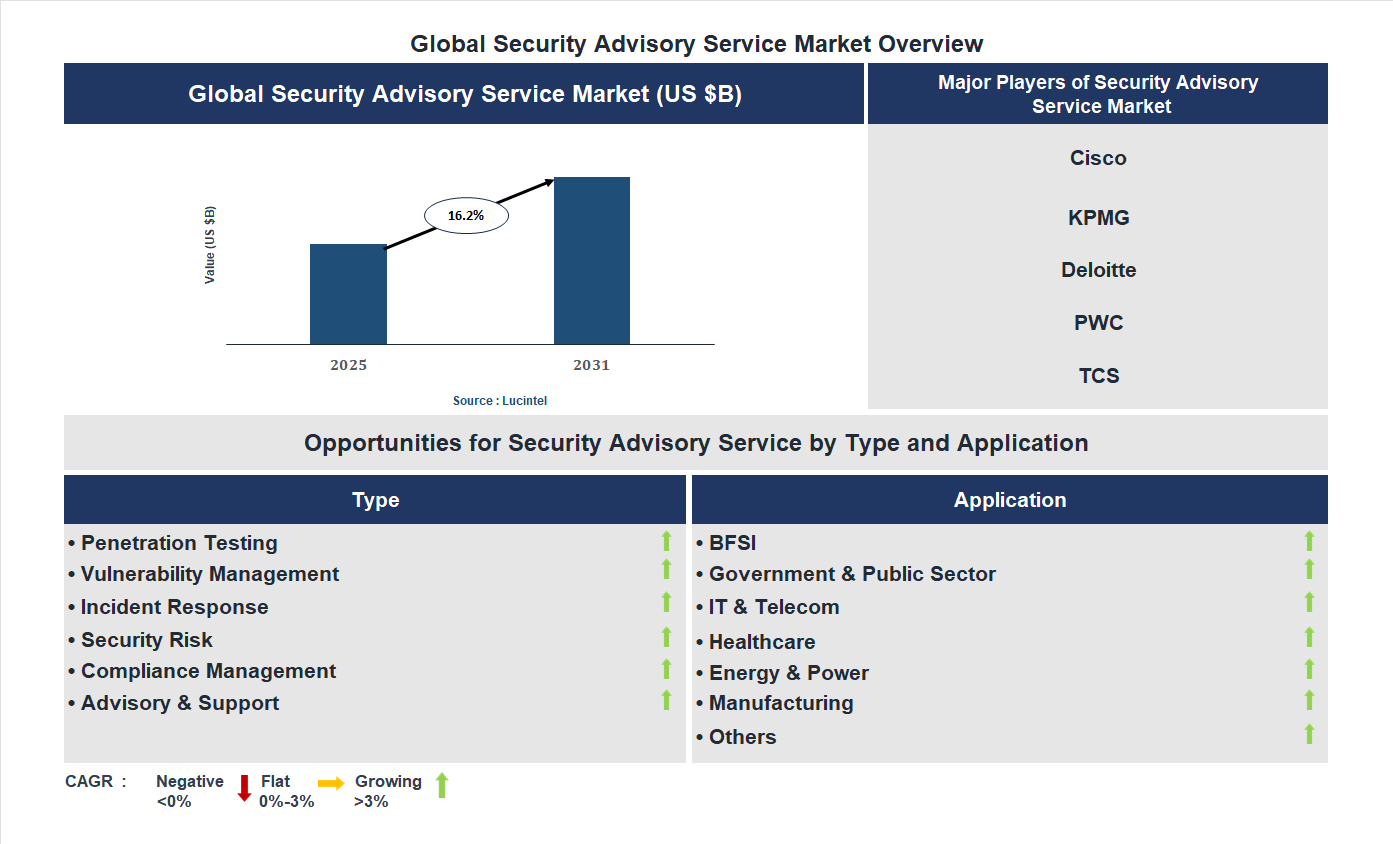
Key data points: The growth forecast = 16.2% annually for the next 7 years. Scroll below to get more insights. This market report covers trends, opportunities and forecasts in security advisory service market to 2031 by type (penetration testing, vulnerability management, incident response, security risk, compliance management, and advisory & support), application (BFSI, government & public sector, IT & telecom, healthcare, energy & power, manufacturing, and others), and region (North America, Europe, Asia Pacific, and the Rest of the World)
We'll send your sample report shortly.
• Lucintel forecasts that, within the type category, incident response is expected to witness the highest growth over the forecast period.
• Within the application category, IT & telecom is expected to witness the highest growth.
• In terms of region, APAC is expected to witness the highest growth over the forecast period. Gain valuable insights for your business decisions with our comprehensive 150+ page report. Sample figures with some insights are shown below.
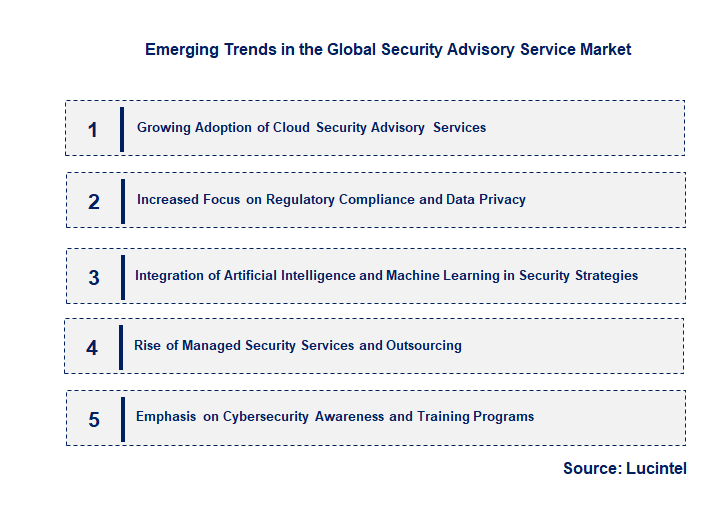
• Growing Adoption of Cloud Security Advisory Services: As organizations migrate to cloud platforms, the need for specialized security guidance increases. Cloud security advisory services help businesses assess risks, implement best practices, and ensure compliance with industry standards. This trend is driven by the rapid adoption of cloud computing, which introduces new vulnerabilities and compliance challenges. Security advisors are now offering tailored solutions for cloud architecture, data protection, and access management, enabling organizations to leverage cloud benefits while maintaining robust security postures. This shift is expanding the market and emphasizing the importance of cloud-specific expertise.
• Increased Focus on Regulatory Compliance and Data Privacy: With evolving regulations such as GDPR, CCPA, and industry-specific standards, organizations require expert advice to ensure compliance. Security advisory services are increasingly focused on helping clients understand legal requirements, implement necessary controls, and prepare for audits. This trend is driven by the rising costs of non-compliance and the reputational damage associated with data breaches. Advisors are offering comprehensive compliance frameworks, risk assessments, and training programs, making regulatory adherence a core component of security strategies. This development is elevating the importance of compliance expertise within the market.
• Integration of Artificial Intelligence and Machine Learning in Security Strategies: The incorporation of AI and ML technologies into security advisory services is transforming threat detection and response. Advisors are leveraging these tools to identify vulnerabilities, predict attack patterns, and automate incident response. This trend enhances the efficiency and accuracy of security measures, enabling proactive defense mechanisms. As AI-driven solutions become more sophisticated, security advisors are integrating them into broader security frameworks, providing clients with advanced, real-time insights. This technological shift is significantly increasing the value and effectiveness of security advisory services.
• Rise of Managed Security Services and Outsourcing: Organizations are increasingly outsourcing security advisory functions to specialized providers to reduce costs and access expert knowledge. Managed security services (MSS) offer continuous monitoring, incident response, and strategic advice, allowing companies to focus on core operations. This trend is driven by the shortage of skilled cybersecurity professionals and the need for 24/7 security oversight. The market is witnessing a surge in partnerships between security firms and enterprises, emphasizing scalable, flexible, and cost-effective security solutions. This shift is making security advisory services more accessible to a broader range of organizations.
• Emphasis on Cybersecurity Awareness and Training Programs: Recognizing that human error remains a significant security vulnerability, organizations are investing heavily in awareness and training initiatives. Security advisory services now include customized training programs, phishing simulations, and policy development to foster a security-conscious culture. This trend aims to reduce insider threats and improve overall security posture by empowering employees with knowledge. As cyber threats become more sophisticated, the importance of human factors in security strategies is gaining prominence. This focus on education is reshaping the market by integrating behavioral change into security frameworks. In summary, these emerging trends are fundamentally reshaping the security advisory service market by emphasizing technological innovation, regulatory compliance, strategic outsourcing, and human-centric approaches. They are enabling organizations to adopt more proactive, comprehensive, and adaptive security strategies, ultimately strengthening their defenses against evolving cyber threats and ensuring resilience in a digital-first world.
• Adoption of AI and Machine Learning: The integration of AI and machine learning into security advisory services has enhanced threat detection and response capabilities. These technologies enable real-time analysis of vast data, identifying anomalies and potential breaches faster than traditional methods. This development improves overall security posture, reduces response times, and helps organizations proactively mitigate risks. As AI becomes more sophisticated, security advisors can offer more predictive and preventative solutions, increasing their value to clients.
• Expansion of Regulatory Compliance Services: With increasing global regulations such as GDPR, CCPA, and industry-specific standards, security advisory firms are expanding their compliance offerings. These services help organizations navigate complex legal requirements, avoid penalties, and maintain customer trust. The development of comprehensive compliance frameworks has become a core component of security advisory, driving demand across sectors. This shift ensures organizations are not only protected from threats but also aligned with legal obligations, fostering a more secure and compliant environment.
• Rise of Cloud Security Advisory: As cloud adoption accelerates, security advisory services are increasingly focusing on cloud security strategies. Experts now provide tailored guidance on cloud architecture, data protection, and access management. This development addresses the unique challenges of securing cloud environments, such as data breaches and misconfigurations. The rise of cloud security advisory has enabled organizations to leverage cloud benefits while maintaining robust security controls, thus supporting digital transformation initiatives securely.
• Focus on Threat Intelligence and Incident Response: The market has seen a surge in services related to threat intelligence and incident response planning. These services help organizations anticipate cyber threats and respond swiftly to security incidents. The development of proactive threat intelligence platforms and rapid response teams enhances resilience against cyberattacks. This focus ensures organizations can minimize damage, recover quickly, and adapt their security strategies based on emerging threats, strengthening overall cybersecurity defenses.
• Increased Emphasis on Employee Training and Security Awareness: Recognizing that human error remains a significant security vulnerability, advisory services now emphasize employee training and awareness programs. These initiatives educate staff on best practices, phishing recognition, and security protocols. The development of customized training modules and simulated attack exercises has improved organizational security culture. This shift reduces the likelihood of insider threats and enhances the effectiveness of technical security measures, creating a more comprehensive security posture. In summary, these recent developments are transforming the security advisory service market by integrating advanced technologies, expanding compliance and cloud security offerings, emphasizing proactive threat management, and fostering a security-aware organizational culture. These changes are driving increased demand for specialized expertise, improving overall security resilience, and positioning the market for sustained growth amid evolving cyber threats.
• Financial Services: Enhanced regulatory compliance and fraud prevention drive growth. Security advisory services help financial institutions implement advanced security measures, ensuring compliance with regulations like GDPR and PCI DSS, and protecting against cyber fraud, thus maintaining customer trust and operational integrity.
• Healthcare: Rising cyberattacks on patient data and medical devices create demand for specialized security strategies. Advisory services assist healthcare providers in safeguarding sensitive information, ensuring HIPAA compliance, and securing connected medical devices, which is critical for patient safety and trust.
• Government: Increasing cyber threats to national security necessitate comprehensive security frameworks. Advisory services support government agencies in developing resilient cybersecurity policies, managing critical infrastructure risks, and ensuring compliance with national security standards.
• Retail: Growing e-commerce and digital transactions heighten the risk of data breaches. Security advisory services enable retailers to implement secure payment systems, protect customer data, and comply with data protection laws, thereby enhancing brand reputation and customer confidence.
• Manufacturing: Industry 4.0 and IoT integration introduce new vulnerabilities. Advisory services help manufacturers secure connected systems, prevent intellectual property theft, and ensure operational continuity through tailored cybersecurity strategies. These growth opportunities are significantly impacting the security advisory service market by expanding its scope and increasing demand across diverse sectors. As organizations recognize the importance of proactive security measures, the market is witnessing accelerated growth, innovation, and a shift towards more comprehensive, strategic security solutions. This evolution ultimately enhances organizational resilience and fosters trust in digital ecosystems.
• Technological Innovation: Rapid advancements in AI, machine learning, and automation enable security advisors to offer more proactive and predictive solutions. These technologies help identify vulnerabilities before exploitation, enhancing overall security posture. As organizations adopt new tech, the need for expert guidance to implement, manage, and optimize these solutions increases. This continuous evolution fuels demand for specialized advisory services, ensuring organizations stay ahead of emerging threats and comply with evolving standards.
• Increasing Cybersecurity Threats: The proliferation of cyberattacks, data breaches, and ransomware incidents has heightened awareness of cybersecurity risks. High-profile attacks on corporations and governments underscore the importance of expert security advice. Organizations seek advisory services to develop robust security strategies, conduct risk assessments, and implement preventive measures. This growing threat landscape directly correlates with increased market demand for comprehensive security advisory solutions to mitigate potential damages.
• Regulatory and Compliance Pressures: Governments and industry bodies are implementing stricter cybersecurity regulations and standards, such as GDPR, HIPAA, and PCI DSS. Organizations must comply to avoid hefty fines and reputational damage. Security advisory services are crucial in helping organizations interpret, implement, and maintain compliance with these complex regulations. The evolving legal landscape drives continuous demand for expert guidance to navigate compliance requirements effectively.
• Digital Transformation Initiatives: Businesses are increasingly adopting digital technologies to enhance operational efficiency and customer experience. This transformation involves integrating cloud services, IoT devices, and mobile platforms, which expand the attack surface. Security advisory services are vital in designing secure digital architectures, managing risks, and ensuring secure deployment of new technologies. The ongoing digital shift sustains a steady demand for specialized security expertise to safeguard organizational assets.
• Growing Adoption of Cloud Computing: The migration to cloud platforms offers flexibility and scalability but introduces new security challenges. Organizations require expert advice to implement secure cloud configurations, manage access controls, and monitor cloud environments effectively. As cloud adoption accelerates, so does the need for security advisory services to address vulnerabilities unique to cloud infrastructures, ensuring data integrity and compliance. The challenges facing this security advisory service market include:
• Rapidly Evolving Threat Landscape: Cyber threats are continuously changing, with attackers developing sophisticated techniques. Keeping pace with these evolving tactics requires constant updates to security strategies, which can be resource-intensive. Security advisory firms must stay ahead of emerging threats, but the rapid pace of change can lead to gaps in defense and increased risk for organizations relying on outdated advice.
• High Cost of Security Services: Implementing comprehensive security measures and engaging expert advisory services can be expensive, especially for small and medium-sized enterprises. The costs associated with hiring skilled professionals, deploying advanced tools, and maintaining ongoing compliance can strain budgets. This financial barrier limits access to top-tier security advice, potentially leaving some organizations vulnerable.
• Regulatory Complexity and Variability: The global regulatory environment is complex and constantly evolving, with different standards across regions. Navigating these diverse requirements can be challenging for organizations operating internationally. Security advisory services must be adaptable and well-versed in multiple regulatory frameworks, but the complexity increases operational costs and can delay compliance efforts, impacting overall security posture. In summary, the security advisory service market is driven by technological innovation, increasing cyber threats, regulatory pressures, digital transformation, and cloud adoption. However, it faces challenges such as a rapidly changing threat landscape, high service costs, and regulatory complexities. These factors collectively shape the markets growth trajectory, requiring stakeholders to balance opportunities with strategic responses to emerging challenges. The markets future will depend on how effectively organizations and service providers adapt to these dynamic drivers and hurdles, ensuring robust security in an increasingly digital world.
• Cisco
• KPMG
• Deloitte
• PWC
• TCS
• Sumeru
• DXC Technologies
• Penetration Testing
• Vulnerability Management
• Incident Response
• Security Risk
• Compliance Management
• Advisory & Support
• BFSI
• Government & Public Sector
• IT & Telecom
• Healthcare
• Energy & Power
• Manufacturing
• Others
• North America
• Europe
• Asia Pacific
• The Rest of the World
• United States: The US market has seen a surge in demand for advanced cybersecurity consulting, driven by high-profile cyberattacks and stringent data privacy laws. Major firms are investing heavily in AI-driven security solutions and threat intelligence services. Regulatory frameworks like CCPA and evolving federal policies are shaping advisory services, emphasizing compliance and proactive risk management. The adoption of cloud security and incident response planning remains a priority for enterprises across sectors.
• China: Chinas security advisory market is rapidly expanding, fueled by government initiatives to enhance national cybersecurity and digital sovereignty. Local firms are developing integrated security solutions tailored to regulatory standards such as the Cybersecurity Law. The focus is on threat detection, network security, and data protection, with increased collaboration between government agencies and private sector providers. The rise of smart city projects and digital infrastructure investments further boost demand for specialized advisory services.
• Germany: Germanys market emphasizes compliance with strict EU data protection regulations like GDPR, prompting organizations to seek expert guidance. There is a growing focus on risk assessment, vulnerability management, and security audits. German firms are adopting innovative solutions such as zero-trust architectures and security automation. The market also benefits from increased awareness of supply chain security and the need for comprehensive security strategies in critical infrastructure sectors.
• India: The Indian security advisory market is witnessing rapid growth due to increasing cyber threats and digital transformation initiatives. Government initiatives like Digital India and Smart Cities are driving demand for security consulting. Local firms are expanding their service portfolios to include threat intelligence, incident response, and compliance advisory. The market is also characterized by a rising number of startups offering innovative security solutions tailored to the unique needs of Indian enterprises.
• Japan: Japans market is characterized by a focus on critical infrastructure security and compliance with international standards. The government promotes cybersecurity resilience through national strategies, encouraging organizations to adopt comprehensive advisory services. Japanese firms are investing in advanced threat detection, AI-based security analytics, and incident response capabilities. The market also benefits from collaborations with global security providers to enhance cybersecurity posture across various sectors.


• Cisco
• KPMG
• Deloitte
• PWC
• TCS
• Sumeru
• DXC Technologies Q5. Which security advisory service market segment will be the largest in future? Answer: Lucintel forecasts that, within the type category, incident response is expected to witness the highest growth over the forecast period. Q6. In security advisory service market, which region is expected to be the largest in next 5 years? Answer: In terms of region, APAC is expected to witness the highest growth over the forecast period. Q7. Do we receive customization in this report? Answer: Yes, Lucintel provides 10% customization without any additional cost.


Choose a license that fits your team. Instant PDF delivery.
Prices exclude taxes. Instant delivery. Custom licensing available on request.
Market Report · July 16, 2026
Market Report · May 18, 2026
Market Report · May 18, 2026
Trusted partner for strategic intelligence and business growth


Receive a complimentary market analysis tailored to your industry. Our analysts will identify key growth opportunities and competitive dynamics specific to your business.

Market size, growth rate, and key trend analysis for your specific sector.

Top competitor positioning and market share analysis.

Strategic recommendations backed by data-driven insights.
Get curated market intelligence and competitive moves straight to your inbox.
By subscribing, you agree to receive our monthly insights. Unsubscribe anytime.
Receive a complimentary market analysis tailored to your industry. Our analysts will identify key growth opportunities and competitive dynamics specific to your business.
Market size, growth rate, and key trend analysis for your specific sector.
Top competitor positioning and market share analysis.
Strategic recommendations backed by data-driven insights.
Get curated market intelligence, emerging trends, and competitive moves straight to your inbox each month.
By subscribing, you agree to receive our monthly insights. Unsubscribe anytime.
We'll send your sample report shortly.