
Market Report · May 18, 2026

This market report covers trends, opportunities, and forecasts in the global satellite phone market to 2031 by technology (leo satellite phone and geo satellite phone), application (defense, maritime, aviation, oil and gas, and others), and region (North America, Europe, Asia Pacific, and the Rest of the World)
We'll send your sample report shortly.
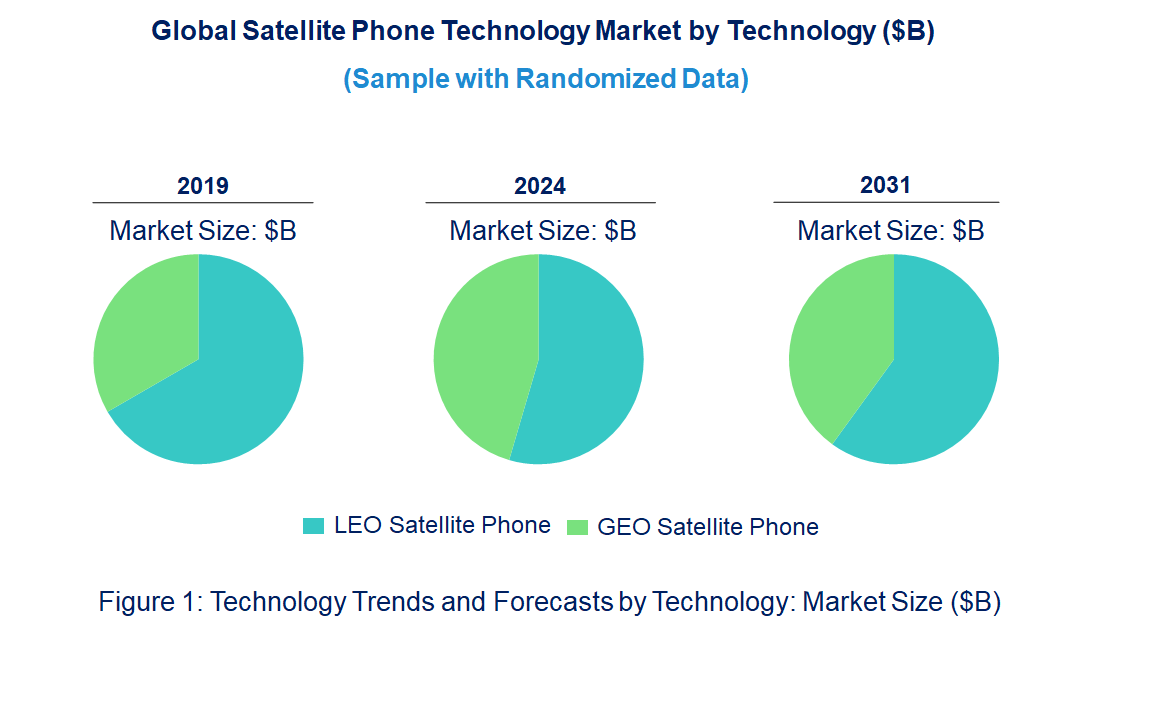
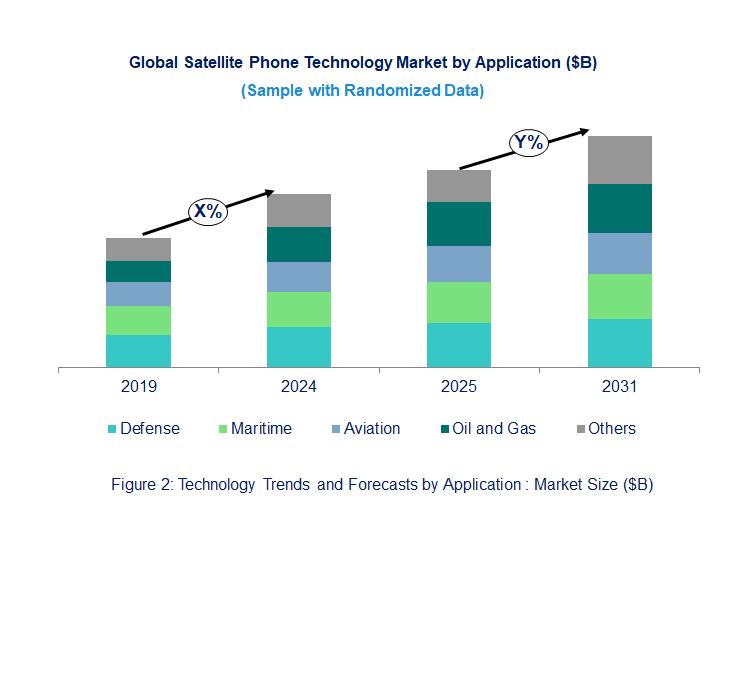
• Adoption of LEO Satellites: LEO satellites are rapidly gaining traction due to their lower latency and improved coverage, providing users with more seamless communication. These satellites are ideal for real-time applications such as internet browsing and live video streaming.
• Integration of Internet of Things (IoT) Connectivity: Satellite phones are increasingly integrated with IoT solutions for remote monitoring in sectors like agriculture, oil and gas, and logistics. This integration enables continuous data transmission from remote locations, improving operational efficiency.
• Enhanced Voice and Data Services: With the ongoing improvements in satellite infrastructure, users now benefit from clearer voice calls, better data speeds, and more stable connections, especially in hard-to-reach areas like the ocean or remote rural areas.
• Miniaturization and Cost Reduction: Advances in satellite technology have led to smaller, lighter, and more affordable satellite phones, making them more accessible for everyday consumers and businesses alike. This miniaturization also enhances portability, offering users greater flexibility.
• Increased Focus on Security: As satellite phones are increasingly used for business-critical applications, there is a growing emphasis on enhancing cybersecurity features to prevent unauthorized access and ensure secure communication, especially for defense and government sectors.
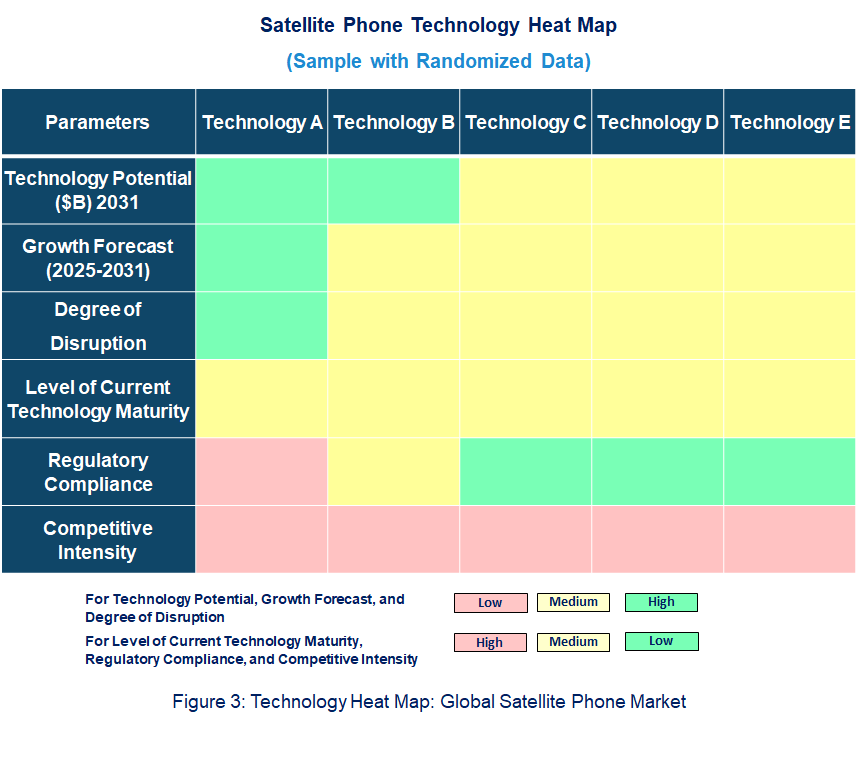
• Technology Potential: The promise of this satellite phone technology is seen in the provision of proper communication where there is weak or no cellular coverage at all. Innovation can range from a much smaller device and lighter to satellites being more energy efficient and perhaps even having data capabilities like 4G or even 5G through a satellite. Also, with such LEO constellations as that by SpaceX through Starlink, it revolutionizes the market, not only because of speed or affordability, but also with such low latency.
• Disruption degree: The LEO satellite constellation is bringing significant disruption into the satellite phone market with promises of global coverage with speeds that are faster and without latency. This is starkly different from geostationary satellites, which inherently bring issues of higher latency and problems concerning coverage. As these constellations grow, they will propel new use cases for these satellite phones, especially into remote IoT applications, for real-time data transmission purposes, and emergency communications.
• Technology Maturity: Satellite phone technology is mature, with strong players like Iridium, Thuraya, and Globalstar offering reliable services. However, the development of LEO satellite systems is still in its emerging phase, but has good commercial potential.
• Regulatory Compliance: All satellite phones must comply with international regulations related to frequency allocation, spectrum management, and safety standards. The ITU and other national telecommunication authorities also require compliance to ensure safe and interference-free communications.
• Globalstar, Inc.: Globalstar has expanded its LEO satellite network, aiming to provide faster and more reliable satellite communication services. Its commitment to upgrading infrastructure and improving connectivity is positioning it as a strong competitor in the growing satellite IoT (Internet of Things) market.
• Garmin Ltd.: Garmin has been enhancing its satellite communication devices, integrating GPS with satellite messaging and tracking capabilities. Its products, such as the inReach satellite communicators, cater to adventure enthusiasts and professionals in remote locations, improving safety and communication.
• Iridium Communications Inc.: Iridium continues to lead with its next-generation satellite constellation, Iridium NEXT, which offers reliable global coverage. The company’s focus on expanding IoT and aviation communications is contributing to its leadership in satellite voice and data services
• Thuraya Telecommunications Company: Thuraya is focusing on providing satellite communication solutions that combine satellite and terrestrial mobile networks. Its enhanced products are specifically targeting mobile users in challenging environments, particularly in defense, maritime, and energy sectors.
• Inmarsat Global Limited: Inmarsat is pushing the envelope with its I-5 Global Xpress (GX) network, which offers high-speed data and voice communication. The company is positioning itself as a leader in global satellite broadband, targeting sectors such as aviation, military, and enterprise.
• KVH Industries, Inc.: KVH is focusing on providing satellite communication systems for the maritime industry. Its mini-VSAT Broadband system allows vessels to stay connected while at sea, offering seamless communication and fleet management capabilities
• Beam Communications Pty. Ltd.: Beam Communications is a leading player in satellite phone and satellite broadband solutions, providing a range of devices for remote areas. They are expanding their product offerings to include hybrid communication devices that combine satellite and cellular connectivity.
• K.S.C. (Kuwait Satellite Communications): K.S.C. has been innovating in the satellite communication space, offering advanced solutions for defense, aviation, and maritime sectors. Their focus on high-performance, secure communications has been pivotal for government contracts.
• TS2 Space Sp. z o.o: TS2 Space is investing in advanced satellite communication technologies to offer both voice and data services in remote locations. Their growth in providing services to the aviation and energy sectors is solidifying their position in the market.
• Expanding IoT and Connectivity in Remote Areas: The rise of the Internet of Things (IoT) and the need for constant connectivity in remote regions is driving demand for satellite phone services. IoT applications in sectors like agriculture, logistics, and energy require reliable satellite connectivity for real-time data transmission.
• Growing Need for Disaster and Emergency Communication: Natural disasters and emergencies often disrupt traditional communication systems, leading to a surge in satellite phone demand. These phones are crucial in ensuring communication in disaster-stricken areas, which has increased their importance in emergency response plans.
• Military and Defense Applications: Military and defense sectors rely on satellite phones for secure and reliable communication in areas without cellular coverage. The demand for specialized satellite communication solutions, including encrypted messaging and voice services, is a significant driver of market growth.
• Global Expansion of Satellite Networks: The ongoing expansion of LEO satellite constellations, such as those by SpaceX’s Starlink, is increasing global connectivity and accessibility. This opens new markets for satellite phones, especially in underserved regions where terrestrial infrastructure is lacking.
• High Cost of Satellite Communication Devices: Despite advancements in technology, the high cost of satellite phones and services remains a barrier to widespread adoption. The cost factor is particularly challenging for consumers and small businesses in remote regions.
• Limited Coverage in Some Areas: While LEO satellites have expanded coverage, there are still regions with limited or no satellite coverage. This issue can impact the effectiveness of satellite phones in certain parts of the world, especially in high-latitude regions or dense urban environments.
• Competition from Other Communication Technologies: Satellite phones face growing competition from terrestrial communication technologies, including 4G/5G networks. As cellular networks expand into rural and remote areas, the need for satellite communication solutions may decrease.
• Globalstar, Inc.
• Garmin Ltd.
• Iridium Communications Inc.
• Thuraya Telecommunications Company
• bharat sanchar nigam limited
• Inmarsat Global Limited
• Technology Readiness by Technology Type in Satellite Phone Market: LEO satellite phones are quickly advancing, with systems like Starlink already offering low-latency, efficient global coverage. GEO satellite phones remain reliable and dominate industries like aviation and maritime, despite higher latency. Competitive intensity is strong as LEO technology grows in adoption, while GEO satellites continue to serve critical, niche markets. Regulatory compliance for LEO satellites is complex due to the numerous satellites involved, while GEO systems follow established standards. LEO systems are ideal for consumer use, while GEO remains crucial for mission-critical applications.
• Competitive Intensity and Regulatory Compliance of Different Technologies in Satellite Phone Market: The competition is growing as LEO satellites offer lower latency and more cost-effective global coverage, with companies like SpaceX and Amazon’s Kuiper challenging established GEO providers. GEO providers, including Iridium and Inmarsat, still dominate niche sectors like aviation and defense. Regulatory compliance is essential for both technologies, requiring adherence to global standards like ITU for frequency allocation and safety. LEO systems face more complex regulations due to the large number of satellites, while GEO systems follow established protocols for long-range communication.
• Disruption Potential of Different Technologies in Satellite Phone Market: LEO satellite phones are disrupting the satellite phone market by offering lower latency, more affordable service, and global coverage, especially in remote areas. Companies like SpaceX’s Starlink are making communication faster and more seamless, challenging traditional GEO systems. GEO satellite phones, while more established, suffer from higher latency and fewer satellites, making them costlier and less efficient. LEO systems are expanding the satellite phone market by enabling real-time communication and addressing gaps in coverage, especially in underserved regions.
• LEO Satellite Phone
• GEO Satellite Phone
• Defense
• Maritime
• Aviation
• Oil and Gas
• Others
• North America
• Europe
• Asia Pacific
• The Rest of the World
• Latest Developments and Innovations in the Satellite Phone Technologies
• Companies / Ecosystems
• Strategic Opportunities by Technology Type


Choose a license that fits your team. Instant PDF delivery.
Prices exclude taxes. Instant delivery. Custom licensing available on request.
Market Report · May 18, 2026
Market Report · May 18, 2026
Market Report · May 18, 2026
Trusted partner for strategic intelligence and business growth


Receive a complimentary market analysis tailored to your industry. Our analysts will identify key growth opportunities and competitive dynamics specific to your business.

Market size, growth rate, and key trend analysis for your specific sector.

Top competitor positioning and market share analysis.

Strategic recommendations backed by data-driven insights.
Get curated market intelligence and competitive moves straight to your inbox.
By subscribing, you agree to receive our monthly insights. Unsubscribe anytime.
Receive a complimentary market analysis tailored to your industry. Our analysts will identify key growth opportunities and competitive dynamics specific to your business.
Market size, growth rate, and key trend analysis for your specific sector.
Top competitor positioning and market share analysis.
Strategic recommendations backed by data-driven insights.
Get curated market intelligence, emerging trends, and competitive moves straight to your inbox each month.
By subscribing, you agree to receive our monthly insights. Unsubscribe anytime.
We'll send your sample report shortly.