
Market Report · May 18, 2026

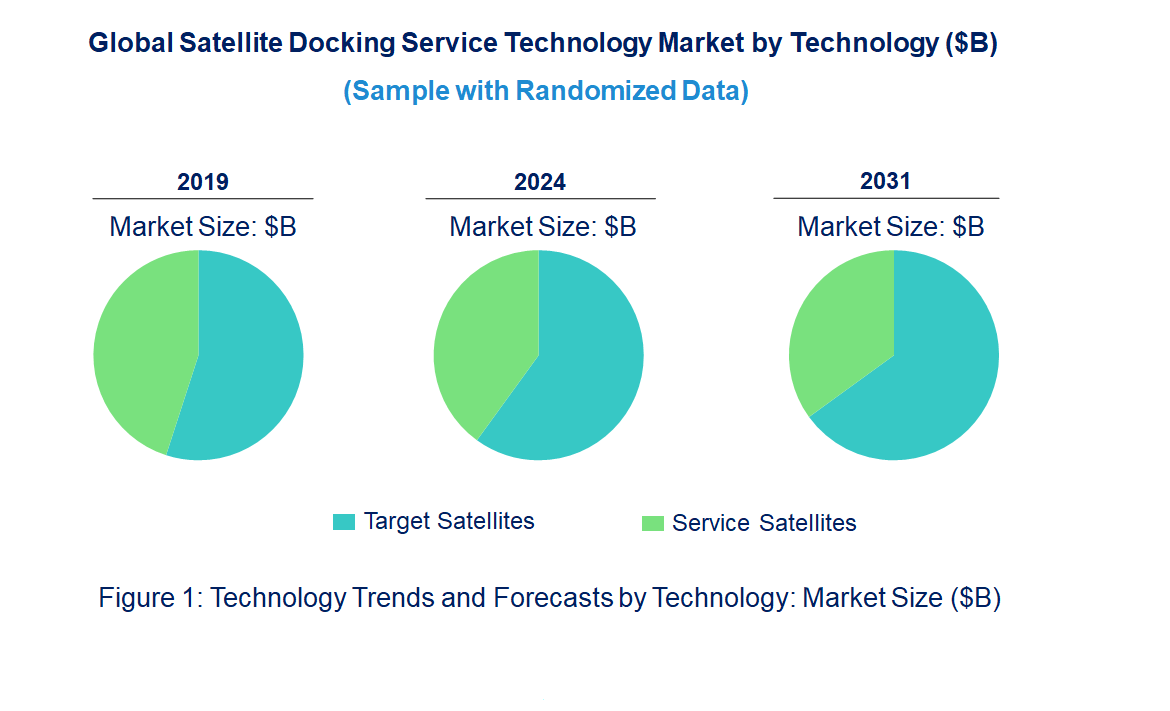
This market report covers trends, opportunities, and forecasts in the global satellite docking service market to 2031 by technology (target satellites and service satellites), application (commercial, civil government, and military), and region (North America, Europe, Asia Pacific, and the Rest of the World)
We'll send your sample report shortly.
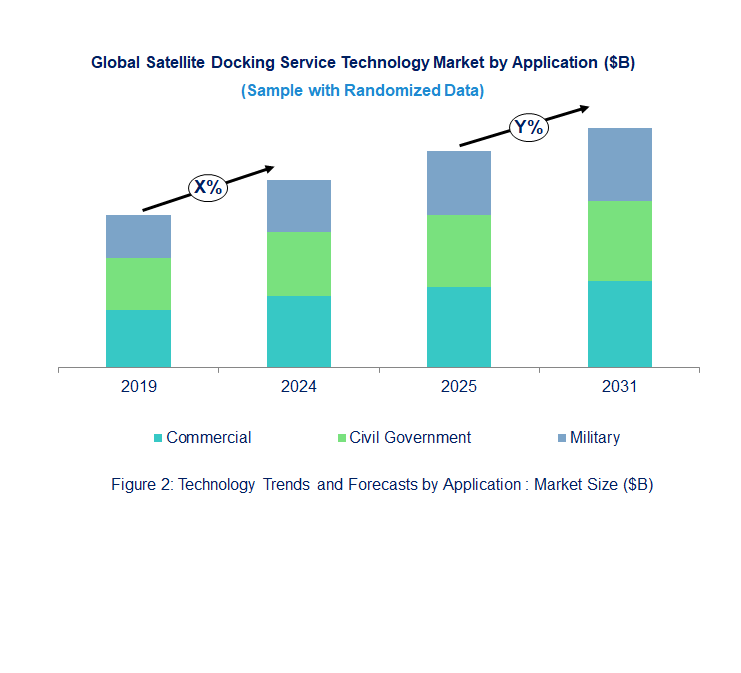
• Autonomous Docking Shift: The shift from manual docking operations to fully autonomous systems, including the use of advanced AI-driven docking mechanisms, is transforming the industry. This significantly improves operational efficiency, minimizes human error, and reduces the cost of satellite servicing and refueling.
• Increased In-Orbit Servicing Demand: The development is also driven by higher demand for in-orbit servicing of satellites, such as fuel resupplying, repairing, and upgrading, which has grown significantly due to the increased lifetime of satellites and the financial benefits of extending satellite operation periods without the need for replacement.
• Commercialization of Satellite Docking: Private companies are becoming increasingly prominent in satellite docking services. Innovations by firms such as SpaceX, Orbital Assembly, and other private ventures are pushing the market toward greater commercialization, with commercial satellites becoming a large market segment for docking services.
• Space Debris Mitigation: The effort to control the ever-growing menace of space debris has led to the development of technologies used for docking purposes. These technologies can remove defunct satellites or debris from orbit. This trend is rapidly gaining traction due to the need for sustainable operations in space and concerns about orbital congestion.
• Government and Private Sector Collaborations: Public-private partnerships are on the rise, with government agencies such as NASA partnering with private space companies to advance docking technologies. This is accelerating innovation as both parties contribute expertise, resources, and funding to tackle common challenges in space operations.
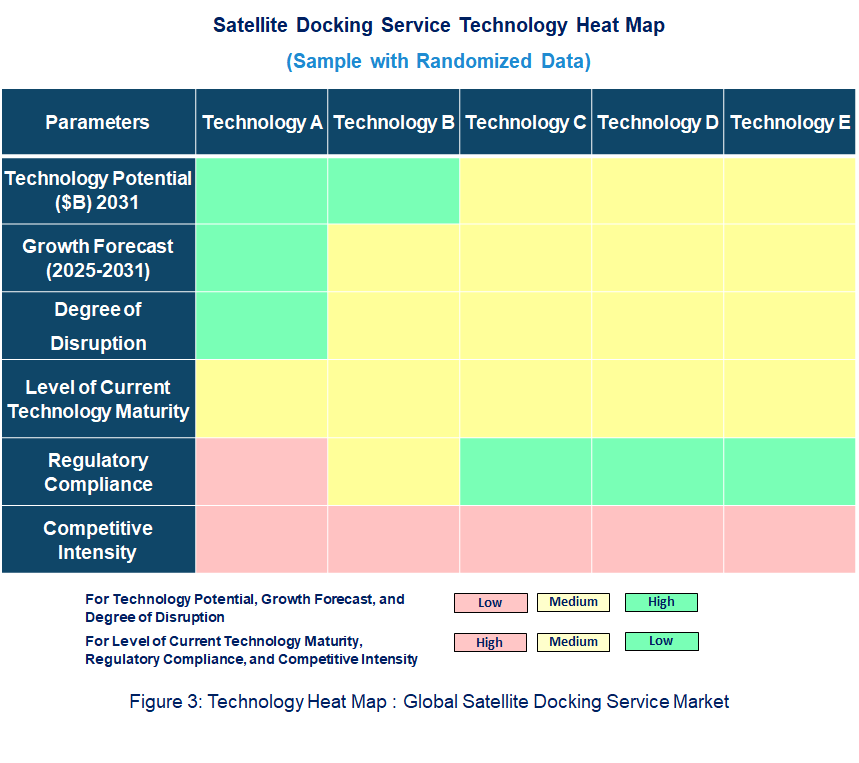
• Technology Potential: There is tremendous potential in satellite docking technology for enhancing satellite longevity, mission flexibility, and cost reduction. Docking capabilities offer opportunities for in-orbit servicing, refueling, and debris removal, opening new business opportunities in space logistics.
• Degree of Disruption: Satellite docking is highly disruptive. It can revolutionize how satellites are operated by extending their lifespan and enabling on-orbit repairs, which could challenge conventional satellite management models and reduce the need for costly launches.
• Level of Current Technology Maturity: Although satellite docking technology is still in its infancy, it is advancing rapidly. Demonstration missions, such as NASA’s test programs and those by private companies, show increasing technological maturity, but widespread adoption is still years away.
• Regulatory Compliance: Regulatory frameworks for satellite docking services are emerging, focusing on safety, orbital debris management, and space traffic management. Success in this market depends on compliance with space treaties, national space policies, and international cooperation. The satellite docking market holds transformative potential but faces challenges regarding technology maturity and regulatory alignment.
• Altius Space Machines: Altius Space Machines has developed an autonomous docking system for space debris removal and in-orbit servicing. Its "Chaser" satellite can autonomously rendezvous with defunct satellites and remove them from orbit, a growing concern in the context of space debris.
• Astroscale Holdings: Through its ELSA-d (End-of-Life Services by Astroscale Demonstrator) mission, Astroscale is a leader in sustainable space operations. The firm’s innovative docking system captures and deorbits nonfunctioning satellites, helping clean up space debris.
• ClearSpace: ClearSpace is one of the companies working to clear space. The company is developing the ClearSpace-1 mission, which will use technology to capture large pieces of debris in orbit. Their docking system is designed to physically capture and safely remove old satellites.
• Lockheed Martin Corporation: Lockheed Martin has made significant strides in autonomous spacecraft technology, particularly through its Mission Extension Vehicle (MEV). This technology provides satellite servicing capabilities, including docking for maintenance and refueling, significantly extending the operational life of satellites.
• Northrop Grumman: Northrop Grumman is developing satellite servicing technologies, including autonomous rendezvous and docking. The company is currently launching its Mission Extension Vehicle, which is designed to repair satellites and provide in-orbit servicing.
• Orbit Fab: Orbit Fab is developing the Gas Stations in Space concept and is pioneering the first satellite in-orbit refueling service. Their docking technology will allow spacecraft to dock at refueling stations, extending the operational life of satellites and reducing the number of expensive satellite launches.
• QinetiQ: QinetiQ is focusing on improving autonomous space capabilities, with its Space Autonomous Robotic Vehicle (SPARV) offering advanced docking and rendezvous technology. The company’s work will enable more efficient and precise docking operations for satellite servicing.
• Rogue Space Systems: Rogue Space Systems is developing autonomous spacecraft capable of executing docking and servicing missions. The company aims to reduce operational costs for satellite owners by providing cost-effective servicing, maintenance, and de-orbiting services.
• Starfish Space: Starfish Space has designed the Otter vehicle, a fully autonomous satellite servicing vehicle capable of docking with dead satellites for refueling or repairs. This technology addresses the increasing need for sustainable satellite operations.
• Increasing Demand for Satellite Servicing: As the number of satellites in orbit continues to rise, so does the demand for servicing, such as refueling, repairs, and upgrades. In-orbit servicing technologies, including docking, can extend satellite lifespans, providing economic benefits to satellite operators.
• Government Investments and Regulations: Governments are heavily investing in space technologies, with NASA and the European Space Agency (ESA) at the forefront. These investments are spurring innovation and development in the market, especially for sustainable space operations and debris mitigation.
• Technological Advancements in Automation: Continuous improvements in AI, machine learning, and robotics are making autonomous satellite docking more reliable and efficient. This shift reduces the need for manual intervention, lowers operational costs, and enhances safety.
• Space Debris Mitigation: Growing concern over the impact of space debris, including the increased risks of satellite collision due to orbital congestion, is driving the need for docking technologies to remove debris and deorbit satellites from orbit. Challenges in the satellite docking service market include:
• High Cost of Development and Deployment: Developing and launching satellite docking technologies is highly capital-intensive, especially for new companies. The investment required for research, testing, and launching docking vehicles creates a significant barrier to entry.
• Regulatory Hurdles: The deployment of docking services is delayed by complex regulations and international agreements governing space operations, particularly concerning docking with foreign satellites or managing space debris. Global policies and frameworks need to be clearer.
• Technical Limitations and Reliability Issues: Despite significant advancements, autonomous docking system technology is not yet fully reliable. Persistent problems such as inaccuracies in docking, system malfunctions, and inconsistent communication with satellites in orbit remain challenges. Technological shifts and emerging trends are reshaping the satellite docking service market. Autonomous docking, satellite servicing, and space debris mitigation are crucial drivers, while high development costs, regulatory complexities, and technical reliability remain major challenges. These trends and challenges will continue to shape the industry’s growth, leading to more efficient, sustainable, and cost-effective satellite operations in the future.
• Altius Space Machines
• Astroscale Holdings
• Clearspace
• Lockheed Martin
• Northrop Grumman
• Orbit Fab
• Technology Readiness by Technology Type: Service satellites are more advanced in terms of technology readiness, with functional prototypes capable of docking, refueling, and repairing satellites. Target satellites are at an earlier development stage, focusing on precise navigation for rendezvous. Competitive intensity is greater for service satellites, with major companies like Astroscale and Northrop Grumman leading the field. Regulatory compliance focuses on safety and debris mitigation. Service satellites are closer to operational deployment, while target satellites are still under development. Both are essential for the future of satellite sustainability.
• Disruption Potential: Target and service satellites hold significant disruption potential in the satellite docking service market. Service satellites can repair, refuel, or upgrade operational satellites, decreasing the demand for new launches and prolonging satellite lifespans. This technology enables on-orbit servicing and increases satellite sustainability. As commercial demand for satellite constellations grows, these technologies could redefine satellite management, offering more cost-effective and efficient space operations. The combination of autonomous docking systems and AI-driven operations will further accelerate market growth.
• Competitive Intensity and Regulatory Compliance: The competitive intensity in the satellite docking market is very high, driven by technological advancements and increasing demand for satellite servicing. Regulatory compliance is crucial, as space operations are governed by international treaties and national space agencies, which enforce safety and environmental standards. Companies must navigate complex regulations regarding space debris and collision avoidance. As regulations become standardized, barriers to entry may decrease, but compliance will remain a challenge for new entrants.
• Target Satellites
• Service Satellites
• Commercial
• Civil Government
• Military
• North America
• Europe
• Asia Pacific
• The Rest of the World
• Latest Developments and Innovations in the Satellite Docking Service Technologies
• Companies / Ecosystems
• Strategic Opportunities by Technology Type


Choose a license that fits your team. Instant PDF delivery.
Prices exclude taxes. Instant delivery. Custom licensing available on request.
Market Report · May 18, 2026
Market Report · May 18, 2026
Market Report · May 18, 2026
Trusted partner for strategic intelligence and business growth


Receive a complimentary market analysis tailored to your industry. Our analysts will identify key growth opportunities and competitive dynamics specific to your business.

Market size, growth rate, and key trend analysis for your specific sector.

Top competitor positioning and market share analysis.

Strategic recommendations backed by data-driven insights.
Get curated market intelligence and competitive moves straight to your inbox.
By subscribing, you agree to receive our monthly insights. Unsubscribe anytime.
Receive a complimentary market analysis tailored to your industry. Our analysts will identify key growth opportunities and competitive dynamics specific to your business.
Market size, growth rate, and key trend analysis for your specific sector.
Top competitor positioning and market share analysis.
Strategic recommendations backed by data-driven insights.
Get curated market intelligence, emerging trends, and competitive moves straight to your inbox each month.
By subscribing, you agree to receive our monthly insights. Unsubscribe anytime.
We'll send your sample report shortly.