
Market Report · July 24, 2026

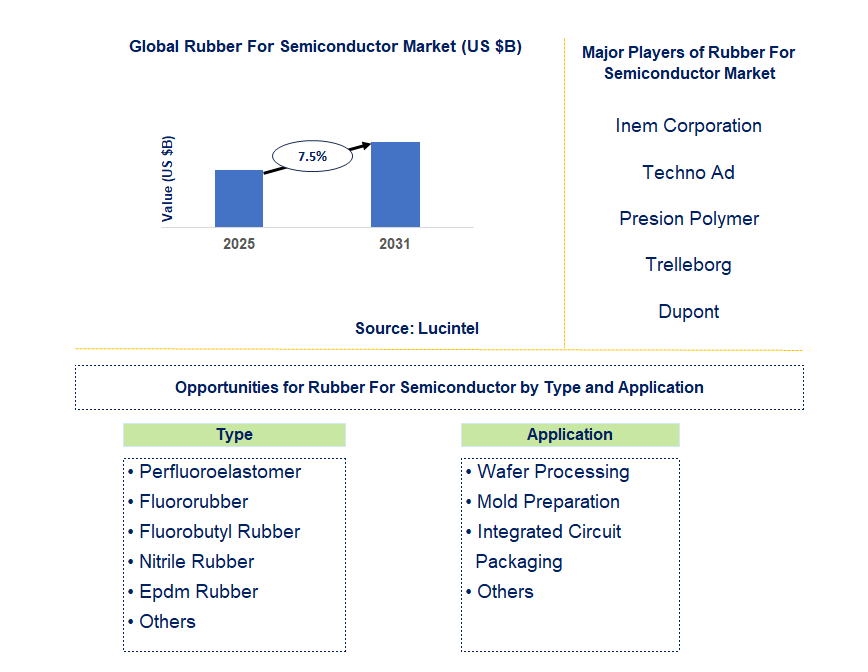
Key data points: The growth forecast = 0.075 annually for the next 7 years. Scroll below to get more insights. This market report covers Trends, opportunities and forecasts in rubber for semiconductor market to 2031 by type (perfluoroelastomer, fluororubber, fluorobutyl rubber, nitrile rubber, epdm rubber, and others), application (wafer processing, mold preparation, integrated circuit packaging, and others), xyz (), ytz (), and region (North America, Europe, Asia Pacific, and the Rest of the World)
We'll send your sample report shortly.
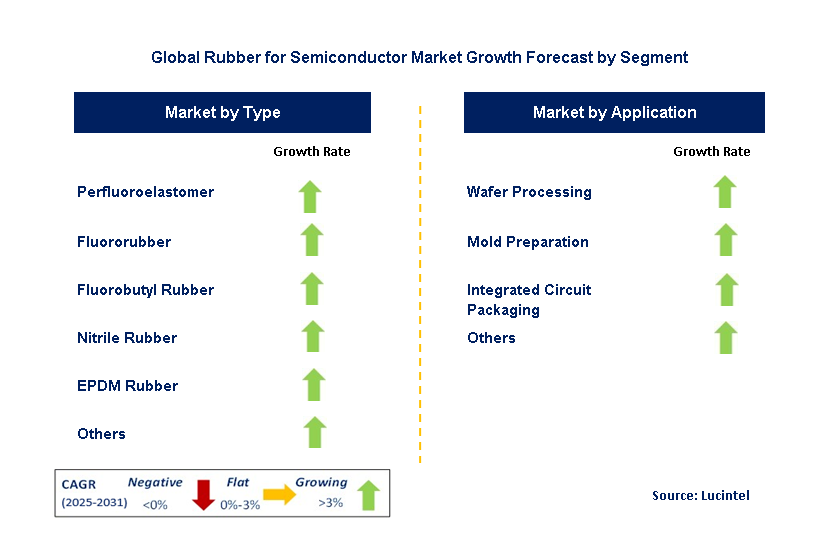
• Lucintel forecasts that, within the type category, perfluoroelastomer is expected to witness the highest growth over the forecast period.
• Within the application category, wafer processing is expected to witness the highest growth.
• In terms of region, APAC is expected to witness the highest growth over the forecast period.
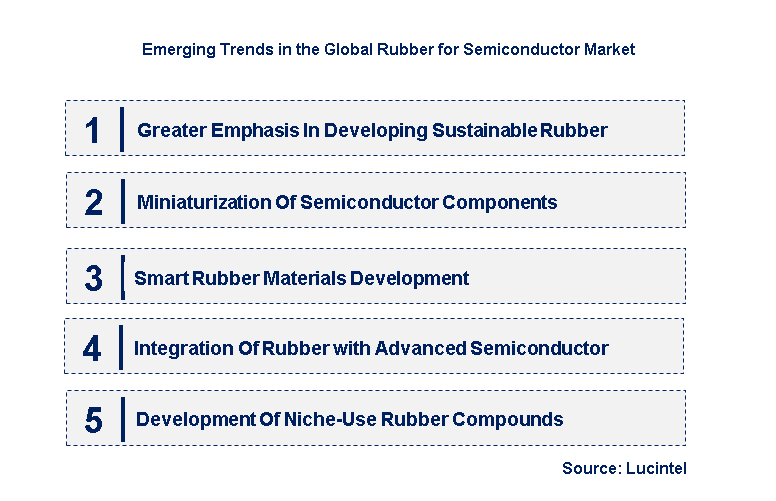
• Greater Emphasis in Developing Sustainable Rubber : The pressure to reduce environmental impact is on the rise, and it is also on the increasing demand to develop sustainable rubber materials for semiconductor applications. Companies strive to develop biodegradable and recyclable rubber compounds that minimize the negative impact of semiconductor production on the environment. This trend is expected to lead to the widespread use of green technologies and innovation in the materials used for semiconductor packaging and insulation.
• Miniaturization of Semiconductor Components: With increasingly small and powerful semiconductor devices, high-performance rubber is gaining interest because of higher pressure and temperature resistance in compact designs. Improved durability, heat resistance, and improved electrical insulation are critical requirements for the rubbers used in smaller semiconductor parts to ensure reliable operation under challenging conditions. This trend is driving research on specialized rubber formulations that can meet varied size needs in semiconductor designs.
• Smart Rubber Materials Development: The smart materials, like rubber compounds that contain sensors or have self-healing properties, are gaining significant attention in the semiconductor industry. Such materials are able to respond to environmental changes and thus extend the life of semiconductor devices with better performance. Smart rubber materials can offer improved thermal management, leakage detection, and self-healing capabilities, which make them a promising option for next-generation semiconductor packaging.
• Integration of Rubber with Advanced Semiconductor : Integration of rubber materials with leading edge semiconductor technologies, such as 5G and electric vehicles, is on the rise. Rubber finds extensive use in packaging, sealing, and insulation for semiconductor devices in these high-tech applications. With the fast-growing demand for these technologies, the focus is growing on developing rubber materials toward satisfying specific demands by high-frequency high-power devices used in 5G and EV systems.
• Development of Niche-Use Rubber Compounds: Semiconductor products have now proliferated to several niche industries where customers have demands specific to each. These days, rubber compound customizing towards these niches has increased substantially, particularly by the semiconductor producers looking for different specialized rubber materials, like chemical and thermal endurance as well as ESD, depending upon niche industry. Hence, such specialized niche applications in turn will enhance bespoke rubber compounds These trends are creating revolutionary novelties in the Rubber for Semiconductor market, offering new opportunities for innovation and growth. More drastic changes in the market are expected as companies transform to adapt to the rising demand for high-performance, sustainable, and smart rubber materials in semiconductor applications.
• Advancements in Rubber Compounds for Thermal Management: With the compactness and power of semiconductor devices, heat management has become a critical challenge. Rubber materials with enhanced thermal conductivity are now being developed to ensure effective heat dissipation. Advanced rubber compounds have been designed to maintain their properties at elevated temperatures, thus improving the overall performance and longevity of semiconductor devices. This development is essential for the continued growth of high-performance semiconductors, particularly in sectors like telecommunications and automotive.
• Sustainability Initiatives in Rubber Production: The semiconductor industry has seen a surge in the trend of sustainable rubber materials. Firms are shifting towards eco-friendly rubber compounds based on renewable resources and focusing on the recyclability of rubber for semiconductor applications. This is being done in the wake of the increasing environmental regulations and the emphasis on greener manufacturing practices. Sustainable rubber material is expected to be a leading market driver in the coming future as companies continue to strive towards achieving global sustainability targets.
• Advanced Manufacturing Technologies Integration: Advanced manufacturing techniques, like 3D printing and precision molding, are revolutionizing the production of rubber semiconductor components. These advanced manufacturing techniques can produce highly customized rubber parts with intricate designs that can enhance performance while keeping waste to a minimum. This is important for meeting complex semiconductor packaging requirements economically and effectively.
• Rising investments in Research and Development: There is an increasing investment in research and development of Rubber for Semiconductor, developing new rubber material that can meet the challenging demands of semiconductor-next generation. Companies and institutions are working together to develop new rubber compounds that are of high performance, improved electrical insulation, greater durability and resistance towards extreme environment. Therefore, an investment of this sort is of utmost importance to keep semiconductor technology abreast of the times.
• Global Supply Chain Partnerships: Due to the need for steady and high-quality rubber material requirements for semiconductors, companies are now entering strategic global partnerships. These partnerships are aimed at acquiring unfailing sources of raw materials and in-house expansion in their production capabilities. It is through these collaborations that supply chain risks will be reduced, ensuring rubber material availability at all times, especially since the demand for semiconductors globally is always on the increase. The recent developments are expected to offer significant growth momentum and innovation prospects in the semiconductor industry. Advanced developments will therefore support the gradual evolution of the semiconductor technology domain and ensure continued adaptation of rubbers to serve the stringent needs of modern devices in the field of semiconductors.
• Electric Vehicle Applications Growth: The increasing popularity of electric vehicles (EVs) is fueling the demand for semiconductors, especially in power electronics and battery management systems. Rubber materials are essential in semiconductor packaging and insulation for EVs because they offer reliable electrical insulation and thermal management. With the growth of the EV market, there is huge potential for rubber manufacturers to create specialized compounds designed specifically for the semiconductor requirements of electric vehicles.
• Growth in 5G Semiconductor Applications: The 5G network deployment has created a growing demand for high-performance semiconductors. Rubber materials are used in the insulation and protection of semiconductor components, especially in 5G base stations and devices. With the maturation of 5G technology, there is scope for rubber manufacturers to develop advanced materials that will meet the requirements of 5G semiconductors in terms of enhanced durability, thermal resistance, and electrical performance.
• Increased Usage in Semiconductor Packaging: The need for smaller, yet more powerful semiconductors is increasing and driving innovation in packaging materials. Rubber is used for sealing, insulating, and protecting semiconductor devices. New rubber compounds have a huge opportunity in the development of advanced packaging solutions, especially for high-tech industries like consumer electronics, telecommunications, and healthcare.
• Increase in Demand for Renewable Energy Systems: The shift towards renewable energies around the world, most prominently solar and wind energy, will drive the semiconductor components required by an energy management system. Rubber materials use in renewable energy applications falls within the insulation and protection of semiconductor components. With renewable energy gaining ground, the opportunities for the Rubber for Semiconductor market also expand by serving materials that contribute towards more energy-efficient technologies.
• Aerospace and Defense Applications Advances: The aerospace and defense industries demand semiconductor components that are extremely reliable and can withstand severe environments. The thermal and electrical isolation provided by rubber materials ensure the long life and reliability of these components. Thus, as the aerospace and defense industries increase their reliance on semiconductor technologies, which is more advanced, the requirement for specific rubber materials will significantly increase. These strategic growth opportunities across various applications are expected to drive innovation and demand in the Rubber for Semiconductor market. The manufacturers who will be able to develop high-performance rubber compounds for these applications will be best placed for long-term growth in this dynamic industry.
• Inem Corporation
• Techno Ad
• Presion Polymer Engineering
• Trelleborg
• Dupont
• Northern Engineering (Sheffield)
• 3M Company
• Barnwell
• Eriks
• Dynamic Rubber
• Perfluoroelastomer
• Fluororubber
• Fluorobutyl Rubber
• Nitrile Rubber
• Epdm Rubber
• Others
• Wafer Processing
• Mold Preparation
• Integrated Circuit Packaging
• Others
• North America
• Europe
• Asia Pacific
• The Rest of the World
• United States: The United States has seen high growth in the Rubber for Semiconductor market as there is an increased semiconductor manufacturing process and investments in research and development. The thrust has been towards improving the rubber materials used for semiconductor packaging, so that it meets the miniaturization demands and thermal management requirements. US-based companies are also increasing their manufacturing capacity so that they reduce their dependence on overseas suppliers.
• China: In China, the Rubber for Semiconductor market is increasing because the country is the largest producer of semiconductors. A great thrust for semiconductor self-reliance has driven the nation to use high-performance rubber materials for better reliability in semiconductor devices. The growth in electric vehicle adoption and 5G technologies is further creating more demand for semiconductors, thereby creating an increased need for rubber materials, mainly for packaging and insulating purposes.
• Germany: The nation is the leader in technology when it comes to semiconductor manufacturing. The growth of the high-tech sector of the nation is coupled with growth in the Rubber for Semiconductor market. Germany focuses on high-quality rubber solutions for semiconductor applications, investing in innovative rubber compounds with better thermal conductivity and environmental resistance. The German market is also responding to EU regulations that promote sustainability in manufacturing, which is driving the development of more eco-friendly rubber materials for semiconductor use.
• India: India is gaining momentum in the semiconductor sector, and therefore, the demand for rubber materials in semiconductor production is on the rise. The Indian government has been working on the encouragement of local production of semiconductors within the country. The domestic semiconductor manufacturing has indeed seen an increased local rubber material production. Firms in India are concentrating their efforts on high-quality rubber material supplies for packaging, insulation, and protective parts. The emerging tech industry of the country has also led to increased demand for semiconductor components based on advanced rubber materials for effective performance.
• Japan: Japanese players are quite significant in the global semiconductor market, with very good advancements on rubber materials utilized for semiconductor purposes. The importance of precision engineering and cutting-edge technology in the development of specially designed rubber compounds for semiconductor packaging is driving this miniaturization process. Additionally, the semiconductor industry is finding support from the Japanese government by investing in research and development on high-temperature-resistant rubber materials that can act as insulators for high-performance semiconductors.


• Inem Corporation
• Techno Ad
• Presion Polymer Engineering
• Trelleborg
• Dupont
• Northern Engineering (Sheffield)
• 3M Company
• Barnwell
• Eriks
• Dynamic Rubber Q5. Which rubber for semiconductor market segment will be the largest in future? Answer: Lucintel forecasts that, within the type category, perfluoroelastomer is expected to witness the highest growth over the forecast period. Q6. In rubber for semiconductor market, which region is expected to be the largest in next 5 years? Answer: In terms of region, APAC is expected to witness the highest growth over the forecast period. Q7. Do we receive customization in this report? Answer: Yes, Lucintel provides 10% customization without any additional cost.


Choose a license that fits your team. Instant PDF delivery.
Prices exclude taxes. Instant delivery. Custom licensing available on request.
Market Report · July 24, 2026
Market Report · July 20, 2026
Market Report · July 20, 2026
Trusted partner for strategic intelligence and business growth


Receive a complimentary market analysis tailored to your industry. Our analysts will identify key growth opportunities and competitive dynamics specific to your business.

Market size, growth rate, and key trend analysis for your specific sector.

Top competitor positioning and market share analysis.

Strategic recommendations backed by data-driven insights.
Get curated market intelligence and competitive moves straight to your inbox.
By subscribing, you agree to receive our monthly insights. Unsubscribe anytime.
Receive a complimentary market analysis tailored to your industry. Our analysts will identify key growth opportunities and competitive dynamics specific to your business.
Market size, growth rate, and key trend analysis for your specific sector.
Top competitor positioning and market share analysis.
Strategic recommendations backed by data-driven insights.
Get curated market intelligence, emerging trends, and competitive moves straight to your inbox each month.
By subscribing, you agree to receive our monthly insights. Unsubscribe anytime.
We'll send your sample report shortly.