
Market Report · July 22, 2026

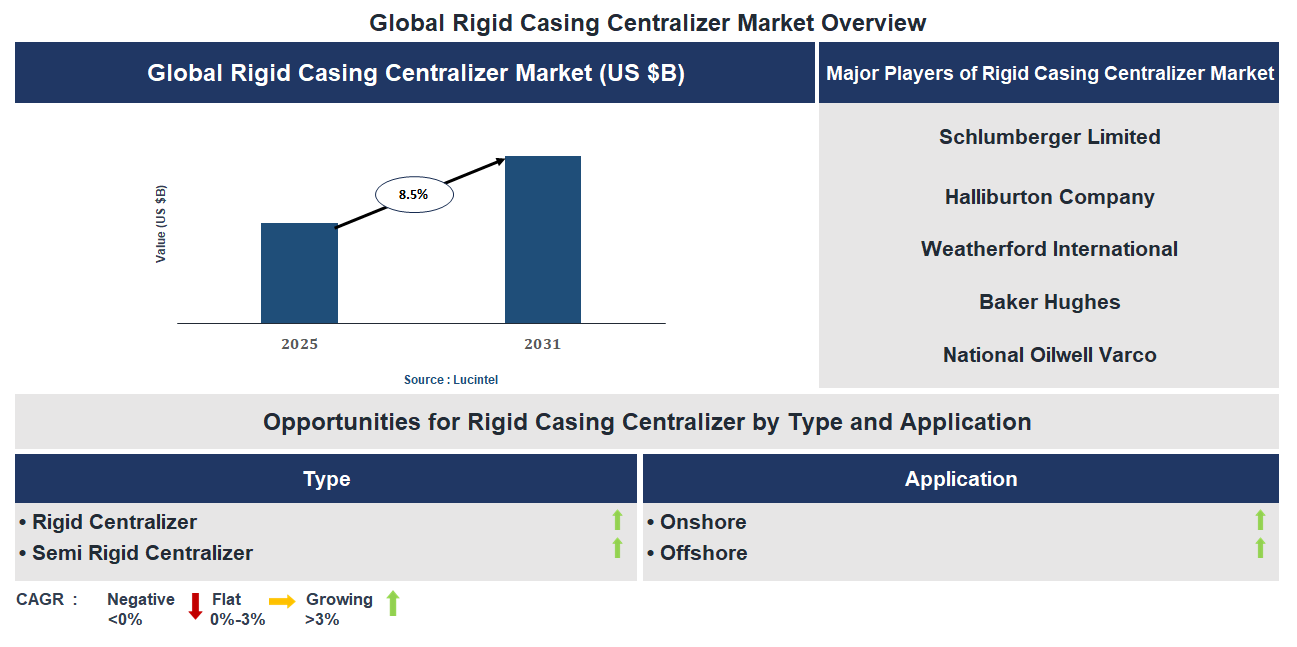
Key data points: The growth forecast = 8.5% annually for the next 6 years. Scroll below to get more insights. This market report covers trends, opportunities and forecasts in rigid casing centralizer market to 2031 by type (rigid centralizer and semi rigid centralizer), application (onshore and offshore), and region (North America, Europe, Asia Pacific, and the Rest of the World)
We'll send your sample report shortly.
• Lucintel forecasts that, within the type category, rigid centralizer is expected to witness higher growth over the forecast period.
• Within the application category, onshore is expected to witness higher growth.
• In terms of region, APAC is expected to witness the highest growth over the forecast period. Gain valuable insights for your business decisions with our comprehensive 150+ page report. Sample figures with some insights are shown below.
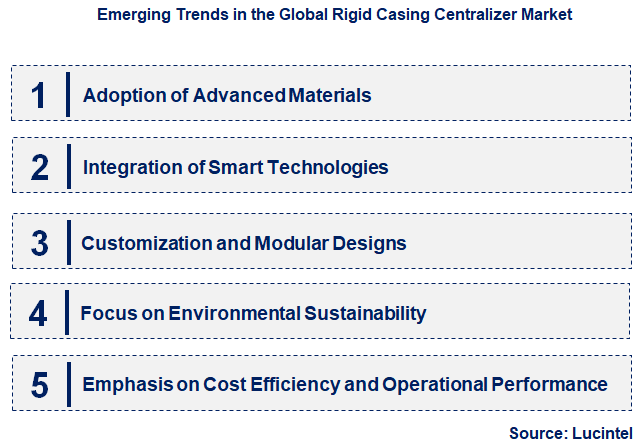
• Adoption of Advanced Materials: The market is shifting towards the use of high-performance materials such as composites and specialized alloys. These materials offer enhanced strength, corrosion resistance, and durability, which are crucial for harsh downhole environments. The adoption of advanced materials improves the lifespan of centralizers, reduces maintenance costs, and ensures better wellbore stability, thereby increasing operational efficiency and safety.
• Integration of Smart Technologies: The incorporation of sensors and IoT-enabled devices into centralizers is gaining momentum. Smart centralizers can monitor parameters like temperature, pressure, and vibration in real-time, providing valuable data for predictive maintenance and operational decision-making. This trend enhances safety, reduces downtime, and optimizes wellbore performance, aligning with the industry’s move towards digitalization and automation.
• Customization and Modular Designs: There is a growing demand for tailored centralizer solutions that fit specific wellbore conditions and operational requirements. Modular designs allow for easy customization, quick installation, and adaptability to various casing sizes and well profiles. This trend improves operational flexibility, reduces installation time, and minimizes costs associated with non-standard solutions.
• Focus on Environmental Sustainability: Increasing environmental regulations and the push for greener operations are influencing the market. Manufacturers are developing eco-friendly centralizers with reduced material waste, recyclable components, and lower carbon footprints. These sustainable solutions help companies comply with regulations, enhance corporate responsibility, and appeal to environmentally conscious stakeholders.
• Emphasis on Cost Efficiency and Operational Performance: Cost reduction remains a key driver, leading to innovations that lower manufacturing and operational costs. Companies are exploring lightweight designs, simplified installation processes, and bulk manufacturing techniques. These efforts aim to deliver high-performance centralizers at competitive prices, ensuring better market penetration and customer satisfaction. In summary, these emerging trends are collectively reshaping the rigid casing centralizer market by promoting innovation, sustainability, and efficiency. They enable companies to meet evolving industry standards, improve operational safety, and reduce costs, ultimately driving growth and competitiveness in a rapidly changing energy landscape.
• Growing Demand for Wellbore Stability: The need for reliable casing centralizers to prevent casing sticking and ensure well integrity is driving market growth. As drilling depths increase and formations become more complex, the demand for high-performance centralizers rises. This trend is supported by the oil and gas industrys focus on reducing non-productive time and operational costs. The market benefits from technological innovations that improve centralizer efficiency, making them essential for modern drilling operations.
• Technological Innovations in Centralizer Design: Advances in materials and manufacturing techniques are leading to more durable, lightweight, and corrosion-resistant centralizers. These innovations improve operational efficiency and extend product lifespan. Companies are investing in R&D to develop customizable solutions tailored to specific well conditions. The integration of smart technologies, such as sensors for real-time monitoring, is also emerging, enhancing wellbore management and safety.
• Increasing Adoption in Horizontal and Deviated Wells: The rising number of horizontal and deviated wells requires specialized centralizers capable of maintaining casing alignment and stability. These wells pose unique challenges, prompting the development of innovative centralizer designs. The market is witnessing increased adoption of adjustable and high-performance centralizers to meet these demands. This trend is expanding the market scope and encouraging manufacturers to diversify their product offerings.
• Rising Exploration and Production Activities: Global exploration and production activities, especially in deepwater and ultra-deepwater regions, are boosting demand for rigid casing centralizers. These regions require robust solutions to withstand harsh conditions and high pressures. The growth in offshore drilling projects and unconventional resource extraction further amplifies this trend. Market players are focusing on developing rugged, reliable centralizers to cater to these challenging environments, thereby expanding their market share.
• Regulatory and Safety Standards: Stricter safety and environmental regulations are compelling operators to adopt advanced casing centralizers that ensure well integrity and prevent blowouts. Compliance with these standards necessitates the use of high-quality, reliable products, driving innovation and market growth. Manufacturers are investing in certifications and testing to meet international standards, which enhances product credibility and market competitiveness. This regulatory push is fostering a safer, more efficient drilling environment globally. The overall impact of these developments is a dynamic, expanding market characterized by technological innovation, increased adoption in complex well types, and heightened safety standards. These factors collectively enhance operational efficiency, reduce costs, and promote sustainable growth within the rigid casing centralizer market.
• Expansion in Offshore Drilling Activities Presents Significant Growth Opportunities: The rise in offshore exploration and production activities necessitates durable casing centralizers capable of withstanding harsh marine environments. Increased investments in deepwater and ultra-deepwater projects are driving demand for high-performance rigid casing centralizers that ensure wellbore stability and prevent casing sticking. This expansion offers manufacturers opportunities to develop specialized products tailored for offshore conditions, boosting market growth and regional penetration.
• Technological Innovations in Material and Design Enhance Market Competitiveness: Advancements in materials such as composite and high-strength alloys improve the durability and performance of rigid casing centralizers. Innovative design features like adjustable and self-aligning centralizers optimize wellbore contact and reduce operational issues. These technological improvements enable better well integrity, reduce non-productive time, and lower costs, providing a competitive edge for manufacturers and expanding application scope across various drilling environments.
• Growing Adoption in Horizontal and Deviated Well Drilling Expands Market Reach: The increasing trend toward horizontal and deviated well drilling requires specialized casing centralizers to maintain casing centralization and prevent contact with borehole walls. Rigid centralizers designed for complex well trajectories improve casing run efficiency and wellbore stability. This growing adoption opens new avenues for market players to develop tailored solutions, thereby expanding their customer base and increasing market share in unconventional and challenging drilling projects.
• Rising Focus on Wellbore Integrity and Safety Drives Demand for Reliable Centralizers: Ensuring wellbore integrity is critical for preventing blowouts, leaks, and operational failures. Rigid casing centralizers play a vital role in maintaining casing position and preventing damage during cementing and production. The increasing emphasis on safety standards and regulatory compliance encourages operators to invest in high-quality centralizers, fostering market growth. This focus on safety and integrity enhances the overall value proposition for advanced centralizer solutions.
• Strategic Partnerships and Regional Expansion Accelerate Market Penetration: Collaborations between manufacturers, service providers, and technology developers facilitate innovation and product development. Expanding into emerging regions with growing exploration activities, such as Africa and the Asia-Pacific, offers new revenue streams. Strategic alliances and regional manufacturing facilities help reduce costs and improve supply chain efficiency. These initiatives enable companies to strengthen their market presence, meet regional demands, and capitalize on the expanding global market for rigid casing centralizers. The overall market outlook is positively influenced by these growth opportunities, promising increased innovation, regional expansion, and enhanced safety standards. As industry demands evolve, companies that leverage these opportunities will be well-positioned to lead in the competitive landscape, ensuring sustained growth and technological advancement in the rigid casing centralizer market.
• Technological Advancements: The development of innovative materials and manufacturing processes has led to more durable, efficient, and cost-effective centralizers. These advancements improve wellbore stability, reduce operational downtime, and enhance overall drilling efficiency. As technology continues to evolve, companies can offer products that meet stricter safety and environmental standards, boosting market demand. The integration of automation and real-time monitoring further enhances operational precision, making modern centralizers indispensable in complex drilling environments. This ongoing innovation sustains market growth by addressing industry needs for safer, more reliable solutions.
• Rising Oil and Gas Exploration Activities: Increasing global energy demand has prompted extensive exploration and production activities, especially in deepwater and unconventional reservoirs. These projects require specialized equipment like rigid casing centralizers to ensure proper casing placement and well integrity. As exploration expands into challenging environments, the need for high-quality centralizers becomes critical, fueling market growth. Governments and private companies investing heavily in new oilfields and offshore projects further drive demand. The surge in exploration activities directly correlates with increased procurement of centralizers, making this a key growth driver.
• Stringent Regulatory Standards: Governments and industry bodies impose strict safety, environmental, and operational standards that influence centralizer design and usage. Compliance with these regulations necessitates the development of high-performance, corrosion-resistant, and environmentally friendly products. Companies investing in R&D to meet evolving standards gain a competitive edge, expanding their market share. Regulatory compliance also encourages innovation in materials and manufacturing processes, which can lead to higher product costs but improved safety and efficiency. These standards shape product specifications and influence market dynamics, ensuring that only compliant, high-quality centralizers are adopted.
• Increasing Focus on Wellbore Integrity: Maintaining wellbore stability and preventing casing failure are critical concerns in drilling operations. Rigid casing centralizers play a vital role in ensuring proper casing centralization, reducing the risk of formation damage, and enhancing wellbore integrity. As operators prioritize safety and operational efficiency, demand for reliable centralizers rises. The focus on wellbore integrity also drives innovation in design and materials, leading to more effective solutions. This emphasis on safety and performance sustains market growth by encouraging the adoption of advanced centralizer technologies across various drilling projects.
• Growing Adoption of Automation and Digital Technologies: The integration of automation, sensors, and digital monitoring systems into centralizer technology is transforming the market. Automated centralizers enable real-time adjustments, improve precision, and reduce human error during installation. Digital technologies facilitate data collection and analysis, leading to better decision-making and operational efficiency. As the industry moves toward smarter drilling solutions, the demand for digitally integrated centralizers increases. This trend enhances product value, reduces operational costs, and accelerates project timelines, thereby significantly impacting market growth positively. The challenges facing this rigid casing centralizer market include:
• Volatility in Oil Prices: Fluctuating oil prices create uncertainty in exploration and production investments, directly affecting demand for drilling equipment like centralizers. When prices decline, companies often delay or reduce drilling activities, leading to decreased orders. Conversely, price surges may temporarily boost demand but can also increase operational costs and project risks. This volatility hampers long-term planning and investment, making it difficult for manufacturers to forecast sales and expand production. The market remains vulnerable to macroeconomic factors influencing oil prices, which can cause sudden shifts in demand and supply dynamics.
• High Manufacturing and Material Costs: Producing high-quality rigid casing centralizers involves advanced materials and manufacturing processes, which can be costly. Fluctuations in raw material prices, such as steel and composites, further escalate production expenses. These costs are often passed on to consumers, potentially limiting market growth in price-sensitive regions. Additionally, stringent quality standards require investments in R&D and quality control, increasing overall costs. High manufacturing expenses can restrict profit margins and slow down market expansion, especially for smaller players competing on price.
• Regulatory and Environmental Challenges: While regulations aim to improve safety and environmental standards, they also pose compliance challenges for manufacturers. Meeting diverse regional standards requires significant adaptation in product design and testing, increasing costs and time-to-market. Environmental concerns related to drilling activities and equipment disposal can lead to restrictions or bans, impacting market growth. Navigating complex regulatory landscapes demands substantial resources and expertise, which can be a barrier for new entrants and limit innovation. These challenges necessitate continuous compliance efforts, affecting overall market dynamics. In summary, the rigid casing centralizer market is driven by technological innovations, increasing exploration activities, regulatory standards, focus on wellbore integrity, and digital transformation. However, it faces challenges such as oil price volatility, high manufacturing costs, and regulatory complexities. These factors collectively influence market stability and growth prospects. While technological and operational advancements offer significant opportunities, economic and regulatory hurdles require strategic management. Overall, the markets future depends on balancing innovation with cost-efficiency and regulatory compliance, ensuring sustainable development amid fluctuating global energy demands.
• Schlumberger Limited
• Halliburton Company
• Weatherford International
• Baker Hughes
• National Oilwell Varco
• Swell Packers Plus Energy Services Inc.
• TAM International
• NCS Multistage
• Rubicon Oilfield International
• Omega Completion Technology
• Rigid Centralizer
• Semi Rigid Centralizer
• Onshore
• Offshore
• North America
• Europe
• Asia Pacific
• The Rest of the World
• United States: The US market has seen increased adoption of high-performance, corrosion-resistant centralizers, driven by shale oil and gas extraction. Innovations in automation and real-time monitoring are improving wellbore stability and reducing downtime. Regulatory pressures for environmental safety have prompted companies to invest in eco-friendly materials and designs. The rise of unconventional drilling techniques has also expanded the demand for specialized centralizers that can withstand high pressures and temperatures. Additionally, mergers and acquisitions are consolidating market players, fostering innovation and competitive pricing.
• China: China is experiencing rapid growth in its oil and gas sector, with a focus on deepwater and offshore drilling. The market is witnessing increased demand for durable, high-strength centralizers capable of operating in challenging environments. Government initiatives aimed at energy security are encouraging domestic manufacturing and technological advancements. The adoption of digital solutions for wellbore management is gaining traction, improving efficiency and safety. China’s emphasis on sustainable development is also pushing for environmentally friendly materials and designs in centralizer manufacturing, aligning with global standards.
• Germany: Germany’s market is characterized by a focus on high-quality, precision-engineered centralizers that meet strict European safety and environmental regulations. The country is investing in innovative materials that enhance durability and reduce environmental impact. There is a growing trend toward integrating digital technologies, such as sensors and IoT, to monitor centralizer performance in real-time. Germany’s emphasis on sustainability and energy efficiency is driving R&D efforts toward eco-friendly solutions. The market benefits from strong industrial automation and a skilled workforce, fostering continuous product improvements and technological advancements.
• India: India’s market is expanding due to increased exploration activities in both the onshore and offshore sectors. The demand for cost-effective, reliable centralizers is high, especially in mature fields undergoing enhanced recovery techniques. The government’s focus on energy security and self-reliance is promoting local manufacturing and innovation. There is a rising trend toward using lightweight, corrosion-resistant materials to improve operational efficiency. Digital integration for monitoring and maintenance is gradually gaining popularity. The market is also witnessing collaborations between domestic and international firms to develop advanced, affordable solutions tailored to Indian conditions.
• Japan: Japan’s market is driven by technological innovation and stringent safety standards. The country is investing in advanced materials that offer superior performance under extreme conditions. The adoption of IoT and automation technologies is improving centralizer monitoring and maintenance, reducing operational risks. Japan’s focus on environmental sustainability is leading to the development of eco-friendly, energy-efficient products. The market benefits from a highly skilled workforce and strong R&D capabilities, fostering continuous innovation. Additionally, Japan’s emphasis on disaster resilience influences the design and manufacturing of centralizers to withstand seismic and other environmental stresses.


• Schlumberger Limited
• Halliburton Company
• Weatherford International
• Baker Hughes
• National Oilwell Varco
• Swell Packers Plus Energy Services Inc.
• TAM International
• NCS Multistage
• Rubicon Oilfield International
• Omega Completion Technology Q5. Which rigid casing centralizer market segment will be the largest in future? Answer: Lucintel forecasts that, within the type category, rigid centralizer is expected to witness higher growth over the forecast period. Q6. In rigid casing centralizer market, which region is expected to be the largest in next 5 years? Answer: In terms of region, APAC is expected to witness the highest growth over the forecast period. Q7. Do we receive customization in this report? Answer: Yes, Lucintel provides 10% customization without any additional cost.


Choose a license that fits your team. Instant PDF delivery.
Prices exclude taxes. Instant delivery. Custom licensing available on request.
Market Report · July 22, 2026
Market Report · July 22, 2026
Market Report · July 17, 2026
Trusted partner for strategic intelligence and business growth


Receive a complimentary market analysis tailored to your industry. Our analysts will identify key growth opportunities and competitive dynamics specific to your business.

Market size, growth rate, and key trend analysis for your specific sector.

Top competitor positioning and market share analysis.

Strategic recommendations backed by data-driven insights.
Get curated market intelligence and competitive moves straight to your inbox.
By subscribing, you agree to receive our monthly insights. Unsubscribe anytime.
Receive a complimentary market analysis tailored to your industry. Our analysts will identify key growth opportunities and competitive dynamics specific to your business.
Market size, growth rate, and key trend analysis for your specific sector.
Top competitor positioning and market share analysis.
Strategic recommendations backed by data-driven insights.
Get curated market intelligence, emerging trends, and competitive moves straight to your inbox each month.
By subscribing, you agree to receive our monthly insights. Unsubscribe anytime.
We'll send your sample report shortly.