Retail Cooler Market Report: Trends, Forecast and Competitive Analysis to 2035

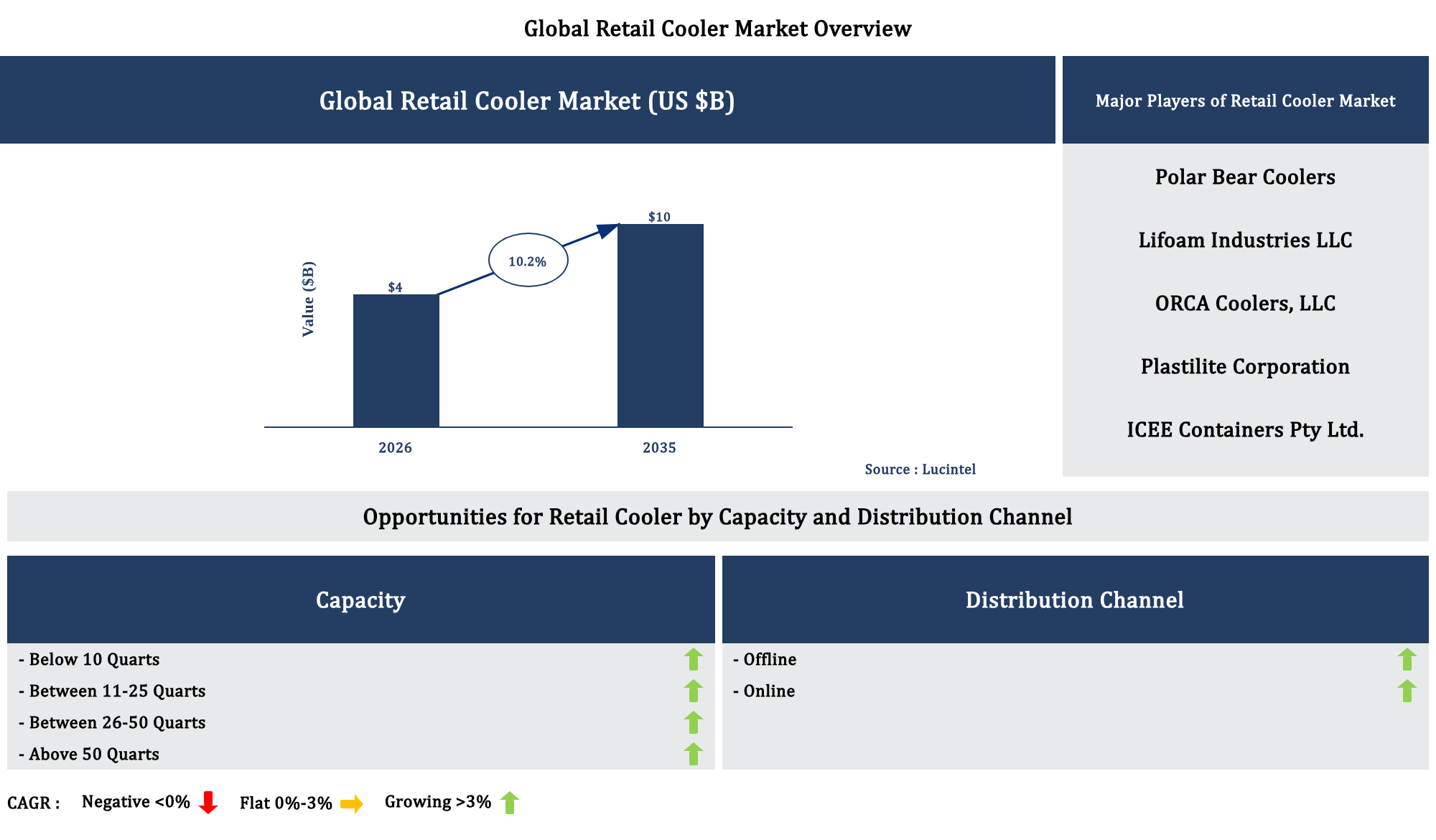
Key data points: The market size in 2035 = $10 billion, growth forecast = 10.2% annually for the next 8 years. Scroll below to get more insights. This market report covers trends, opportunities and forecasts in retail cooler market to 2035 by capacity (below 10 quarts, between 11-25 quarts, between 26-50 quarts, and above 50 quarts), distribution channel (offline and online), and region (North America, Europe, Asia Pacific, and the Rest of the World)

Publisher: Lucintel Last Updated: July 2026
See Pricing

Download Sample Report

| ✨ New Download Sample report — Get instant insights! | ✨ New Download Sample report — Get instant insights!

Retail Cooler Market Report: Trends, Forecast and Competitive Analysis to 2035

Retail Cooler Market

The future of the global retail cooler market looks promising with opportunities in the offline and online markets. The global retail cooler market is expected to reach an estimated $10 billion by 2035 with a CAGR of 10.2% from 2026 to 2035. The major drivers for this market are the rising demand for frozen & chilled food products, the increasing investments in organized retail infrastructure, and the growing adoption of smart and connected retail coolers.

  • Lucintel forecasts that, within the capacity category, between 26-50 quart is expected to witness the highest growth over the forecast period due to the increasing demand for portable and convenient cooling solutions.
  • Within the distribution channel category, offline is expected to witness higher growth due to the preference for physical product evaluation and purchases.
  • In terms of regions, APAC is expected to witness the highest growth over the forecast period due to the growing outdoor activities and consumer lifestyle changes.

Gain valuable insights for your business decisions with our comprehensive 150+ page report. Sample figures with some insights are shown below.
Retail Cooler Market

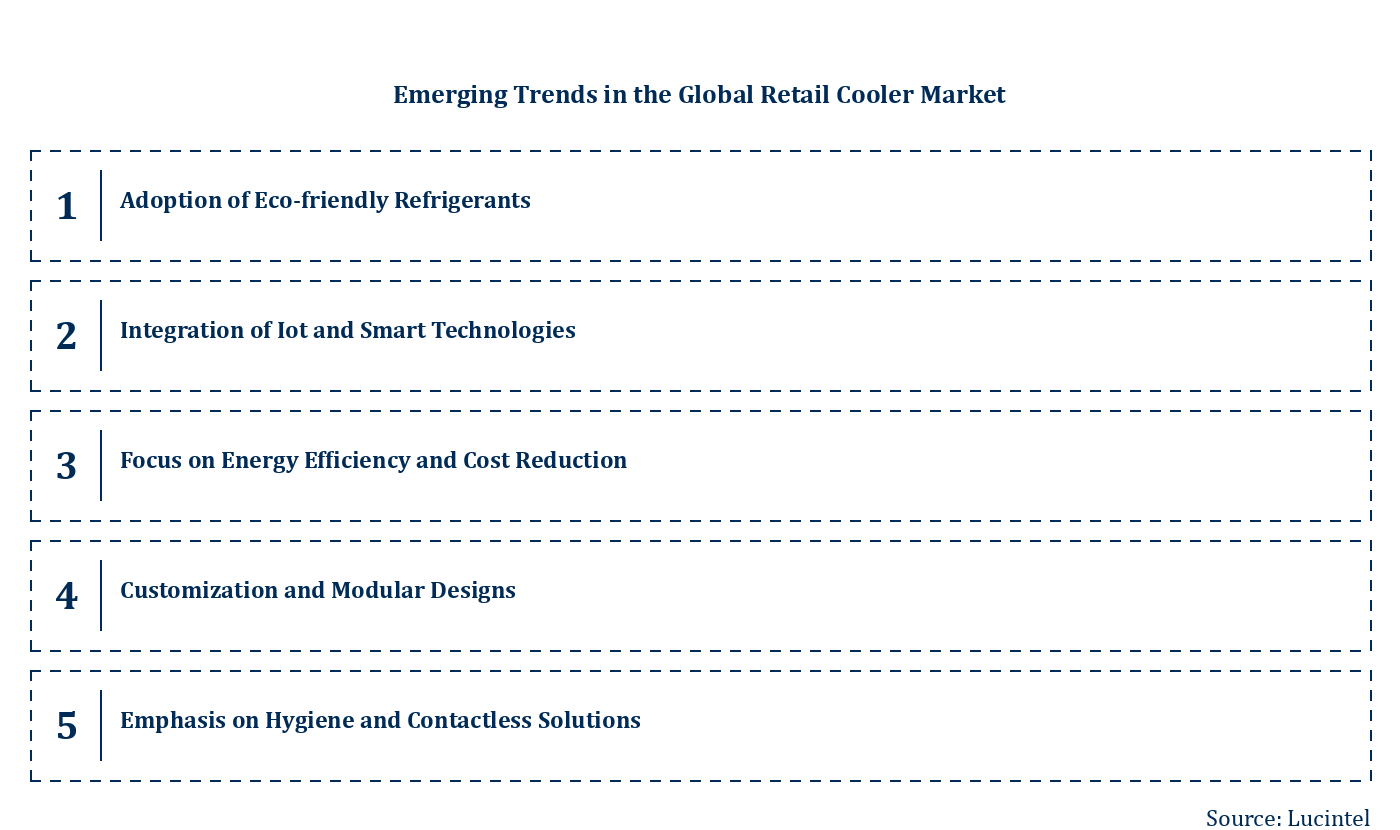
Emerging Trends in the Retail Cooler Market

The retail cooler market is experiencing rapid evolution driven by technological advancements, changing consumer preferences, and sustainability initiatives. As retailers seek to optimize operations and enhance customer experience, new trends are emerging that significantly influence market dynamics. These developments are not only improving efficiency but also aligning with environmental and health standards, thereby shaping the future landscape of retail cooling solutions. Understanding these key trends is essential for stakeholders aiming to stay competitive and innovative in this evolving market.

  • Adoption of Eco-Friendly Refrigerants: The shift towards environmentally sustainable refrigerants is gaining momentum. Retailers are increasingly replacing traditional refrigerants with eco-friendly alternatives such as hydrofluoroolefins (HFOs) and natural refrigerants like CO2 and ammonia. This trend reduces greenhouse gas emissions, complies with stringent regulations, and appeals to eco-conscious consumers. The adoption of green refrigerants also helps retailers lower their carbon footprint and operational costs, fostering a more sustainable retail environment.
  • Integration of IoT and Smart Technologies: The incorporation of Internet of Things (IoT) devices and smart technology is transforming retail coolers into connected systems. These innovations enable real-time monitoring of temperature, humidity, and energy consumption, allowing for predictive maintenance and reduced downtime. Smart coolers optimize energy efficiency, improve product quality, and enhance customer experience by ensuring consistent cooling. This trend also provides valuable data analytics, helping retailers make informed decisions and improve operational efficiency.
  • Focus on Energy Efficiency and Cost Reduction: Retailers are prioritizing energy-efficient cooling solutions to reduce operational costs and meet sustainability goals. Advanced insulation materials, variable speed compressors, and LED lighting are being integrated into cooler designs. These innovations significantly lower energy consumption and utility bills while maintaining optimal cooling performance. The emphasis on energy efficiency aligns with global efforts to combat climate change and supports retailers in achieving long-term cost savings.
  • Customization and Modular Designs: The market is witnessing a shift towards customizable and modular cooler units that cater to specific retail needs. Modular coolers allow easy scalability, flexible configurations, and quick installation, making them ideal for diverse retail environments. Customization options include branding, lighting, and shelving, enhancing store aesthetics and customer engagement. This trend provides retailers with tailored solutions that improve space utilization and operational flexibility, ultimately boosting sales and customer satisfaction.
  • Emphasis on Hygiene and Contactless Solutions: The COVID-19 pandemic has heightened the focus on hygiene and contactless interactions within retail environments. Coolers with touchless controls, antimicrobial coatings, and easy-to-clean surfaces are becoming standard. These features help prevent contamination, ensure product safety, and meet health regulations. The trend towards hygienic and contactless coolers enhances consumer confidence and aligns with health-conscious shopping behaviors, thereby influencing purchasing decisions and fostering a safer retail environment.

These emerging trends are reshaping the retail cooler market by promoting sustainability, technological integration, cost efficiency, customization, and hygiene. They are driving innovation, improving operational performance, and aligning retail cooling solutions with evolving consumer and regulatory expectations. As these trends continue to develop, the market is poised for significant transformation, emphasizing smarter, greener, and more customer-centric cooling solutions.
Retail Cooler Market by country

Recent Developments in the Retail Cooler Market

The retail cooler market is experiencing rapid innovation driven by technological advancements, changing consumer preferences, and sustainability initiatives. These developments are reshaping how retailers operate, enhance customer experience, and meet environmental standards. As the industry adapts to these shifts, market players are exploring new opportunities for growth, efficiency, and competitive advantage. The following key developments highlight the current trajectory and future potential of the retail cooler sector.

  • Adoption of Energy-Efficient Technologies: The integration of energy-efficient cooling systems is transforming the retail cooler market by reducing operational costs and environmental impact. Advanced refrigeration technologies, such as inverter compressors and eco-friendly refrigerants, are gaining popularity. These innovations help retailers comply with stricter regulations, lower energy consumption, and improve sustainability credentials. As a result, retailers can achieve significant cost savings while contributing to environmental conservation, making energy-efficient coolers a strategic investment.
  • Smart Cooler Solutions and IoT Integration: The deployment of smart coolers equipped with IoT technology is revolutionizing inventory management and customer engagement. These coolers enable real-time monitoring of temperature, stock levels, and maintenance needs, reducing waste and operational downtime. IoT integration also allows personalized marketing and data collection for targeted promotions. This technological leap enhances efficiency, reduces costs, and improves customer satisfaction, positioning smart coolers as a vital component of modern retail infrastructure.
  • Focus on Sustainability and Eco-Friendly Materials: Sustainability is a key driver in the retail cooler market, prompting manufacturers to develop eco-friendly products. Use of recyclable materials, energy-efficient designs, and environmentally safe refrigerants are becoming standard. Retailers are increasingly prioritizing green initiatives to meet consumer demand and regulatory standards. These sustainable coolers not only reduce carbon footprints but also enhance brand reputation, attracting environmentally conscious customers and fostering long-term loyalty.
  • Customization and Modular Designs: The trend toward customizable and modular cooler units is gaining momentum, offering retailers flexibility in store layouts and product displays. Modular coolers can be easily reconfigured to accommodate changing inventory needs or store designs, reducing capital expenditure. Customization options, such as branding and interior lighting, improve visual appeal and customer experience. This adaptability allows retailers to optimize space utilization and respond swiftly to market trends, boosting overall operational efficiency.
  • Expansion of Refrigeration as A Service (RaaS): The RaaS model is emerging as a cost-effective alternative to traditional cooler ownership, providing retailers with flexible leasing options, maintenance, and upgrades. This approach reduces upfront capital investment and ensures access to the latest technology. RaaS also minimizes downtime and operational risks through proactive maintenance. As this model gains traction, it is enabling smaller retailers to access advanced cooling solutions, fostering market growth and technological adoption across the sector.

The retail cooler market is being reshaped by technological innovation, sustainability efforts, and flexible service models, leading to increased efficiency, cost savings, and enhanced customer experiences. These developments are driving market expansion, attracting new entrants, and setting new standards for environmental responsibility and operational agility. Overall, these opportunities are positioning the retail cooler industry for sustained growth and competitive advantage.

Strategic Growth Opportunities in the Retail Cooler Market

The retail cooler market is experiencing significant growth driven by increasing demand for fresh and frozen products, technological advancements, and evolving consumer preferences. Retailers are investing in innovative cooling solutions to enhance product visibility, reduce energy consumption, and improve customer experience. Expanding urbanization and the growth of organized retail chains further contribute to market expansion. Strategic investments and product diversification are essential for companies aiming to capitalize on emerging opportunities and stay competitive in this dynamic landscape.

  • Adoption of Energy-Efficient Cooling Technologies To Reduce Operational Costs and Meet Sustainability Goals: Retailers are increasingly implementing energy-efficient coolers, such as LED lighting and advanced refrigeration systems, to lower energy consumption. This shift not only reduces costs but also aligns with environmental regulations and corporate social responsibility initiatives. The demand for eco-friendly solutions is driving innovation in cooling technology, creating opportunities for manufacturers to develop sustainable products that appeal to environmentally conscious consumers and retailers.
  • Growing Demand for Customized and Modular Cooler Solutions for Diverse Retail Formats: As retail formats diversify, there is a rising need for adaptable cooler solutions that can be tailored to specific store layouts and product categories. Modular coolers allow retailers to optimize space utilization and enhance product presentation. Customization options enable brands to create unique shopping experiences, improve product accessibility, and increase sales. This trend offers manufacturers opportunities to develop flexible, scalable cooling systems that cater to various retail environments
  • Expansion of Organized Retail Chains and Supermarkets Fueling Cooler Installation and Upgrades: The rapid growth of organized retail and supermarket chains is boosting demand for large-scale cooler installations and upgrades. These retailers require extensive refrigeration infrastructure to support a wide range of products, from perishables to beverages. Upgrading existing coolers to more efficient models also presents opportunities for market players to provide retrofit solutions. This expansion supports increased sales volume and encourages innovation in high-capacity, durable cooling systems.
  • Integration of IoT and Smart Technologies for Enhanced Cooler Management and Energy Optimization: The integration of Internet of Things (IoT) and smart sensors into retail coolers enables real-time monitoring, predictive maintenance, and energy management. These technologies help reduce downtime, improve operational efficiency, and lower energy costs. Retailers are increasingly adopting smart coolers to gain better control over refrigeration conditions, ensure product quality, and reduce waste. This technological shift opens avenues for manufacturers to develop connected cooling solutions with advanced analytics capabilities.
  • Rising Focus on Cold Chain Logistics To Ensure Product Freshness and Expand Market Reach: The growing importance of cold chain logistics for perishable goods is creating new opportunities for retail coolers designed for transportation and storage. Enhanced cold chain infrastructure ensures product freshness from supplier to shelf, supporting the expansion into new markets and e-commerce channels. Cooler solutions that facilitate seamless cold chain integration are in high demand, enabling retailers to meet consumer expectations for fresh products and comply with safety standards, thereby broadening market reach and increasing sales.

The overall impact of these opportunities is a dynamic, innovative retail cooler market poised for substantial growth. Companies that leverage technological advancements, customization, and sustainability will be better positioned to meet evolving consumer and retailer needs. This evolution will drive increased efficiency, product quality, and market competitiveness, ultimately shaping the future landscape of retail refrigeration solutions.

Retail Cooler Market Drivers and Challenges

The retail cooler market is influenced by a variety of technological, economic, and regulatory factors that shape its growth and development. Advances in refrigeration technology, energy efficiency standards, and changing consumer preferences are key drivers. Economic conditions such as rising disposable incomes and urbanization contribute to increased demand for retail coolers. Regulatory frameworks aimed at environmental sustainability and safety also impact market dynamics. Additionally, innovations in smart cooling solutions and sustainable materials are transforming the industry landscape. However, the market faces challenges including high installation costs, regulatory compliance complexities, and environmental concerns related to refrigerants. Understanding these drivers and challenges is essential for stakeholders to navigate the evolving market landscape effectively.

The factors responsible for driving the retail cooler market include:

  • Technological Advancements: The integration of smart technology and energy-efficient refrigeration systems is a major driver. Innovations such as IoT-enabled coolers allow real-time monitoring, predictive maintenance, and optimized energy consumption, which appeal to retailers seeking operational efficiency. These advancements reduce energy costs and improve product freshness, thereby increasing demand. As technology continues to evolve, retailers are increasingly adopting modern coolers to stay competitive, which accelerates market growth. The focus on sustainability and automation further fuels innovation, making technologically advanced coolers a key growth driver.
  • Rising Urbanization and Disposable Income: Rapid urbanization and increasing disposable incomes are significantly boosting demand for retail coolers. Urban consumers expect fresh, chilled products, prompting retailers to invest in modern cooling solutions. As cities expand, retail outlets, supermarkets, and convenience stores grow, requiring efficient cooling infrastructure. Higher disposable incomes enable consumers to purchase a wider variety of perishable goods, which in turn compels retailers to upgrade their cooling systems. This economic shift supports sustained market expansion, especially in developing regions where retail infrastructure is rapidly developing.
  • Regulatory and Environmental Policies: Stringent regulations aimed at reducing energy consumption and environmental impact are shaping the retail cooler industry. Governments are enforcing standards for refrigerant use, energy efficiency, and waste management, compelling manufacturers to innovate. Policies promoting the adoption of eco-friendly refrigerants and energy-efficient designs are driving the development of sustainable coolers. While these regulations pose compliance challenges, they also create opportunities for companies to differentiate through eco-friendly products. Overall, regulatory frameworks are a double-edged sword, fostering innovation while demanding compliance.
  • Growing E-commerce and Retail Sector: The expansion of the retail sector and e-commerce platforms is a significant driver. Retailers require reliable cooling solutions to maintain product quality during storage and transportation. The rise of online grocery shopping increases demand for portable and modular coolers suitable for various retail formats. Additionally, supermarkets and hypermarkets are investing heavily in modern refrigeration to attract customers and ensure product freshness. The growth of retail chains and convenience stores globally amplifies the need for advanced cooling infrastructure, fueling market growth.
  • Sustainability and Energy Efficiency Focus: Increasing emphasis on sustainability is driving the adoption of energy-efficient and environmentally friendly coolers. Retailers and manufacturers are prioritizing eco-conscious solutions to reduce carbon footprints and operational costs. The development of refrigerants with low global warming potential (GWP) and energy-saving technologies is central to this trend. This focus not only aligns with regulatory requirements but also appeals to environmentally conscious consumers. As sustainability becomes a core business objective, the market for green cooling solutions is expected to expand significantly.

The challenges facing this Market include:

  • High Installation and Maintenance Costs: The initial investment for advanced retail coolers can be substantial, especially for small and medium-sized retailers. High costs associated with purchasing, installing, and maintaining sophisticated cooling systems can hinder adoption, particularly in price-sensitive markets. Additionally, ongoing maintenance and energy expenses add to the total cost of ownership, impacting profitability. Retailers may delay or avoid upgrading to newer, more efficient models due to these financial barriers, which can slow overall market growth and innovation.
  • Regulatory Compliance Complexities: Navigating the complex landscape of regulations related to refrigerants, energy efficiency, and waste management poses significant challenges. Different regions have varying standards, requiring manufacturers and retailers to adapt their products and processes accordingly. Compliance can involve costly certifications, retrofitting existing infrastructure, and ongoing monitoring. Non-compliance risks penalties and reputational damage, making regulatory adherence a critical but challenging aspect of market operations. This complexity can act as a barrier to entry for new players and limit innovation.
  • Environmental Concerns and Refrigerant Restrictions: The phase-out of high-GWP refrigerants due to environmental concerns presents a significant challenge. Manufacturers must develop and adopt alternative refrigerants that meet regulatory standards without compromising cooling performance. Transitioning to eco-friendly refrigerants involves research, testing, and potential redesigns, which can be costly and time-consuming. Additionally, the disposal and recycling of refrigerants pose environmental risks. These factors create uncertainty and operational hurdles, potentially slowing market growth and innovation in cooling technologies.

A synthesis of these drivers and challenges indicates that while technological innovation, economic growth, and regulatory support are propelling the retail cooler market forward, high costs, compliance complexities, and environmental restrictions pose notable hurdles. The markets future will depend on how effectively stakeholders can leverage technological advancements and sustainable practices while managing costs and regulatory demands. Overall, the market is poised for growth, driven by increasing demand for efficient, eco-friendly cooling solutions, but must navigate significant operational and regulatory challenges to realize its full potential.

List of Retail Cooler Market Companies

Companies in the market compete on the basis of product quality offered. Major players in this market focus on expanding their manufacturing facilities, R&D investments, infrastructural development, and leverage integration opportunities across the value chain. Through these strategies retail cooler market companies cater increasing demand, ensure competitive effectiveness, develop innovative products & technologies, reduce production costs, and expand their customer base. Some of the retail cooler market companies profiled in this report include-

  • Polar Bear Coolers
  • Lifoam Industries LLC
  • ORCA Coolers, LLC
  • Plastilite Corporation
  • ICEE Containers Pty Ltd.
  • Bison Coolers
  • Grizzly Coolers LLC
  • Huntington Solutions
  • The Coleman Company, Inc.
  • YETI Holdings, Inc.

Retail Cooler Market by Segment

The study includes a forecast for the global retail cooler market by capacity, distribution channel, and region.

  • Retail Cooler Market by Capacity [Value from 2019 to 2035]:
    • Below 10 Quarts
    • Between 11-25 Quarts
    • Between 26-50 Quarts
    • Above 50 Quarts
  • Retail Cooler Market by Distribution Channel [Value from 2019 to 2035]:
    • Offline
    • Online
  • Retail Cooler Market by Region [Value ($B) from 2019 to 2035]:
    • North America
    • Europe
    • Asia Pacific
    • The Rest of the World

Country Wise Outlook for the Retail Cooler Market

The retail cooler market has experienced significant shifts driven by technological innovations, changing consumer preferences, and sustainability initiatives across major economies. As retailers seek energy-efficient and eco-friendly solutions, market dynamics are evolving rapidly. Governments' policies and advancements in refrigeration technology are also influencing growth trajectories. Each country presents unique trends shaped by local regulations, consumer behavior, and technological adoption. Understanding these developments is crucial for stakeholders aiming to capitalize on emerging opportunities and address challenges in this competitive landscape.

  • United States: The US retail cooler market has seen increased adoption of energy-efficient and smart cooling solutions, driven by stringent environmental regulations and consumer demand for sustainability. Major retailers are investing in eco-friendly refrigeration systems that reduce energy consumption and carbon footprint. Innovations such as IoT-enabled coolers for real-time monitoring and maintenance are gaining popularity. Additionally, the shift towards healthier food options has increased the demand for specialized coolers, including those for fresh produce and dairy products. The market is also witnessing a rise in private label brands, prompting customized cooler solutions.
  • China: China's retail cooler market is expanding rapidly due to the growth of hypermarkets and convenience stores. The focus is on cost-effective, energy-efficient refrigeration systems that comply with government regulations aimed at reducing energy consumption. Local manufacturers are increasingly adopting advanced technologies like inverter compressors and eco-friendly refrigerants. E-commerce integration is also influencing cooler designs, with smart coolers enabling better inventory management. The government’s push for green initiatives and urbanization further boost market growth, with a rising preference for modern, aesthetically appealing cooler units in retail outlets.
  • Germany: Germany's retail cooler market emphasizes sustainability and energy efficiency, aligned with the country's strong environmental policies. The adoption of eco-friendly refrigerants such as natural gases and the implementation of energy-saving technologies are prevalent. Retailers are investing in modular and customizable cooler units to optimize space and improve customer experience. The market also benefits from technological innovations like digital temperature controls and remote monitoring systems. Additionally, Germany's focus on reducing carbon emissions has led to increased demand for high-performance, environmentally friendly cooling solutions, especially in supermarkets and hypermarkets.
  • India: The Indian retail cooler market is witnessing rapid growth driven by expanding retail chains, supermarkets, and convenience stores. Cost-effective and energy-efficient coolers are in high demand due to rising electricity costs and government initiatives promoting sustainable practices. Local manufacturers are adopting innovative refrigeration technologies, including inverter compressors and eco-friendly refrigerants. The increasing urbanization and changing consumer preferences for fresh and frozen foods are fueling demand for specialized coolers. Additionally, the government’s focus on reducing carbon emissions and promoting renewable energy sources is encouraging the adoption of green cooling solutions across retail outlets.
  • Japan: Japan's retail cooler market is characterized by advanced technology integration and a focus on energy conservation. The market is driven by strict regulations on refrigerants and energy efficiency standards. Retailers are increasingly adopting smart coolers with IoT connectivity for better inventory and temperature management. There is a growing preference for compact, space-saving units that blend seamlessly with store aesthetics. Innovations such as eco-friendly refrigerants and high-efficiency compressors are prevalent. Japan’s emphasis on sustainability and technological innovation continues to shape the market, with a focus on reducing environmental impact while maintaining high standards of food safety and quality.

Features of the Retail Cooler Market

  • Market Size Estimates: Retail cooler market size estimation in terms of value ($B).
  • Trend and Forecast Analysis: Market trends (2019 to 2025) and forecast (2026 to 2035) by various segments and regions.
  • Segmentation Analysis: Retail cooler market size by capacity, distribution channel, and region in terms of value ($B).
  • Regional Analysis: Retail cooler market breakdown by North America, Europe, Asia Pacific, and Rest of the World.
  • Growth Opportunities: Analysis of growth opportunities in different capacity, distribution channels, and regions for the retail cooler market.
  • Strategic Analysis: This includes M&A, new product development, and competitive landscape of the retail cooler market.
  • Analysis of competitive intensity of the industry based on Porter’s Five Forces model.

Top 5 Companies

  • Polar Bear Coolers
  • Lifoam Industries LLC
  • ORCA Coolers, LLC
  • Plastilite Corporation
  • ICEE Containers Pty Ltd.

Table of Contents

1. Executive Summary
13.1 Competitive Analysis Overview

List of Figures

List of Tables

Methodology

Lucintel has been in the business of market research and management consulting since 2000 and has published over 1000 market intelligence reports in various markets / applications and served over 1,000 clients worldwide. This study is a culmination of four months of full-time effort performed by Lucintel's analyst team. The analysts used the following sources for the creation and completion of this valuable report:

  • In-depth interviews of the major players in this market
  • Detailed secondary research from competitors' financial statements and published data
  • Extensive searches of published works, market, and database information pertaining to industry news, company press releases, and customer intentions
  • A compilation of the experiences, judgments, and insights of Lucintel's professionals, who have analyzed and tracked this market over the years.

Extensive research and interviews are conducted across the supply chain of this market to estimate market share, market size, trends, drivers, challenges, and forecasts. Below is a brief summary of the primary interviews that were conducted by job function for this report.

Lucintel's methodology for market research

Thus, Lucintel compiles vast amounts of data from numerous sources, validates the integrity of that data, and performs a comprehensive analysis. Lucintel then organizes the data, its findings, and insights into a concise report designed to support the strategic decision-making process. The figure below is a graphical representation of Lucintel's research process.

Primary interviews by job function

Buy Now

Choose a license that fits your team. Instant PDF delivery.

Market Report

1 User PDF

$4,850
Buy Now

Market Report

2-5 Users PDF

$6,700
Buy Now

Market Report

Corporate PDF

$8,850
Buy Now

Market Report

Global PDF

$10,000
Buy Now

Prices exclude taxes. Instant delivery. Custom licensing available on request.

Frequently Asked Questions

What is the retail cooler market size?
The global retail cooler market is expected to reach an estimated $10 billion by 2035.
What is the growth forecast for retail cooler market?
The global retail cooler market is expected to grow with a CAGR of 10.2% from 2026 to 2035.
What are the major drivers influencing the growth of the retail cooler market?
The major drivers for this market are the rising demand for frozen & chilled food products, the increasing investments in organized retail infrastructure, and the growing adoption of smart and connected retail coolers.
What are the major segments for retail cooler market?
The future of the retail cooler market looks promising with opportunities in the offline and online markets.
Who are the key retail cooler market companies?

Some of the key retail cooler companies are as follows:

  • Polar Bear Coolers
  • Lifoam Industries LLC
  • ORCA Coolers, LLC
  • Plastilite Corporation
  • ICEE Containers Pty Ltd.
  • Bison Coolers
  • Grizzly Coolers LLC
  • Huntington Solutions
  • The Coleman Company, Inc.
  • YETI Holdings, Inc.
Which retail cooler market segment will be the largest in future?
Lucintel forecasts that, within the capacity category, between 26-50 quart is expected to witness the highest growth over the forecast period.
In retail cooler market, which region is expected to be the largest in next 8 years?
In terms of region, APAC is expected to witness the highest growth over the forecast period.
Do we receive customization in this report?
Yes, Lucintel provides 10% customization without any additional cost.

Key Questions

  • What are some of the most promising, high-growth opportunities for the retail cooler market by capacity (below 10 quarts, between 11-25 quarts, between 26-50 quarts, and above 50 quarts), distribution channel (offline and online), and region (North America, Europe, Asia Pacific, and the Rest of the World)?
  • Which segments will grow at a faster pace and why?
  • Which region will grow at a faster pace and why?
  • What are the key factors affecting market dynamics? What are the key challenges and business risks in this market?
  • What are the business risks and competitive threats in this market?
  • What are the emerging trends in this market and the reasons behind them?
  • What are some of the changing demands of customers in the market?
  • What are the new developments in the market? Which companies are leading these developments?
  • Who are the major players in this market? What strategic initiatives are key players pursuing for business growth?
  • What are some of the competing products in this market and how big of a threat do they pose for loss of market share by material or product substitution?
  • What M&A activity has occurred in the last 5 years and what has its impact been on the industry?
Why Choose Us

The Lucintel Advantage

Trusted partner for strategic intelligence and business growth

25+ Years Excellence

25+ Years Excellence

Quarter century of proven expertise in management consulting and market research across global markets.
Game-Changer Ideas

Game-Changer Ideas

Innovative strategies and actionable insights that help clients become the smartest in their industry.
Global Reach

Global Reach

Extensive coverage across 50+ industries and markets worldwide with localized expertise.
Start Your Growth Journey

Get Your Free
Market Intelligence
Briefing

Receive a complimentary market analysis tailored to your industry. Our analysts will identify key growth opportunities and competitive dynamics specific to your business.

Custom Market Snapshot

Market size, growth rate, and key trend analysis for your specific sector.

Competitive Landscape Overview

Top competitor positioning and market share analysis.

Growth Opportunity Identification

Strategic recommendations backed by data-driven insights.

Subscribe

Subscribe to our Newsletter

Get curated market intelligence and competitive moves straight to your inbox.

By subscribing, you agree to receive our monthly insights. Unsubscribe anytime.

Industry Trends Market Signals Opportunities Competitor Moves