
Market Report · July 22, 2026

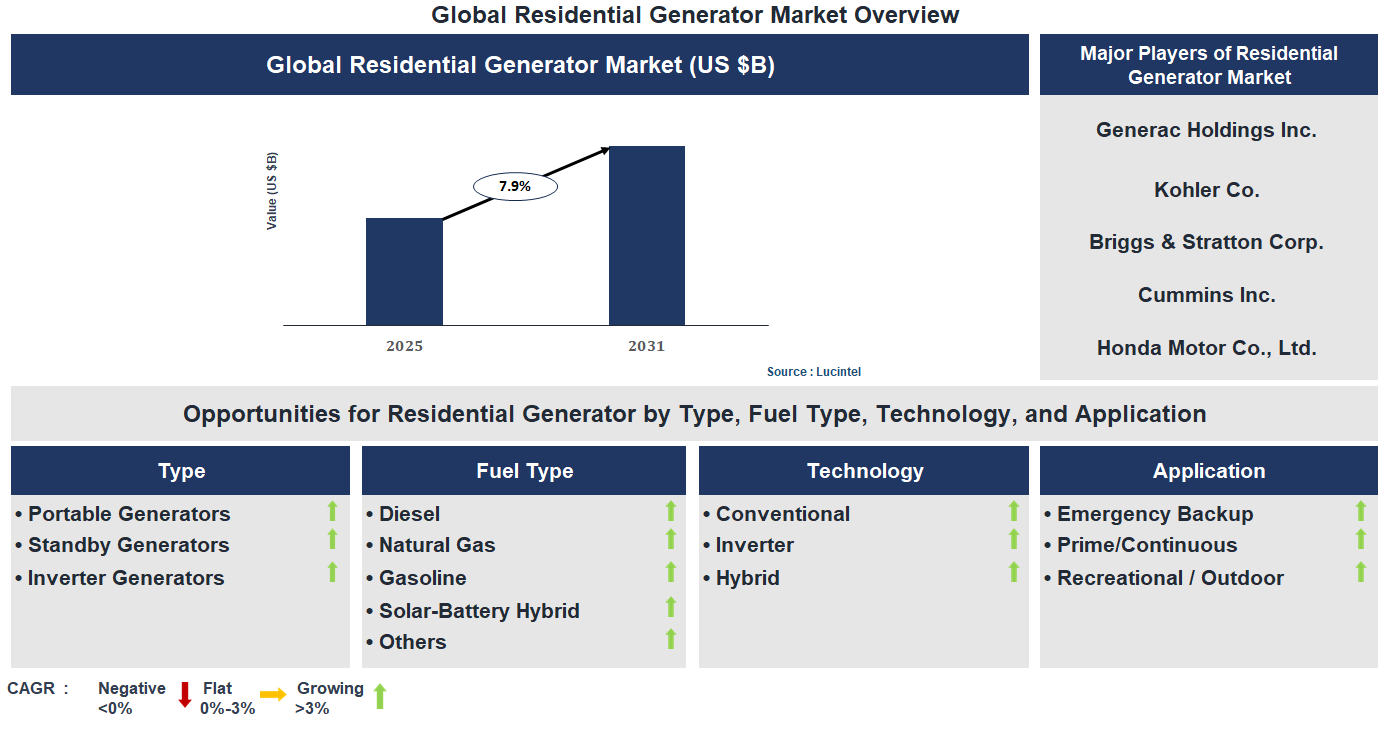
Key data points: The growth forecast = 7.9% annually for the next 7 years. Scroll below to get more insights. This market report covers trends, opportunities and forecasts in residential generator market to 2031 by type (portable generators, standby generators, and inverter generators), fuel type (diesel, natural gas, gasoline, solar-battery hybrid, and others), technology (conventional, inverter, and hybrid), application (emergency backup, prime/continuous, and recreational / outdoor), and region (North America, Europe, Asia Pacific, and the Rest of the World)
We'll send your sample report shortly.
• Lucintel forecasts that, within the type category, portable generator is expected to witness the highest growth over the forecast period.
• Within the application category, emergency backup is expected to witness the highest growth.
• In terms of region, North America is expected to witness the highest growth over the forecast period. Gain valuable insights for your business decisions with our comprehensive 150+ page report. Sample figures with some insights are shown below.
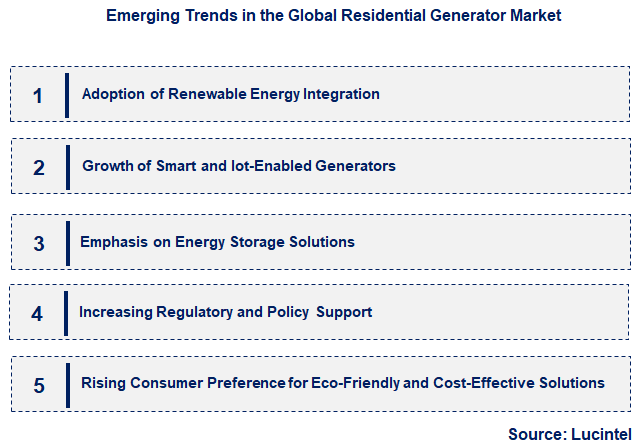
• Adoption of Renewable Energy Integration: Increasing integration of renewable energy sources, such as solar and wind, with residential generators is a prominent trend. This hybrid approach enhances energy independence, reduces reliance on fossil fuels, and lowers carbon footprints. Advanced inverter technology and smart grid compatibility enable seamless energy management, making these systems more attractive to eco-conscious consumers. The trend promotes sustainable living and aligns with government incentives for clean energy adoption, thereby expanding market potential and encouraging innovation in hybrid generator solutions.
• Growth of Smart and IoT-Enabled Generators: The incorporation of Internet of Things (IoT) technology into residential generators is revolutionizing user experience and operational efficiency. Smart generators offer remote monitoring, automatic diagnostics, and predictive maintenance, reducing downtime and service costs. Connectivity features enable users to optimize energy use and integrate with home automation systems. This trend enhances convenience, safety, and energy management, appealing to tech-savvy homeowners. As IoT adoption accelerates, manufacturers are focusing on developing intelligent, user-friendly products that provide real-time insights and improved reliability.
• Emphasis on Energy Storage Solutions: The rising demand for energy storage systems alongside generators is transforming the market landscape. Homeowners seek reliable backup power and the ability to store excess renewable energy for later use. Advanced battery technologies, such as lithium-ion, are being integrated with generators to create comprehensive energy solutions. This trend supports energy independence, cost savings, and grid stability. The development of compact, efficient, and affordable storage options is making these combined systems more accessible, fostering a shift toward self-sufficient and resilient residential energy setups.
• Increasing Regulatory and Policy Support: Governments worldwide are implementing policies and incentives to promote clean energy and resilient power solutions. Regulations favoring emissions reduction, renewable integration, and energy efficiency are encouraging consumers to adopt advanced residential generators. Subsidies, tax credits, and stricter emissions standards are driving innovation and market growth. This supportive policy environment is also fostering partnerships between manufacturers and energy providers, accelerating the deployment of sustainable generator solutions. Such regulatory support is crucial in shaping a future-oriented, environmentally responsible market.
• Rising Consumer Preference for Eco-Friendly and Cost-Effective Solutions: Consumers are increasingly prioritizing environmentally friendly and economical power options. This shift is driven by rising awareness of climate change, energy costs, and the desire for energy independence. As a result, there is a growing demand for generators that are energy-efficient, low-emission, and compatible with renewable sources. Manufacturers are responding by developing greener products with lower operational costs and longer lifespans. This trend is reshaping market offerings, emphasizing sustainability, and influencing purchasing decisions, ultimately fostering a more environmentally conscious residential generator market. In summary, these trends are collectively reshaping the residential generator market by promoting sustainability, technological innovation, and consumer-centric solutions. They are driving the development of smarter, cleaner, and more integrated energy systems, which are essential for meeting future energy demands and environmental goals.
• Technological Innovation: Integration of smart technology and IoT in generators has enhanced user control, monitoring, and maintenance, leading to increased efficiency and convenience for consumers. This development improves reliability and reduces operational costs, making generators more attractive to homeowners.
• Renewable Energy Integration: The adoption of hybrid systems combining solar panels with generators is gaining traction, promoting sustainable energy use. This reduces dependence on fossil fuels, lowers emissions, and aligns with global environmental goals, thereby expanding market appeal.
• Regulatory and Policy Changes: Governments are implementing stricter emissions standards and offering incentives for cleaner energy solutions. These policies encourage manufacturers to develop eco-friendly generators and influence consumer purchasing decisions toward greener options.
• Rising Demand Due to Power Outages: Increased frequency of power outages caused by extreme weather events has driven demand for reliable backup power solutions. This trend boosts sales of residential generators, especially in regions prone to outages, ensuring household energy security.
• Market Expansion in Emerging Regions: Growing urbanization and infrastructure development in emerging economies are opening new markets for residential generators. Affordability and increasing awareness are further accelerating adoption in these regions. In summary, these developments are collectively transforming the residential generator market by making products more technologically advanced, environmentally sustainable, and aligned with consumer needs. The market is experiencing robust growth driven by increased demand for reliable power, regulatory support, and expanding geographic reach, positioning it for continued expansion in the coming years.
• Increasing Adoption of Smart Generators: This opportunity involves integrating IoT and smart technology into residential generators, enabling remote monitoring, maintenance alerts, and enhanced user control. It improves convenience, reduces downtime, and optimizes energy use, making smart generators highly attractive to tech-savvy homeowners.
• Growth in renewable energy integration: Combining residential generators with renewable energy sources like solar panels enhances sustainability and reduces reliance on traditional Fuel-based Generators. This integration supports eco-friendly living and offers cost savings, appealing to environmentally conscious consumers.
• Rising Demand for Portable Generators: Portable generators provide flexibility and ease of use for homeowners during outdoor activities or temporary power outages. Their compact design and affordability make them popular, especially in regions prone to natural disasters or with unreliable grid infrastructure.
• Expansion of Hybrid Generator Systems: Hybrid systems that combine traditional fuel-based generators with battery storage or renewable sources offer increased efficiency and reduced emissions. They provide reliable power with lower environmental impact, aligning with global sustainability goals.
• Implementation of Noise Reduction Technologies: Innovations aimed at reducing generator noise levels improve residential comfort and meet regulatory standards. Quieter generators are more acceptable in densely populated areas, expanding market reach and consumer acceptance. In summary, these growth opportunities are significantly impacting the residential generator market by driving innovation, enhancing consumer appeal, and promoting sustainable solutions. They are enabling market players to meet the increasing demand for reliable, efficient, and eco-friendly power solutions, thereby fostering overall market expansion and competitiveness.
• Growing Incidence of Power Outages: Power outages caused by storms, grid failures, or maintenance issues are increasing globally, prompting homeowners to seek reliable backup power solutions. Residential generators provide an immediate and dependable power source during outages, ensuring safety, comfort, and continuity of daily activities. This rising demand is particularly prominent in regions prone to extreme weather events and aging infrastructure, fueling market growth. As urban areas expand and energy demands rise, the need for backup power solutions becomes more critical, making residential generators an essential component of modern homes.
• Technological Advancements in Generator Design: Innovations such as inverter technology, smart controls, and fuel efficiency improvements have significantly enhanced generator performance. These advancements lead to quieter operation, lower emissions, and better fuel economy, making generators more appealing to homeowners. The integration of IoT and remote monitoring allows users to manage and maintain their generators more effectively. As technology continues to evolve, manufacturers are able to offer more compact, efficient, and user-friendly products, which broadens market appeal and encourages adoption across diverse residential settings.
• Increasing Urbanization and Population Growth: Rapid urbanization and population growth in many regions increase the demand for reliable power sources in densely populated areas. As urban homes become more sophisticated and energy-dependent, the need for backup power solutions intensifies. Residential generators are increasingly viewed as essential for maintaining household operations during outages, especially in areas with unreliable grid infrastructure. This demographic shift drives market expansion, as homeowners seek to safeguard their households against power disruptions and ensure continuous access to electricity.
• Rising Awareness of Energy Security and Independence: Consumers are increasingly concerned about energy security and reducing dependence on the grid. Residential generators offer a means to achieve greater energy independence, especially in remote or disaster-prone areas. This awareness is driven by frequent natural calamities and geopolitical uncertainties affecting energy supplies. As a result, homeowners are investing in backup power solutions to ensure safety, comfort, and operational continuity, thereby propelling market growth. The trend towards self-sufficiency encourages manufacturers to develop more accessible and affordable generator options.
• Government Incentives and Support Programs: Many governments are promoting the adoption of backup power solutions through incentives, subsidies, and supportive policies. These initiatives aim to enhance energy resilience, reduce reliance on fossil fuels, and promote sustainable practices. Such policies lower the financial barriers for consumers, encouraging them to invest in residential generators. Additionally, regulations mandating backup power in critical infrastructure and new building codes further stimulate market demand. Government support plays a vital role in accelerating adoption rates and expanding the market footprint. The challenges facing this residential generator market include:-
• High Initial Investment and Operating Costs: The upfront cost of purchasing and installing residential generators can be significant, deterring many homeowners from adoption. Additionally, ongoing expenses such as fuel, maintenance, and repairs contribute to the total cost of ownership. These financial barriers limit market penetration, especially in price-sensitive regions. The economic burden may discourage widespread adoption despite the benefits of backup power, thereby constraining market growth. Manufacturers need to focus on cost-effective solutions and financing options to overcome this challenge.
• Environmental Regulations and Emissions Standards: Stricter environmental policies aimed at reducing emissions from fossil fuel-based generators pose a challenge for market growth. Many regions are imposing limits on emissions and noise levels, which require manufacturers to develop cleaner and quieter generator models. Compliance with these regulations can increase production costs and limit product offerings. Additionally, the shift towards renewable energy sources and alternative backup solutions may reduce demand for traditional generators, impacting market expansion.
• Limited Awareness and Market Penetration in Developing Regions: Despite the growing need for backup power, awareness about residential generators remains low in many developing areas. Lack of information, affordability issues, and inadequate infrastructure hinder market penetration. Consumers may prioritize other basic needs over backup power solutions, and local regulations may not support widespread adoption. Overcoming these barriers requires targeted awareness campaigns, affordable product offerings, and supportive policies to unlock market potential in emerging regions. In summary, the residential generator market is driven by increasing power outage incidents, technological innovations, urbanization, energy security concerns, and supportive government policies. However, high costs, environmental regulations, and limited awareness in certain regions pose significant challenges. These factors collectively influence market growth, requiring stakeholders to innovate, educate, and adapt strategies to capitalize on opportunities while addressing obstacles. The overall impact is a dynamic and evolving market landscape with substantial potential for expansion amid ongoing technological and regulatory developments.
• Generac Holdings Inc.
• Kohler Co.
• Briggs & Stratton Corp.
• Cummins Inc.
• Honda Motor Co., Ltd.
• Atlas Copco AB
• Caterpillar Inc.
• Yamaha Motor Co., Ltd.
• Champion Power Equipment Inc.
• Wacker Neuson SE
• Portable Generators
• Standby Generators
• Inverter Generators
• Diesel
• Natural Gas
• Gasoline
• Solar-Battery Hybrid
• Others
• Conventional
• Inverter
• Hybrid
• Emergency Backup
• Prime/Continuous
• Recreational / Outdoor
• North America
• Europe
• Asia Pacific
• The Rest of the World
• United States: The US market has seen a surge in demand for smart and hybrid residential generators, integrating IoT technology for remote monitoring and control. There is a growing preference for eco-friendly and fuel-efficient models, supported by government incentives for clean energy solutions. The adoption of natural gas generators is rising due to their lower emissions and operational costs. Additionally, the market benefits from increased disaster preparedness initiatives, especially in hurricane-prone regions, leading to higher sales of standby generators. Manufacturers are also focusing on compact, noise-reducing designs to enhance consumer appeal.
• China: China’s residential generator market is expanding rapidly, driven by urbanization and increasing power outages in rural areas. The government’s push for energy independence and rural electrification has spurred demand for affordable and reliable backup power solutions. Local manufacturers are innovating with cost-effective, compact models that cater to the growing middle class. The adoption of renewable-powered generators, such as solar hybrid systems, is gaining momentum, aligning with China’s sustainability goals. Market growth is also supported by government policies promoting clean energy and infrastructure development, making China a key player in the global market.
• Germany: Germany’s market emphasizes eco-friendly and energy-efficient residential generators, driven by strict environmental regulations and a strong focus on sustainability. There is a notable shift towards hybrid systems combining traditional generators with renewable energy sources like solar panels. The adoption of smart grid-compatible generators is increasing, allowing consumers to optimize energy use and reduce costs. The market benefits from government incentives for renewable energy integration and energy storage solutions. Additionally, the rising awareness of climate change impacts has encouraged households to invest in resilient and environmentally conscious backup power systems.
• India: The Indian residential generator market is witnessing rapid growth due to frequent power outages and expanding urban infrastructure. Affordable and durable generator models are in high demand, especially in semi-urban and rural areas. The market is seeing increased adoption of diesel and gas-powered generators, although there is a rising interest in solar hybrid systems driven by government initiatives promoting renewable energy. The affordability factor remains crucial, with local manufacturers offering cost-effective solutions. As energy access improves, the market is expected to diversify with more innovative, sustainable, and efficient backup power options tailored to India’s unique needs.
• Japan: Japan’s market is characterized by a focus on high-efficiency, compact, and noise-reducing residential generators, driven by urban density and strict noise regulations. The country is investing heavily in smart and integrated energy systems, including solar and battery storage, to enhance resilience against natural disasters like earthquakes and tsunamis. There is a growing trend towards eco-friendly models that meet stringent emissions standards. The government’s emphasis on disaster preparedness and energy independence is fueling demand for reliable backup solutions. Market players are also exploring advanced automation and remote management features to cater to tech-savvy consumers seeking sustainable and resilient power options.


• Generac Holdings Inc.
• Kohler Co.
• Briggs & Stratton Corp.
• Cummins Inc.
• Honda Motor Co., Ltd.
• Atlas Copco AB
• Caterpillar Inc.
• Yamaha Motor Co., Ltd.
• Champion Power Equipment Inc.
• Wacker Neuson SE Q5. Which residential generator market segment will be the largest in future? Answer: Lucintel forecasts that, within the type category, portable generator is expected to witness the highest growth over the forecast period. Q6. In residential generator market, which region is expected to be the largest in next 5 years? Answer: In terms of region, North America is expected to witness the highest growth over the forecast period. Q7. Do we receive customization in this report? Answer: Yes, Lucintel provides 10% customization without any additional cost.


Choose a license that fits your team. Instant PDF delivery.
Prices exclude taxes. Instant delivery. Custom licensing available on request.
Market Report · July 22, 2026
Market Report · July 22, 2026
Market Report · July 17, 2026
Trusted partner for strategic intelligence and business growth


Receive a complimentary market analysis tailored to your industry. Our analysts will identify key growth opportunities and competitive dynamics specific to your business.

Market size, growth rate, and key trend analysis for your specific sector.

Top competitor positioning and market share analysis.

Strategic recommendations backed by data-driven insights.
Get curated market intelligence and competitive moves straight to your inbox.
By subscribing, you agree to receive our monthly insights. Unsubscribe anytime.
Receive a complimentary market analysis tailored to your industry. Our analysts will identify key growth opportunities and competitive dynamics specific to your business.
Market size, growth rate, and key trend analysis for your specific sector.
Top competitor positioning and market share analysis.
Strategic recommendations backed by data-driven insights.
Get curated market intelligence, emerging trends, and competitive moves straight to your inbox each month.
By subscribing, you agree to receive our monthly insights. Unsubscribe anytime.
We'll send your sample report shortly.