
Market Report · July 15, 2026

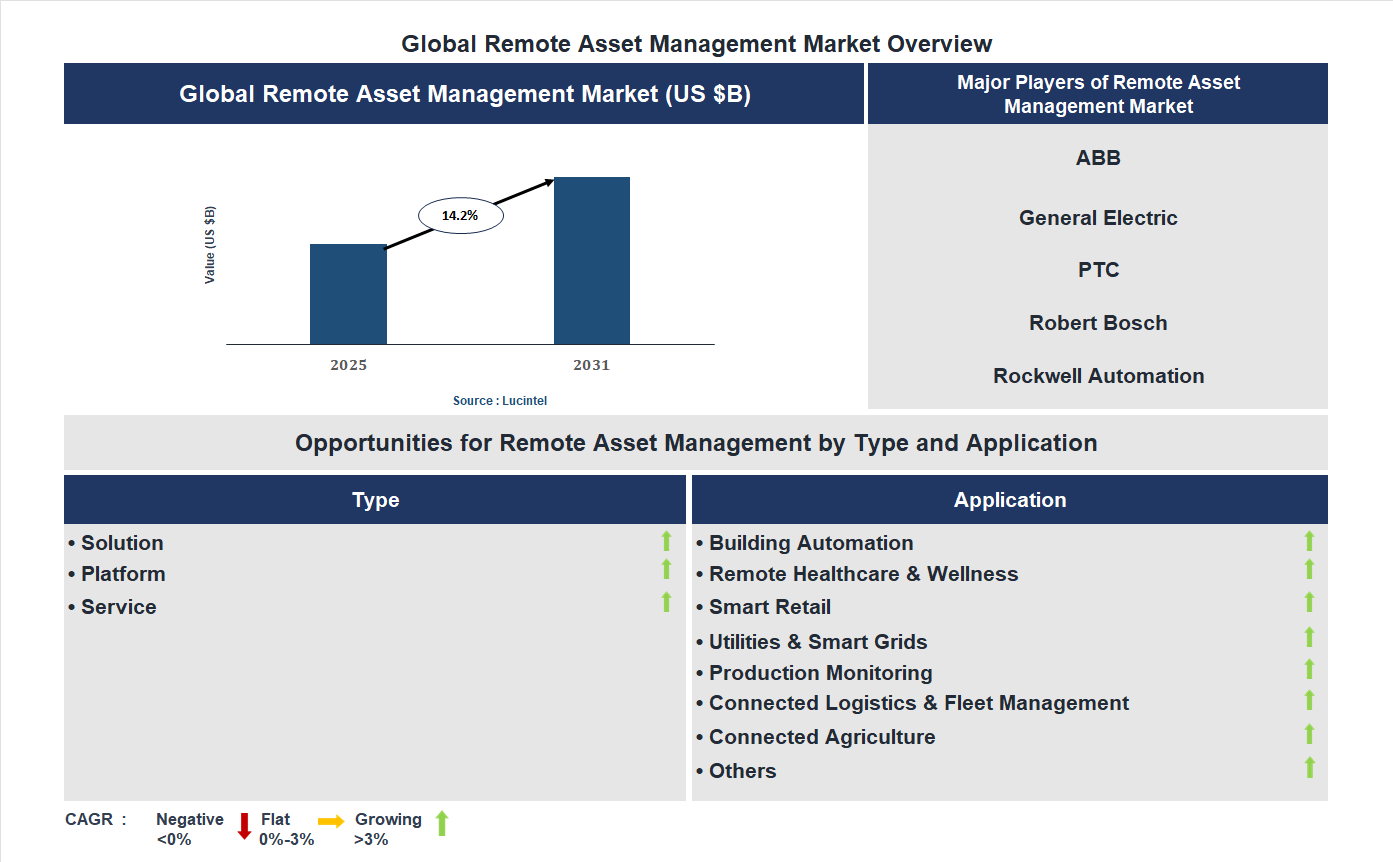
Key data points: The growth forecast = 14.2% annually for the next 7 years. Scroll below to get more insights. This market report covers trends, opportunities and forecasts in remote asset management market to 2031 by type (solution, platform, and service), application (building automation, remote healthcare & wellness, smart retail, utilities & smart grids, production monitoring, connected logistics & fleet management, connected agriculture, and others), and region (North America, Europe, Asia Pacific, and the Rest of the World)
We'll send your sample report shortly.
• Lucintel forecasts that, within the type category, service is expected to witness the highest growth over the forecast period.
• Within the application category, connected logistics & fleet management is expected to witness the highest growth.
• In terms of region, APAC is expected to witness the highest growth over the forecast period. Gain valuable insights for your business decisions with our comprehensive 150+ page report. Sample figures with some insights are shown below.
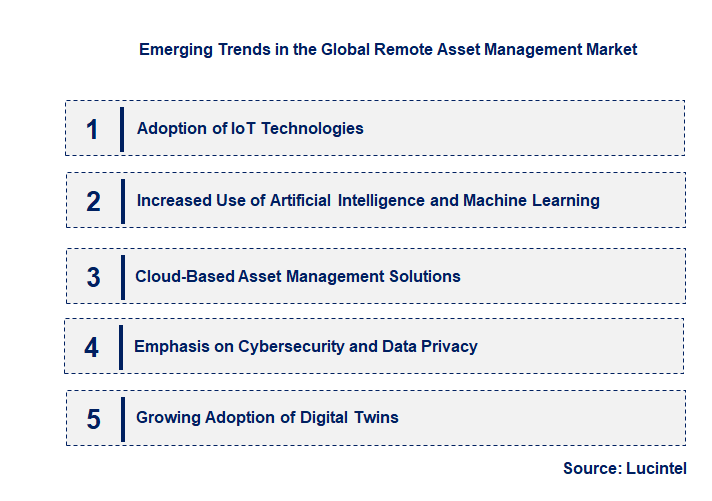
• Adoption of IoT Technologies: The integration of Internet of Things (IoT) devices is revolutionizing remote asset management by enabling real-time data collection and monitoring. IoT sensors provide continuous insights into asset performance, location, and condition, allowing for predictive maintenance and reducing unexpected failures. This trend enhances operational efficiency, minimizes downtime, and lowers maintenance costs. As IoT technology becomes more affordable and scalable, its adoption is expanding across industries such as manufacturing, energy, and transportation, making remote asset management more proactive and data-driven.
• Increased Use of Artificial Intelligence and Machine Learning: AI and ML are increasingly being incorporated into remote asset management systems to analyze vast amounts of data generated by IoT devices. These technologies facilitate predictive analytics, anomaly detection, and decision-making automation, leading to smarter asset management. AI-driven insights help organizations anticipate failures before they occur, optimize maintenance schedules, and improve resource allocation. The integration of AI and ML is transforming reactive approaches into proactive strategies, significantly enhancing asset lifespan and operational efficiency across sectors.
• Cloud-Based Asset Management Solutions: Cloud computing is playing a pivotal role in remote asset management by providing scalable, flexible, and cost-effective platforms for data storage and analysis. Cloud solutions enable centralized control, remote access, and real-time collaboration among stakeholders. They also facilitate seamless integration with other enterprise systems, improving overall operational visibility. As organizations increasingly migrate to cloud-based platforms, they benefit from reduced infrastructure costs, enhanced security, and faster deployment of new features, making remote asset management more accessible and efficient.
• Emphasis on Cybersecurity and Data Privacy: As remote asset management relies heavily on interconnected devices and cloud platforms, cybersecurity has become a critical concern. Protecting sensitive asset data from cyber threats and ensuring compliance with data privacy regulations are top priorities. Companies are investing in advanced security protocols, encryption, and regular vulnerability assessments to safeguard their systems. Strengthening cybersecurity measures not only prevents data breaches but also builds trust with clients and partners, ensuring the integrity and reliability of remote asset management solutions in an increasingly digital environment.
• Growing Adoption of Digital Twins: Digital twin technology is gaining traction as a powerful tool for remote asset management. Digital twins are virtual replicas of physical assets that simulate their behavior and performance in real-time. This technology enables predictive maintenance, scenario testing, and performance optimization without physical intervention. The use of digital twins enhances decision-making accuracy, reduces operational risks, and accelerates innovation. As industries recognize the value of digital twins, their adoption is expected to grow, transforming traditional asset management into a more intelligent, simulation-driven process. In summary, these emerging trends—IoT integration, AI and ML adoption, cloud solutions, cybersecurity focus, and digital twin technology—are collectively reshaping the remote asset management market. They are driving increased efficiency, predictive capabilities, and security, enabling organizations to manage assets more proactively and intelligently. This evolution is fostering a more connected, data-driven, and resilient asset management landscape, positioning the market for sustained growth and innovation.
• Adoption of IoT Technologies: The integration of Internet of Things (IoT) devices has revolutionized remote asset management by enabling real-time monitoring and data collection. This development enhances predictive maintenance, reduces operational costs, and improves asset lifespan. Companies leveraging IoT are gaining a competitive edge through increased efficiency and proactive decision-making, which ultimately boosts profitability and customer satisfaction.
• AI and Machine Learning Integration: The incorporation of AI and machine learning algorithms into remote asset management systems allows for advanced data analysis and predictive insights. This development helps in early fault detection, optimizing maintenance schedules, and minimizing downtime. The impact is a more intelligent, autonomous management process that enhances asset reliability and reduces operational risks.
• Cloud-Based Solutions Expansion: The shift towards cloud-based platforms has made remote asset management more scalable, flexible, and cost-effective. Cloud solutions facilitate centralized data access, remote control, and seamless integration with other enterprise systems. This development supports rapid deployment, easier updates, and improved collaboration, thereby accelerating digital transformation initiatives across industries.
• Regulatory and Security Enhancements: As remote asset management becomes more prevalent, regulatory frameworks and cybersecurity measures are evolving to address data privacy and security concerns. Enhanced compliance standards and security protocols protect sensitive information and ensure system integrity. This development fosters trust among users and encourages broader adoption of remote management solutions.
• Strategic Partnerships and Market Consolidation: Companies are forming alliances and engaging in mergers to expand their technological capabilities and market reach. These collaborations enable the development of comprehensive solutions, access to new customer segments, and increased innovation. Market consolidation is driving competitive dynamics, leading to a more robust and diverse ecosystem for remote asset management. In summary, these developments are significantly transforming the remote asset management market by enhancing technological capabilities, improving security, and fostering strategic growth. The market is becoming more efficient, secure, and scalable, which is attracting a broader range of industries and driving sustained growth. As these trends continue, stakeholders will benefit from increased innovation, better asset performance, and competitive advantages in a rapidly evolving landscape.
• Industrial Manufacturing: Enhanced predictive maintenance : Implementing remote asset management in manufacturing allows real-time monitoring of machinery, reducing downtime and maintenance costs. This leads to increased operational efficiency and productivity, enabling manufacturers to respond swiftly to equipment issues and extend asset lifespan.
• Energy & Utilities: Smart grid integration : Remote asset management facilitates the integration of smart grids, improving energy distribution and reducing losses. It enables utilities to monitor and control assets remotely, ensuring reliable power supply and supporting renewable energy integration.
• Transportation & Logistics: Fleet tracking and management : Remote asset management solutions enable real-time tracking of vehicles and cargo, optimizing routes and reducing fuel consumption. This improves supply chain efficiency, enhances security, and reduces operational costs for logistics providers.
• Oil & Gas: Asset integrity and safety monitoring : Remote monitoring of pipelines, drilling equipment, and storage tanks enhances safety and prevents environmental hazards. It allows for early detection of leaks or failures, minimizing risks and ensuring regulatory compliance.
• Healthcare & Pharmaceuticals: Equipment tracking and maintenance : Remote asset management ensures the optimal functioning of critical medical devices and pharmaceutical equipment. It reduces downtime, improves patient care, and ensures compliance with health standards through proactive maintenance. In summary, these growth opportunities are transforming the remote asset management market by enabling more efficient, secure, and sustainable operations across diverse industries. They are driving innovation, reducing costs, and supporting the shift toward smarter, connected asset ecosystems, ultimately fueling market expansion and competitiveness.
• Technological Innovation: Rapid advancements in IoT, AI, and cloud computing enable real-time monitoring, predictive maintenance, and data-driven decision-making, significantly improving asset efficiency and reducing downtime. These innovations facilitate remote management, reduce operational costs, and enhance scalability, making asset management more proactive and less reactive. As technology continues to evolve, the market is expected to expand further, driven by increased adoption across industries such as manufacturing, energy, and transportation.
• Growing Industrial Automation: The increasing adoption of automation in manufacturing and other sectors is a key driver. Automated systems require continuous monitoring and management of assets to optimize performance and prevent failures. Remote asset management solutions support this trend by providing centralized control and real-time insights, leading to improved operational efficiency, reduced maintenance costs, and minimized downtime, thereby fueling market growth.
• Rising Need for Cost Optimization: Companies are seeking ways to reduce operational expenses and improve asset utilization. Remote asset management offers a cost-effective alternative to traditional on-site management by minimizing the need for physical inspections and manual interventions. This cost efficiency, combined with the ability to predict failures and schedule maintenance proactively, makes remote management solutions highly attractive, especially for large-scale asset portfolios.
• Increasing Focus on Asset Lifecycle Management: Effective management of assets throughout their lifecycle is crucial for maximizing ROI. Remote asset management tools enable organizations to monitor asset health, plan maintenance activities, and extend asset lifespan. This focus on lifecycle management helps companies reduce replacement costs and improve sustainability, further driving demand for remote management solutions. The challenges facing this remote asset management market include:-
• Cybersecurity Threats: As remote asset management relies heavily on interconnected systems and data sharing, it becomes vulnerable to cyberattacks. Breaches can lead to operational disruptions, data theft, and safety hazards. Ensuring robust cybersecurity measures is essential but often costly and complex, posing a significant challenge for market participants to maintain secure and resilient systems.
• High Implementation and Maintenance Costs: Deploying remote asset management solutions involves substantial initial investments in hardware, software, and infrastructure. Additionally, ongoing maintenance, updates, and staff training add to operational expenses. These costs can be prohibitive for small and medium-sized enterprises, limiting market penetration and slowing adoption rates.
• Evolving Regulatory Standards: The regulatory landscape around data privacy, security, and industry-specific compliance is continuously changing. Navigating these complex standards requires significant effort and resources, and non-compliance can result in penalties and reputational damage. This uncertainty and the need for constant updates pose challenges for companies aiming to implement remote asset management solutions globally. In summary, the remote asset management market is driven by technological advancements, automation trends, cost optimization needs, and lifecycle management focus. However, cybersecurity risks, high costs, and regulatory complexities present notable hurdles. These factors collectively influence the pace and scope of market growth, requiring stakeholders to innovate and adapt strategically. Overall, the markets future depends on balancing these drivers and challenges to unlock its full potential across diverse industries.
• ABB
• General Electric
• PTC
• Robert Bosch
• Rockwell Automation
• Schneider Electric
• Cisco
• Hitachi
• Infosys
• IBM
• Solution
• Platform
• Service
• Building Automation
• Remote Healthcare & Wellness
• Smart Retail
• Utilities & Smart Grids
• Production Monitoring
• Connected Logistics & Fleet Management
• Connected Agriculture
• Others
• North America
• Europe
• Asia Pacific
• The Rest of the World
• United States: The US RAM market has seen rapid expansion due to increased adoption of IoT and AI technologies. Major companies are integrating cloud-based asset management solutions to improve real-time monitoring and predictive maintenance. The government’s focus on infrastructure modernization and smart city projects further fuels growth. Additionally, cybersecurity concerns are prompting investments in secure remote management systems. The rise of Industry 4.0 initiatives has also contributed to the markets evolution, with enterprises seeking more efficient asset tracking and management solutions to enhance operational efficiency.
• China: China’s RAM market is experiencing robust growth driven by government policies promoting digital transformation and smart manufacturing. The country is investing heavily in IoT infrastructure, enabling widespread deployment of remote asset management systems across industries such as manufacturing, transportation, and energy. Local tech giants are developing innovative platforms that integrate AI and big data analytics. The emphasis on Industry 4.0 and smart city projects is accelerating adoption. Moreover, the Chinese government’s support for 5G deployment is expected to further enhance remote asset management capabilities, making China a key player in this sector.
• Germany: Germany’s RAM market is characterized by a focus on industrial automation and precision engineering. The country’s strong manufacturing sector is adopting advanced remote management solutions to optimize production processes and ensure high quality standards. Industry 4.0 initiatives are driving the integration of IoT and AI into asset management systems. German companies are also emphasizing cybersecurity and data privacy, aligning with strict EU regulations. The adoption of cloud-based platforms and digital twins is increasing, enabling predictive maintenance and reducing downtime. Overall, Germany’s market is marked by technological innovation and a focus on sustainable, efficient industrial practices.
• India: The Indian RAM market is witnessing rapid growth fueled by increasing industrialization and government initiatives like Make in India. The adoption of IoT and cloud computing is expanding across manufacturing, agriculture, and energy sectors. Startups and local vendors are developing cost-effective remote asset management solutions tailored to regional needs. The government’s push for smart cities and digital infrastructure is further boosting demand. Additionally, rising awareness of predictive maintenance and operational efficiency is encouraging enterprises to adopt remote management systems. The market is expected to grow significantly as digital transformation accelerates across various sectors in India.
• Japan: Japan’s RAM market is driven by its advanced manufacturing industry and focus on automation. Companies are investing in sophisticated remote asset management systems to enhance productivity and reduce operational costs. The integration of AI, robotics, and IoT is prominent in sectors such as automotive, electronics, and energy. Japan emphasizes cybersecurity and data integrity, aligning with national standards. The adoption of digital twins and cloud-based solutions is increasing, supporting predictive maintenance and asset optimization. The government’s initiatives to promote Industry 4.0 and smart manufacturing are further propelling market growth, positioning Japan as a leader in innovative remote asset management solutions.


• ABB
• General Electric
• PTC
• Robert Bosch
• Rockwell Automation
• Schneider Electric
• Cisco
• Hitachi
• Infosys
• IBM Q5. Which remote asset management market segment will be the largest in future? Answer: Lucintel forecasts that, within the type category, service is expected to witness the highest growth over the forecast period. Q6. In remote asset management market, which region is expected to be the largest in next 5 years? Answer: In terms of region, APAC is expected to witness the highest growth over the forecast period. Q7. Do we receive customization in this report? Answer: Yes, Lucintel provides 10% customization without any additional cost.


Choose a license that fits your team. Instant PDF delivery.
Prices exclude taxes. Instant delivery. Custom licensing available on request.
Market Report · July 15, 2026
Market Report · June 26, 2026
Market Report · June 24, 2026
Trusted partner for strategic intelligence and business growth


Receive a complimentary market analysis tailored to your industry. Our analysts will identify key growth opportunities and competitive dynamics specific to your business.

Market size, growth rate, and key trend analysis for your specific sector.

Top competitor positioning and market share analysis.

Strategic recommendations backed by data-driven insights.
Get curated market intelligence and competitive moves straight to your inbox.
By subscribing, you agree to receive our monthly insights. Unsubscribe anytime.
Receive a complimentary market analysis tailored to your industry. Our analysts will identify key growth opportunities and competitive dynamics specific to your business.
Market size, growth rate, and key trend analysis for your specific sector.
Top competitor positioning and market share analysis.
Strategic recommendations backed by data-driven insights.
Get curated market intelligence, emerging trends, and competitive moves straight to your inbox each month.
By subscribing, you agree to receive our monthly insights. Unsubscribe anytime.
We'll send your sample report shortly.