
Market Report · May 18, 2026

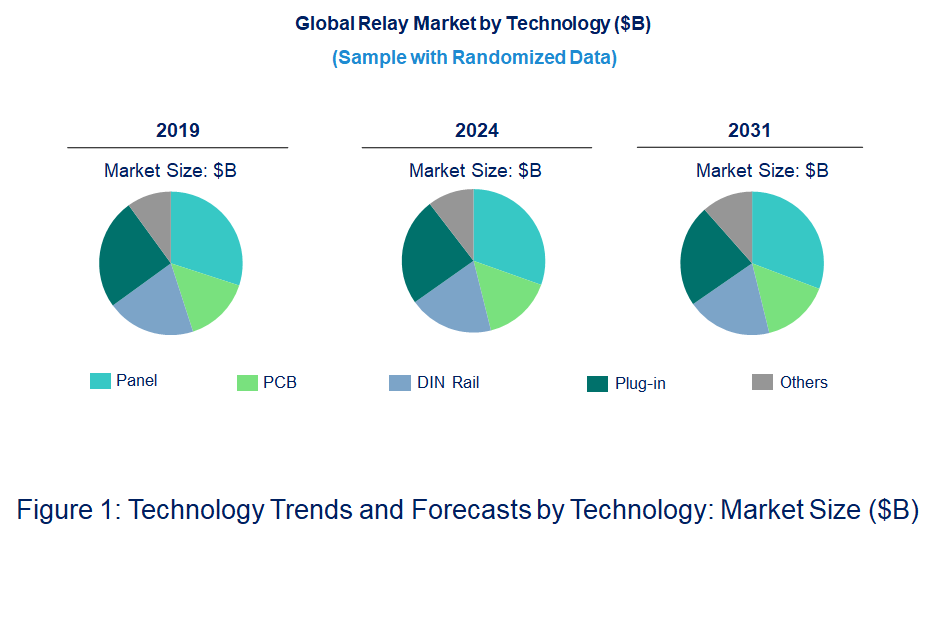
This market report covers trends, opportunities, and forecasts in the global relay market to 2031 by technology (panel, pcb, din rail, plug-in, and others), end use industry (aerospace, defense and military, automotive, communications, and others), and region (North America, Europe, Asia Pacific, and the Rest of the World)
We'll send your sample report shortly.
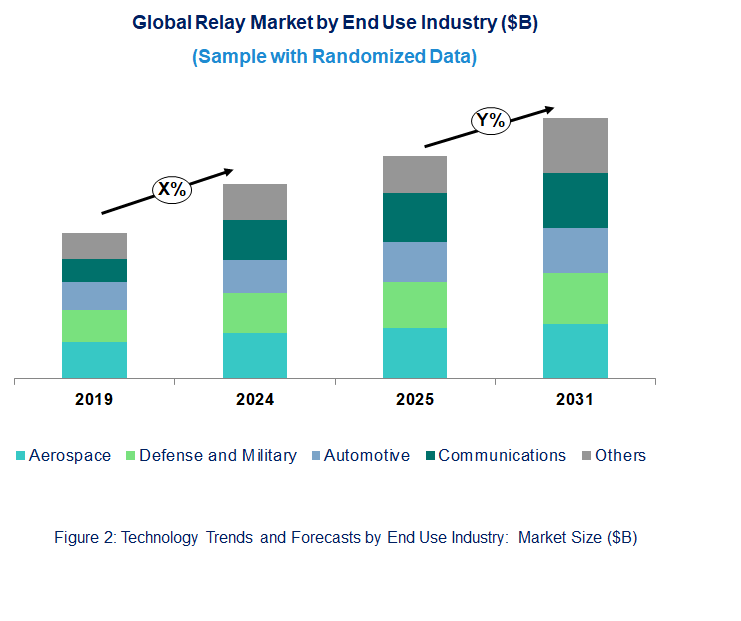
• Shift from Mechanical to Solid-State Relays (SSRs): Solid-state relays, which use semiconductor components instead of mechanical parts, are replacing traditional mechanical relays due to their faster switching speeds, higher durability, and longer life. This trend is particularly important in industries requiring high reliability, such as aerospace and defense.
• Miniaturization of Relays: As industries demand smaller, more compact systems, the relay market is witnessing a trend towards miniaturization. Smaller relays are ideal for applications in automotive electronics, consumer devices, and other space-constrained environments. This trend is also driven by the need for more energy-efficient components.
• Increased Adoption of PCB-Mounted Relays: PCB-mounted relays offer advantages such as lower cost, smaller size, and easier integration into complex electronic circuits. These are gaining popularity in automotive, communications, and consumer electronics due to their flexibility and ease of use in compact applications.
• Integration with IoT and Smart Systems: Relays are increasingly being integrated into IoT devices and smart systems to enable automation and real-time monitoring. This integration allows for enhanced control, remote diagnostics, and predictive maintenance, leading to smarter, more energy-efficient systems, particularly in industries like communications and automotive.
• Focus on Energy Efficiency and Sustainability: With growing environmental concerns, there is a push for energy-efficient relay solutions that help reduce energy consumption and increase system performance. Relays designed to operate with low power consumption and high reliability are becoming more popular in industries such as renewable energy, automotive, and industrial automation. These emerging trends—shift to solid-state relays, miniaturization, increased adoption of PCB-mounted relays, integration with IoT, and a focus on energy efficiency—are significantly reshaping the relay market. They are driving advancements in various sectors such as aerospace, automotive, communications, and industrial automation, resulting in more efficient, reliable, and compact systems that meet the evolving demands of industries across the globe.
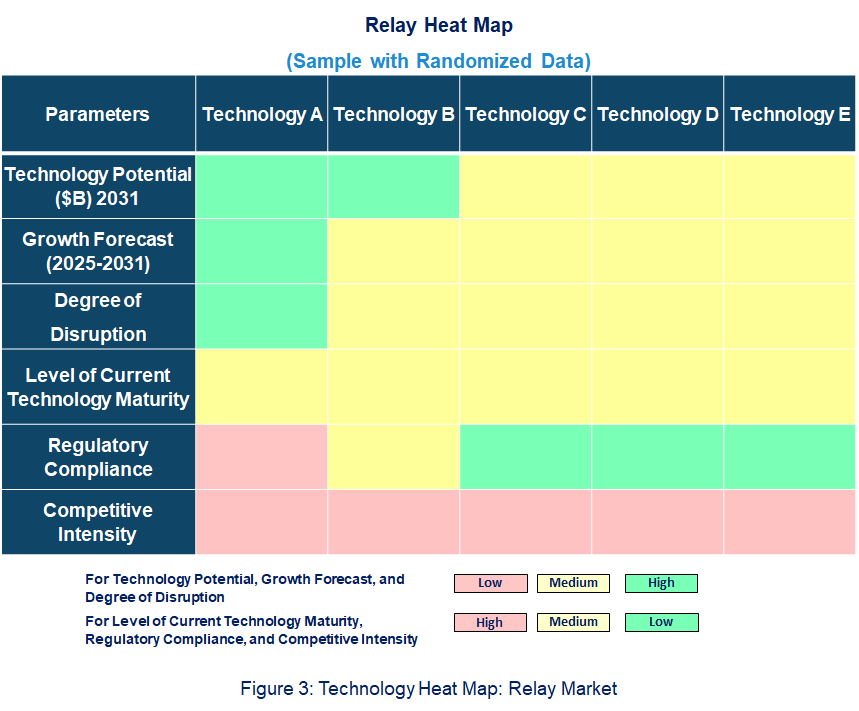
• Potential in Technology: The technology potential in the relay market is significant, with ongoing advancements driven by the demand for faster, more reliable, and energy-efficient components. The shift from traditional mechanical relays to solid-state relays (SSRs) is a key development, offering increased durability, faster switching speeds, and higher precision. SSRs are well-suited for applications in industries such as aerospace, defense, automotive, and industrial automation, where reliability and performance are critical. These relays have the potential to disrupt traditional relay systems by providing longer lifespans and improved operational efficiency, especially in harsh environments.
• Degree of Disruption: The degree of disruption in the market is high, as SSRs are gradually replacing mechanical relays in many applications due to their superior performance. SSRs eliminate wear and tear issues, which are common in mechanical systems, offering better resistance to shock and vibration. However, the technology maturity of SSRs is high, with solid-state solutions already being widely adopted in several industries, making them a mature and reliable choice.
• Regulatory Compliance: Regulatory compliance is also a critical factor for relay technology. As industries, particularly aerospace, automotive, and energy, require systems that meet stringent safety and environmental standards, relay technologies must comply with certifications like ISO, UL, and CE. The market is witnessing increasing regulatory pressure to ensure that relays contribute to the overall sustainability and efficiency of electronic systems.
• Panasonic: Panasonic has been advancing its relay technology by focusing on compact, energy-efficient, and high-performance relays for automotive applications. The company has developed a range of solid-state relays and high-frequency relays that offer improved performance and reliability, which is critical for the growing demand in electric vehicles (EVs) and renewable energy systems.
• Xiamen Hongfa Electroacoustic: Hongfa has expanded its portfolio by enhancing its PCB and DIN rail relays, providing robust, energy-efficient solutions for industrial and automotive applications. Their relays offer high switching capacities and improved durability, responding to the increasing demand for more reliable and compact relays in industrial automation and automotive systems.
• TE Connectivity: TE Connectivity has been working on developing relays that integrate with IoT and smart systems, aiming to provide more precise control and automation. Their relays are designed to meet the needs of industries like telecommunications and smart grids, where reliability and energy efficiency are paramount.
• Fuji Electric: Fuji Electric has been focusing on the development of solid-state relays (SSRs) for various industrial applications. Their SSRs offer faster switching speeds, longer lifespans, and reduced maintenance, which is essential for automation systems and manufacturing plants that demand high reliability and minimal downtime.
• OMRON Industrial Automation: OMRON has been enhancing its relay technologies for industrial automation, with a focus on improving the reliability and precision of its relays. Their advancements include the development of smaller, more energy-efficient relays and integrating them with smart factory systems for enhanced automation, leading to better operational efficiency in manufacturing environments. These developments highlight how key players in the relay market are advancing technology to cater to the growing need for smarter, more reliable, and energy-efficient solutions across various industries.
• Growing Demand for Automation: The increasing adoption of industrial automation, especially in manufacturing and smart factories, is driving the demand for relays. Relays are essential for controlling machines and processes with precision, contributing to higher efficiency and reduced downtime in industrial applications.
• Shift to Electric Vehicles (EVs): The rise of electric vehicles is boosting the demand for high-performance relays. Automotive applications require compact, reliable relays for battery management, energy control, and charging systems, creating growth opportunities for companies specializing in automotive relays.
• Need for Energy Efficiency: As industries push for greener solutions, energy-efficient relays are in high demand. Solid-state relays (SSRs) provide superior energy efficiency, lower power consumption, and longer life, making them ideal for renewable energy applications and reducing operational costs in industrial settings. Challenges:
• Technological Complexity and Innovation Costs: The development of advanced relay technologies, such as solid-state and high-frequency relays, requires significant investment in R&D. Companies face challenges in managing the costs and time associated with developing innovative solutions while remaining competitive in the market.
• Intense Market Competition: The relay market is highly competitive, with several global players offering similar products. Companies must differentiate themselves through innovation, customer service, and cost-effectiveness, making it challenging to maintain market share and profitability. The growing demand for automation, EV adoption, and energy-efficient technologies is a key driver reshaping the relay market. However, challenges like technological complexity and intense competition require companies to innovate continually. These opportunities and challenges are driving the market toward more reliable, compact, and efficient relay solutions, meeting the evolving needs of various industries.
• Panasonic
• Xiamen Hongfa Electroacoustic
• TE connectivity
• Fuji Electric
• OMRON Industrial Automation
• Technology Readiness of Different Relay Technologies: The technology readiness of different relay types varies based on their applications. Panel-mounted relays are widely used in legacy systems and have high readiness for traditional industrial setups. PCB-mounted relays are gaining popularity due to their compact size and integration into modern electronics, particularly in consumer electronics and automotive applications. DIN Rail relays are mature and widely used in industrial automation, offering reliability and ease of installation. Plug-in relays are highly flexible, with high readiness for both industrial and consumer applications. Regulatory compliance across all these relay types is stringent, with key applications in industries like automotive, telecommunications, and renewable energy driving their development.
• Competitive Intensity and Regulatory Compliance: The competitive intensity in the relay market is high, as companies strive to offer the most reliable, cost-effective, and efficient relay solutions. With technologies like PCB, DIN Rail, and Plug-in relays becoming more prevalent, the market is increasingly fragmented, with multiple players vying for market share. Regulatory compliance is critical, as these relays must meet stringent industry standards, especially in sectors like aerospace, automotive, and industrial automation. Adherence to safety, environmental, and performance standards, such as UL and CE certifications, is a key factor driving competition, with companies investing in technologies that meet these regulatory requirements while maintaining performance.
• Disruption Potential of Different Relay Technologies: The disruption potential of relay technologies such as Panel, PCB, DIN Rail, and Plug-in is significant as industries increasingly demand more efficient, compact, and reliable solutions. PCB relays are becoming more common due to their integration in smaller electronic systems, while DIN Rail and Plug-in relays are popular for industrial automation and easy installation. The shift from traditional panel-mounted systems to more flexible, space-saving solutions is accelerating, particularly in sectors like automotive, telecommunications, and manufacturing. This shift towards smaller, more efficient relays is driving increased automation and energy efficiency across industries, potentially replacing traditional relay systems in many applications.
• Panel
• PCB
• DIN Rail
• Plug-in
• Others
• Aerospace
• Defense and Military
• Automotive
• Communications
• Others
• North America
• Europe
• Asia Pacific
• The Rest of the World
• Latest Developments and Innovations in the Relay Technologies
• Companies / Ecosystems
• Strategic Opportunities by Technology Type


Choose a license that fits your team. Instant PDF delivery.
Prices exclude taxes. Instant delivery. Custom licensing available on request.
Market Report · May 18, 2026
Market Report · May 18, 2026
Market Report · May 18, 2026
Trusted partner for strategic intelligence and business growth


Receive a complimentary market analysis tailored to your industry. Our analysts will identify key growth opportunities and competitive dynamics specific to your business.

Market size, growth rate, and key trend analysis for your specific sector.

Top competitor positioning and market share analysis.

Strategic recommendations backed by data-driven insights.
Get curated market intelligence and competitive moves straight to your inbox.
By subscribing, you agree to receive our monthly insights. Unsubscribe anytime.
Receive a complimentary market analysis tailored to your industry. Our analysts will identify key growth opportunities and competitive dynamics specific to your business.
Market size, growth rate, and key trend analysis for your specific sector.
Top competitor positioning and market share analysis.
Strategic recommendations backed by data-driven insights.
Get curated market intelligence, emerging trends, and competitive moves straight to your inbox each month.
By subscribing, you agree to receive our monthly insights. Unsubscribe anytime.
We'll send your sample report shortly.