
Market Report · May 18, 2026

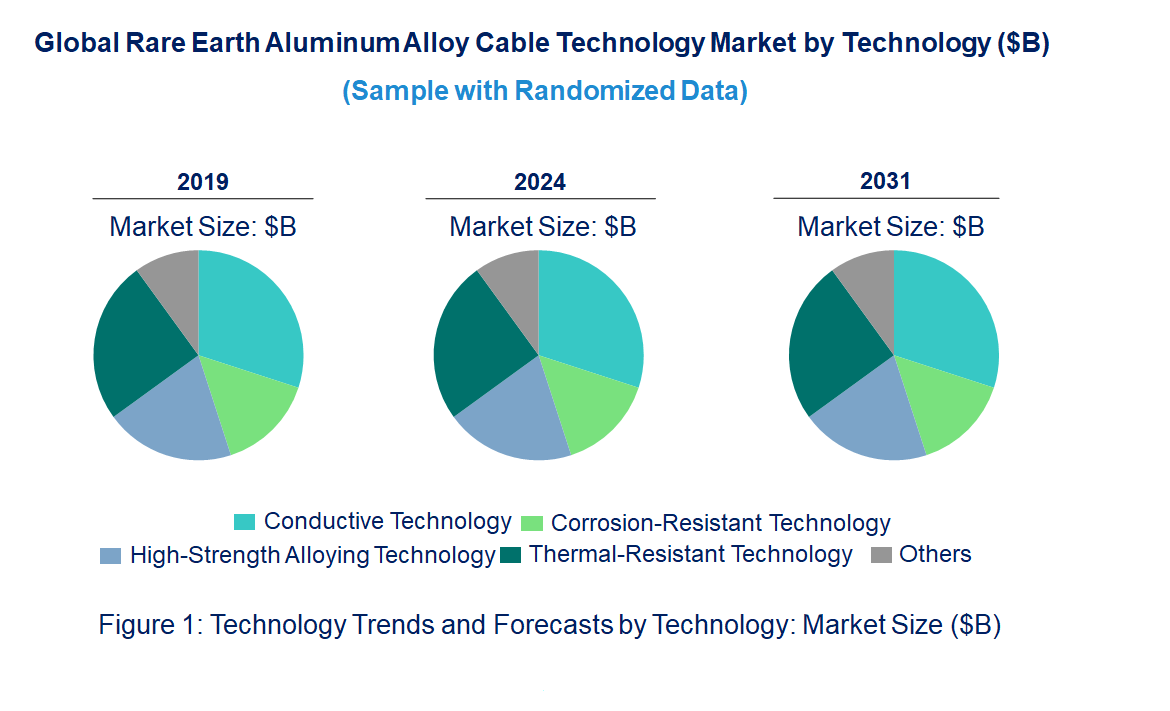
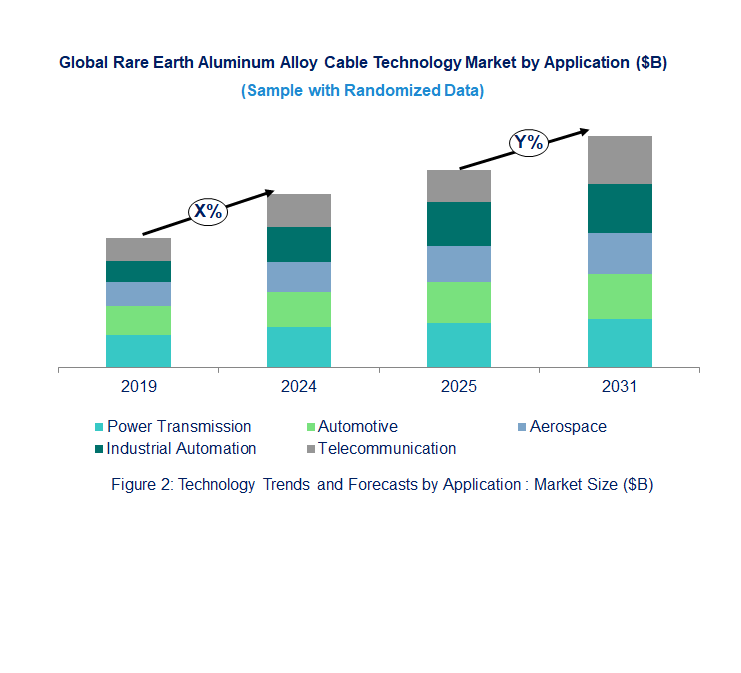
This market report covers trends, opportunities, and forecasts in the global rare earth aluminum alloy cable market to 2031 by technology (conductive technology, corrosion-resistant technology, high-strength alloying technology, thermal-resistant technology, and others), application (power transmission, automotive, aerospace, industrial automation, and telecommunication), and region (North America, Europe, Asia Pacific, and the Rest of the World)
We'll send your sample report shortly.
• Enhanced Performance with Rare Earth Additives: The addition of rare earth elements like cerium and lanthanum to aluminum alloys improves conductivity and corrosion resistance, leading to more efficient power transmission cables.
• Focus on Lightweight, High-Strength Materials: Cables made from rare earth aluminum alloys are gaining traction in the automotive and aerospace industries due to their high strength-to-weight ratio, improving fuel efficiency and performance.
• Growth in Renewable Energy Applications: These advanced cables are increasingly used in renewable energy projects, such as wind and solar farms, due to their durability and ability to withstand harsh environmental conditions.
• Advancements in Manufacturing Techniques: New alloying and extrusion technologies are improving the quality, consistency, and cost-effectiveness of rare earth aluminum alloy cables.
• Increased Focus on Environmental Sustainability: Manufacturers are adopting eco-friendly production processes, making these cables more attractive for industries focused on sustainability, such as telecommunication and industrial automation. The emerging trends in the rare earth aluminum alloy cable market highlight a transformative shift toward more efficient, durable, and sustainable solutions. The incorporation of rare earth elements is enhancing the performance of cables, offering improved conductivity, corrosion resistance, and strength. Key trends such as the increased use of these cables in renewable energy applications, advancements in manufacturing processes, and a growing focus on sustainability are reshaping the market.
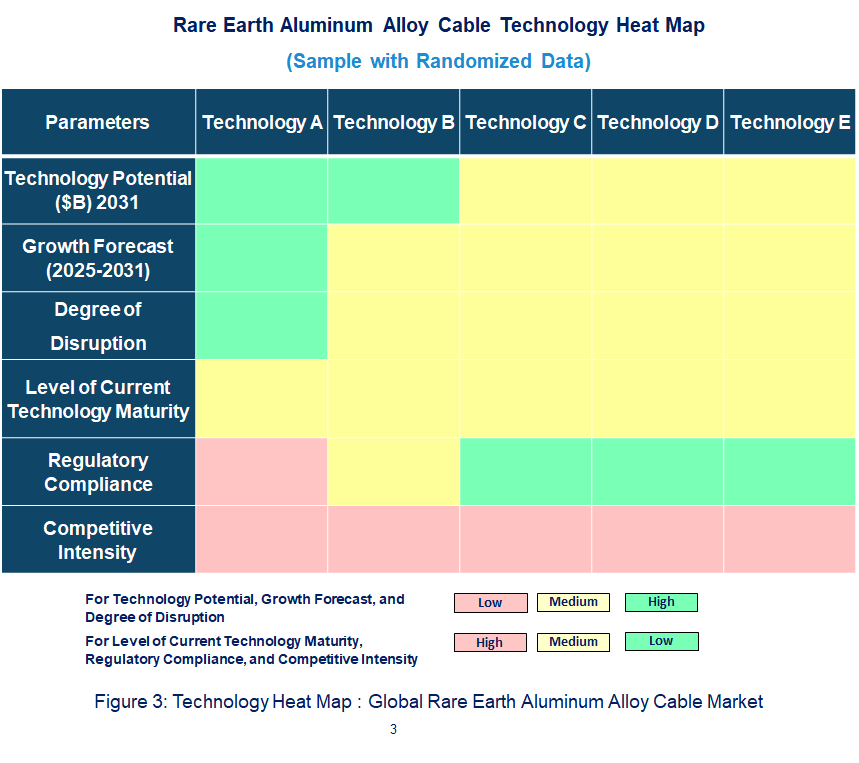
• Technology Potential: The rare earth aluminum alloy cable technology holds significant potential, particularly in energy-efficient and high-performance applications, offering better conductivity, mechanical properties, and environmental resistance.
• Degree of Disruption: The market is experiencing moderate disruption as traditional aluminum and copper cables are being replaced by rare earth aluminum alloys, leading to enhanced operational performance, energy efficiency, and material sustainability.
• Level of Current Technology Maturity: The core technology of rare earth aluminum alloy cables is still in the growth phase, with some segments, such as power transmission, seeing wider adoption, while others, like automotive and aerospace, are in the early stages of integration.
• Regulatory Compliance: Compliance with environmental and safety standards, including RoHS and ISO certifications, is crucial for market growth. These cables meet stringent regulations for durability and energy efficiency, positioning them as a sustainable option for various industries.
• General Cable: General Cable introduced a new range of rare earth aluminum alloy cables designed to enhance conductivity and tensile strength while maintaining lightweight characteristics. These cables are gaining popularity in the power generation and renewable energy sectors due to their superior performance under high-stress conditions.
• Southwire Company: Southwire launched a series of aluminum alloy cables with rare earth elements that improve oxidation resistance and durability. This development addresses the need for cables capable of operating in extreme weather conditions and corrosive environments, making them ideal for outdoor and industrial applications.
• Jiangsu Shangshang Cable Group: Jiangsu Shangshang Cable Group expanded its product offerings with rare earth aluminum alloy cables that boast high corrosion resistance and better heat tolerance. This innovation has enhanced the company’s position in the domestic and international markets, particularly in the power transmission sector.
• SHANGHAI CABLE WORKS: SHANGHAI CABLE WORKS developed advanced rare earth aluminum alloy cables with increased flexibility, making them easier to install and maintain. The cables are also lighter, reducing installation costs and increasing efficiency in large-scale projects, particularly in urban infrastructure.
• Lamifil: Lamifil’s introduction of rare earth aluminum alloy cables with improved thermal stability has found applications in high-performance environments, such as industrial machinery and data centers. This advancement ensures the cables maintain integrity under extreme temperature fluctuations, which is critical in maintaining continuous operations.
• Hebei Dagang Cable: Hebei Dagang Cable has integrated rare earth elements into its aluminum alloy cables to enhance their electrical conductivity and increase their lifespan. This upgrade caters to the increasing demand for more energy-efficient and long-lasting cables in both residential and industrial applications.
• Leader Cable: Leader Cable’s rare earth aluminum alloy cables feature enhanced mechanical strength, reducing the risk of cable damage during installation or usage. The cables are widely adopted in the automotive and renewable energy industries, contributing to greater sustainability and lower maintenance costs.
• Enhanced Performance and Durability: Rare earth aluminum alloy cables offer superior conductivity, corrosion resistance, and tensile strength, making them ideal for demanding applications like power transmission, industrial machinery, and renewable energy systems. These qualities drive the adoption of such cables across industries that require reliable and long-lasting solutions.
• Demand for Lightweight and Efficient Solutions: The lightweight nature of rare earth aluminum alloy cables reduces transportation and installation costs while maintaining high-performance standards. Their use in industries such as electric vehicles (EVs) and renewable energy projects is accelerating due to the need for energy-efficient, space-saving, and cost-effective materials.
• Renewable Energy Growth: With the global shift towards renewable energy sources such as solar and wind power, the demand for specialized cables that can handle high voltages and harsh environmental conditions has increased. Rare earth aluminum alloy cables, known for their high performance in such conditions, are crucial to supporting this transition.
• Technological Advancements in Cable Manufacturing: Continuous improvements in manufacturing processes, such as precision alloying techniques and the integration of rare earth elements, are enabling the production of more efficient, cost-effective, and durable cables. These innovations are attracting significant investments in the development and production of rare earth aluminum alloy cables.
• Regulatory Pressure for Energy Efficiency: Governments worldwide are enforcing regulations that prioritize energy efficiency, reducing power loss, and enhancing sustainability. Rare earth aluminum alloy cables, with their low energy loss and high efficiency, are aligning with these regulatory requirements, making them a preferred choice for energy transmission and industrial applications. Major Challenges in the rare earth aluminum alloy cable market are:
• High Production Costs: The inclusion of rare earth elements in aluminum alloys significantly increases production costs. These materials are more expensive than traditional aluminum, which poses a challenge for manufacturers seeking to keep costs competitive while maintaining quality.
• Supply Chain Constraints for Rare Earth Materials: The supply of rare earth materials is limited and subject to geopolitical factors, which can lead to price volatility and availability issues. These supply chain challenges can disrupt production schedules and impact the market’s growth, particularly in regions dependent on rare earth imports.
• Interoperability with Existing Infrastructure: Integrating rare earth aluminum alloy cables into existing infrastructure can be challenging due to compatibility issues with older cable systems. Upgrading infrastructure requires significant investment in testing, certification, and retrofitting, which can be a barrier to widespread adoption.
• Environmental and Ethical Concerns: The mining and extraction of rare earth materials can have significant environmental and ethical implications, including habitat destruction and labor concerns. These issues may influence public perception and regulatory scrutiny, potentially limiting the growth of the rare earth aluminum alloy cable market.
• Technological Complexity: Developing advanced cable designs that fully harness the properties of rare earth materials requires highly specialized knowledge and technology. The complexity of these manufacturing processes can limit the number of companies capable of producing such cables, creating market entry barriers and increasing costs. The rare earth aluminum alloy cable market is poised for growth due to the demand for high-performance cables in renewable energy, automotive, and industrial applications. However, challenges such as high production costs, supply chain constraints, and environmental concerns must be addressed to sustain this growth. Continued technological advancements and strategic investments will be key in overcoming these obstacles and unlocking the full potential of the market.
• General Cable
• Southwire Company
• Jiangsu Shangshang Cable Group
• Shanghai Cable Works
• Lamifil
• Hebei Dagang Cable
• Technology Readiness: In terms of technology readiness, conductive technology is highly mature, with widespread adoption in various industries, including power and telecommunications. Corrosion-resistant technology is also well-established, particularly in marine and infrastructure sectors, offering proven long-term reliability. High-strength alloying technology is advancing but remains niche, catering to high-performance applications in aerospace and heavy industry. Thermal-resistant technology is moderately developed, with applications in environments where heat resilience is paramount. Other emerging technologies, such as smart cables and advanced composites, show promising potential but are still in developmental stages, awaiting further breakthroughs to improve competitive positioning.
• Competitive Intensity and Regulatory Compliance: The competitive intensity in the rare earth aluminum alloy cable market varies by technology. Conductive and corrosion-resistant technologies face high competition due to their widespread application in sectors like energy and telecommunications. High-strength alloying and thermal-resistant technologies are less competitive but crucial for specific high-demand industries, such as aerospace and manufacturing. Regulatory compliance is stringent, especially for technologies dealing with environmental impact, safety, and electrical efficiency. Conductive and corrosion-resistant technologies comply with standards such as IEC and ISO, while high-strength alloying and thermal-resistant technologies often meet specialized industry-specific regulations for performance and safety.
• Disruption Potential: The disruption potential of various technologies in the rare earth aluminum alloy cable market is significant, with each bringing unique advantages. Conductive technology enhances electrical efficiency and performance, potentially transforming energy transmission. Corrosion-resistant technology ensures durability and longevity, vital for outdoor and marine applications. High-strength alloying technology increases cable robustness, enabling use in more demanding environments. Thermal-resistant technology enhances performance under high temperatures, essential for industrial and aerospace sectors. Other technologies, such as smart materials and nanotechnology, may offer further improvements in flexibility, strength, and sustainability, paving the way for innovative applications across industries.
• Conductive Technology
• Corrosion-Resistant Technology
• High-Strength Alloying Technology
• Thermal-Resistant Technology
• Others
• Power Transmission
• Automotive
• Aerospace
• Industrial Automation
• Telecommunication
• North America
• Europe
• Asia Pacific
• The Rest of the World
• Latest Developments and Innovations in the Rare Earth Aluminum Alloy Cable Technologies
• Companies / Ecosystems
• Strategic Opportunities by Technology Type


Choose a license that fits your team. Instant PDF delivery.
Prices exclude taxes. Instant delivery. Custom licensing available on request.
Market Report · May 18, 2026
Market Report · May 18, 2026
Market Report · May 18, 2026
Trusted partner for strategic intelligence and business growth


Receive a complimentary market analysis tailored to your industry. Our analysts will identify key growth opportunities and competitive dynamics specific to your business.

Market size, growth rate, and key trend analysis for your specific sector.

Top competitor positioning and market share analysis.

Strategic recommendations backed by data-driven insights.
Get curated market intelligence and competitive moves straight to your inbox.
By subscribing, you agree to receive our monthly insights. Unsubscribe anytime.
Receive a complimentary market analysis tailored to your industry. Our analysts will identify key growth opportunities and competitive dynamics specific to your business.
Market size, growth rate, and key trend analysis for your specific sector.
Top competitor positioning and market share analysis.
Strategic recommendations backed by data-driven insights.
Get curated market intelligence, emerging trends, and competitive moves straight to your inbox each month.
By subscribing, you agree to receive our monthly insights. Unsubscribe anytime.
We'll send your sample report shortly.