
Market Report · May 18, 2026

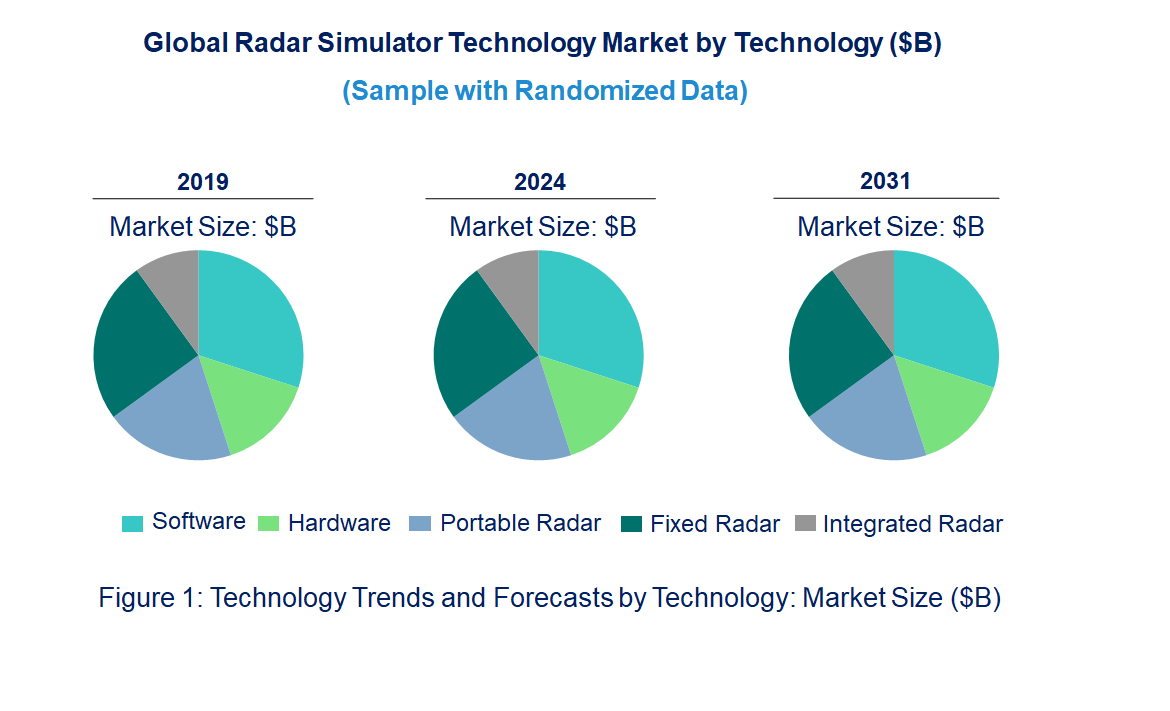
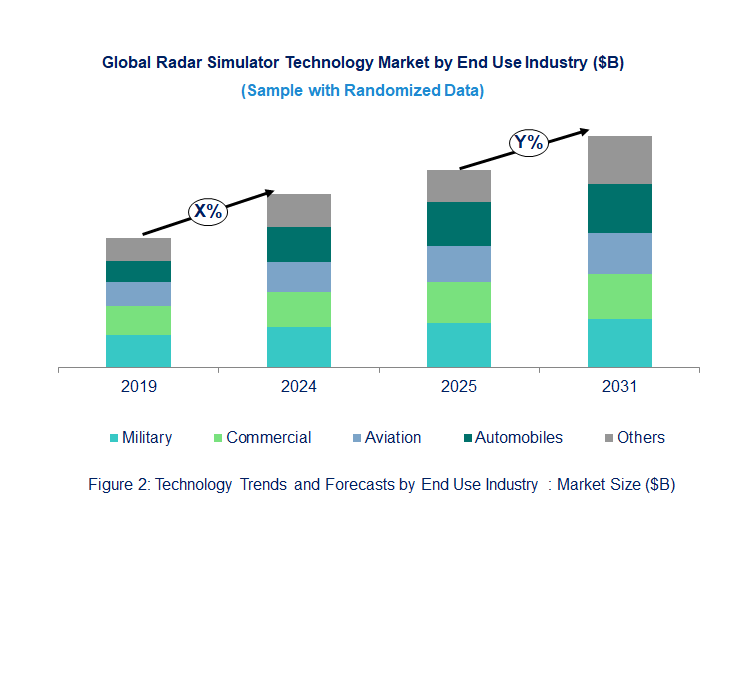
This market report covers trends, opportunities, and forecasts in the global radar simulator market to 2031 by technology (software, hardware, portable radar simulators, fixed radar simulators, and integrated radar simulators), end uses (military, commercial, aviation, automobiles, and others), and region (North America, Europe, Asia Pacific, and the Rest of the World)
We'll send your sample report shortly.
• AI-Driven Simulations: Integration of AI enables real-time adaptability, predictive analytics, and enhanced scenario modeling, improving training outcomes for operators.
• Integration with Virtual and Augmented Reality (VR/AR): VR/AR in radar simulators creates immersive environments for training, boosting user engagement and operational effectiveness.
• Cloud-based Simulation Platforms: Cloud technology facilitates remote access, collaboration, and scalability for radar simulation systems, reducing infrastructure costs.
• Portable and Modular Systems: Portable radar simulators provide mobility and flexibility for field training, while modular systems allow customization to specific operational requirements.
• Enhanced Signal Processing Technologies: Adoption of advanced signal processing improves the precision and fidelity of radar simulations, enabling more realistic and accurate scenarios. These trends are driving innovation and operational efficiency in the radar simulator market, equipping end-users with tools to meet growing complexity in radar operations while reducing costs.
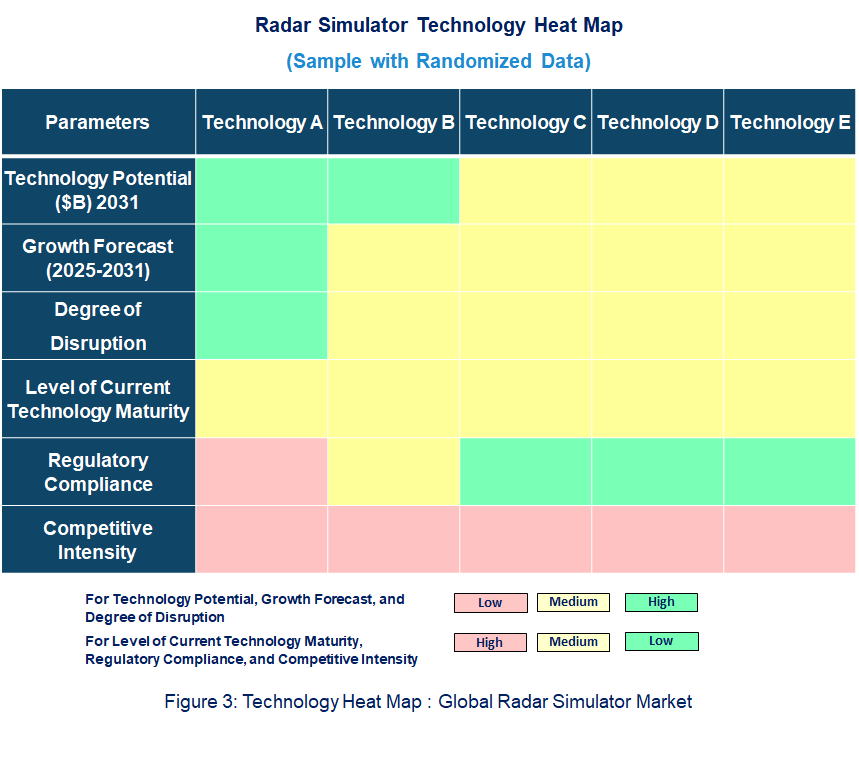
• Technology Potential: High, as advancements in AI, VR/AR, and cloud-based systems promise greater realism and operational efficiency in radar simulations.
• Degree of Disruption: Significant, with the shift from traditional systems to integrated, AI-powered solutions challenging existing paradigms and enabling new applications.
• Level of Current Technology Maturity: Moderate to advanced, with technologies like AI and VR/AR in early adoption phases and cloud solutions becoming more prevalent.
• Regulatory Compliance: Evolving, focusing on compliance with military and aviation safety standards, data security, and international export regulations.
• Adacel Technologies: Adacel introduced an advanced radar simulation module integrated with air traffic control training systems. This development improves realism and operational readiness, enabling precise training for aviation professionals.
• Aechelon Technology: Aechelon Technology launched a high-resolution radar image generation system for military training. This innovation enhances mission-specific training capabilities by offering realistic and detailed radar simulations.
• Cadence Design Systems: Cadence Design unveiled new radar simulation software that incorporates AI-driven analytics. This solution improves simulation accuracy and optimizes radar design workflows for automotive and defense applications.
• Cambridge Pixel: Cambridge Pixel developed an enhanced radar processing platform supporting complex multi-target tracking. This innovation strengthens situational awareness for military and commercial applications.
• Keysight Technologies: Keysight Technologies introduced a cloud-based radar simulation solution, enabling seamless remote operations and collaborative testing. This supports scalable and cost-effective simulation environments.
• L3Harris Technologies: L3Harris launched a portable radar simulator tailored for field training in military operations. Its mobility and adaptability make it ideal for on-site mission preparedness.
• Mercury Systems: Mercury Systems released a modular radar simulation system with integrated AI for adaptive scenario generation. This enhances training flexibility and operational realism.
• Increasing Demand for Realistic Training: The need for advanced and immersive radar simulation systems for military and aviation training drives innovation in high-fidelity simulators.
• Integration of AI and VR Technologies: AI and VR improve simulation accuracy and realism, making them essential for addressing complex operational scenarios.
• Growing Adoption in Automotive Applications: Radar simulators are increasingly used in autonomous vehicle testing, ensuring safety and performance in real-world conditions.
• Cloud-based Solutions Enabling Remote Access: Cloud technology facilitates cost-effective, scalable, and collaborative simulation environments, making radar simulators accessible to a broader range of users. Challenges:
• High Development and Implementation Costs: Developing high-fidelity radar simulation systems requires significant investment, limiting adoption by smaller organizations.
• Regulatory Compliance: Navigating strict regulatory frameworks, particularly in military and aviation sectors, complicates the deployment of radar simulators. Drivers like advanced training demands and AI integration propel growth in the radar simulator market, while challenges such as cost and regulations pose hurdles. These dynamics collectively shape market trends, encouraging innovation to address emerging needs and expand applications.
• Adacel Technologies
• Aechelon Technology
• Cadence Design
• Cambridge Pixel
• Keysight Technologies
• L3Harris
• Technology Readiness by Technology Type: Software-based simulators are highly ready with intense competition, primarily used for cost-effective and scalable simulation scenarios. Hardware simulators show moderate readiness, with applications in high-fidelity, precision-demanding environments like defense. Portable radar simulators demonstrate high readiness and competition, excelling in flexible and real-time applications. Fixed radar simulators are mature but less competitive, suitable for static, long-term testing setups. Integrated radar simulators are advancing rapidly, with intense competition and applications in comprehensive radar system testing. AI-enhanced simulators are emerging, offering advanced analytical capabilities. Cloud-based simulators show growing readiness, enabling remote access and scalability. Compliance with defense and communication standards is critical across all technologies. Hardware and integrated solutions face stricter regulatory scrutiny. Each technology’s readiness is shaped by its adaptability and compliance with evolving market demands.
• Disruption Potential: Software-based radar simulators disrupt traditional methods with advanced simulation capabilities, flexibility, and cost-efficiency. Hardware simulators provide high fidelity and precision but face challenges in scalability and integration. Portable radar simulators bring mobility and convenience, enabling real-time applications in diverse environments. Fixed radar simulators ensure stability and high-performance testing for long-term operations. Integrated radar simulators combine hardware and software, delivering a comprehensive solution for complex radar systems. AI and machine learning integration in simulators enhances real-time decision-making. Cloud-based radar simulation adds scalability and remote access. 5G connectivity improves simulator responsiveness and interoperability. Open-source simulation tools are fostering innovation but may compromise proprietary advantages. These evolving technologies are reshaping radar simulation with enhanced capabilities and broader applications.
• Competitive Intensity and Regulatory Compliance: The radar simulator market faces intense competition, especially in software and integrated solutions, driven by rapid technological advancements. Hardware simulators see moderate competition due to their niche applications. Portable simulators experience growing rivalry as demand for flexible and mobile solutions rises. Fixed radar simulators face declining competition due to shifts toward integrated and portable systems. Regulatory compliance is stringent, focusing on defense, aviation, and communication standards. Software simulators must adhere to data security and compatibility regulations. Hardware solutions must meet rigorous manufacturing and performance benchmarks. Integrated simulators face complex compliance due to their multifaceted nature. Regional regulations and export controls further influence market dynamics. Balancing competitive strategies with compliance requirements is critical for sustained growth.
• Software
• Hardware
• Portable Radar Simulators
• fixed Radar Simulators
• Integrated Radar Simulators
• Military
• Commercial
• Aviation
• Automobiles
• Others
• North America
• Europe
• Asia Pacific
• The Rest of the World
• Latest Developments and Innovations in the Radar Simulator Technologies
• Companies / Ecosystems
• Strategic Opportunities by Technology Type


Choose a license that fits your team. Instant PDF delivery.
Prices exclude taxes. Instant delivery. Custom licensing available on request.
Market Report · May 18, 2026
Market Report · May 18, 2026
Market Report · May 18, 2026
Trusted partner for strategic intelligence and business growth


Receive a complimentary market analysis tailored to your industry. Our analysts will identify key growth opportunities and competitive dynamics specific to your business.

Market size, growth rate, and key trend analysis for your specific sector.

Top competitor positioning and market share analysis.

Strategic recommendations backed by data-driven insights.
Get curated market intelligence and competitive moves straight to your inbox.
By subscribing, you agree to receive our monthly insights. Unsubscribe anytime.
Receive a complimentary market analysis tailored to your industry. Our analysts will identify key growth opportunities and competitive dynamics specific to your business.
Market size, growth rate, and key trend analysis for your specific sector.
Top competitor positioning and market share analysis.
Strategic recommendations backed by data-driven insights.
Get curated market intelligence, emerging trends, and competitive moves straight to your inbox each month.
By subscribing, you agree to receive our monthly insights. Unsubscribe anytime.
We'll send your sample report shortly.