
Market Report · July 22, 2026

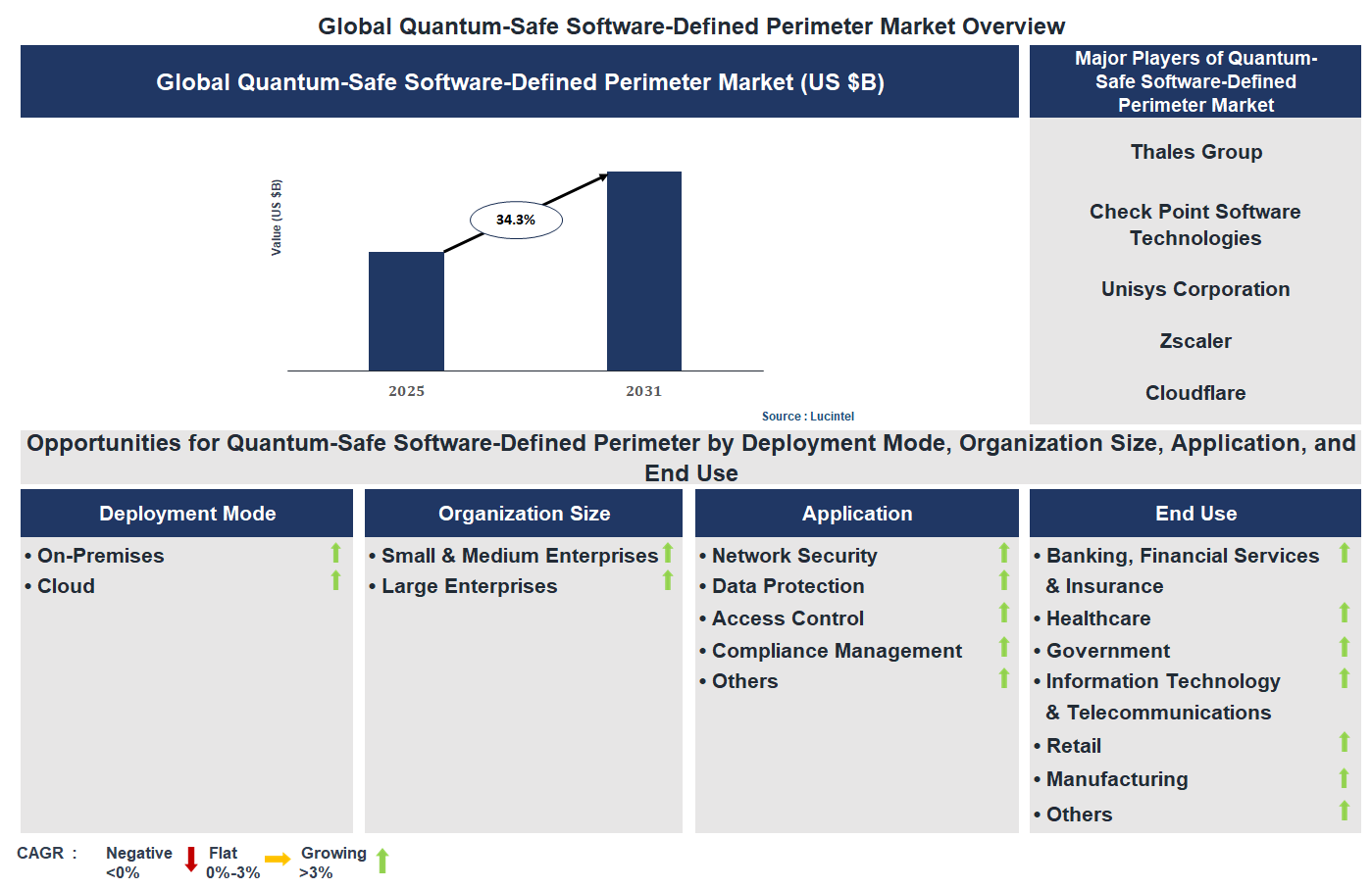
Key data points: The growth forecast = 34.3% annually for the next 7 years. Scroll below to get more insights. This market report covers trends, opportunities and forecasts in quantum-safe software-defined perimeter market to 2031 by deployment mode (on-premises and cloud), organization size (small & medium enterprises and large enterprises), application (network security, data protection, access control, compliance management, and others), end use (banking, financial services & insurance, healthcare, government, information technology & telecommunications, retail, manufacturing, and others), and region (North America, Europe, Asia Pacific, and the Rest of the World)
We'll send your sample report shortly.
• Lucintel forecasts that, within the deployment mode category, cloud is expected to witness higher growth over the forecast period.
• Within the application category, network security is expected to witness the highest growth.
• In terms of region, North America is expected to witness the highest growth over the forecast period. Gain valuable insights for your business decisions with our comprehensive 150+ page report. Sample figures with some insights are shown below.
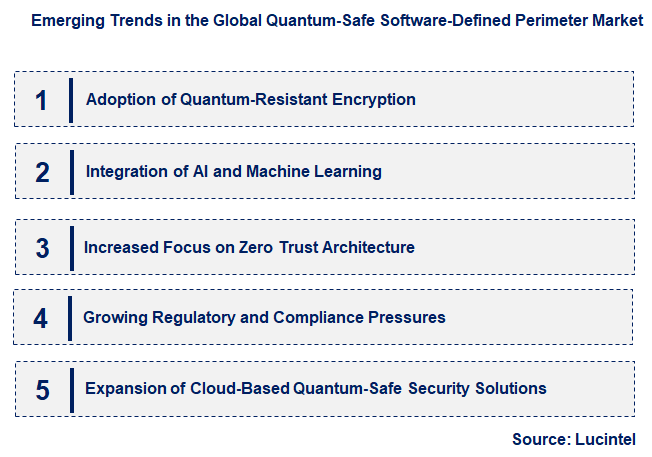
• Adoption of Quantum-Resistant Encryption: As quantum computing threatens traditional encryption methods, the market is shifting towards quantum-resistant algorithms. These algorithms are designed to withstand attacks from quantum computers, ensuring long-term data security. Organizations are increasingly integrating these encryption techniques into SDP solutions to safeguard sensitive information against future threats. This trend is driven by the need for proactive security measures and regulatory compliance, making quantum-resistant encryption a critical component of next-generation cybersecurity strategies.
• Integration of AI and Machine Learning: Artificial Intelligence (AI) and machine learning are being incorporated into quantum-safe SDP solutions to enhance threat detection and response capabilities. These technologies enable real-time monitoring, anomaly detection, and automated decision-making, improving overall security posture. The integration helps organizations identify sophisticated attacks more efficiently and adapt quickly to emerging threats. As AI-driven security becomes more sophisticated, it is expected to play a pivotal role in maintaining resilient quantum-safe networks.
• Increased Focus on Zero Trust Architecture: The market is witnessing a significant shift towards Zero Trust security models, which assume no implicit trust within the network. Quantum-safe SDP solutions are being designed to enforce strict access controls, continuous authentication, and micro-segmentation. This approach minimizes attack surfaces and ensures that only authorized users and devices can access sensitive resources. The adoption of Zero Trust principles is driven by the need for robust security frameworks capable of countering advanced cyber threats in a quantum era.
• Growing Regulatory and Compliance Pressures: Governments and industry bodies are implementing stricter cybersecurity regulations to protect critical infrastructure and data privacy. These regulations are encouraging organizations to adopt quantum-safe security measures, including SDP solutions that are compliant with emerging standards. The market is responding with solutions that meet regulatory requirements, fostering increased adoption and innovation. This trend underscores the importance of proactive security investments to avoid penalties and reputational damage.
• Expansion of Cloud-Based Quantum-Safe Security Solutions: Cloud service providers are increasingly offering quantum-safe SDP solutions to meet the demand for scalable, flexible security architectures. Cloud-based offerings enable organizations to deploy quantum-resistant security measures without significant infrastructure investments. This trend facilitates widespread adoption across various industries, especially those with remote or distributed workforces. The shift towards cloud-based solutions enhances agility, reduces costs, and ensures that security measures evolve in tandem with technological advancements. In summary, these trends are fundamentally transforming the quantum-safe software-defined perimeter market by emphasizing proactive, adaptable, and resilient security strategies. The integration of quantum-resistant encryption, AI, Zero Trust models, regulatory compliance, and cloud solutions is creating a more secure digital environment. As these developments continue, the market will become more sophisticated, enabling organizations to better defend against both current and future cyber threats in an increasingly quantum-enabled world.
• Adoption of Quantum-Resistant Algorithms: Major vendors are integrating quantum-resistant cryptographic algorithms into SDP solutions, ensuring security against future quantum attacks. This development enhances the resilience of network perimeters, making them less vulnerable to quantum-enabled hacking attempts. It also positions companies as proactive leaders in cybersecurity, fostering trust among clients. The integration of these algorithms is expected to become a standard feature, significantly strengthening the security infrastructure across industries.
• Strategic Partnerships and Collaborations: Leading technology firms are forming alliances with quantum computing companies and cybersecurity providers to develop advanced SDP solutions. These collaborations facilitate knowledge sharing, resource pooling, and accelerated innovation. By combining expertise, they are creating more robust, scalable, and quantum-proof security frameworks. Such partnerships are also expanding market reach and driving adoption across sectors like finance, healthcare, and government, thereby broadening the market landscape.
• Deployment of AI-Driven Threat Detection: The market is witnessing the deployment of artificial intelligence (AI) within SDP platforms for real-time threat detection and response. AI algorithms analyze network traffic patterns to identify anomalies indicative of cyber threats, including those posed by quantum-enabled attacks. This proactive approach enhances security posture, reduces response times, and minimizes potential damage. The integration of AI is making SDP solutions more intelligent, adaptive, and capable of handling sophisticated cyber threats effectively.
• Expansion into Emerging Markets: Vendors are increasingly targeting emerging markets with tailored SDP solutions to address unique security challenges. This expansion is driven by rising digital transformation initiatives and increasing cyber threats in these regions. Localized solutions, compliance with regional regulations, and cost-effective offerings are key strategies. This growth not only broadens the market base but also accelerates the adoption of quantum-safe security measures globally, fostering a more secure digital environment.
• Regulatory and Standardization Initiatives: Governments and industry bodies are developing standards and regulations for quantum-safe cybersecurity solutions, including SDP. These initiatives aim to establish uniform security protocols, certification processes, and compliance requirements. They are encouraging vendors to adopt quantum-resistant technologies and ensuring interoperability across platforms. Such regulatory frameworks are vital for building trust, facilitating market growth, and ensuring widespread adoption of quantum-safe security solutions. The recent developments in the quantum-safe software-defined perimeter market are significantly impacting the industry by enhancing security resilience, fostering innovation through collaborations, and expanding global reach. The integration of quantum-resistant algorithms and AI-driven threat detection is making network perimeters more secure against future threats. Strategic partnerships and regulatory initiatives are accelerating market growth and standardization. Overall, these advancements are positioning the Quantum-Safe SDP Market as a critical component in the future of cybersecurity, ensuring robust protection in an increasingly digital and quantum-enabled world.
• Strengthening national security : Governments are prioritizing quantum-safe SDP solutions to protect classified information and critical infrastructure from emerging quantum threats, ensuring national security and resilience against cyber espionage.
• Securing financial transactions : Financial institutions are adopting quantum-resistant security measures to safeguard transactions, customer data, and assets, maintaining trust and compliance amid increasing cyber risks.
• Protecting sensitive health data : Healthcare providers are implementing quantum-safe SDP to secure patient records and medical devices, ensuring privacy and compliance with data protection regulations.
• Ensuring secure communications : Telecom companies are deploying quantum-safe SDP to protect data transmission networks, enabling secure 5G and IoT communications against future quantum attacks.
• Safeguarding data in the cloud : Cloud service providers are integrating quantum-resistant security solutions to protect stored data and cloud-based applications, supporting secure remote access and compliance. In summary, these growth opportunities across key applications are significantly impacting the quantum-safe software-defined perimeter market by driving innovation, enhancing security postures, and enabling organizations to prepare for the quantum era. As sectors increasingly recognize the importance of quantum resistance, market demand is expected to surge, fostering technological advancements and expanding market reach.
• Growing Threat of Quantum Computing Attacks: The imminent threat posed by quantum computers capable of breaking traditional encryption algorithms has accelerated the demand for quantum-safe security solutions. Organizations seek to safeguard sensitive data against future quantum-enabled breaches, prompting investments in quantum-resistant cryptography and SDP solutions. This urgency is further amplified by government initiatives and industry standards emphasizing quantum security, fostering market expansion. As quantum technology advances, the need for robust, scalable, and interoperable quantum-safe solutions becomes critical, making this a primary driver for market growth.
• Increasing Adoption of Software-Defined Networking: The shift towards SDN offers enhanced network agility, centralized control, and improved security features. Quantum-safe SDP solutions integrate seamlessly with SDN architectures, providing dynamic access control and secure connectivity. This integration supports organizations in managing complex networks efficiently while ensuring security against evolving threats. The flexibility and scalability of SDN make it an attractive platform for deploying quantum-safe security measures, thereby fueling market demand. As industries increasingly adopt SDN, the market for quantum-safe SDP solutions is expected to expand correspondingly.
• Rising Cybersecurity Budgets and Digital Transformation: Organizations are allocating more resources to cybersecurity to protect against sophisticated cyber threats. The digital transformation wave, driven by cloud computing, IoT, and remote work, increases the attack surface, necessitating advanced security solutions like quantum-safe SDP. Governments and private sectors are investing heavily in secure infrastructure, which accelerates market growth. The need for future-proof security measures that can adapt to emerging threats is a key factor motivating organizations to adopt quantum-safe SDP solutions, ensuring data integrity and compliance.
• Regulatory and Compliance Pressures: Governments and industry bodies are implementing stringent data protection regulations, such as GDPR and sector-specific standards, requiring organizations to enhance their cybersecurity measures. Quantum-safe SDP solutions help organizations meet these compliance requirements by providing advanced encryption and access controls resistant to quantum attacks. Regulatory pressures incentivize organizations to upgrade their security infrastructure proactively, driving market growth. Additionally, standards development for quantum-safe cryptography fosters confidence and accelerates adoption across various sectors, including finance, healthcare, and government.
• Technological Innovations in Quantum-Resistant Cryptography: Advances in quantum-resistant algorithms and cryptographic techniques are pivotal in enabling secure communication in a post-quantum world. These innovations facilitate the development of effective quantum-safe SDP solutions that can be integrated into existing networks. Continuous research and development efforts are reducing implementation complexities and costs, making these solutions more accessible. The evolution of quantum-resistant cryptography directly influences market growth by providing reliable, scalable, and interoperable security options, encouraging widespread adoption across industries. The challenges facing quantum-safe software-defined perimeter market include:
• High Implementation and Operational Costs: Deploying quantum-safe SDP solutions requires significant investment in new hardware, software, and skilled personnel. The complexity of integrating these solutions into existing infrastructure can lead to substantial costs, which may deter small and medium-sized enterprises from adoption. Additionally, ongoing maintenance and updates add to operational expenses. These financial barriers slow down market penetration, especially in regions with limited cybersecurity budgets, hindering widespread implementation and delaying the realization of full market potential.
• Technological Complexity and Lack of Standardization: The development of quantum-safe cryptography and SDP solutions involves complex algorithms and protocols that require specialized expertise. The absence of universally accepted standards complicates interoperability and integration across different platforms and vendors. This fragmentation hampers seamless deployment and increases the risk of security gaps. Moreover, rapid technological evolution necessitates continuous updates, posing challenges for organizations to keep pace. Standardization efforts are crucial to streamline adoption, but delays in establishing comprehensive frameworks remain a significant obstacle.
• Limited Awareness and Expertise: Many organizations lack awareness of quantum threats and the importance of quantum-safe security measures. The scarcity of skilled cybersecurity professionals knowledgeable in quantum-resistant cryptography further impedes adoption. This knowledge gap results in delayed decision-making and implementation, leaving organizations vulnerable. Educational initiatives and industry collaborations are needed to build expertise and promote understanding of quantum-safe solutions. Without increased awareness and skilled personnel, market growth may be constrained, and the transition to quantum-safe security could be prolonged. In summary, the quantum-safe software-defined perimeter market is driven by the urgent need to counteract quantum computing threats, the adoption of SDN architectures, increased cybersecurity investments, regulatory pressures, and technological innovations. However, high costs, technological complexity, and limited awareness pose significant challenges. These factors collectively shape the market landscape, requiring strategic efforts to overcome barriers and capitalize on emerging opportunities. The overall impact suggests a promising yet cautious growth trajectory, emphasizing the importance of standardization, education, and cost-effective solutions for sustained development.
• Thales Group
• Check Point Software Technologies
• Unisys Corporation
• Zscaler
• Cloudflare
• Entrust Corporation
• BlackBerry Limited
• Cato Networks
• Versa Networks
• SP Telecommunications
• On-Premises
• Cloud
• Small & Medium Enterprises
• Large Enterprises
• Network Security
• Data Protection
• Access Control
• Compliance Management
• Others
• Banking, Financial Services & Insurance
• Healthcare
• Government
• Information Technology & Telecommunications
• Retail
• Manufacturing
• Others
• North America
• Europe
• Asia Pacific
• The Rest of the World
• United States: The US leads in quantum-safe SDP development, with major tech firms and government agencies investing in quantum-resistant encryption technologies. Recent initiatives include federal funding for quantum cybersecurity research and partnerships between industry leaders and academic institutions to develop scalable solutions. Several startups have launched innovative SDP platforms integrating quantum-safe algorithms, enhancing national cybersecurity resilience.
• China: China has accelerated its quantum cybersecurity efforts, focusing on integrating quantum-safe protocols into existing network infrastructures. The government has announced substantial investments in quantum communication networks and SDP solutions to secure critical infrastructure. Recent collaborations between Chinese tech giants and research institutes aim to develop robust, scalable quantum-safe security frameworks tailored for large-scale enterprise and government applications.
• Germany: Germanys focus remains on advancing quantum cryptography and SDP solutions through public-private partnerships. The country has launched several pilot projects to test quantum-safe SDP in real-world scenarios, particularly in banking and healthcare sectors. German research institutions are also contributing to international standards development for quantum-safe network security, positioning Germany as a key player in European quantum cybersecurity initiatives.
• India: India is rapidly adopting quantum-safe SDP technologies, driven by government initiatives to secure digital infrastructure. Recent developments include the launch of national programs to promote quantum research and the deployment of pilot projects in banking and defense sectors. Indian startups are actively developing localized quantum-safe encryption solutions, aiming to enhance the countrys cybersecurity posture amid increasing cyber threats.
• Japan: Japan has made significant strides in integrating quantum-safe SDP solutions into its critical infrastructure. The government has announced strategic investments in quantum technology research, focusing on developing secure communication networks. Collaborations between Japanese corporations and international research bodies are fostering the development of advanced quantum-resistant security protocols, positioning Japan as a leader in quantum cybersecurity innovation.


• Thales Group
• Check Point Software Technologies
• Unisys Corporation
• Zscaler
• Cloudflare
• Entrust Corporation
• BlackBerry Limited
• Cato Networks
• Versa Networks
• SP Telecommunications Q5. Which quantum-safe software-defined perimeter market segment will be the largest in future? Answer: Lucintel forecasts that, within the deployment mode category, cloud is expected to witness higher growth over the forecast period. Q6. In quantum-safe software-defined perimeter market, which region is expected to be the largest in next 5 years? Answer: In terms of region, North America is expected to witness the highest growth over the forecast period. Q7. Do we receive customization in this report? Answer: Yes, Lucintel provides 10% customization without any additional cost.


Choose a license that fits your team. Instant PDF delivery.
Prices exclude taxes. Instant delivery. Custom licensing available on request.
Market Report · July 22, 2026
Market Report · July 17, 2026
Market Report · July 17, 2026
Trusted partner for strategic intelligence and business growth


Receive a complimentary market analysis tailored to your industry. Our analysts will identify key growth opportunities and competitive dynamics specific to your business.

Market size, growth rate, and key trend analysis for your specific sector.

Top competitor positioning and market share analysis.

Strategic recommendations backed by data-driven insights.
Get curated market intelligence and competitive moves straight to your inbox.
By subscribing, you agree to receive our monthly insights. Unsubscribe anytime.
Receive a complimentary market analysis tailored to your industry. Our analysts will identify key growth opportunities and competitive dynamics specific to your business.
Market size, growth rate, and key trend analysis for your specific sector.
Top competitor positioning and market share analysis.
Strategic recommendations backed by data-driven insights.
Get curated market intelligence, emerging trends, and competitive moves straight to your inbox each month.
By subscribing, you agree to receive our monthly insights. Unsubscribe anytime.
We'll send your sample report shortly.