
Market Report · July 15, 2026

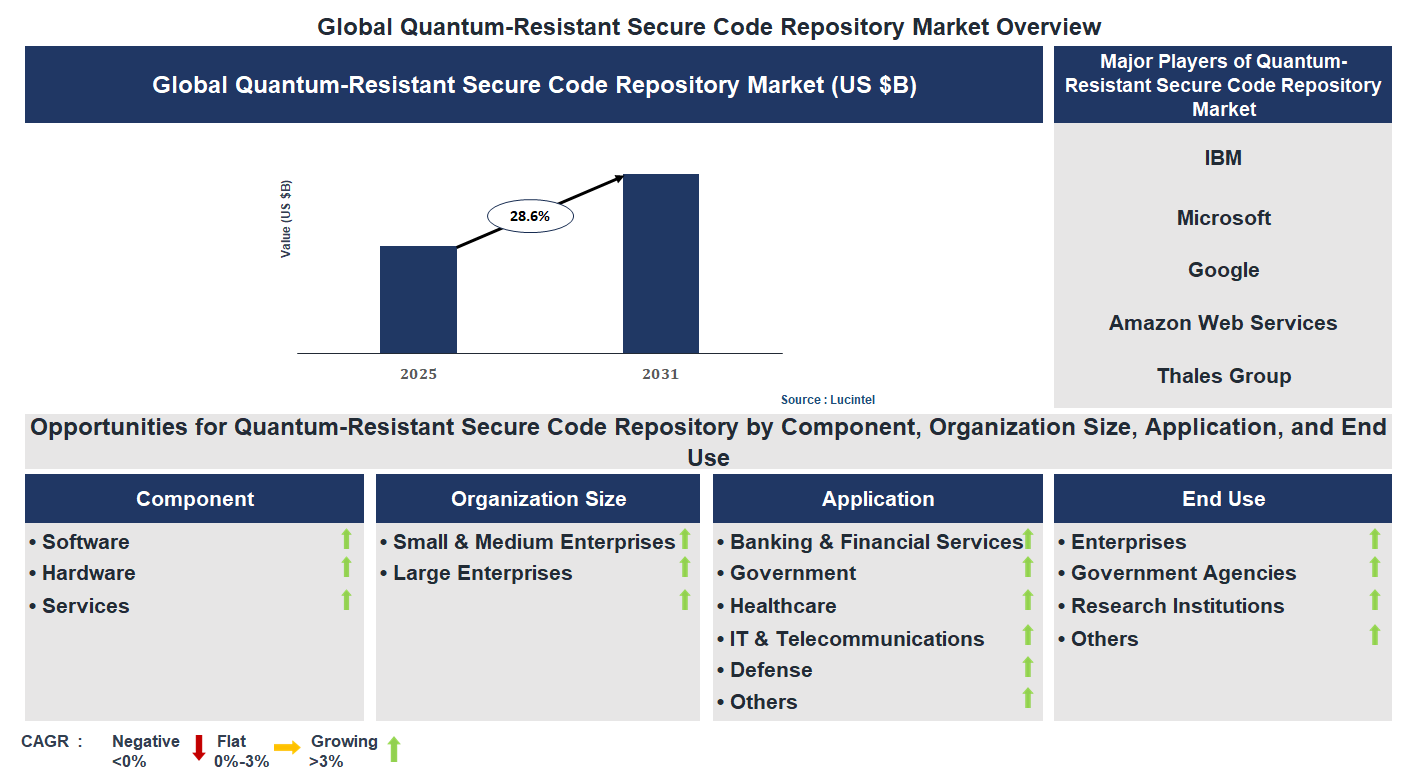
Key data points: The growth forecast = 28.6% annually for the next 7 years. Scroll below to get more insights. This market report covers trends, opportunities and forecasts in quantum-resistant secure code repository market to 2031 by component (software, hardware, and services), organization size (small & medium enterprises and large enterprises), application (banking & financial services, government, healthcare, IT & telecommunications, defense, and others), end use (enterprises, government agencies, research institutions, and others), and region (North America, Europe, Asia Pacific, and the Rest of the World)
We'll send your sample report shortly.
• Lucintel forecasts that, within the component category, software is expected to witness the highest growth over the forecast period.
• Within the end use category, enterprise is expected to witness the highest growth.
• In terms of region, North America is expected to witness the highest growth over the forecast period. Gain valuable insights for your business decisions with our comprehensive 150+ page report. Sample figures with some insights are shown below.
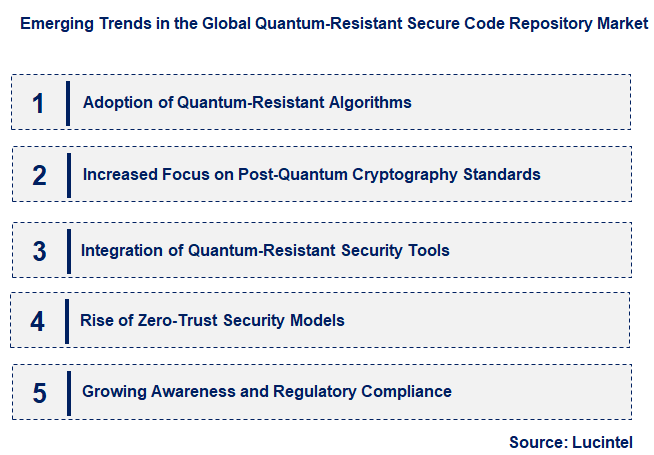
• Adoption of Quantum-Resistant Algorithms: This trend involves integrating algorithms designed to withstand quantum attacks into code repositories. As quantum computing advances, traditional cryptographic methods become vulnerable, prompting the adoption of lattice-based, hash-based, and multivariate cryptography. These algorithms ensure long-term security for stored code and associated data, making repositories resilient against future quantum decryption efforts. Organizations are increasingly prioritizing these algorithms to future-proof their software assets, which significantly impacts security protocols and compliance standards.
• Increased Focus on Post-Quantum Cryptography Standards: Governments and industry bodies are actively developing and promoting standards for post-quantum cryptography. This trend influences the market by encouraging the adoption of standardized, vetted cryptographic solutions within code repositories. The establishment of these standards provides a clear framework for developers and security professionals, reducing uncertainty and accelerating implementation. As standards evolve, they foster greater confidence in quantum-resistant security measures, ultimately shaping the development of more secure and interoperable code repositories.
• Integration of Quantum-Resistant Security Tools: Market players are increasingly incorporating specialized security tools that support quantum-resistant encryption and key management within code repositories. These tools facilitate seamless integration of quantum-safe protocols into existing development workflows, enhancing overall security. The impact includes improved threat detection, automated vulnerability assessments, and streamlined compliance with emerging regulations. This integration helps organizations maintain agility while upgrading their security infrastructure to counter quantum threats effectively.
• Rise of Zero-Trust Security Models: The adoption of zero-trust architectures is gaining momentum in the quantum-resistant code repository market. This approach assumes no implicit trust within the network, requiring continuous verification of user identities and device integrity. Implementing zero-trust principles enhances security by limiting access to sensitive code and data, even in the presence of quantum vulnerabilities. The impact is a more robust security posture, reducing the risk of insider threats and lateral movement of cyberattacks, which is vital as quantum computing increases the sophistication of cyber threats.
• Growing Awareness and Regulatory Compliance: As quantum threats become more imminent, organizations are increasing their awareness of the need for quantum-resistant security measures. Regulatory bodies are also beginning to mandate quantum-safe practices for critical infrastructure and data protection. This trend drives market growth by encouraging investments in quantum-resistant repositories and fostering a proactive security culture. Compliance requirements influence product development and deployment strategies, ensuring that organizations remain resilient against future quantum-enabled cyberattacks. In summary, these emerging trends are fundamentally reshaping the quantum-resistant secure code repository market by fostering innovation, standardization, and proactive security measures. They are enabling organizations to build resilient software development environments capable of withstanding the evolving landscape of quantum computing threats, thereby ensuring long-term data security and trust.
• Adoption of Quantum-Resistant Algorithms: This development involves integrating algorithms like lattice-based, hash-based, and multivariate cryptography into code repositories, enhancing security against quantum attacks. It has increased confidence among organizations in protecting sensitive code and data, fostering wider adoption of quantum-resistant solutions.
• Strategic Collaborations and Partnerships: Major tech firms, cybersecurity companies, and academic institutions are forming alliances to develop and standardize quantum-resistant security protocols. These collaborations accelerate innovation, reduce development costs, and promote widespread implementation, thereby strengthening the overall market ecosystem.
• Integration with DevSecOps Pipelines: Incorporating quantum-resistant security measures into DevSecOps workflows ensures continuous protection during software development. This integration minimizes vulnerabilities, streamlines compliance, and promotes proactive security practices, leading to more resilient code repositories.
• Regulatory and Standardization Initiatives: Governments and international bodies are establishing guidelines and standards for quantum-resistant security in software development. These initiatives drive compliance, encourage industry-wide adoption, and create a more secure digital environment, boosting market confidence.
• Advancements in Quantum-Resistant Key Management: Innovations in key management systems tailored for quantum-resistant cryptography are improving secure storage and distribution of cryptographic keys. This development enhances overall security infrastructure, reduces risks of key compromise, and supports scalable deployment of quantum-resistant solutions. In summary, these developments are significantly impacting the quantum-resistant secure code repository market by enhancing security measures, fostering collaboration, and establishing regulatory frameworks. They are driving increased adoption of quantum-resistant technologies, ensuring long-term protection of software assets, and positioning the market for sustained growth amid emerging quantum threats.
• Enhanced Security for Transactions : The financial sector requires robust security to protect sensitive data and transactions. Quantum-resistant code repositories provide advanced cryptographic measures, ensuring data integrity and confidentiality against future quantum threats. This growth opportunity helps financial institutions maintain trust, comply with regulations, and prevent cyberattacks, thereby strengthening their market position and customer confidence.
• Securing National Infrastructure : Governments and defense agencies handle classified information that demands the highest security standards. Quantum-resistant repositories enable secure storage and management of critical data, safeguarding national security against emerging quantum computing threats. This opportunity accelerates the development of resilient cybersecurity frameworks, ensuring long-term protection of sensitive information.
• Protecting Patient Data and Research : The healthcare industry manages vast amounts of sensitive patient data and research information. Implementing quantum-resistant secure code repositories ensures data privacy and compliance with regulations like HIPAA. This growth opportunity enhances trust in digital health solutions and supports secure collaboration across healthcare providers and researchers.
• Securing Software Supply Chains : The technology sector relies heavily on secure code repositories for software development and deployment. Quantum-resistant solutions mitigate risks associated with supply chain attacks and code tampering. This opportunity promotes the development of resilient software ecosystems, fostering innovation and reducing vulnerabilities in critical applications.
• Safeguarding Utilities and Transportation : Critical infrastructure sectors such as utilities and transportation are increasingly targeted by cyber threats. Quantum-resistant repositories provide a secure platform for managing operational software and control systems. This growth opportunity ensures the resilience and continuity of essential services amid evolving cybersecurity challenges. In summary, these growth opportunities across key applications are significantly impacting the quantum-resistant secure code repository market by driving innovation, enhancing security, and enabling organizations to prepare for future quantum threats. As industries adopt these advanced solutions, market expansion is expected to accelerate, fostering a more secure digital environment worldwide.
• Growing Threat of Quantum Computing Attacks: The imminent threat posed by quantum computers capable of breaking traditional cryptographic algorithms has accelerated the need for quantum-resistant security solutions. Organizations across sectors such as finance, healthcare, and government are investing heavily in quantum-safe repositories to safeguard sensitive code and data. This urgency is driven by the potential for quantum attacks to compromise existing security measures, prompting a shift toward advanced cryptographic techniques that can withstand such threats. As awareness increases, market demand for quantum-resistant repositories is expected to surge, fostering innovation and adoption.
• Increasing Adoption of Cloud and DevOps Practices: The widespread adoption of cloud computing and DevOps methodologies has transformed software development and deployment processes. Companies require secure, scalable, and collaborative code repositories that can integrate seamlessly with cloud platforms. Quantum-resistant security features embedded within these repositories ensure protection against future quantum threats while supporting rapid development cycles. This trend enhances market growth by creating a demand for specialized repositories capable of addressing both current and future security challenges, thereby enabling organizations to maintain agility without compromising security.
• Stringent Regulatory and Compliance Requirements: Governments and regulatory bodies worldwide are implementing strict data security and privacy standards, such as GDPR, HIPAA, and industry-specific regulations. These frameworks mandate robust security measures for code repositories, especially when handling sensitive or classified information. The need for compliance drives organizations to adopt quantum-resistant solutions that can meet evolving regulatory standards. This regulatory pressure not only accelerates market growth but also encourages vendors to develop innovative, compliant security offerings, fostering a competitive landscape focused on quantum-safe technologies.
• Technological Advancements in Quantum-Resistant Algorithms: Continuous research and development efforts have led to the emergence of new cryptographic algorithms resistant to quantum attacks. These advancements enable the creation of secure code repositories capable of protecting intellectual property and sensitive data against future threats. The development of standardized quantum-resistant algorithms by organizations like NIST further boosts confidence in their deployment. As these technologies mature, market players are increasingly integrating them into their repositories, driving innovation and expanding the scope of quantum-safe security solutions. The challenges facing quantum-resistant secure code repository market include:
• High Implementation and Maintenance Costs: Deploying quantum-resistant secure code repositories involves significant financial investment in new hardware, software, and expertise. Small and medium-sized enterprises may find these costs prohibitive, limiting widespread adoption. Additionally, ongoing maintenance, updates, and staff training add to the financial burden. This economic barrier can slow market growth, especially in regions with limited budgets for cybersecurity infrastructure, necessitating cost-effective solutions and strategic investments to overcome these hurdles.
• Technological Complexity and Lack of Industry Standards: Developing and integrating quantum-resistant algorithms into existing repositories is complex, requiring specialized knowledge and expertise. The absence of universally accepted standards for quantum-safe security complicates implementation and interoperability. This technological complexity can lead to delays, increased costs, and potential security gaps if not managed properly. Industry-wide collaboration and standardization efforts are essential to streamline development processes and ensure consistent, reliable security measures across platforms.
• Limited Awareness and Skilled Workforce: Many organizations lack awareness of quantum threats and the importance of quantum-resistant security measures. Furthermore, there is a shortage of skilled cybersecurity professionals proficient in quantum-safe cryptography. This knowledge gap hampers adoption and effective implementation of secure repositories. Addressing this challenge requires targeted education, training programs, and awareness campaigns to build a knowledgeable workforce capable of deploying and managing quantum-resistant solutions effectively. In summary, the quantum-resistant secure code repository market is driven by the urgent need to counteract quantum computing threats, the proliferation of cloud and DevOps practices, regulatory pressures, and technological innovations. However, high costs, technological complexities, and workforce limitations pose significant challenges. These factors collectively influence the market's trajectory, requiring stakeholders to balance innovation with strategic investments and standardization efforts. As the landscape evolves, proactive measures to address these challenges will be crucial for widespread adoption and the development of resilient, quantum-safe code repositories.
• IBM
• Microsoft
• Amazon Web Services
• Thales Group
• ISARA Corporation
• QuintessenceLabs
• Post-Quantum
• PQShield
• CryptoNext Security
• Software
• Hardware
• Services
• Small & Medium Enterprises
• Large Enterprises
• Banking & Financial Services
• Government
• Healthcare
• IT & Telecommunications
• Defense
• Others
• Enterprises
• Government Agencies
• Research Institutions
• Others
• North America
• Europe
• Asia Pacific
• The Rest of the World
• United States: The US market is leading with significant investments in quantum-resistant encryption technologies, driven by government agencies and private sector innovation. Major tech firms are developing secure repositories integrated with quantum-safe algorithms, and regulatory frameworks are being established to ensure compliance. The focus is on creating scalable solutions for enterprise and government use, with startups emerging in this space. Research institutions are collaborating with industry leaders to advance quantum-resistant security protocols, positioning the US as a pioneer in this market.
• China: China is rapidly advancing in quantum-resistant security, with substantial government funding directed toward national cybersecurity initiatives. The country is developing proprietary quantum-safe algorithms and integrating them into existing code repositories. Chinese tech giants are actively participating in international standards development and investing in quantum computing research to stay ahead. The market is characterized by a focus on strategic security applications, including defense and critical infrastructure, with a strong emphasis on self-reliance and technological sovereignty.
• Germany: Germany's market is characterized by a strong emphasis on industrial cybersecurity and compliance with European Union regulations. Leading research institutions and industry players are collaborating to develop quantum-resistant solutions tailored for manufacturing and critical infrastructure sectors. The government supports innovation through funding programs and partnerships with European organizations. German companies are also focusing on interoperability and standardization to facilitate widespread adoption of quantum-resistant secure repositories across Europe.
• India: India is increasingly investing in quantum technology research, with government initiatives aimed at developing quantum-safe cryptography solutions. The market is witnessing the emergence of startups focused on secure code repositories resistant to quantum attacks. Public-private partnerships are fostering innovation, especially in sectors like banking, telecommunications, and defense. India’s strategic focus is on building indigenous solutions to reduce dependency on foreign technology and enhance national cybersecurity resilience.
• Japan: Japan is actively advancing in quantum-resistant security, with a focus on integrating these solutions into its robust industrial and technological ecosystem. The government is supporting research through funding and policy initiatives aimed at securing critical infrastructure. Japanese firms are developing secure repositories with quantum-resistant algorithms, emphasizing reliability and long-term security. Collaboration between academia and industry is strong, with efforts to establish standards and promote widespread adoption of quantum-safe cybersecurity measures across sectors.


• IBM
• Microsoft
• Amazon Web Services
• Thales Group
• ISARA Corporation
• QuintessenceLabs
• Post-Quantum
• PQShield
• CryptoNext Security Q5. Which quantum-resistant secure code repository market segment will be the largest in future? Answer: Lucintel forecasts that, within the component category, software is expected to witness the highest growth over the forecast period. Q6. In quantum-resistant secure code repository market, which region is expected to be the largest in next 5 years? Answer: In terms of region, North America is expected to witness the highest growth over the forecast period. Q7. Do we receive customization in this report? Answer: Yes, Lucintel provides 10% customization without any additional cost.


Choose a license that fits your team. Instant PDF delivery.
Prices exclude taxes. Instant delivery. Custom licensing available on request.
Market Report · July 15, 2026
Market Report · June 26, 2026
Market Report · June 24, 2026
Trusted partner for strategic intelligence and business growth


Receive a complimentary market analysis tailored to your industry. Our analysts will identify key growth opportunities and competitive dynamics specific to your business.

Market size, growth rate, and key trend analysis for your specific sector.

Top competitor positioning and market share analysis.

Strategic recommendations backed by data-driven insights.
Get curated market intelligence and competitive moves straight to your inbox.
By subscribing, you agree to receive our monthly insights. Unsubscribe anytime.
Receive a complimentary market analysis tailored to your industry. Our analysts will identify key growth opportunities and competitive dynamics specific to your business.
Market size, growth rate, and key trend analysis for your specific sector.
Top competitor positioning and market share analysis.
Strategic recommendations backed by data-driven insights.
Get curated market intelligence, emerging trends, and competitive moves straight to your inbox each month.
By subscribing, you agree to receive our monthly insights. Unsubscribe anytime.
We'll send your sample report shortly.