
Market Report · July 13, 2026

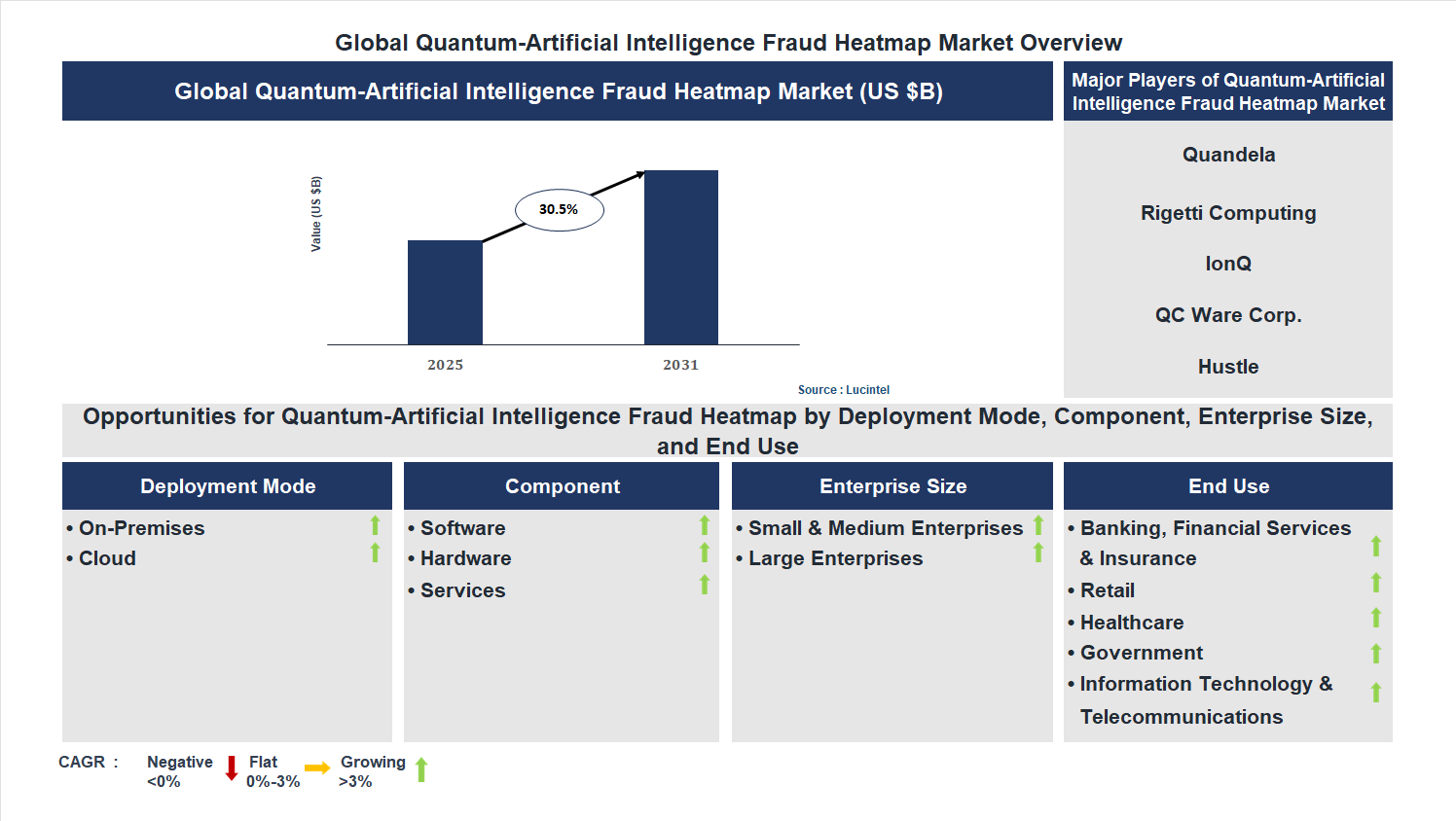
Key data points: The growth forecast = 30.5% annually for the next 7 years. Scroll below to get more insights. This market report covers trends, opportunities and forecasts in quantum-artificial intelligence fraud heatmap market to 2031 by deployment mode (on-premises and cloud), component (software, hardware, and services), enterprise size (small & medium enterprises and large enterprises), end use (banking, financial services, & insurance, retail, healthcare, government, information technology & telecommunications, and others), and region (North America, Europe, Asia Pacific, and the Rest of the World)
We'll send your sample report shortly.
• Lucintel forecasts that, within the deployment mode category, cloud is expected to witness higher growth over the forecast period.
• Within the end use category, banking, financial service, & insurance is expected to witness the highest growth.
• In terms of region, APAC is expected to witness the highest growth over the forecast period. Gain valuable insights for your business decisions with our comprehensive 150+ page report. Sample figures with some insights are shown below.
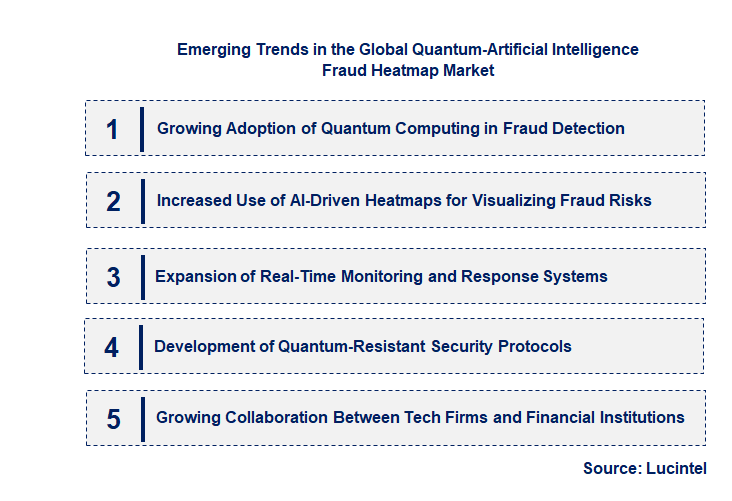
• Growing Adoption of Quantum Computing in Fraud Detection: The integration of quantum computing with AI enhances processing power and data analysis capabilities. This trend allows for faster and more accurate detection of fraudulent activities by analyzing vast datasets in real time. Organizations are investing in quantum algorithms to identify complex fraud patterns that traditional systems might miss. The impact is significant, as it improves detection speed and reduces false positives, leading to more efficient fraud prevention and increased trust in digital transactions.
• Increased Use of AI-Driven Heatmaps for Visualizing Fraud Risks: AI-powered heatmaps are becoming essential tools for visualizing areas of high fraud risk within financial and digital ecosystems. These heatmaps provide intuitive, real-time insights into suspicious activities, enabling quicker decision-making. The trend enhances the ability of security teams to pinpoint vulnerabilities and allocate resources effectively. As a result, organizations can proactively address potential threats, minimizing financial losses and safeguarding customer data through more targeted interventions.
• Expansion of Real-Time Monitoring and Response Systems: The market is witnessing a shift toward real-time fraud detection and response systems powered by AI and quantum technologies. These systems continuously monitor transactions and user behaviors, instantly flagging anomalies. The impact is a significant reduction in fraud-related losses and improved customer experience, as responses are swift and precise. This trend underscores the importance of proactive security measures, enabling organizations to mitigate risks before substantial damage occurs and maintain regulatory compliance.
• Development of Quantum-Resistant Security Protocols: As quantum computing advances, so does the need for quantum-resistant encryption methods. The market is focusing on developing and implementing security protocols that can withstand quantum attacks. This trend is crucial for protecting sensitive data and maintaining trust in digital financial systems. The impact includes enhanced security resilience, future-proofing against emerging threats, and ensuring the integrity of fraud detection systems in a post-quantum world.
• Growing Collaboration Between Tech Firms and Financial Institutions: Strategic partnerships are forming to accelerate innovation in quantum-AI fraud detection solutions. Tech companies bring cutting-edge quantum and AI expertise, while financial institutions provide real-world data and application insights. This collaboration fosters the development of more robust, scalable, and effective fraud prevention tools. The impact is a faster deployment of advanced solutions, increased market competitiveness, and a more unified approach to combating sophisticated financial crimes. In summary, these trends are collectively reshaping the quantum-artificial intelligence fraud heatmap market by enhancing detection capabilities, improving visualization, ensuring future security, and fostering innovation through collaboration. These developments are making fraud prevention more proactive, precise, and resilient, ultimately transforming how organizations safeguard their digital assets in an increasingly complex threat landscape.
• Adoption of Quantum Algorithms: Implementation of quantum algorithms in fraud detection models has improved processing speeds and accuracy, enabling real-time analysis of large datasets. This development enhances the ability to identify complex fraud patterns swiftly, reducing financial losses and increasing trust in digital transactions.
• Integration with AI and Machine Learning: Combining quantum computing with AI and machine learning techniques has led to more sophisticated heatmaps that can predict potential fraud hotspots. This integration improves predictive capabilities, allowing proactive measures and reducing false positives.
• Expansion into Financial Services: The market is witnessing increased adoption within banking, insurance, and investment sectors. Quantum-AI heatmaps help these institutions detect fraudulent activities more effectively, ensuring compliance and protecting customer assets, thus boosting market confidence.
• Development of Specialized Quantum Hardware: Advances in quantum hardware, such as more stable qubits and scalable quantum processors, are facilitating the deployment of complex fraud detection models. This hardware evolution is critical for operationalizing quantum-AI solutions at scale.
• Regulatory and Ethical Frameworks: Governments and industry bodies are establishing guidelines for quantum-AI applications in fraud detection. These frameworks aim to ensure data privacy, ethical use, and security, fostering wider acceptance and responsible deployment of these technologies. In summary, these developments are significantly transforming the quantum-artificial intelligence fraud heatmap market by enhancing detection capabilities, expanding application areas, and ensuring responsible use. The integration of quantum computing with AI is driving faster, more accurate fraud detection solutions, which are crucial for safeguarding digital financial ecosystems. As technology advances and regulatory frameworks mature, the market is poised for sustained growth and innovation.
• Expansion in Financial Services: The integration of quantum-AI heatmaps in banking and finance enhances real-time fraud detection, reducing financial losses and increasing customer trust. This application improves the speed and accuracy of identifying suspicious activities, enabling proactive measures and strengthening security protocols.
• Retail Sector Adoption: Retailers utilize these heatmaps to monitor transaction patterns and detect fraudulent activities swiftly. This reduces chargebacks and fraud-related losses, while also improving customer experience through secure shopping environments.
• Healthcare Security Enhancement: In healthcare, quantum-AI heatmaps help identify fraudulent claims and unauthorized access to sensitive data. This ensures compliance with regulations, protects patient information, and reduces financial fraud within healthcare systems.
• Government and Public Sector: Governments deploy these heatmaps to safeguard national security and prevent identity theft. They enable authorities to detect complex fraud schemes efficiently, ensuring integrity in public services and benefits distribution.
• Cybersecurity and Data Protection: The market's growth in cybersecurity involves using quantum-AI heatmaps to identify cyber threats and malicious activities in real-time. This proactive approach enhances overall digital security infrastructure and mitigates potential breaches. In summary, these growth opportunities are significantly impacting the quantum-artificial intelligence fraud heatmap market by driving innovation, improving detection accuracy, and enabling scalable solutions across industries. They are fostering a more secure digital environment, reducing financial and data losses, and supporting organizations in maintaining trust and compliance in an increasingly digital world.
• Technological Innovation: Rapid advancements in quantum computing and AI algorithms are revolutionizing fraud detection capabilities. Quantum computing offers unprecedented processing power, enabling real-time analysis of vast datasets, which enhances the accuracy and speed of fraud identification. AI models, especially machine learning and deep learning, improve over time, providing more precise insights. This technological synergy allows organizations to detect complex, evolving fraud patterns that traditional systems might miss, thereby reducing financial losses and increasing trust in digital transactions. As these technologies become more accessible and affordable, their adoption accelerates, fueling market growth.
• Increasing Cybersecurity Threats: The rising frequency and sophistication of cyberattacks and financial frauds are compelling organizations to adopt advanced detection tools. Cybercriminals employ complex tactics that can bypass conventional security measures, necessitating more robust solutions. Quantum-AI-based heatmaps provide comprehensive visualization of fraudulent activities, enabling quicker response times and better risk management. The growing awareness of cybersecurity vulnerabilities across industries such as banking, e-commerce, and healthcare drives demand for innovative fraud detection systems. This trend underscores the importance of proactive measures, positioning the market for sustained expansion as organizations seek to protect their assets and reputation.
• Regulatory and Compliance Pressures: Governments and regulatory bodies worldwide are implementing stricter data security and privacy standards, such as GDPR and CCPA. These regulations mandate organizations to deploy advanced fraud detection and prevention tools to ensure compliance. Quantum-AI heatmaps assist in maintaining audit trails, detecting anomalies, and demonstrating adherence to legal requirements. The increasing regulatory landscape compels organizations to invest in sophisticated solutions to avoid penalties and reputational damage. Consequently, compliance-driven demand acts as a significant growth driver, encouraging innovation and adoption of quantum-AI-based fraud detection systems across various sectors.
• Growing Adoption of Digital Payments and E-commerce: The surge in digital transactions and online shopping has expanded the attack surface for fraudsters. As consumers and businesses increasingly rely on digital platforms, the need for real-time fraud monitoring becomes critical. Quantum-AI heatmaps enable comprehensive visualization of transaction patterns, helping identify suspicious activities swiftly. This adoption trend is driven by the need to enhance customer trust, reduce financial losses, and comply with industry standards. The rapid growth of e-commerce and digital payments thus acts as a catalyst for market expansion, prompting organizations to invest in advanced fraud detection technologies to stay competitive and secure.
• Strategic Collaborations and Investments: Major technology firms, financial institutions, and startups are forming strategic alliances and investing heavily in quantum-AI solutions for fraud detection. These collaborations facilitate technology sharing, research, and development, accelerating innovation. Investments in R&D lead to more sophisticated, scalable, and user-friendly heatmap solutions. Such partnerships also help in expanding market reach and customizing solutions for specific industry needs. The influx of capital and collaborative efforts foster a competitive environment that drives technological progress, ultimately benefiting end-users through improved fraud detection capabilities and market growth. The challenges facing this quantum-artificial intelligence fraud heatmap market include:-
• High Implementation Costs: Deploying quantum-AI fraud heatmaps requires significant capital investment in hardware, software, and skilled personnel. Quantum computing infrastructure is expensive and still in developmental stages, making it inaccessible for small and medium-sized enterprises. Additionally, integrating these advanced systems with existing IT infrastructure poses technical challenges and costs. The high initial investment can deter organizations from adopting these solutions, limiting market penetration. Overcoming cost barriers and demonstrating clear ROI are essential for broader adoption, especially in cost-sensitive sectors.
• Technological Complexity and Skill Gap: The sophisticated nature of quantum-AI systems demands specialized expertise for development, deployment, and maintenance. There is a significant shortage of skilled professionals proficient in quantum computing, AI, and cybersecurity. This skills gap hampers the effective implementation and operation of fraud heatmaps, leading to delays and increased costs. Moreover, rapid technological changes require continuous training and updates, adding to operational challenges. Addressing this gap through education and training programs is crucial for the sustainable growth of the market.
• Regulatory Uncertainty and Ethical Concerns: The evolving regulatory landscape around quantum computing and AI raises uncertainties regarding compliance and data privacy. Ethical issues related to data usage, algorithmic bias, and decision transparency pose additional challenges. Organizations may face legal risks if they fail to adhere to emerging standards or if their systems inadvertently discriminate or violate privacy rights. Navigating these regulatory and ethical complexities requires careful planning and investment, which can slow down market growth and innovation. Ensuring responsible development and deployment of quantum-AI solutions is vital for long-term success. In summary, the quantum-artificial intelligence fraud heatmap market is driven by rapid technological innovations, increasing cyber threats, regulatory pressures, digital transaction growth, and strategic investments. However, high costs, technological complexity, and regulatory uncertainties pose significant challenges. These drivers and challenges collectively shape the market landscape, influencing adoption rates and technological evolution. While opportunities for growth are substantial, addressing the barriers is essential for sustainable development. The market's future will depend on how effectively stakeholders can leverage technological advancements while managing associated risks and costs.
• Quandela
• Rigetti Computing
• IonQ
• QC Ware Corp.
• Hustle
• Sandbox
• D-Wave Quantum
• On-Premises
• Cloud
• Software
• Hardware
• Services
• Small & Medium Enterprises
• Large Enterprises
• Banking, Financial Services, & Insurance
• Retail
• Healthcare
• Government
• Information Technology & Telecommunications
• Others
• North America
• Europe
• Asia Pacific
• The Rest of the World
• United States: The US leads in quantum and AI research, with major tech firms and government agencies investing heavily in fraud detection innovations. Recent advancements include the deployment of quantum-resistant algorithms and AI-powered heatmaps that enhance real-time fraud detection accuracy. Regulatory initiatives are also promoting the adoption of secure quantum communication channels, strengthening national cybersecurity infrastructure.
• China: China has made significant progress in integrating quantum computing with AI for fraud prevention. The government has launched several initiatives to develop quantum encryption and AI-driven analytics, resulting in more robust fraud heatmaps. These efforts aim to secure financial transactions and combat cybercrime, positioning China as a key player in this emerging market.
• Germany: Germany focuses on combining quantum technology with AI to improve fraud detection systems within its financial sector. Recent developments include collaborative projects between academia and industry to develop secure, scalable heatmaps. The country emphasizes data privacy and regulatory compliance, ensuring that innovations align with European standards.
• India: India is rapidly adopting quantum and AI technologies to enhance fraud detection in banking and digital payments. Recent initiatives include government-backed research programs and partnerships with global tech firms. The country is witnessing the deployment of AI-powered heatmaps that help identify fraudulent activities more efficiently, supporting financial inclusion and security.
• Japan: Japan has advanced its quantum-AI integration by developing sophisticated fraud heatmaps used in banking and cybersecurity. Recent developments include the implementation of quantum-enhanced algorithms that improve detection speed and accuracy. The country also emphasizes regulatory frameworks to ensure the safe deployment of these emerging technologies, fostering innovation in secure financial transactions.


• Quandela
• Rigetti Computing
• IonQ
• QC Ware Corp.
• Hustle
• Sandbox
• D-Wave Quantum Q5. Which quantum-artificial intelligence fraud heatmap market segment will be the largest in future? Answer: Lucintel forecasts that, within the deployment mode category, cloud is expected to witness higher growth over the forecast period. Q6. In quantum-artificial intelligence fraud heatmap market, which region is expected to be the largest in next 5 years? Answer: In terms of region, APAC is expected to witness the highest growth over the forecast period. Q7. Do we receive customization in this report? Answer: Yes, Lucintel provides 10% customization without any additional cost.


Choose a license that fits your team. Instant PDF delivery.
Prices exclude taxes. Instant delivery. Custom licensing available on request.
Market Report · July 13, 2026
Market Report · July 13, 2026
Market Report · July 2, 2026
Trusted partner for strategic intelligence and business growth


Receive a complimentary market analysis tailored to your industry. Our analysts will identify key growth opportunities and competitive dynamics specific to your business.

Market size, growth rate, and key trend analysis for your specific sector.

Top competitor positioning and market share analysis.

Strategic recommendations backed by data-driven insights.
Get curated market intelligence and competitive moves straight to your inbox.
By subscribing, you agree to receive our monthly insights. Unsubscribe anytime.
Receive a complimentary market analysis tailored to your industry. Our analysts will identify key growth opportunities and competitive dynamics specific to your business.
Market size, growth rate, and key trend analysis for your specific sector.
Top competitor positioning and market share analysis.
Strategic recommendations backed by data-driven insights.
Get curated market intelligence, emerging trends, and competitive moves straight to your inbox each month.
By subscribing, you agree to receive our monthly insights. Unsubscribe anytime.
We'll send your sample report shortly.