
Market Report · July 15, 2026

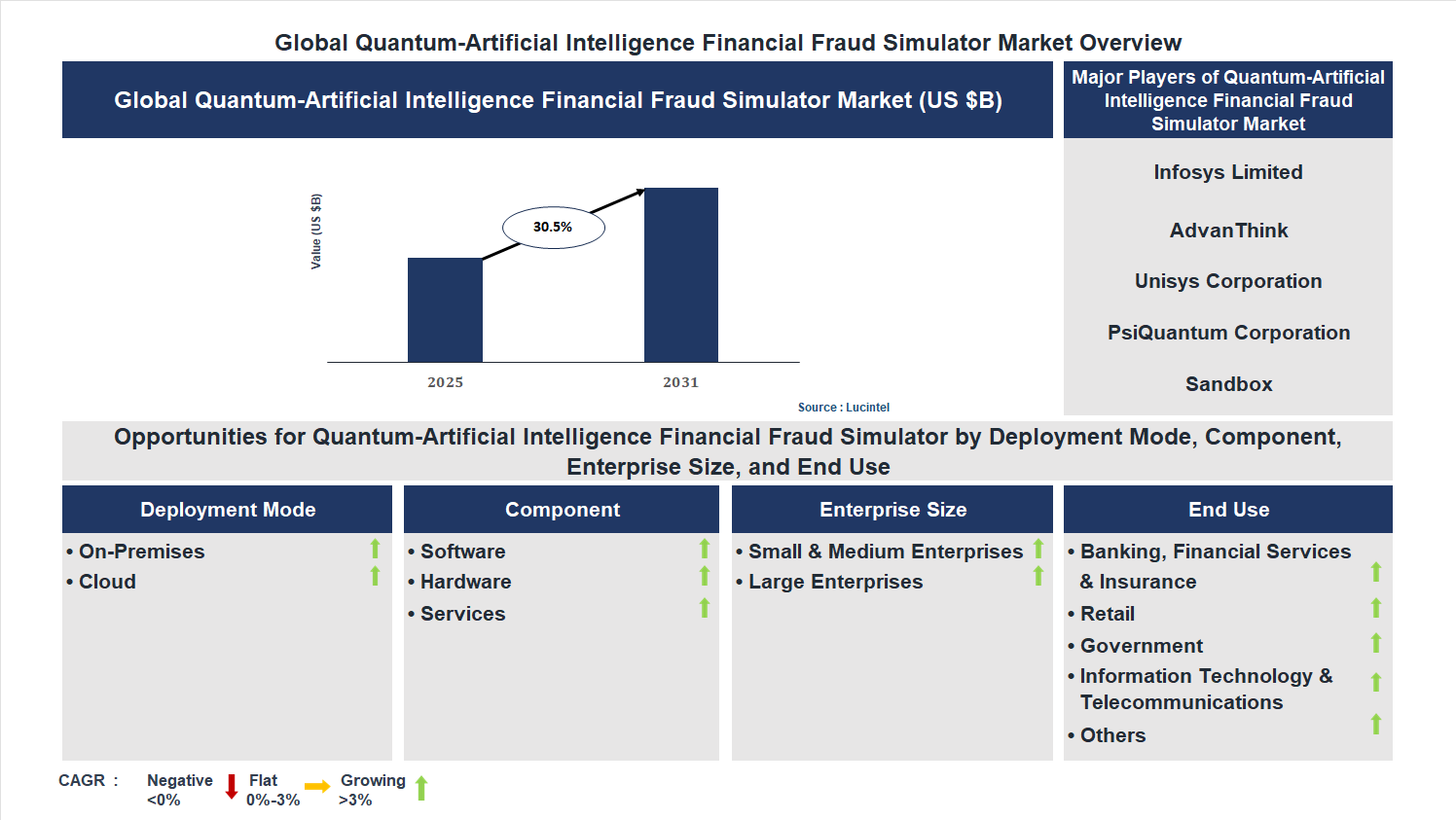
Key data points: The growth forecast = 30.5% annually for the next 7 years. Scroll below to get more insights. This market report covers trends, opportunities and forecasts in quantum-artificial intelligence financial fraud simulator market to 2031 by deployment mode (on-premises and cloud), component (software, hardware, and services), enterprise size (small & medium enterprises and large enterprises), end use (banking, financial services, & insurance, retail, government, information technology & telecommunications, and others), and region (North America, Europe, Asia Pacific, and the Rest of the World)
We'll send your sample report shortly.
• Lucintel forecasts that, within the deployment mode category, cloud is expected to witness higher growth over the forecast period.
• Within the end use category, banking, financial service, & insurance is expected to witness the highest growth.
• In terms of region, APAC is expected to witness the highest growth over the forecast period. Gain valuable insights for your business decisions with our comprehensive 150+ page report. Sample figures with some insights are shown below.
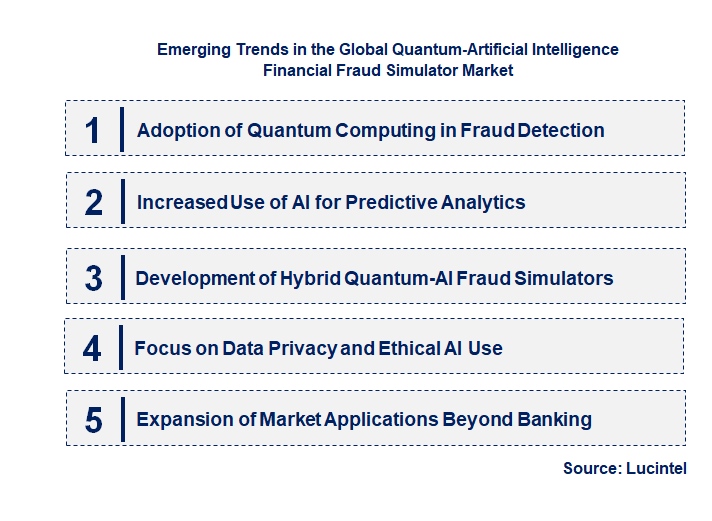
• Adoption of Quantum Computing in Fraud Detection: Quantum computing is being integrated into fraud detection systems to process vast datasets at unprecedented speeds. This allows for real-time analysis of complex transaction patterns, significantly improving the accuracy of fraud identification. Quantum algorithms can uncover subtle anomalies that classical systems might miss, reducing false positives and negatives. Financial institutions investing in quantum-enhanced simulators are gaining a competitive edge by proactively preventing fraud before it occurs. This trend is expected to accelerate as quantum hardware becomes more accessible and scalable.
• Increased Use of AI for Predictive Analytics: Artificial Intelligence is increasingly employed to develop predictive models that anticipate fraudulent activities before they happen. Machine learning algorithms analyze historical transaction data to identify emerging fraud patterns and adapt to new tactics used by fraudsters. This proactive approach enables financial firms to implement preventative measures, reducing financial losses and reputational damage. The integration of AI-driven predictive analytics into fraud simulators enhances their effectiveness, making them vital tools in the fight against evolving financial crimes. This trend underscores the shift toward more intelligent, adaptive security systems.
• Development of Hybrid Quantum-AI Fraud Simulators: Combining quantum computing with AI creates hybrid simulators that leverage the strengths of both technologies. These systems can simulate complex financial environments with high precision, testing various fraud scenarios rapidly and accurately. Hybrid simulators improve the robustness of fraud detection models by providing more realistic training data and testing environments. This synergy enhances the ability of financial institutions to prepare for sophisticated fraud schemes. As this technology matures, it is expected to become a standard component of advanced financial security infrastructure, offering unparalleled simulation capabilities.
• Focus on Data Privacy and Ethical AI Use: As fraud simulators handle sensitive financial data, there is a growing emphasis on ensuring data privacy and ethical AI deployment. Regulations such as GDPR and other data protection laws influence how data is collected, stored, and used in fraud detection systems. Financial firms are investing in privacy-preserving AI techniques, such as federated learning, to maintain compliance while still benefiting from AI insights. Ethical considerations also include transparency in AI decision-making processes to build trust with users. This trend highlights the importance of balancing innovation with responsible data management practices in the evolving market.
• Expansion of Market Applications Beyond Banking: The use of quantum-AI fraud simulators is expanding into other financial sectors such as insurance, asset management, and fintech startups. These applications help detect fraud in diverse financial products and services, broadening market reach. For example, insurance companies use simulators to identify fraudulent claims, while asset managers monitor suspicious trading activities. This diversification increases market size and encourages innovation across sectors. As the technology becomes more affordable and adaptable, its adoption is expected to grow, transforming fraud prevention strategies across the entire financial ecosystem. In summary, these trends are fundamentally reshaping the quantum-artificial intelligence financial fraud simulator market by enhancing detection capabilities, fostering innovation, and emphasizing responsible data use. The integration of quantum computing with AI is creating more powerful, predictive, and adaptable fraud prevention tools. As these developments continue, the market will become more sophisticated, secure, and inclusive, ultimately strengthening the integrity of global financial systems.
• Adoption of Quantum Computing in Fraud Detection: This development involves integrating quantum algorithms with AI models to enhance the speed and accuracy of fraud detection. Quantum computing's ability to process complex data sets rapidly allows for real-time analysis of suspicious activities, significantly reducing false positives and negatives. Financial institutions adopting this technology are gaining a competitive edge by identifying fraudulent transactions more efficiently. The impact is a more secure financial environment and improved customer trust, although high implementation costs remain a challenge.
• Development of AI-Driven Predictive Models: Advanced AI models are now capable of predicting potential fraudulent activities before they occur by analyzing historical data patterns. These models improve the proactive detection of fraud, minimizing financial losses and reputational damage. The use of machine learning algorithms enables continuous learning and adaptation to new fraud tactics. This development enhances the overall effectiveness of fraud prevention strategies, leading to more resilient financial systems and increased confidence among stakeholders.
• Regulatory Frameworks and Compliance Standards: Governments and regulatory bodies are establishing stricter guidelines for fraud detection technologies, emphasizing transparency and data security. These frameworks influence market growth by encouraging the adoption of compliant solutions that meet legal standards. Financial institutions are investing in systems that adhere to these regulations, fostering innovation in secure fraud detection methods. The impact is a more standardized approach across the industry, although compliance costs may pose barriers for smaller firms.
• Integration of Blockchain with Fraud Simulation: Blockchain technology is being integrated into fraud simulation platforms to ensure data integrity and transparency. This development allows for secure sharing of fraud-related data across institutions, facilitating collaborative detection efforts. Blockchain's decentralized nature reduces the risk of data tampering, enhancing trust in fraud detection processes. The impact is increased collaboration and more robust fraud prevention networks, although scalability and regulatory acceptance are ongoing concerns.
• Emergence of Cloud-Based Fraud Simulation Platforms: Cloud technology enables scalable, cost-effective deployment of fraud simulation tools. These platforms allow financial institutions to run complex simulations and training exercises without significant infrastructure investments. The flexibility and accessibility of cloud solutions support rapid updates and integration with existing systems. The impact is improved preparedness and agility in fraud detection, though data security and privacy issues require ongoing attention. In summary, these developments are significantly transforming the quantum-artificial intelligence financial fraud simulator market by enhancing detection capabilities, improving regulatory compliance, and fostering collaboration. The integration of quantum computing and AI is leading to faster, more accurate fraud prevention methods, while regulatory and technological innovations are creating a more secure and efficient financial environment. These trends are poised to drive continued growth and innovation in the market, ultimately strengthening the integrity of financial systems worldwide.
• Adoption of Quantum Computing in Fraud Detection: This opportunity involves integrating quantum computing with AI to analyze vast datasets rapidly, improving the accuracy and speed of fraud detection. It enhances the ability to identify complex, emerging fraud patterns, reducing false positives and increasing trust in financial systems.
• Development of Real-Time Fraud Prevention Solutions: Real-time analytics powered by AI and quantum algorithms enable instant detection and prevention of fraudulent activities. This reduces financial losses and enhances customer confidence by providing immediate responses to suspicious transactions.
• Expansion into Emerging Markets: Growing digital financial services in emerging economies present new opportunities for fraud simulation and prevention tools. Tailoring solutions to these markets can help financial institutions combat fraud more effectively and expand their customer base.
• Integration with Blockchain Technologies: Combining quantum-AI fraud simulators with blockchain enhances transparency and security. This integration can create tamper-proof records of transactions, making fraud more difficult and improving overall trust in financial networks.
• Customization of Fraud Simulation Models: Developing tailored simulation models for specific financial products and services allows institutions to better understand vulnerabilities. Customized solutions improve the precision of fraud detection and help in designing targeted prevention strategies. In summary, these growth opportunities are significantly impacting the quantum-artificial intelligence financial fraud simulator market by driving innovation, improving detection accuracy, and expanding market reach. They are enabling financial institutions to stay ahead of increasingly sophisticated fraud tactics, thereby strengthening security frameworks and fostering trust in digital financial ecosystems.
• Technological Innovation: Rapid advancements in quantum computing and AI enable the development of highly sophisticated fraud detection and simulation tools. These technologies allow for faster processing of large datasets, improved accuracy in identifying fraudulent activities, and the ability to simulate complex financial scenarios. As organizations seek to stay ahead of increasingly sophisticated cybercriminals, the integration of quantum and AI technologies becomes a critical differentiator, fueling market growth and innovation.
• Growing Digital Financial Transactions: The surge in digital banking, online payments, and mobile financial services has exponentially increased transaction volumes. This growth creates a larger attack surface for fraudsters, necessitating advanced simulation tools to predict, detect, and prevent fraudulent activities effectively. The rising demand for secure digital financial ecosystems directly propels the adoption of quantum-AI fraud simulators, making them indispensable for financial institutions.
• Regulatory Compliance and Security Standards: Governments and financial regulators worldwide are imposing stringent security and compliance requirements to protect consumer data and financial assets. These regulations compel financial institutions to adopt advanced fraud detection systems that can adapt to evolving threats. Quantum-AI simulators help organizations meet these standards by providing robust testing environments and ensuring compliance, thereby driving market expansion.
• Increasing Investment in Cybersecurity: Both private and public sectors are increasing their investments in cybersecurity infrastructure to combat rising cyber threats. Funding for research and development of quantum-AI solutions is growing, fostering innovation and deployment of advanced fraud simulation tools. This financial backing accelerates market growth, enabling the development of more effective and scalable solutions to combat financial fraud. The challenges facing this quantum-artificial intelligence financial fraud simulator market include:
• High Implementation Costs: Deploying quantum-AI fraud simulators requires significant capital investment in hardware, software, and skilled personnel. The costs associated with integrating these advanced technologies can be prohibitive for smaller financial institutions, limiting widespread adoption. Additionally, ongoing maintenance and updates add to the financial burden, potentially slowing market growth and innovation.
• Technological Complexity and Skill Gap: The integration of quantum computing and AI involves complex technical processes that require specialized expertise. A shortage of skilled professionals in quantum technologies and AI hampers the development, deployment, and maintenance of fraud simulators. This skill gap can delay implementation timelines and reduce the effectiveness of solutions, posing a significant challenge to market expansion.
• Evolving Cyber Threats and Regulatory Uncertainty: Cybercriminal tactics are continuously evolving, making it difficult for existing fraud simulation models to stay current. Additionally, regulatory frameworks are still developing around quantum computing and AI applications, creating uncertainty for market participants. This dynamic environment complicates strategic planning and investment, potentially hindering the growth of quantum-AI fraud simulation solutions. In summary, the quantum-artificial intelligence financial fraud simulator market is driven by technological innovation, increasing digital transactions, regulatory demands, and rising cybersecurity investments. However, high costs, technical complexity, and rapidly evolving threats pose substantial challenges. These factors collectively influence the pace and direction of market development, requiring stakeholders to balance innovation with strategic risk management. As technology matures and regulatory clarity improves, the market is poised for significant growth, provided these challenges are effectively addressed.
• Infosys Limited
• AdvanThink
• Unisys Corporation
• PsiQuantum Corporation
• Sandbox
• Quantinuum
• Hakkoda
• 1QB Information Technologies
• Pasqal SAS
• IonQ
• On-Premises
• Cloud
• Software
• Hardware
• Services
• Small & Medium Enterprises
• Large Enterprises
• Banking, Financial Services, & Insurance
• Retail
• Government
• Information Technology & Telecommunications
• Others
• North America
• Europe
• Asia Pacific
• The Rest of the World
• United States: The US has seen substantial investments from tech giants and financial institutions in quantum-AI fraud detection tools, with several startups emerging to develop advanced simulators. Federal agencies are funding research to improve quantum algorithms for fraud detection, and collaborations between academia and industry are accelerating innovation. The US market is also witnessing increased adoption of quantum-resistant security measures.
• China: China is rapidly advancing in quantum computing and AI integration, with government-backed initiatives aimed at developing quantum-enhanced fraud detection systems. Major tech firms are investing in quantum-AI research, and several pilot projects are underway to test new simulators capable of identifying complex financial fraud patterns. The country aims to become a global leader in quantum security applications.
• Germany: Germany's focus is on integrating quantum-AI solutions within its financial sector, emphasizing regulatory compliance and data security. Several research institutions are collaborating with industry partners to develop sophisticated fraud simulators that leverage quantum algorithms. The country is also investing in workforce training to support these emerging technologies.
• India: India is witnessing a surge in startups and government initiatives aimed at deploying quantum-AI tools for financial fraud detection. The emphasis is on creating cost-effective, scalable simulators suitable for diverse financial institutions. The government is also fostering partnerships with international firms to accelerate technological adoption and innovation.
• Japan: Japan is investing heavily in quantum computing research, with a focus on applying these advancements to financial security. Several corporations are developing quantum-AI fraud simulators that can detect and prevent complex schemes in real-time. The government is supporting these efforts through funding and policy initiatives to strengthen its financial cybersecurity infrastructure.


• Infosys Limited
• AdvanThink
• Unisys Corporation
• PsiQuantum Corporation
• Sandbox
• Quantinuum
• Hakkoda
• 1QB Information Technologies
• Pasqal SAS
• IonQ Q5. Which quantum-artificial intelligence financial fraud simulator market segment will be the largest in future? Answer: Lucintel forecasts that, within the deployment mode category, cloud is expected to witness higher growth over the forecast period. Q6. In quantum-artificial intelligence financial fraud simulator market, which region is expected to be the largest in next 5 years? Answer: In terms of region, APAC is expected to witness the highest growth over the forecast period. Q7. Do we receive customization in this report? Answer: Yes, Lucintel provides 10% customization without any additional cost.


Choose a license that fits your team. Instant PDF delivery.
Prices exclude taxes. Instant delivery. Custom licensing available on request.
Market Report · July 15, 2026
Market Report · June 26, 2026
Market Report · June 24, 2026
Trusted partner for strategic intelligence and business growth


Receive a complimentary market analysis tailored to your industry. Our analysts will identify key growth opportunities and competitive dynamics specific to your business.

Market size, growth rate, and key trend analysis for your specific sector.

Top competitor positioning and market share analysis.

Strategic recommendations backed by data-driven insights.
Get curated market intelligence and competitive moves straight to your inbox.
By subscribing, you agree to receive our monthly insights. Unsubscribe anytime.
Receive a complimentary market analysis tailored to your industry. Our analysts will identify key growth opportunities and competitive dynamics specific to your business.
Market size, growth rate, and key trend analysis for your specific sector.
Top competitor positioning and market share analysis.
Strategic recommendations backed by data-driven insights.
Get curated market intelligence, emerging trends, and competitive moves straight to your inbox each month.
By subscribing, you agree to receive our monthly insights. Unsubscribe anytime.
We'll send your sample report shortly.