
Market Report · May 18, 2026

This market report covers trends, opportunities, and forecasts in the global proton exchange membrane fuel cell market to 2031 by material technology (membrane electrode assembly, hardware, and others), application (automotive, portable, stationary, and others), and region (North America, Europe, Asia Pacific, and the Rest of the World)
We'll send your sample report shortly.
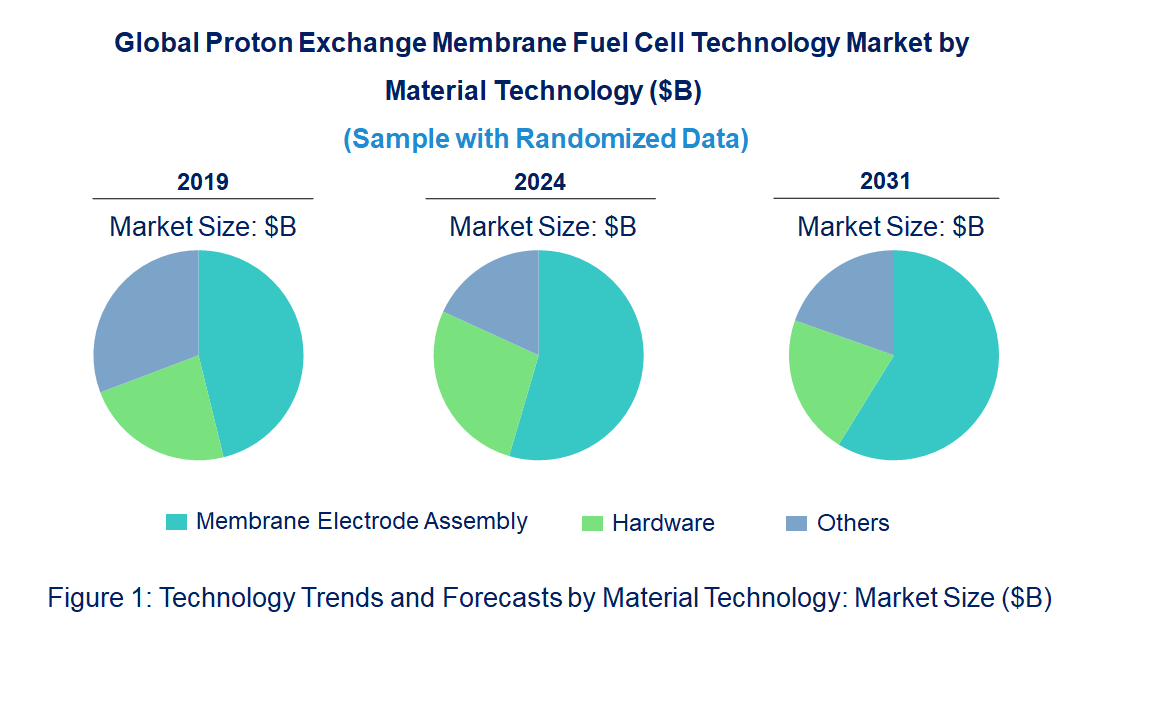
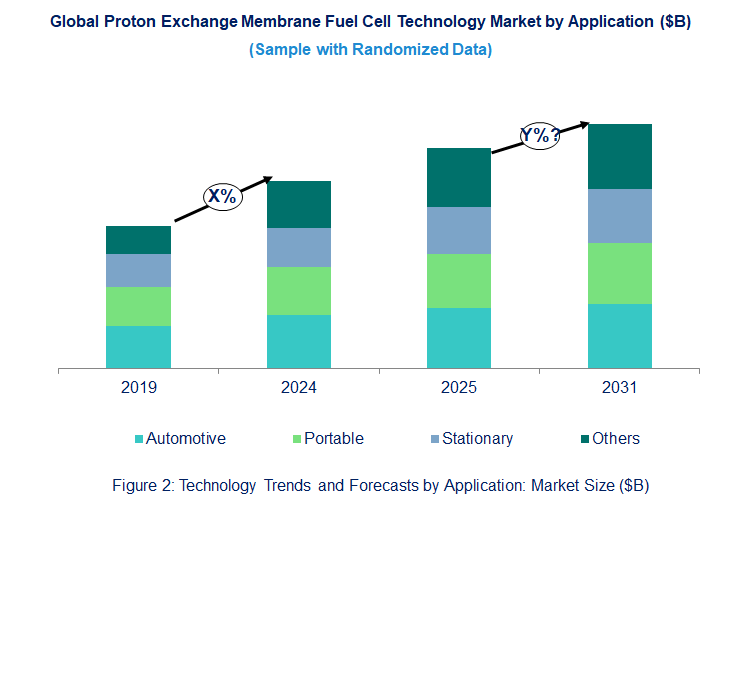
• Catalyst Technologies Advancement: The major trend in the PEM fuel cell market is the shift from platinum-based catalysts to non-precious metal catalysts. This development reduces the cost of fuel cells, making them commercially viable for automotive and stationary power systems.
• Enhanced Long-Term Reliability and Durability: Improved MEA durability and lifetime are considered critical steps toward the further commercialization of PEMFC technology. Service lifetimes of PEM systems have already increased with advances in MEAs, ensuring higher reliability for long-term applications in automotive and stationary markets.
• Integration with Hydrogen Infrastructure: As the hydrogen economy expands, PEM fuel cells are increasingly aligned with hydrogen production, storage, and distribution infrastructures. This integration is driving the adoption of PEM fuel cells, especially in the automotive sector, where hydrogen refueling infrastructure is essential for FCEVs.
• Miniaturization for Portable Applications: Advances in miniaturization have made PEM fuel cells smaller and more efficient, making them suitable for portable applications such as electronics and backup power systems. Their smaller sizes provide clean, reliable energy solutions for consumer electronics and off-grid power needs.
• Government Support and Policy Incentives: Governments around the world are offering financial incentives, subsidies, and regulatory support to encourage the development and deployment of PEM fuel cells in the automotive and stationary power sectors. This support is motivating further investments in research and development, along with infrastructure development. In conclusion, these emerging trends are reshaping the proton exchange membrane fuel cell market by making PEM fuel cells more affordable, durable, and widely applicable. Technological advancements in catalysts, durability, and miniaturization are driving the adoption of PEM fuel cells in key sectors, including automotive, portable devices, and stationary power generation.
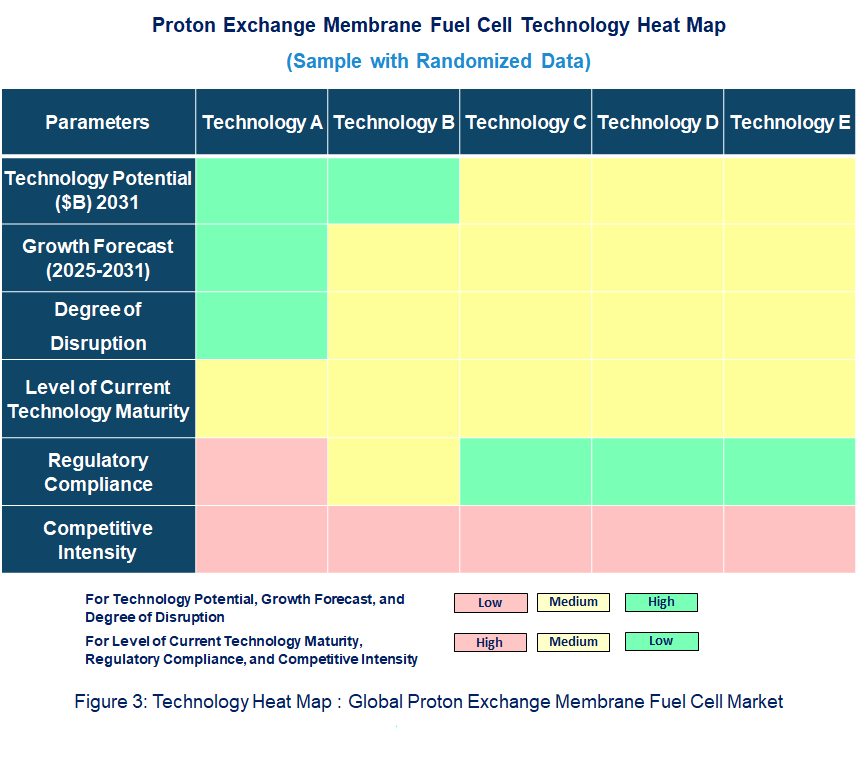
• Technology Potential: The potential of material technology in PEMFCs is significant. The improvement of materials, especially proton-conductive membranes and catalysts, can improve performance, lower costs, and increase the lifespan of fuel cells. Nanomaterials innovations, such as graphene-based membranes and platinum-free catalysts, will make PEMFCs more efficient and cheaper, making them more viable for widespread use in vehicles, backup power systems, and renewable energy applications.
• Degree of Disruption: The degree of disruption in the PEMFC market is moderate. Material innovations will significantly affect the performance and scalability of PEMFCs, but the technology is still competing with other energy sources. The main source of disruption comes from breakthroughs in material cost reductions and performance improvements.
• Technology Maturity: PEMFC technology is mature in terms of basic functionality, but material innovations are still evolving. Current fuel cell systems are deployed in niche applications, and while materials are improving, challenges remain in scalability and cost reduction.
• Regulatory Compliance: PEMFCs must comply with stringent environmental and safety regulations, such as those from the EPA and ISO, ensuring minimal emissions and safe operation. Standards for hydrogen storage, fuel cell efficiency, and recyclability are also essential for market acceptance and widespread deployment.
• Smart Energy focuses on the development of PEM fuel cell technology for both automotive and portable applications, particularly for UAV markets. Its hydrogen fuel cell systems are designed to provide efficient, lightweight power solutions for industries requiring long endurance and minimal emissions.
• Plug Power is expanding its portfolio of PEM fuel cell systems for the industrial, material handling, and transportation sectors. Their collaboration with companies such as Amazon and Walmart to deploy fuel cells in warehouse forklifts and other material handling equipment is driving the commercialization of PEM technology in the logistics sector.
• ITM Power is developing large-scale hydrogen electrolysis and PEM fuel cell systems for stationary power generation and industrial applications. Their focus is on integrated energy solutions that combine hydrogen production, storage, and fuel cell-based power generation for grid balancing and industrial uses.
• Ballard Power Systems has been expanding its presence in the commercial vehicle market, particularly for buses, trucks, and other heavy-duty vehicles. Its work on optimizing fuel cell stacks for higher efficiency and lower costs uniquely positions the company as a leader in the adoption of PEM fuel cells in mass transit and logistics.
• PowerCell Sweden is working to develop PEM fuel cell systems for both automotive and stationary applications, focusing on highly efficient and cost-effective power solutions. Currently, its partnerships with major automobile manufacturers are driving the broader application of fuel cells in passenger and commercial vehicles.
• Cummins has been investing heavily in fuel cell technologies, particularly through its acquisition of Hydrogenics. The company focuses on scaling PEM fuel cell systems for use in heavy-duty transportation, stationary power generation, and backup power solutions, positioning itself as a key player in the global fuel cell market.
• AVL is optimizing PEM fuel cell stacks for automotive applications, emphasizing performance maximization while minimizing manufacturing costs. The company is streamlining testing and validation of fuel cell systems for automakers, helping to bring these vehicles into greater production and use. These recent developments reflect the growing investment in PEM fuel cell technology, with key players making strides in automotive, industrial, and stationary power markets. Their efforts are central to driving the adoption of PEM fuel cells and advancing the global hydrogen economy.
• A mounting demand for clean energy solutions arises from the world’s growing shift toward cleaner sources of energy, which are supported by PEM fuel cells through zero-emission power generation. This demand is particularly strong in industries like automotive, which prioritize greenhouse gas reduction.
• Government Policies and Incentives: Financial incentives, subsidies, and government mandates for reducing emissions are encouraging investment in PEM fuel cell technology. Policies such as carbon pricing, emissions reduction targets, and infrastructure development initiatives are accelerating market growth.
• Technological Advancements in Fuel Cell Performance: Catalyst, membrane electrode assembly, and stack design improvements have significantly enhanced the performance, efficiency, and cost-effectiveness of PEM fuel cells. This has expanded the commercial viability of PEM technology across various sectors.
• Expansion of Hydrogen Infrastructure: With the expansion of hydrogen refueling infrastructure, especially in key European markets, Japan, and California, PEM fuel cells are gaining further space to dominate automotive and stationary operations. The development of widespread hydrogen networks is a key enabler for fuel cell vehicles. Challenges in the proton exchange membrane fuel cell market include:
• High Initial Costs: High costs for PEM fuel cells, largely driven by expensive materials like platinum and complex manufacturing, are one of the barriers to their wide adoption, particularly in cost-sensitive markets such as automotive.
• Lack of Hydrogen Infrastructure: The lack of hydrogen refueling stations is another challenge in the widespread use of PEM fuel cells, especially outside metropolitan areas, limiting applications for cars.
• Fuel Supply and Storage Issues: Hydrogen fuel supply and storage infrastructures are still in the early stages of development. The widespread use of this technology requires the development of efficient and cost-effective modes of hydrogen production, storage, and transportation. In conclusion, the proton exchange membrane fuel cell market is growing steadily due to the increasing demand for clean energy, government support, and technological improvements. However, challenges such as high costs, insufficient infrastructure, and fuel supply difficulties remain. The future looks promising, with full-scale market penetration expected in the automotive, stationary power generation, and portable appliance sectors.
• Intelligent Energy
• Plug Power
• ITM Power
• Ballard Power Systems
• PowerCell Sweden
• Cummins
• Technology Readiness by Technology Type of Different Technologies: Regarding technological readiness, the most highly developed component is the Membrane Electrode Assembly in the PEMFC market. Significant progress has been made in improving catalyst efficiency, membrane conductivity, and durability. Technology is well-established in fuel cell stacks applied in automotive and stationary power applications, though ongoing research focuses on reducing costs and enhancing longevity. Hardware, including the fuel cell stack and balance-of-plant systems, is developed but faces challenges like cost reduction, compactness, and integration with other systems. While commercialization is possible in specific markets, such as hydrogen-powered vehicles and backup power systems, PEMFCs are not yet as competitive in larger markets like grid-scale energy due to cost and efficiency barriers. Other technologies, such as alternative catalysts, new membranes, and novel strategies for integrating systems, are still under development but show promise for significant cost savings and performance improvements. As technology matures, further developments will make these technologies more competitive, with regulatory demands becoming ever more stringent due to tightening environmental and safety standards.
• Disruption Potential of Different Technologies: The disruption potential of technologies like Membrane Electrode Assembly (MEA), hardware, and others in the proton exchange membrane fuel cell (PEMFC) market lies in their ability to advance fuel cell performance, cost-effectiveness, and scalability. MEAs are central to PEMFCs, as they directly influence efficiency, power density, and durability. Innovations here could significantly lower costs and improve performance. Advances in hardware components, including stack and balance-of-plant systems, are crucial for achieving overall system reliability and integration, pushing PEMFCs toward widespread applications in transportation and stationary power generation. Other emerging technologies, like novel catalysts and new membrane materials, have the potential to lower fuel cell costs and enhance operational longevity, bringing disruption to the market. The overall disruption potential lies in enhancing the synergy of these technologies to create more reliable, cost-effective, and efficient PEMFCs for different applications.
• Competitive Intensity and Regulatory Compliance of Various Technologies: The competitive intensity in the PEMFC market is primarily driven by the race to innovate in key components like Membrane Electrode Assemblies (MEAs), hardware, and other associated technologies. MEAs are very competitive, with many manufacturers targeting improvements in catalyst performance, membrane durability, and overall efficiency to lower costs and increase power density. Hardware innovations, such as improved fuel cell stacks and balance-of-plant components, contribute to market competition, especially in large-scale applications like hydrogen-powered vehicles and stationary power systems. Regulatory compliance is a major consideration for all these technologies, especially in automotive and residential applications. PEMFCs must comply with stringent emissions and safety standards set by bodies like the EPA and European Union, ensuring their contribution to greenhouse gas emissions reduction and adherence to safety standards for market growth.
• Membrane Electrode Assembly
• Hardware
• Others
• Automotive
• Portable
• Stationary
• Others
• North America
• Europe
• Asia Pacific
• The Rest of the World
• Latest Developments and Innovations in the Proton Exchange Membrane Fuel Cell Technologies
• Companies / Ecosystems
• Strategic Opportunities by Technology Type


Choose a license that fits your team. Instant PDF delivery.
Prices exclude taxes. Instant delivery. Custom licensing available on request.
Market Report · May 18, 2026
Market Report · May 18, 2026
Market Report · May 18, 2026
Trusted partner for strategic intelligence and business growth


Receive a complimentary market analysis tailored to your industry. Our analysts will identify key growth opportunities and competitive dynamics specific to your business.

Market size, growth rate, and key trend analysis for your specific sector.

Top competitor positioning and market share analysis.

Strategic recommendations backed by data-driven insights.
Get curated market intelligence and competitive moves straight to your inbox.
By subscribing, you agree to receive our monthly insights. Unsubscribe anytime.
Receive a complimentary market analysis tailored to your industry. Our analysts will identify key growth opportunities and competitive dynamics specific to your business.
Market size, growth rate, and key trend analysis for your specific sector.
Top competitor positioning and market share analysis.
Strategic recommendations backed by data-driven insights.
Get curated market intelligence, emerging trends, and competitive moves straight to your inbox each month.
By subscribing, you agree to receive our monthly insights. Unsubscribe anytime.
We'll send your sample report shortly.