
Market Report · May 18, 2026

This market report covers trends, opportunities, and forecasts in the global projected capacitive screen market to 2031 by technology (multi-touch technology, gesture recognition, wet touch technology, and glove-friendly technology), application (smartphone, tablet computer, industrial, and others), and region (North America, Europe, Asia Pacific, and the Rest of the World)
We'll send your sample report shortly.
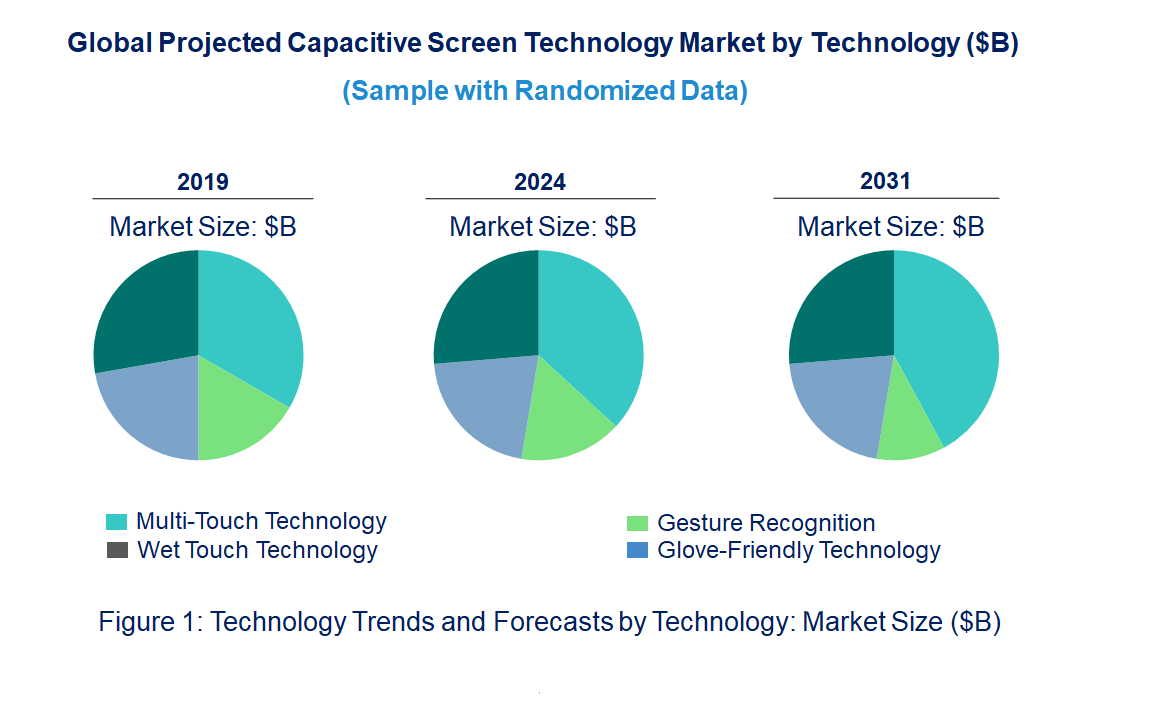
![Projected Capacitive Screen Market Trend and Forecast by Application [Value from 2019 to 2031]:](https://lucintel.com/images/Projected-Capacitive-Screen-Technology-Market-Segment.png "Projected Capacitive Screen Market Trend and Forecast by Application [Value from 2019 to 2031]:")
• Shift to Multi-Touch Technology: Multi-touch technology is now the standard for PCAP screens, allowing for multiple inputs simultaneously. This advancement has greatly improved the user experience with gestures such as pinch-to-zoom, swipe, and multitasking. The demand for multi-touch functionality is high in smartphones, tablets, and interactive kiosks, which offer more intuitive user interfaces and increased functionality.
• Gesture Recognition Integration: Gesture recognition is replacing traditional touch input, enabling users to control devices with hand movements or motions. This feature is being widely adopted in consumer electronics, automotive, and gaming industries, where hands-free operation provides greater convenience, hygiene, and accessibility. Gesture recognition technology is expected to change how individuals interact with devices, offering a more immersive experience.
• Wet and Glove-Friendly Technology: Wet-touch and glove-friendly technologies have broadened the application scope of PCAP screens, allowing them to detect inputs even in wet conditions or when users are wearing gloves. This is especially important for industries such as healthcare, manufacturing, and outdoor applications, where users often need to operate touchscreens in harsh environments. This trend is driving the demand for PCAP screens in industrial and rugged devices.
• Increased Use of Flexible and Curved Displays: Flexible and curved PCAP screens are becoming more popular in consumer electronics, automotive displays, and wearable devices. These displays offer a seamless, ergonomic experience by conforming to different surfaces and providing enhanced visual appeal. The trend toward flexible displays allows for innovative form factors, such as foldable smartphones and curved monitors, giving manufacturers greater design flexibility.
• Integration of Advanced Security Features: With the growing concern over cybersecurity, projected capacitive screens are increasingly being integrated with advanced security features such as biometric sensors, including fingerprint recognition and facial recognition. These features are particularly important in smartphones, laptops, and other portable devices where secure access is necessary. PCAP technology is being developed to support these features, enhancing both functionality and security in touch-enabled devices. The projected capacitive screen market is undergoing a major transformation driven by trends such as multi-touch interfaces, gesture recognition, wet and glove-friendly functionalities, flexible displays, and advanced security features. These innovations are fundamentally changing how users interact with devices, opening up a broader range of applications for PCAP screens across industries. As technology continues to advance, the PCAP market will evolve toward providing smarter, more adaptable solutions that meet the growing demand for intuitive, reliable, and secure touch interactions.
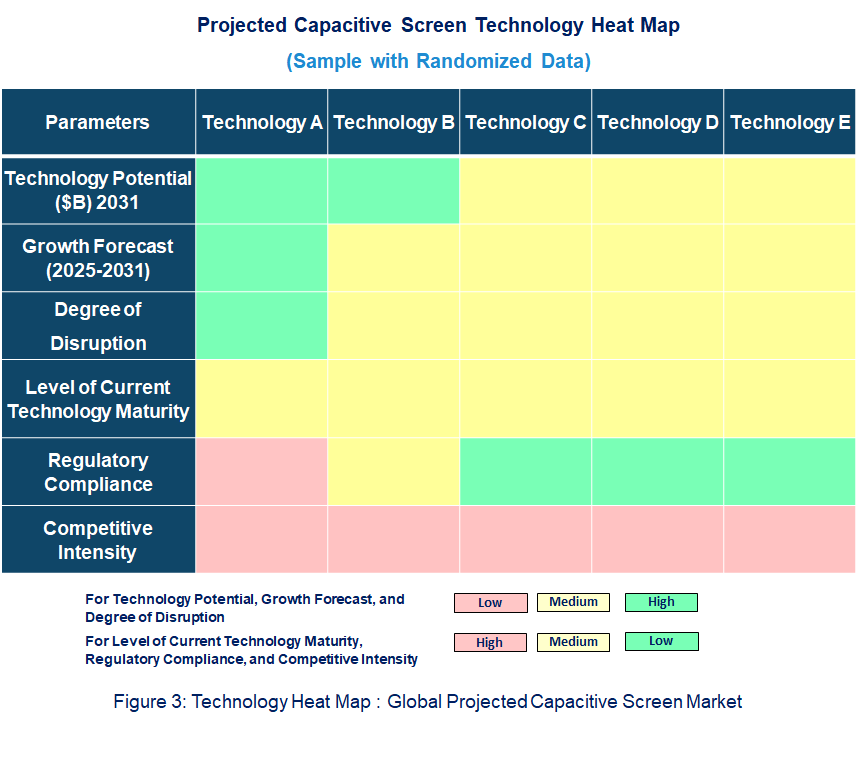
• Technology Potential: PCAP technology offers immense potential, enabling highly responsive and intuitive touch interfaces. It supports multi-touch, gesture recognition, and advanced security features, making it essential for a wide range of industries, from consumer electronics to healthcare. The ability to integrate with emerging technologies, like AI and biometric sensors, further enhances its utility.
• Degree of Disruption: The disruption potential of PCAP technology is substantial. It is replacing older resistive touch and mechanical interfaces, offering faster, more reliable, and user-friendly experiences. It is poised to reshape interactions in sectors such as automotive, gaming, healthcare, and wearables by introducing touch-free and more personalized experiences.
• Level of Current Technology Maturity: PCAP technology is highly mature, especially in consumer electronics. However, some areas, such as flexible and glove-friendly screens, are still evolving. Research and development continue to enhance durability, flexibility, and security.
• Regulatory Compliance: Regulatory standards are crucial in the PCAP market, particularly regarding safety, cybersecurity, and environmental sustainability. Compliance with international standards, such as RoHS and CE certifications, is essential to ensure product reliability and user protection across global markets.
• AD Metro: AD Metro has improved the strength and sensitivity of its projected capacitive screens. The company has been expanding its product range to include larger, more rugged PCAP displays for industrial and medical applications. By increasing the ruggedness of its screens, AD Metro is responding to the growing demand for reliable touch solutions in harsh environments, thereby improving the user experience across industries.
• 3M Touch Systems: 3M has brought innovations to the PCAP screen market by integrating multi-touch technology and enhancing optical clarity. The company focused on creating touch screens that are more resistant to dust and moisture, making them suitable for outdoor and industrial applications. As a result, 3M has emerged as a leader, driving the market for both consumer and commercial applications.
• AMT Touch: AMT Touch has placed greater emphasis on the flexibility and thinness of its projected capacitive screens. The company’s latest developments involve ultra-thin, bendable PCAP displays, which are ideal for wearables, automotive displays, and portable devices. By producing lightweight and flexible screens, AMT Touch improves design flexibility and opens up new opportunities for manufacturers.
• Touch International: Touch International has focused on developing highly sensitive, durable PCAP screens with optical clarity and low power consumption. The company has made significant progress in providing touch solutions for a broad range of applications, including aerospace, medical devices, and industrial equipment. By emphasizing energy efficiency and precision, Touch International continues to meet the demand for sustainable, high-performance touchscreens.
• Advantech: Advantech has been a prominent player in the industrial PCAP screen market, developing touchscreens for applications in factory automation, medical equipment, and transportation. The company has incorporated advanced features such as gesture recognition and enhanced multi-touch capabilities. Advantech’s focus on reliability and versatility positions it as a key provider of rugged and customized touch solutions in the industrial sector.
• DLC Display Co. Limited: DLC Display Co. Limited has recently focused on developing large-format projected capacitive screens for use in interactive kiosks and digital signage. The company’s commitment to enhancing touch accuracy and versatility in screen size has established it as a leader in the interactive display market. Ongoing innovations in large-scale PCAP technology are meeting the increasing demand for high-performance digital signage and self-service kiosks. These advancements illustrate the future direction of the projected capacitive screen market, as key players continue to push technological boundaries. Their focus on increasing strength, flexibility, multi-touch capabilities, and power efficiency will help shape the market’s future, with applications spanning consumer electronics to industrial and medical devices.
• Increasing Demand for Touch-Based Interfaces: This is one of the main drivers, as touch-based devices are being adopted across industries. Consumers and industries are demanding more responsive, intuitive, and durable touch solutions. With touch technologies becoming an integral part of consumer electronics, the demand for advanced PCAP screens will continue to increase, driving innovation in the sector.
• Technological Advances in Flexibility and Durability: The development of flexible and durable PCAP displays has enabled new applications in wearable devices, automotive systems, and industrial solutions. The ability to design flexible, robust, and responsive screens improves the user experience and unlocks new market opportunities, particularly in environments where conventional screens fail.
• Growth in Consumer Electronics: The demand for smartphones, tablets, and other smart devices is increasing rapidly, particularly with the rise of interactive touch interfaces. As a result, PCAP technology is crucial in enhancing the user experience, increasing its prevalence in the consumer electronics market. The trend toward multi-touch technology also boosts growth opportunities.
• Healthcare and Industrial Applications: PCAP technology is gaining more applications as it advances in healthcare, industrial automation, and medical devices. From operating room equipment to control panels in factories, the market is growing due to increasing demand for rugged and sensitive touchscreens that can withstand challenging environments.
• Gesture Recognition and Multi-Touch: The rise of gesture recognition and multi-touch capabilities is driving the future of PCAP screens. This innovation in touch experiences will play a major role in sectors like gaming, automotive, and smart home systems, where more complex methods of user interaction are required. Challenges in the projected capacitive screen market are:
• High Development and Manufacturing Costs: Even though there is rising demand for advanced PCAP technology, the high cost of development and manufacturing remains a serious challenge. The manufacturing process is complex; flexible, durable, and high-resolution touchscreens require a tremendous investment, which can be a barrier for smaller manufacturers and limit market growth.
• Technological Limitations in Harsh Environments: Despite its advancements, PCAP technology still faces limitations in extreme conditions, such as extreme temperature fluctuations, moisture, and exposure to chemicals. These challenges must be resolved to enable further expansion into industries like manufacturing, oil and gas, and medical applications.
• Competition and Market Saturation: As more players enter the market, competition is increasing. Established companies like 3M and Advantech face pressure from new entrants offering lower-priced solutions. Companies must innovate to remain competitive, resulting in price wars and low profit margins.
• Regulatory Compliance and Industry Standards: As the PCAP market grows, companies must comply with various regulatory and industry standards across different regions. Meeting safety standards—especially for medical and industrial applications—is critical but challenging, particularly when distributing solutions globally. The projected capacitive screen market is driven by advancements in technology, growing demand for touch-based interfaces, and the increasing number of applications across diverse industries. While there are opportunities in consumer electronics, healthcare, automotive, and flexible displays, challenges such as high costs, competition, and technological limitations must be addressed. These drivers and challenges are shaping the market, pushing for more innovative and cost-effective PCAP solutions.
• AD Metro
• 3M Touch Systems
• AMT Touch
• Touch International
• Advantech
• DLC Display Co.
• Technology Readiness by Technology Type in the Projected Capacitive Screen Market: The technology readiness of different projected capacitive screen technologies varies depending on the type and its applications. Multi-touch technology is highly mature and widely adopted in consumer electronics like smartphones, tablets, and interactive displays. It is well-integrated and ready for further innovation in terms of precision and sensitivity. Gesture recognition, while promising, is still in the development phase for mainstream applications, though it is seeing growing adoption in specialized sectors like automotive and gaming. Wet touch and glove-friendly technologies are gaining traction in industrial and healthcare environments where users face challenging conditions. These technologies are improving in terms of sensitivity and responsiveness, but still face limitations in extreme conditions such as high moisture or low temperatures. Competitive intensity is high for multi-touch and gesture recognition, but these technologies must meet stringent regulatory compliance standards, especially for the medical, industrial, and automotive sectors. Regulatory frameworks for these technologies are evolving, but consistent standards across regions remain a challenge. Each technology is advancing toward greater functionality and adoption, with multi-touch leading the market, while wet-touch and glove-friendly technologies are still gaining momentum in specific sectors.
• Competitive Intensity and Regulatory Compliance of Different Technologies: The projected capacitive screen market is highly competitive, with intense rivalry among technology providers offering solutions like multi-touch, gesture recognition, wet touch, and glove-friendly technologies. Companies must differentiate their products by offering enhanced performance, durability, and specialized features to stay ahead of the market. Multi-touch technology faces competition in terms of precision and speed, while gesture recognition is developing rapidly but requires significant investment for widespread adoption. Wet touch and glove-friendly technologies, though niche, are gaining popularity in industrial and healthcare applications where specific environmental needs are required. Regulatory compliance plays a critical role in ensuring safety, especially for medical and industrial applications. Standards for touch technologies, such as electromagnetic compatibility, environmental protection, and user safety, must be met to enter various markets. These regulations can limit the speed of adoption but ensure that only reliable, secure solutions are available for critical applications.
• Disruption Potential of Different Technologies in the Projected Capacitive Screen Market: The projected capacitive screen market is being significantly disrupted by advancements in technologies such as multi-touch, gesture recognition, wet touch, and glove-friendly technologies. Multi-touch technology enhances user interaction, enabling intuitive gestures like pinch-to-zoom and swipe, thus transforming user interfaces. Gesture recognition technology, which allows touch-free control, is revolutionizing industries like automotive, healthcare, and gaming by providing hands-free user experiences. Wet touch technology allows for touchscreen use even when the surface is wet, opening opportunities for use in outdoor and industrial environments. Glove-friendly technology, which enables touch functionality while wearing gloves, is particularly disruptive in industries such as healthcare, manufacturing, and defense, where workers need to operate devices in extreme conditions. These innovations are creating new applications and driving demand for more versatile and durable touch solutions across multiple industries, making the PCAP market more competitive and expansive.
• Multi-Touch Technology
• Gesture Recognition
• Wet Touch Technology
• Glove-Friendly Technology
• Smartphone
• Tablet Computer
• Industrial
• Others
• North America
• Europe
• Asia Pacific
• The Rest of the World
• Latest Developments and Innovations in the Projected Capacitive Screen Technologies
• Companies / Ecosystems
• Strategic Opportunities by Technology Type


Choose a license that fits your team. Instant PDF delivery.
Prices exclude taxes. Instant delivery. Custom licensing available on request.
Market Report · May 18, 2026
Market Report · May 18, 2026
Market Report · May 18, 2026
Trusted partner for strategic intelligence and business growth


Receive a complimentary market analysis tailored to your industry. Our analysts will identify key growth opportunities and competitive dynamics specific to your business.

Market size, growth rate, and key trend analysis for your specific sector.

Top competitor positioning and market share analysis.

Strategic recommendations backed by data-driven insights.
Get curated market intelligence and competitive moves straight to your inbox.
By subscribing, you agree to receive our monthly insights. Unsubscribe anytime.
Receive a complimentary market analysis tailored to your industry. Our analysts will identify key growth opportunities and competitive dynamics specific to your business.
Market size, growth rate, and key trend analysis for your specific sector.
Top competitor positioning and market share analysis.
Strategic recommendations backed by data-driven insights.
Get curated market intelligence, emerging trends, and competitive moves straight to your inbox each month.
By subscribing, you agree to receive our monthly insights. Unsubscribe anytime.
We'll send your sample report shortly.