
Market Report · May 18, 2026

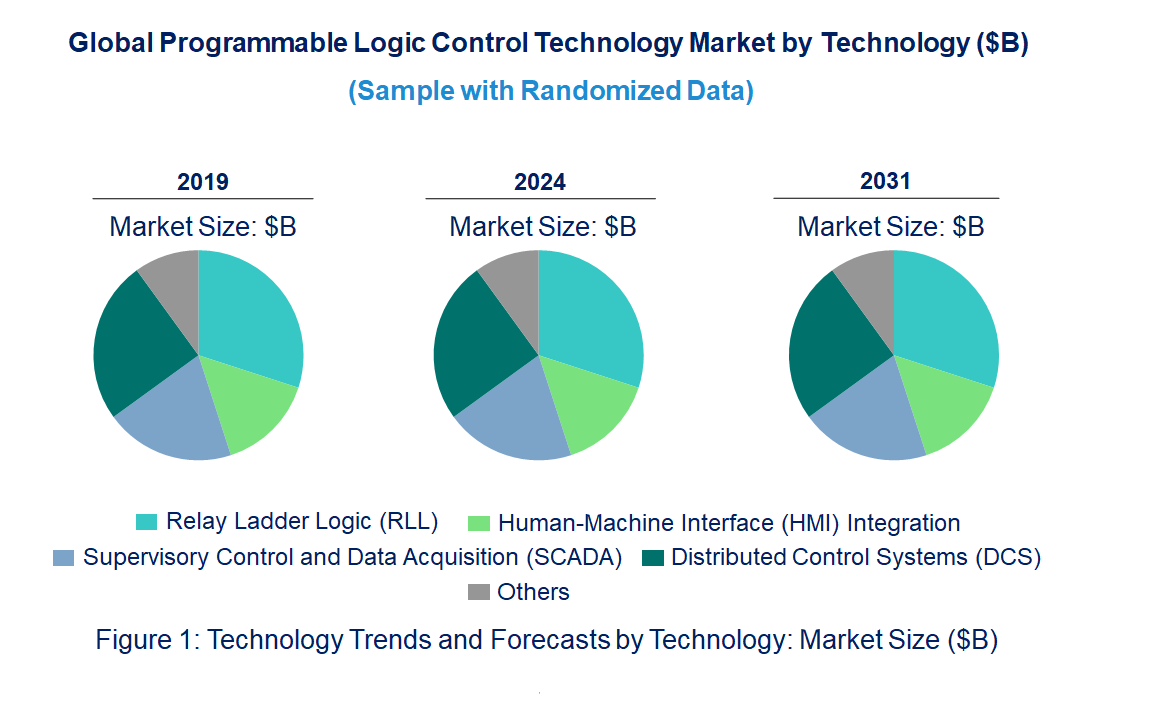
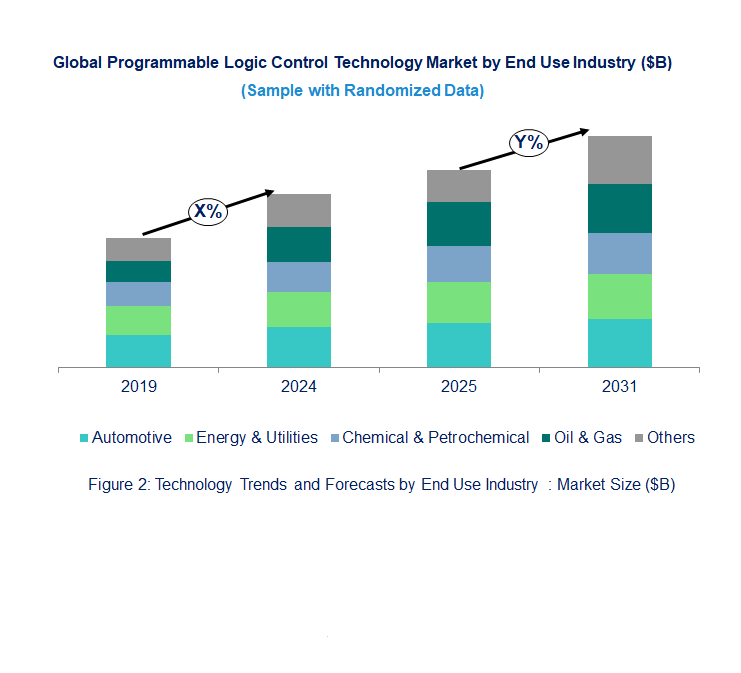
This market report covers trends, opportunities, and forecasts in the global programmable logic control market to 2031 by technology (relay ladder logic (rll), human-machine interface (hmi) integration, supervisory control and data acquisition (scada), distributed control systems (dcs), and others), end use (automotive, energy & utilities, chemical & petrochemical, oil & gas, pulp & paper, pharmaceutical, water & wastewater treatment, and others), and region (North America, Europe, Asia Pacific, and the Rest of the World)
We'll send your sample report shortly.
• Integration with IoT and Smart Devices: As IoT becomes more widespread, PLC systems are increasingly integrating with connected devices and sensors. This trend enables real-time data collection, analysis, and decision-making, improving process automation, predictive maintenance, and remote diagnostics.
• Cloud-based PLC Systems: The shift to cloud-based solutions is enabling remote monitoring and control of PLC systems. Cloud computing allows for better data storage, real-time updates, and remote troubleshooting, reducing the need for on-site maintenance and enhancing scalability.
• Edge Computing Integration: Edge computing enables data processing closer to the source, reducing latency and improving response time in PLC systems. This trend supports time-sensitive applications, allowing for faster decision-making and more efficient control of processes without relying solely on centralized cloud infrastructure.
• Advanced Human-Machine Interfaces (HMI): HMI technology is evolving to include more sophisticated, user-friendly interfaces with touchscreens, mobile apps, and voice control capabilities. These advancements are making it easier for operators to interact with PLC systems, monitor real-time data, and make adjustments with greater ease.
• Artificial Intelligence and Machine Learning (AI/ML) Integration: PLC systems are beginning to incorporate AI and ML algorithms for predictive maintenance, anomaly detection, and optimization of processes. These technologies allow PLCs to learn from historical data and improve system performance autonomously. These emerging trends are transforming the PLC landscape, enabling more intelligent, efficient, and flexible automation solutions. The integration of IoT, cloud computing, AI, and advanced HMI systems is enhancing operational efficiency and scalability while reducing downtime and manual intervention. As these technologies continue to evolve, they will drive further innovation, enabling businesses to meet the demands of increasingly complex industrial environments.
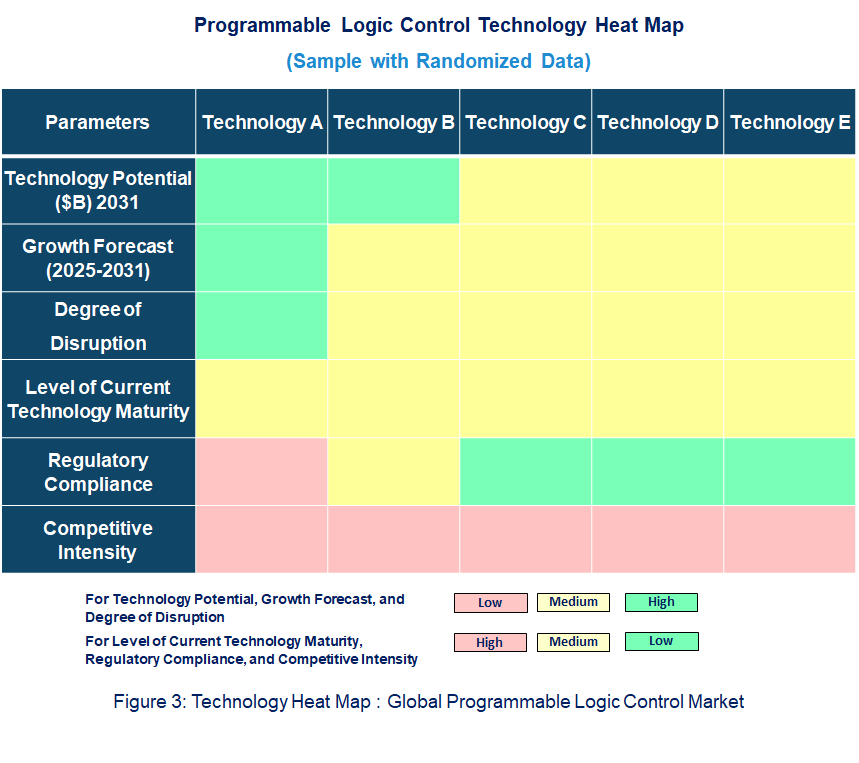
• Technology Potential : The programmable logic control (PLC) technology has immense potential in industrial automation, offering high scalability, reliability, and flexibility. With the integration of emerging technologies such as IoT, AI, and edge computing, PLC systems are evolving to handle increasingly complex tasks, optimize processes in real-time, and improve decision-making. The potential for PLC technology is significant, particularly as industries demand more automation in areas like manufacturing, energy, and transportation.
• Degree of Disruption: The degree of disruption introduced by PLC technology has been substantial over the past decades, but its ongoing evolution, driven by advancements like cloud connectivity and AI, will further transform industries. New capabilities such as predictive maintenance, real-time data analytics, and remote operation are shifting traditional industrial practices and providing companies with more control and insights into their operations.
• Current Technology Maturity Level: The current technology maturity of PLCs is relatively high, with systems that are robust, well-established, and widely adopted across industries. However, the ongoing integration of newer technologies like cloud computing, machine learning, and IoT indicates that PLC technology is continually advancing. These developments promise to push the boundaries of automation further, making PLC systems even more powerful and versatile.
• Regulatory Compliance: In terms of regulatory compliance, PLC systems must adhere to various industry-specific standards, including those related to safety, data privacy, and cybersecurity. As new features like cloud-based connectivity become more prevalent, ensuring regulatory compliance will be crucial for maintaining system security and performance across different sectors.
• ABB: It has introduced next-generation PLCs with integrated AI capabilities. The company’s systems are now designed to enhance predictive maintenance and optimize industrial processes. This development impacts industries by improving uptime and reducing operational costs.
• Delta Electronics: It has focused on integrating IoT into their PLC systems, allowing for cloud-based monitoring and control. This integration provides real-time data access, improving decision-making and enabling remote monitoring, thus enhancing operational flexibility and reducing downtime.
• Eaton Corporation: It has launched advanced PLC systems with built-in cybersecurity features. As industries become more reliant on digital systems, Eaton's focus on security ensures that their PLC systems comply with rigorous safety standards and are protected from cyber threats, which is crucial for data integrity.
• Emerson Electric: It has introduced PLCs that combine edge computing and IoT capabilities, enabling local data processing at the machine level. This development reduces latency, improves automation efficiency, and helps industries make quicker, more informed decisions.
• Fuji Electric: It has enhanced their PLC offerings by integrating machine learning and AI-driven algorithms. This addition helps optimize industrial operations, particularly in predictive maintenance and real-time fault detection, leading to higher system reliability and reduced operational disruptions. These developments demonstrate how PLC technology is evolving to meet the growing needs for enhanced automation, real-time control, cybersecurity, and predictive maintenance. The continuous integration of advanced technologies into PLC systems is helping industries improve operational efficiency, safety, and sustainability.
• Automation and Industry 4.0: The increasing adoption of automation and smart manufacturing practices is driving the demand for PLCs. These systems enable seamless control, monitoring, and data acquisition in manufacturing processes, enhancing efficiency and reducing human error.
• Integration with IoT and Cloud Computing: PLCs are being integrated with IoT and cloud computing, enabling real-time data exchange and remote monitoring. This helps manufacturers optimize processes and make data-driven decisions, fostering operational improvements.
• Increased Demand for Predictive Maintenance: The shift towards predictive maintenance, enabled by PLC systems, allows businesses to monitor equipment health and perform maintenance proactively. This reduces downtime, improves productivity, and cuts costs related to equipment failure.
• Rising Adoption in New Industries: PLC systems are being increasingly adopted in industries like energy management, automotive, and logistics. Their ability to automate complex systems across various sectors is expanding their market footprint.
• Advancements in Cybersecurity: As industrial systems become more interconnected, the need for robust cybersecurity features is growing. PLC systems with built-in security help prevent cyber-attacks, ensuring data integrity and system reliability. Challenges:
• Cybersecurity Risks: With the increasing digitization of industrial processes, PLCs are becoming prime targets for cyberattacks. Ensuring that these systems have strong security features is crucial to prevent data breaches and operational disruptions.
• High Initial Costs: The cost of implementing PLC systems, especially those with advanced features, can be prohibitive for small businesses. This poses a challenge to the widespread adoption of the technology in cost-sensitive industries.
• Complex Integration with Legacy Systems: Integrating PLC systems with existing infrastructure and legacy equipment can be a complex and costly process. Compatibility issues and the need for system overhauls can slow down adoption.
• Technological Complexity: Advanced PLC systems can be difficult to program and maintain, requiring specialized skills. As the technology evolves, businesses need to invest in training and upskilling their workforce. The PLC technology market is being reshaped by the demand for automation, predictive maintenance, and IoT integration, while overcoming challenges such as cybersecurity concerns and high implementation costs. These growth opportunities are driving the industry towards more intelligent, interconnected, and efficient systems, shaping the future of industrial automation and control.
• Abb
• Delta Electronics
• Eaton Corporation
• Emerson Electric
• Fuji Electric
• Hitachi
• Technology Readiness by Technology Type: Technology readiness by technology type for various technologies in programmable logic control (PLC), covering relay ladder logic (RLL), HMI Integration, SCADA, DCS, and Others, with highlights on competitive level, regulatory compliance, and key applications. Relay ladder logic highly mature and standardized in industrial automation, with strong regulatory acceptance and dominant use in discrete manufacturing and legacy systems. Human-machine Interface (HMI) Integration has reached offering intuitive visualization and control; it's highly competitive with vendors innovating in touchscreen, mobile, and IIoT-ready interfaces for manufacturing and utilities. SCADA systems are at TRL 9, widely adopted for real-time monitoring and control in power, water, and oil & gas; they meet strict cybersecurity and operational compliance standards (e.g., NERC CIP, IEC 62443). Distributed control systems (DCS) are also at essential in process industries like petrochemicals and pharmaceuticals, offering high redundancy and complying with industry-specific safety standards
• Disruption Potential of Different Technologies for Programmable Logic Control (PLC): Relay Ladder Logic (RLL) remains the cornerstone of traditional PLC programming but is gradually being replaced by more sophisticated technologies like HMI Integration and SCADA. HMI Integration enables users to interact with complex PLC systems via intuitive graphical interfaces, enhancing usability and performance. SCADA systems, offering centralized control over large-scale operations, are disrupting industries with their ability to monitor and control processes in real-time across multiple locations. Distributed Control Systems (DCS) offer a more decentralized approach, providing more flexibility and redundancy, especially in large industrial processes. These technologies are progressively shifting control processes from basic automation to smarter, more integrated solutions. With the rise of edge computing, real-time analytics, and IoT, PLC technology is undergoing significant transformation, making it more powerful and versatile. However, challenges like high implementation costs and integration complexities remain, slowing widespread disruption.
• Competitive Intensity and Regulatory Compliance: The competitive intensity in the programmable logic control market is high due to the ongoing integration of advanced technologies like RLL, HMI, SCADA, and DCS in diverse industries. Companies that successfully integrate these systems offer more robust, scalable, and adaptable solutions. Regulatory compliance, especially in industries like manufacturing and energy, requires adherence to standards like IEC 61131-3 for PLC programming and cybersecurity protocols for IoT-enabled PLCs. The industry is heavily regulated due to the critical nature of automation systems, with stringent rules for operational safety, data integrity, and system reliability. The increased focus on compliance standards adds complexity to the competitive landscape, driving innovations and upgrades to meet both performance and regulatory requirements.
• Relay Ladder Logic (RLL)
• Human-Machine Interface (HMI) Integration
• Supervisory Control and Data Acquisition (SCADA)
• Distributed Control Systems (DCS)
• Others
• Automotive
• Energy & Utilities
• Chemical & Petrochemical
• Oil & Gas
• Pulp & Paper
• Pharmaceutical
• Water & Wastewater Treatment
• Others
• North America
• Europe
• Asia Pacific
• The Rest of the World
• Latest Developments and Innovations in the Programmable Logic Control Technologies
• Companies / Ecosystems
• Strategic Opportunities by Technology Type


Choose a license that fits your team. Instant PDF delivery.
Prices exclude taxes. Instant delivery. Custom licensing available on request.
Market Report · May 18, 2026
Market Report · May 18, 2026
Market Report · May 18, 2026
Trusted partner for strategic intelligence and business growth


Receive a complimentary market analysis tailored to your industry. Our analysts will identify key growth opportunities and competitive dynamics specific to your business.

Market size, growth rate, and key trend analysis for your specific sector.

Top competitor positioning and market share analysis.

Strategic recommendations backed by data-driven insights.
Get curated market intelligence and competitive moves straight to your inbox.
By subscribing, you agree to receive our monthly insights. Unsubscribe anytime.
Receive a complimentary market analysis tailored to your industry. Our analysts will identify key growth opportunities and competitive dynamics specific to your business.
Market size, growth rate, and key trend analysis for your specific sector.
Top competitor positioning and market share analysis.
Strategic recommendations backed by data-driven insights.
Get curated market intelligence, emerging trends, and competitive moves straight to your inbox each month.
By subscribing, you agree to receive our monthly insights. Unsubscribe anytime.
We'll send your sample report shortly.