
Market Report · July 29, 2026

Key data points: The growth forecast = 4.7% annually for the next 6 years. Scroll below to get more insights. This market report covers trends, opportunities and forecasts in programmable IC market to 2031 by type (standalone memory chips, microcontrollers, and programmable logic), application (electronics & semiconductors, medical, network & communications, aerospace, and automotive), and region (North America, Europe, Asia Pacific, and the Rest of the World)
We'll send your sample report shortly.
• Lucintel forecasts that, within the type category, programmable logic is expected to witness the highest growth over the forecast period.
• Within the application category, automotive is expected to witness the highest growth.
• In terms of region, APAC is expected to witness the highest growth over the forecast period. Gain valuable insights for your business decisions with our comprehensive 150+ page report. Sample figures with some insights are shown below.

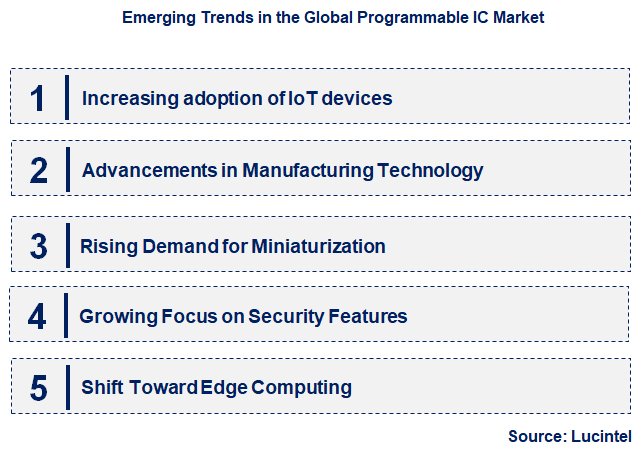
• Increasing adoption of IoT devices: The proliferation of IoT devices across sectors such as healthcare, manufacturing, and smart homes is driving demand for programmable ICs. These ICs enable customization and flexibility, allowing devices to perform complex functions efficiently. As IoT applications grow in complexity and volume, the need for adaptable integrated circuits becomes more prominent, leading to increased market opportunities and innovation in product offerings.
• Advancements in manufacturing technology: Innovations like smaller process nodes and improved fabrication techniques are enhancing the performance and reliability of programmable ICs. These technological improvements reduce costs and power consumption while increasing speed and integration density. Consequently, manufacturers can develop more sophisticated and energy-efficient products, expanding the application scope and competitiveness of programmable ICs in various markets.
• Rising demand for miniaturization: The trend toward smaller, more compact electronic devices necessitates highly integrated and miniaturized programmable ICs. This demand is driven by consumer electronics, wearables, and medical devices seeking portability and convenience. Advances in packaging and integration techniques are enabling the production of smaller ICs without compromising performance, thus opening new avenues for innovation and market expansion.
• Growing focus on security features: As programmable ICs are increasingly used in sensitive applications, security has become a critical concern. Market players are integrating advanced security features such as encryption, secure boot, and tamper resistance into their products. This focus on security enhances trust and compliance with regulatory standards, making programmable ICs more suitable for applications in finance, defense, and healthcare sectors.
• Shift toward edge computing: The rise of edge computing requires programmable ICs capable of processing data locally with low latency. This trend is driven by the need for real-time decision-making in autonomous vehicles, industrial automation, and smart cities. Programmable ICs designed for edge applications offer flexibility, power efficiency, and high performance, positioning them as essential components in the evolving digital infrastructure. In summary, these trends are transforming the programmable IC market by fostering innovation, enabling new applications, and improving performance and security. They are reshaping the competitive landscape, encouraging manufacturers to adopt advanced technologies and focus on customer-centric solutions. As these developments continue, the market is poised for sustained growth and diversification, reflecting the increasing importance of programmable integrated circuits in modern electronics.
• Growing Adoption in Consumer Electronics: The increasing integration of programmable ICs in smartphones, wearables, and smart home devices is expanding market reach. Consumers demand more personalized, efficient, and feature-rich products, which programmable ICs facilitate by enabling customization and rapid updates. This trend boosts sales and encourages manufacturers to innovate, leading to a broader product ecosystem and higher market penetration.
• Advancements in Semiconductor Technology: Innovations such as smaller process nodes and improved fabrication techniques are enhancing the performance and energy efficiency of programmable ICs. These technological improvements allow for more complex functionalities within smaller footprints, reducing costs and power consumption. As a result, industries like automotive and industrial automation benefit from more reliable, high-performance solutions, accelerating market growth.
• Rising Demand for IoT and AI Integration: The proliferation of IoT devices and AI applications necessitates flexible, programmable components capable of handling complex algorithms and data processing. Programmable ICs enable seamless integration of AI functionalities and connectivity features, fostering smarter, more autonomous systems. This demand is driving manufacturers to develop specialized ICs, significantly expanding the market scope and application diversity.
• Expansion in Automotive and Industrial Sectors: The automotive industry’s shift towards electric, autonomous, and connected vehicles relies heavily on programmable ICs for control systems, sensors, and communication modules. Similarly, industrial automation benefits from customizable solutions for robotics and process control. These sectors growth is creating substantial opportunities for market players, promoting innovation and increasing demand for versatile, high-performance programmable ICs.
• Increasing Focus on Miniaturization and Power Efficiency: The need for compact, energy-efficient devices is pushing the development of smaller, low-power programmable ICs. This trend is critical for portable electronics, wearables, and embedded systems, where space and battery life are constraints. Enhanced miniaturization and power management capabilities are enabling new product designs, expanding market applications, and fostering competitive advantages for manufacturers. These developments are significantly impacting the programmable IC market by driving innovation, expanding application areas, and improving device performance. The integration of advanced technologies and growing industry demands is fostering a dynamic environment that encourages investment and R&D. As a result, the market is poised for sustained growth, with increased adoption across sectors, leading to more versatile, efficient, and intelligent electronic solutions that shape the future of technology.
• Expansion into Emerging Markets: The programmable IC market is poised for growth in developing regions where electronic manufacturing is expanding. Increased investments in infrastructure, rising consumer electronics adoption, and government initiatives to promote local manufacturing create opportunities for market players to establish a foothold. Tailoring products to meet regional needs and establishing local partnerships will be crucial for capturing market share and driving revenue growth in these emerging economies.
• Integration with IoT and Smart Devices: The proliferation of Internet of Things (IoT) devices and smart technologies presents a significant growth avenue for programmable ICs. These ICs enable customization, energy efficiency, and enhanced connectivity, making them ideal for IoT applications. As industries adopt smart solutions for automation, healthcare, and home automation, demand for flexible, programmable chips will surge, encouraging manufacturers to develop specialized ICs that meet the unique requirements of these interconnected systems.
• Advancements in Automotive Electronics: The automotive industry is increasingly reliant on programmable ICs for applications such as advanced driver-assistance systems (ADAS), electric vehicles, and infotainment systems. The shift towards autonomous vehicles and electrification demands highly reliable, customizable, and high-performance ICs. Market growth will be driven by innovations in automotive-grade programmable ICs that support safety, connectivity, and energy management, enabling automakers to develop smarter, safer vehicles.
• Development of High-Performance and Low-Power ICs: The demand for high-performance yet energy-efficient programmable ICs is rising across sectors like data centers, consumer electronics, and industrial automation. Innovations in materials and design techniques are enabling the production of chips that deliver superior processing capabilities while minimizing power consumption. This balance is critical for extending device battery life, reducing operational costs, and supporting sustainable technology initiatives, thereby fueling market expansion.
• Strategic Collaborations and Acquisitions: Market players are increasingly engaging in strategic partnerships, mergers, and acquisitions to enhance technological capabilities and expand product portfolios. Collaborations with technology firms, research institutions, and end-users facilitate innovation and accelerate time-to-market for new programmable IC solutions. These strategic moves help companies stay competitive, access new markets, and leverage shared expertise, ultimately driving overall market growth and fostering a more dynamic, innovation-driven industry landscape. The overall impact of these opportunities will significantly accelerate the growth trajectory of the programmable IC market, fostering innovation, expanding application domains, and enabling manufacturers to meet evolving technological demands across various industries.
• Technological Innovation: The continuous evolution of programmable integrated circuits, such as FPGAs and CPLDs, enables higher performance, lower power consumption, and greater flexibility. These innovations meet the growing demand for customized, application-specific solutions across sectors like telecommunications, automotive, and consumer electronics. As technology advances, manufacturers can develop more sophisticated ICs that support complex algorithms and real-time processing, fueling market expansion. The ability to upgrade and reprogram devices remotely also reduces costs and enhances product lifecycle management, making programmable ICs increasingly attractive to a broad range of industries.
• Growing IoT and Smart Devices: The surge in Internet of Things (IoT) devices and smart systems is a major driver for programmable ICs. These devices require adaptable hardware that can be updated and reconfigured to support evolving functionalities. Programmable ICs provide the flexibility needed for diverse applications such as smart homes, wearable technology, and industrial automation. As IoT adoption accelerates globally, the demand for customizable, scalable, and energy-efficient ICs rises, directly contributing to market growth. This trend is further supported by the increasing need for secure and reliable connectivity solutions in interconnected systems.
• Increasing Adoption in Automotive and Aerospace: The automotive industry’s shift towards electric, autonomous, and connected vehicles relies heavily on programmable ICs for real-time data processing, sensor integration, and control systems. Similarly, aerospace applications demand high-reliability, radiation-tolerant programmable ICs for navigation, communication, and safety systems. The ability to reprogram and update these ICs remotely enhances vehicle safety and performance while reducing maintenance costs. As these sectors expand their technological capabilities, the demand for advanced programmable ICs is expected to grow significantly, driving innovation and market expansion.
• Cost Reduction and Manufacturing Advancements: Advances in semiconductor fabrication techniques have led to reductions in production costs for programmable ICs. Economies of scale, improved manufacturing processes, and increased competition have made these components more affordable for a wide range of applications. Lower costs enable broader adoption across consumer electronics, industrial equipment, and other sectors, fueling market growth. Additionally, the integration of programmable ICs into mainstream products is facilitated by cost-effective solutions, encouraging innovation and diversification of applications, which further propels the market forward.
• Rising Demand for Customization and Flexibility: Modern electronic systems require tailored solutions to meet specific performance, size, and power requirements. Programmable ICs offer unparalleled flexibility, allowing designers to customize functionalities post-manufacture. This adaptability reduces time-to-market and development costs, making them highly attractive for rapid product deployment. The increasing complexity of electronic systems and the need for rapid updates in response to technological changes make programmable ICs indispensable. As a result, the market benefits from heightened demand for versatile, upgradeable, and application-specific integrated circuits. The challenges facing this Programmable IC Market include:-
• Supply Chain Disruptions: The global semiconductor supply chain has faced significant disruptions due to geopolitical tensions, pandemics, and logistical issues. These disruptions lead to shortages of raw materials, delays in manufacturing, and increased costs, which hinder the timely delivery of programmable ICs. Such challenges impact product availability and can slow down innovation cycles. Companies may also face difficulties in maintaining inventory levels, affecting customer satisfaction and market competitiveness. Overcoming these supply chain issues requires strategic planning, diversification of suppliers, and investment in local manufacturing capabilities.
• Rapid Technological Obsolescence: The fast-paced nature of technological advancements in programmable ICs results in frequent product obsolescence. Companies must continuously innovate to stay competitive, which can lead to increased R&D costs and shorter product lifecycles. This rapid evolution also creates challenges in managing inventory and supporting legacy systems. Customers may hesitate to invest in new solutions if they perceive the risk of obsolescence, impacting sales and market stability. Balancing innovation with product longevity remains a critical challenge for market players.
• Regulatory and Security Concerns: Increasing regulatory standards related to data security, energy efficiency, and environmental impact impose additional compliance burdens on manufacturers. Ensuring that programmable ICs meet these evolving standards requires ongoing R&D and certification processes, which can be costly and time-consuming. Moreover, security vulnerabilities in programmable ICs pose risks of cyberattacks, especially in critical applications like automotive and aerospace. Addressing these concerns necessitates robust security protocols and compliance strategies, adding complexity to product development and deployment. In summary, the programmable IC market is driven by technological innovation, the proliferation of IoT, automotive and aerospace applications, cost reductions, and the need for customization. However, it faces challenges such as supply chain disruptions, rapid obsolescence, and regulatory/security issues. These factors collectively influence the market’s growth trajectory, requiring stakeholders to adapt strategically. While expansion opportunities are substantial, addressing the challenges effectively will be crucial for sustained success and innovation in this dynamic industry.
• Microchip
• iC-Haus
• Atmel
• Cirrus Logic
• CML Microcircuits
• eGalax_eMPIA Technology Inc.
• ADI
• Trenz Electronic GmbH
• Diodes Incorporated
• AMAC ASIC- und Mikrosensoranwendung Chemnitz GmbH
• Standalone Memory Chips
• Microcontrollers
• Programmable Logic
• Electronics & Semiconductors
• Medical
• Network & Communications
• Aerospace
• Automotive
• North America
• Europe
• Asia Pacific
• The Rest of the World
• United States: The US leads in innovation with major players like Xilinx and Intel expanding their product portfolios. Investment in AI and 5G applications has driven demand for advanced programmable ICs. The government’s focus on semiconductor research and development, along with collaborations between academia and industry, has fostered a robust ecosystem. Additionally, US companies are increasingly focusing on edge computing and data centers, boosting market growth.
• China: China is rapidly advancing its programmable IC industry through substantial government support and domestic manufacturing initiatives. Companies like Huawei and SMIC are investing in developing indigenous solutions to reduce reliance on foreign technology. The country emphasizes AI, 5G, and IoT applications, leading to increased production and innovation in programmable ICs. Strategic partnerships and acquisitions are also strengthening China’s market position.
• Germany: Germany’s market growth is driven by its strong automotive and industrial sectors, which require high-performance programmable ICs for automation and smart manufacturing. Leading firms are focusing on developing energy-efficient and reliable solutions. The country’s emphasis on Industry 4.0 and digitalization initiatives has created a favorable environment for market expansion. Collaboration between research institutions and industry players is fostering innovation.
• India: India is witnessing rapid growth in the programmable IC market, supported by government initiatives like Make in India and Digital India. The focus is on developing indigenous design capabilities and attracting foreign investment. The expanding electronics manufacturing sector and increasing adoption of IoT and smart devices are fueling demand. Startups and local firms are increasingly involved in R&D, contributing to market diversification and growth.
• Japan: Japan maintains a strong position in the programmable IC market through its advanced semiconductor manufacturing capabilities. Companies like Renesas and Sony are innovating in automotive, consumer electronics, and industrial applications. The country emphasizes energy efficiency and miniaturization, aligning with global trends. Government policies support R&D and international collaboration, ensuring Japan’s continued competitiveness in the evolving market.


• Microchip
• iC-Haus
• Atmel
• Cirrus Logic
• CML Microcircuits
• eGalax_eMPIA Technology Inc.
• ADI
• Trenz Electronic GmbH
• Diodes Incorporated
• AMAC ASIC- und Mikrosensoranwendung Chemnitz GmbH Q5. Which programmable IC market segment will be the largest in future? Answer: Lucintel forecasts that, within the type category, programmable logic is expected to witness the highest growth over the forecast period. Q6. In programmable IC market, which region is expected to be the largest in next 5 years? Answer: In terms of region, APAC is expected to witness the highest growth over the forecast period. Q7. Do we receive customization in this report? Answer: Yes, Lucintel provides 10% customization without any additional cost.


Choose a license that fits your team. Instant PDF delivery.
Prices exclude taxes. Instant delivery. Custom licensing available on request.
Market Report · July 29, 2026
Market Report · July 20, 2026
Market Report · July 20, 2026
Trusted partner for strategic intelligence and business growth


Receive a complimentary market analysis tailored to your industry. Our analysts will identify key growth opportunities and competitive dynamics specific to your business.

Market size, growth rate, and key trend analysis for your specific sector.

Top competitor positioning and market share analysis.

Strategic recommendations backed by data-driven insights.
Get curated market intelligence and competitive moves straight to your inbox.
By subscribing, you agree to receive our monthly insights. Unsubscribe anytime.
Receive a complimentary market analysis tailored to your industry. Our analysts will identify key growth opportunities and competitive dynamics specific to your business.
Market size, growth rate, and key trend analysis for your specific sector.
Top competitor positioning and market share analysis.
Strategic recommendations backed by data-driven insights.
Get curated market intelligence, emerging trends, and competitive moves straight to your inbox each month.
By subscribing, you agree to receive our monthly insights. Unsubscribe anytime.
We'll send your sample report shortly.