
Market Report · July 29, 2026

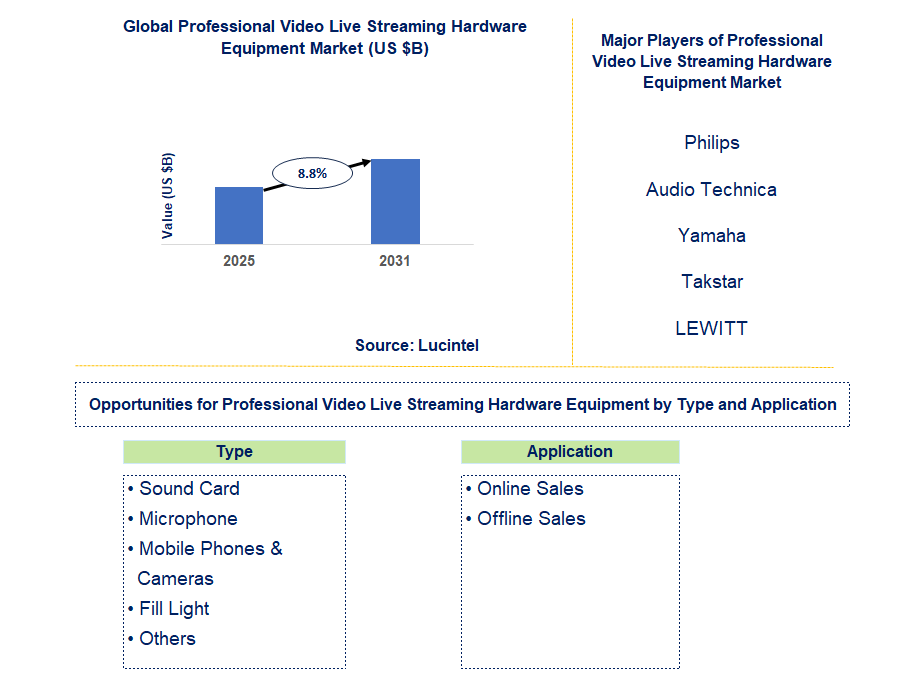
Key data points: The growth forecast = 8.8% annually for the next 7 years. Scroll below to get more insights. This market report covers Trends, opportunity and forecast in professional video live streaming hardware equipment market to 2031 by type (sound card, microphone, mobile phones & cameras, fill light, and others), application (online sales and offline sales), and region (North America, Europe, Asia Pacific, and the Rest of the World)
We'll send your sample report shortly.
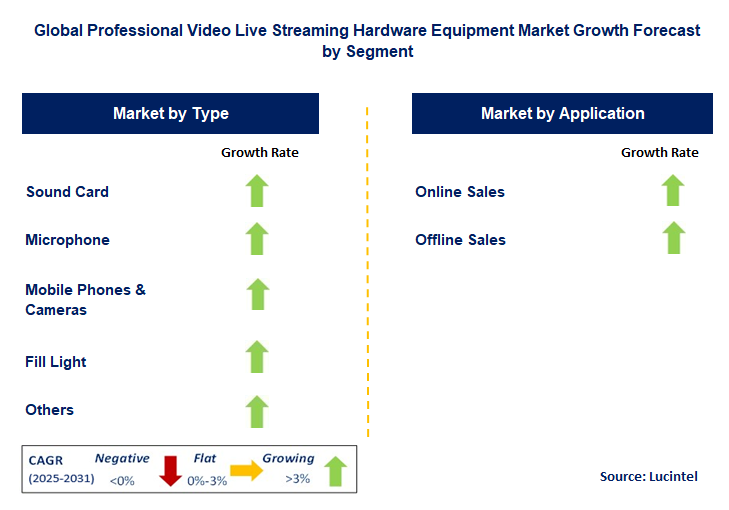
• Lucintel forecasts that, within the type category, the sound card is expected to witness the highest growth over the forecast period.
• Within the application category, online sale is expected to witness higher growth.
• In terms of region, APAC is expected to witness the highest growth over the forecast period. Gain valuable insights for your business decisions with our comprehensive 150+ page report. Sample figures with some insights are shown below.
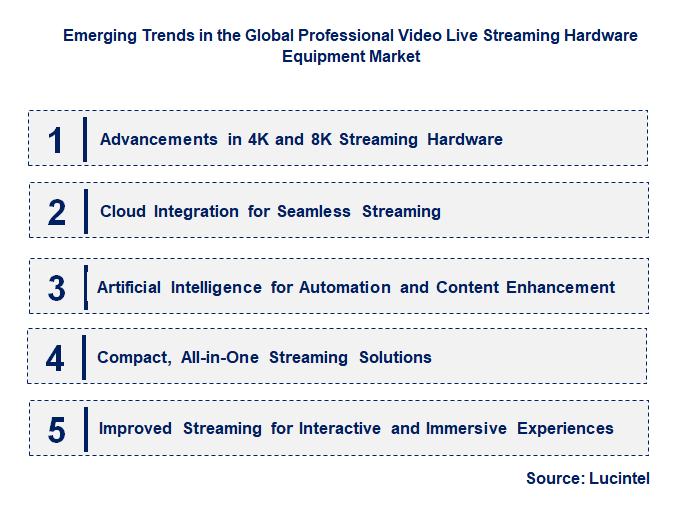
• Advancements in 4K and 8K Streaming Hardware: With the rise in demand for ultra-high-definition (UHD) content, 4K and 8K video streaming hardware are seeing increased adoption. Professional video live streaming hardware is now being optimized to handle high-resolution content, providing sharper, more immersive experiences for audiences. Cameras, encoders, and switchers capable of delivering 4K and 8K video are crucial for live event streaming, eSports, and high-end broadcasting. These advancements not only meet consumer demand for higher-quality content but also enable content creators to future-proof their operations, positioning them for long-term success in the market.
• Cloud Integration for Seamless Streaming: Cloud technology is reshaping the way live streaming hardware operates by providing scalable, flexible solutions. Cloud-based streaming services allow for remote production, reducing the need for large on-site equipment setups and enabling professional-quality streams from anywhere. The integration of cloud services into hardware platforms enhances collaboration, improves data management, and ensures better distribution efficiency. Streaming companies and content creators can access advanced hardware and services without the high upfront costs of traditional setups, driving accessibility and flexibility in the market.
• Artificial Intelligence for Automation and Content Enhancement: AI technology is becoming a key trend in professional video live streaming. AI-powered hardware solutions, such as cameras with automatic framing, lighting adjustment, and intelligent audio mixing, are enhancing the production process. These technologies improve operational efficiency by automating manual tasks and providing a more polished output with minimal intervention. AI tools also assist in streamlining content management and enabling real-time content enhancement, such as automated highlights in sports broadcasts. This trend is accelerating the adoption of intelligent hardware by professional broadcasters and content creators seeking high-quality, cost-effective solutions.
• Compact, All-in-One Streaming Solutions: The demand for compact, portable live streaming equipment is growing as professionals seek mobile, all-in-one solutions that simplify setups without compromising performance. Equipment such as portable encoders, compact cameras, and mobile video production kits allow content creators to stream high-quality video from almost anywhere. These solutions are perfect for on-the-go live events, interviews, and corporate broadcasts. By offering integrated solutions in smaller, easier-to-carry packages, these products appeal to a wide range of users, from independent creators to large-scale enterprises looking to simplify production workflows.
• Improved Streaming for Interactive and Immersive Experiences: Interactive and immersive live streaming experiences are gaining traction, especially with the rise of virtual events, gaming, and social streaming platforms. Hardware that supports augmented reality (AR), virtual reality (VR), and interactive streaming experiences is becoming more prevalent. By integrating these immersive technologies with live streaming hardware, content creators can offer engaging and interactive content that attracts viewers. The trend towards more immersive video experiences is reshaping how live streams are consumed and creating new opportunities for advertisers and broadcasters to connect with audiences in innovative ways. The professional video live streaming hardware equipment market is being transformed by a combination of technological innovations and evolving consumer demands. Advancements in 4K/8K capabilities, cloud integration, AI automation, compact solutions, and immersive streaming experiences are reshaping the market landscape. These trends make live streaming more accessible, efficient, and interactive, enabling professionals across various industries to deliver high-quality content. The increased demand for flexible, scalable, and immersive streaming solutions positions these technologies as essential components of modern broadcasting and online content creation, creating new growth opportunities and competition in the market.
• Rise of 5G and Remote Production: The rollout of 5G technology has transformed live streaming by providing ultra-low latency and higher data transfer speeds. This has enabled remote production models, where video production teams can operate from distant locations without compromising on stream quality. Professionals can now use mobile devices for high-quality live streaming, with real-time production capabilities and minimal delay. The ability to transmit live video remotely without being physically at the event offers significant cost savings and operational flexibility. This trend will continue, particularly in sports and large-scale event broadcasting.
• Advancement in 4K and 8K Streaming Solutions: As consumer demand for ultra-high-definition video grows, the adoption of 4K and 8K live streaming hardware has surged. Key players such as Blackmagic Design, AJA Video Systems, and Sony have introduced cutting-edge equipment capable of handling 4K and even 8K streams. These advancements provide crystal-clear, immersive video quality for broadcasters, content creators, and entertainment platforms. High-definition streaming has become a significant differentiator for professional live streaming businesses, allowing them to cater to premium audiences and attract new viewers seeking top-tier video quality in real-time broadcasts.
• Cloud Integration and Streaming Services: Cloud-based live streaming solutions have gained significant traction in recent years. Cloud integration allows for seamless video encoding, storage, and distribution while reducing the need for on-site hardware. Companies like AWS and Google Cloud are offering dedicated services for video streaming, including cloud-based video production, editing, and management. These innovations enable content creators to scale up production effortlessly, improve stream reliability, and lower infrastructure costs. Additionally, they support multi-device compatibility, ensuring content reaches global audiences with minimal disruption.
• AI and Automation in Live Streaming: The introduction of artificial intelligence (AI) in live streaming hardware is revolutionizing video production workflows. AI tools are now embedded in cameras, encoders, and mixers to automate tasks such as camera tracking, switching, and real-time content analysis. This reduces the need for manual operation and allows for smoother, more efficient productions. For example, AI-powered video cameras can automatically adjust to changes in lighting or subject movement, while AI-driven video editing can create dynamic highlights during sports events or live concerts. The result is higher-quality content with less manual effort.
• Increased Focus on Mobile Live Streaming Equipment: With the rise of social media and mobile-based platforms, mobile live streaming has become more popular, leading to the development of portable and compact streaming hardware. Equipment such as mobile video encoders, compact cameras, and battery-powered mixers enable content creators to stream high-quality video directly from their smartphones or mobile setups. This shift has made professional-grade live streaming more accessible to individual creators and small businesses, contributing to the expansion of live streaming into new markets and applications, including e-commerce and influencer-driven content. These five developments—5G-powered remote production, advancements in 4K and 8K solutions, cloud-based integration, AI and automation, and mobile live streaming equipment—are driving significant growth in the professional video live streaming hardware equipment market. Together, they are increasing production capabilities, improving quality, and enabling greater flexibility in the live streaming space. These innovations not only allow content creators and broadcasters to enhance the viewer experience but also pave the way for more cost-effective, scalable, and efficient live streaming operations, further fueling the demand for professional-grade video streaming solutions.
• Broadcasting Industry Expansion: The broadcasting sector continues to be a major growth driver for the professional video live streaming hardware market. As content consumption moves to digital platforms and live events increase in popularity, broadcasters require advanced streaming solutions for high-quality broadcasts. Opportunities in this sector include the development of 4K and 8K streaming equipment, cloud-based production systems, and portable, integrated hardware. These innovations cater to the growing demand for live broadcasts in entertainment, news, and sports while enabling broadcasters to improve production efficiency and content quality, thus positioning them for long-term success in the market.
• eSports and Gaming Streaming: eSports and gaming live streaming is one of the fastest-growing segments within the professional video live streaming market. The increasing viewership of competitive gaming and the demand for high-quality streams offer significant growth potential. Hardware providers can capitalize on this by developing gaming-optimized video capture devices, encoders, and portable streaming solutions. These products can support high-definition broadcasts with minimal latency and provide seamless integration with gaming platforms and virtual event solutions. As eSports events gain more global exposure, the demand for specialized hardware for gaming professionals will continue to increase.
• Corporate and Virtual Event Broadcasting: With the shift to remote work and digital communication, companies are increasingly using live video streaming for virtual events, conferences, and meetings. This trend has created a need for high-quality hardware that ensures smooth virtual presentations and seamless communication. Growth opportunities in this application include the development of all-in-one, user-friendly video production kits, professional-grade cameras, and microphones that cater to the corporate environment. By addressing the demand for polished, professional virtual events, hardware providers can enhance business communication, improve client engagement, and facilitate smoother virtual presentations, leading to higher adoption rates in the corporate sector.
• Live Event Streaming Solutions: As live events like concerts, sports, and festivals continue to transition to online platforms, there is an increased demand for advanced live streaming hardware that can ensure flawless delivery. Opportunities in this application include the development of portable encoders, robust camera systems, and mobile live production units designed for dynamic environments. Additionally, innovations in wireless streaming solutions, which allow for on-the-go broadcasting from remote locations, are essential for this segment. By focusing on mobile and flexible solutions that support live event streaming, hardware companies can tap into the growing market for hybrid and fully virtual events.
• Education and Online Learning: The education sector is experiencing a significant shift toward online learning, and live streaming is an essential part of this transformation. The demand for high-quality, interactive educational content has increased the need for professional-grade live streaming hardware, such as cameras, microphones, and encoders. There is a growing opportunity to cater to educational institutions and online course providers by developing affordable, user-friendly, and high-performance solutions. By enabling seamless, engaging learning experiences, hardware providers can help institutions deliver top-tier content while driving innovation in eLearning platforms. The education market remains a key growth area for video live streaming hardware providers. The professional video live streaming hardware equipment market is poised for significant growth across various applications, driven by the expanding demand for live content in broadcasting, eSports, corporate communication, live events, and online education. Hardware providers have the opportunity to capitalize on these trends by developing innovative solutions tailored to the unique needs of each sector. The focus on high-quality streaming, mobility, and flexibility is reshaping how content is produced and consumed. By addressing these diverse market demands, hardware companies can strengthen their positions, attract new customers, and drive sustainable growth in an increasingly digital world.
• Philips
• Audio Technica
• Yamaha
• Takstar
• LEWITT
• DJI
• MOMA
• HIKVISION
• Lenovo
• Panasonic
• Sound Card
• Microphone
• Mobile Phones & Cameras
• Fill Light
• Others
• Online Sales
• Offline Sales
• North America
• Europe
• Asia Pacific
• The Rest of the World
• United States: In the United States, the professional video live streaming hardware market has seen significant growth, fueled by the increasing popularity of live streaming for sports, gaming, and corporate broadcasting. Companies like Blackmagic Design, NewTek, and AJA Video Systems are leading the way with new products such as 4K-capable encoders, multi-camera switchers, and portable live streaming kits. The rise of 5G technology is also boosting demand for remote production setups, allowing for higher-quality streaming with lower latency. Moreover, the integration of AI-driven tools, such as automated camera switching and real-time analytics, is becoming a key feature in new live streaming hardware.
• China: In China, the professional video live streaming hardware market is expanding rapidly due to the country’s booming online entertainment and e-commerce industries. Major players like Haivision and DJI are investing in innovative live streaming equipment tailored to meet the demands of live e-commerce, gaming, and content creators. The Chinese market has seen a rise in mobile-based live streaming hardware and more advanced camera systems designed for live video production. Furthermore, the development of 5G infrastructure is enabling seamless live streaming with ultra-low latency, which is particularly beneficial for sports broadcasting and large-scale live events.
• Germany: The German professional video live streaming hardware market is influenced by the country’s strong broadcasting and media production industry. German companies like Roland, Atem, and Vitec have introduced cutting-edge live streaming solutions that support 4K/8K video, cloud-based streaming, and multi-camera workflows. With the increasing demand for live streaming in sports, concerts, and corporate events, there is a rising adoption of integrated production equipment. Germany is also focusing on cloud-based workflows and remote production, enabling seamless integration with advanced video platforms. The country’s leadership in industrial technology is also contributing to the development of reliable, high-performance hardware for live video streaming.
• India: The Indian professional video live streaming hardware market is growing rapidly, driven by the increasing adoption of digital media, social media platforms, and virtual events. Indian broadcasters and content creators are investing in cost-effective, high-quality live streaming solutions to engage with large audiences. Companies like Broadcast Solutions India are introducing affordable live streaming hardware tailored to local needs, such as portable live stream cameras and affordable video switchers. The rise of digital and OTT content platforms is driving innovation, while advancements in 5G networks are expected to further elevate live streaming experiences, reducing latency and enabling better video quality.
• Japan: The Japanese professional video live streaming hardware market is being shaped by the country’s emphasis on technological innovation and its strong presence in the entertainment and gaming sectors. Companies like Sony, Panasonic, and JVC Kenwood are leading with innovations in high-definition video encoders, broadcast cameras, and studio-grade video production systems. Japan’s live streaming industry is seeing an increase in remote production, allowing for high-quality broadcasts of events such as sports and gaming tournaments. Additionally, Japan is leveraging advancements in AI for video production, such as automated camera control and real-time audience analytics, which is enhancing live streaming experiences.


• Philips
• Audio Technica
• Yamaha
• Takstar
• LEWITT
• DJI
• MOMA
• HIKVISION
• Lenovo
• Panasonic Q5. Which professional video live streaming hardware equipment market segment will be the largest in future? Answer: Lucintel forecasts that sound card is expected to witness the highest growth over the forecast period. Q6. In professional video live streaming hardware equipment market, which region is expected to be the largest in next 5 years? Answer: APAC is expected to witness the highest growth over the forecast period. Q7. Do we receive customization in this report? Answer: Yes, Lucintel provides 10% customization without any additional cost.


Choose a license that fits your team. Instant PDF delivery.
Prices exclude taxes. Instant delivery. Custom licensing available on request.
Market Report · July 29, 2026
Market Report · July 20, 2026
Market Report · July 20, 2026
Trusted partner for strategic intelligence and business growth


Receive a complimentary market analysis tailored to your industry. Our analysts will identify key growth opportunities and competitive dynamics specific to your business.

Market size, growth rate, and key trend analysis for your specific sector.

Top competitor positioning and market share analysis.

Strategic recommendations backed by data-driven insights.
Get curated market intelligence and competitive moves straight to your inbox.
By subscribing, you agree to receive our monthly insights. Unsubscribe anytime.
Receive a complimentary market analysis tailored to your industry. Our analysts will identify key growth opportunities and competitive dynamics specific to your business.
Market size, growth rate, and key trend analysis for your specific sector.
Top competitor positioning and market share analysis.
Strategic recommendations backed by data-driven insights.
Get curated market intelligence, emerging trends, and competitive moves straight to your inbox each month.
By subscribing, you agree to receive our monthly insights. Unsubscribe anytime.
We'll send your sample report shortly.