
Market Report · July 15, 2026

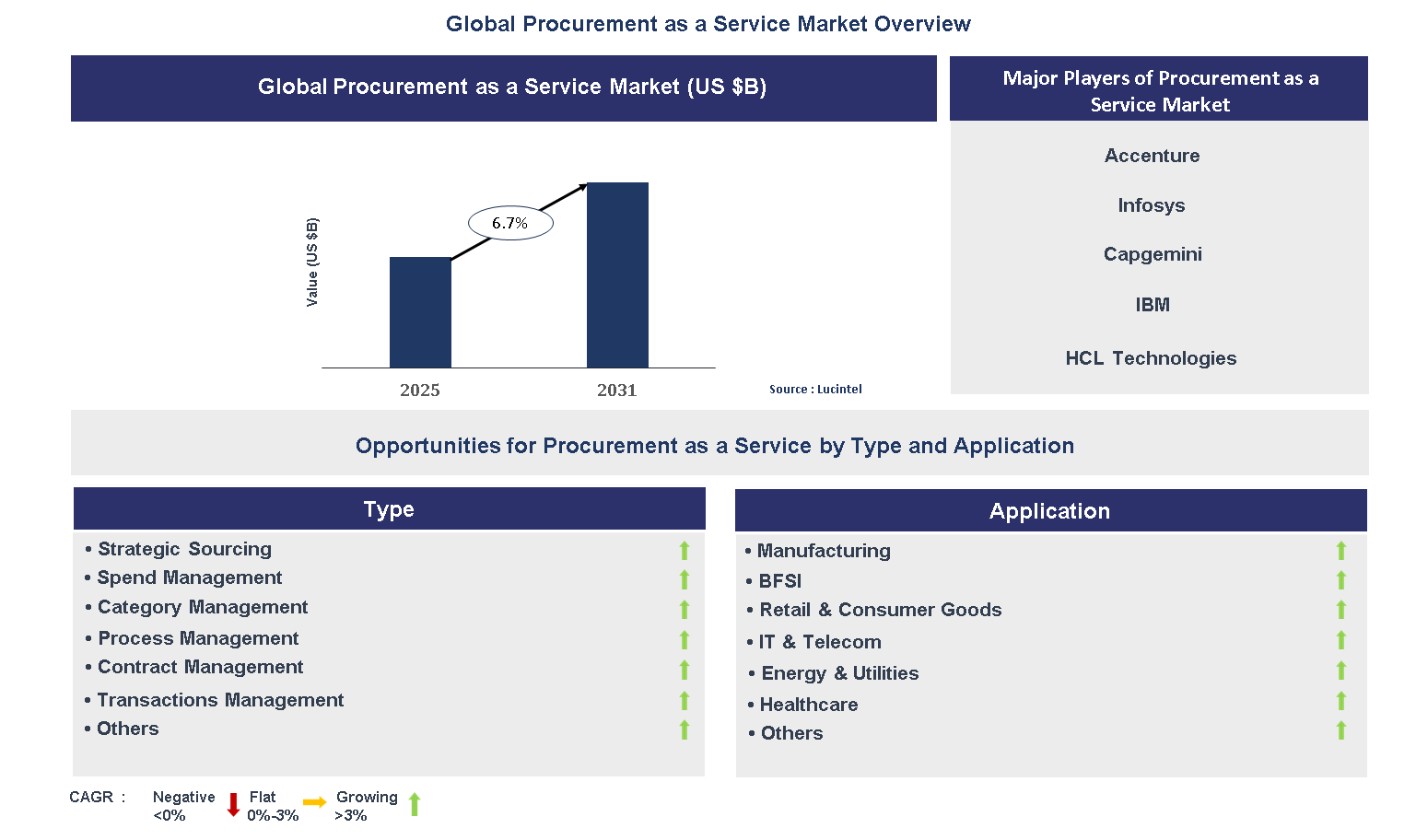
Key data points: The growth forecast = 6.7% annually for the next 7 years. Scroll below to get more insights. This market report covers trends, opportunities and forecasts in procurement as a service market to 2031 by type (strategic sourcing, spend management, category management, process management, contract management, transactions management, and others), application (manufacturing, BFSI, retail & consumer goods, IT & telecom, energy & utilities, healthcare, and others), and region (North America, Europe, Asia Pacific, and the Rest of the World)
We'll send your sample report shortly.
• Lucintel forecasts that, within the type category, strategic sourcing is expected to witness higher growth over the forecast period.
• Within the application category, healthcare is expected to witness the highest growth.
• In terms of region, APAC is expected to witness the highest growth over the forecast period. Gain valuable insights for your business decisions with our comprehensive 150+ page report. Sample figures with some insights are shown below.
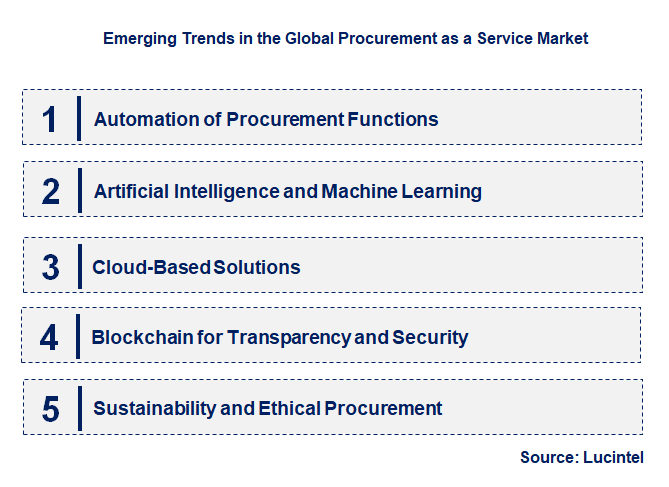
• Automation of Procurement Functions: The widespread adoption of automation tools is reducing manual efforts in procurement processes. By automating tasks like purchase order creation, vendor management, and invoice processing, businesses can focus on strategic decision-making, improving efficiency and reducing human error. Automation is essential for scaling procurement functions and driving cost savings.
• Artificial Intelligence and Machine Learning: AI and ML are transforming procurement strategies by enabling data-driven decision-making. These technologies help businesses analyze vast amounts of procurement data to forecast demand, optimize supplier selection, and predict supply chain disruptions. As these technologies advance, they are becoming more integrated into PaaS solutions, offering a competitive edge.
• Cloud-Based Solutions: Cloud computing continues to be a dominant trend in the PaaS market. With cloud platforms, companies can centralize procurement data, streamline collaboration with suppliers, and reduce infrastructure costs. The scalability, flexibility, and remote access provided by cloud-based solutions are making them essential for modern procurement operations.
• Blockchain for Transparency and Security: Blockchain technology is increasingly being used to ensure transparency, traceability, and security in procurement processes. It allows businesses to securely track transactions, verify supplier credentials, and ensure the integrity of supply chains. As transparency becomes more critical, blockchain adoption within PaaS is expected to grow.
• Sustainability and Ethical Procurement: Sustainability is a growing priority in procurement practices. Companies are integrating sustainability metrics into their procurement decisions, using PaaS solutions to track environmental and social criteria when selecting suppliers. This shift is reshaping the market, as businesses look to align procurement with their broader sustainability goals. These emerging trends are reshaping the procurement as a service market by enhancing efficiency, transparency, and sustainability. The integration of automation, AI, blockchain, and cloud technologies is enabling businesses to streamline operations and stay competitive in a rapidly evolving market. As these trends continue to grow, they will redefine the future of procurement.
• Digital Procurement Transformation: Digital procurement solutions are gaining popularity as businesses move away from manual, paper-based processes. This transition to digital platforms enables faster decision-making, improved supplier collaboration, and better data insights. Companies adopting digital tools are witnessing improved procurement efficiency and cost reduction, leading to more agile operations.
• Advanced Analytics and Data-Driven Decisions: The use of advanced analytics in procurement is enabling businesses to make data-driven decisions that improve supply chain performance. By leveraging predictive analytics and real-time data, organizations can anticipate market shifts, identify cost-saving opportunities, and optimize supplier relationships. This development enhances the strategic value of procurement functions.
• AI-Powered Procurement Solutions: AI is becoming central to procurement as a service, offering predictive insights, automated processes, and enhanced supplier selection. Machine learning algorithms help analyze vast datasets to forecast trends, optimize procurement strategies, and automate repetitive tasks. AI integration leads to more accurate, efficient, and cost-effective procurement decisions.
• Integration with Other Business Functions: PaaS solutions are increasingly being integrated with other business functions such as finance, supply chain, and HR systems. This holistic approach ensures seamless data flow and cross-functional collaboration, enabling organizations to gain a comprehensive view of their operations and make more informed procurement decisions.
• Supplier Collaboration and Relationship Management: Supplier collaboration is a critical focus in the PaaS market. Businesses are shifting toward long-term partnerships with suppliers, utilizing collaborative platforms to manage supplier performance, communicate more effectively, and improve the overall procurement process. Strengthening supplier relationships enhances reliability, reduces costs, and drives innovation. Conclusion: These key developments are driving the transformation of the PaaS market, making procurement functions more efficient, transparent, and aligned with broader business strategies. As digitalization, AI, and advanced analytics continue to shape the industry, businesses will increasingly rely on PaaS solutions to gain competitive advantages and optimize procurement outcomes.
• Small and Medium-Sized Enterprises: SMEs are increasingly adopting PaaS to optimize their procurement functions. Cloud-based and scalable solutions offer cost-effective options for smaller businesses to streamline operations without hefty infrastructure investments. With the rise of SMEs in emerging markets, PaaS providers can target this segment to drive growth and expand their customer base.
• E-Commerce and Retail Sectors: The e-commerce sector presents a massive growth opportunity for PaaS providers. With rapid supply chain shifts, increased demand for faster deliveries, and evolving consumer behavior, retail companies are looking for ways to streamline procurement. PaaS solutions that offer real-time data analytics, supplier management, and demand forecasting are essential for e-commerce growth.
• Healthcare and Life Sciences: In healthcare, procurement efficiency is critical due to regulatory challenges, rising costs, and a need for robust supplier management. PaaS can help healthcare organizations optimize sourcing, reduce inventory costs, and improve compliance with industry standards. This sector represents a strong growth opportunity as healthcare systems worldwide continue to modernize.
• Manufacturing and Industrial Sectors: The manufacturing industry, with its complex supply chains, is increasingly turning to PaaS to improve procurement efficiency and reduce costs. Cloud-based solutions help manufacturers optimize sourcing, manage supplier relationships, and streamline production processes. PaaS providers can tap into this sector by offering tailored solutions that address industry-specific challenges.
• Sustainability and Green Procurement: Sustainability is becoming a top priority for many organizations. PaaS providers offering solutions that help companies integrate sustainability goals into their procurement processes can capitalize on this trend. As businesses strive for greener supply chains and responsible sourcing, PaaS solutions focused on sustainability are expected to see significant demand. These growth opportunities are reshaping the procurement as a service market, with businesses from SMEs to large enterprises increasingly seeking efficient, digital solutions to streamline procurement. Providers that tap into these sectors and address emerging needs like sustainability and efficiency will be well-positioned for long-term growth.
• Accenture
• Infosys
• Capgemini
• IBM
• HCL Technologies
• Wipro
• GEP
• Proxima
• Genpact
• WNS
• Strategic Sourcing
• Spend Management
• Category Management
• Process Management
• Contract Management
• Transactions Management
• Others
• Manufacturing
• BFSI
• Retail & Consumer Goods
• IT & Telecom
• Energy & Utilities
• Healthcare
• Others
• North America
• Europe
• Asia Pacific
• The Rest of the World
• United States: Procurement as a Service in the U.S. is evolving with increased automation and artificial intelligence (AI) integration. Leading firms are adopting cloud-based PaaS solutions to streamline procurement processes, reduce costs, and enhance procurement visibility. This trend is supported by a robust tech ecosystem and the need for more efficient supply chain management post-pandemic.
• China: China’s PaaS market is driven by government initiatives aimed at improving digital infrastructure and enhancing supply chain resilience. The focus is on integrating AI and machine learning to optimize sourcing decisions. Companies are also leveraging blockchain technology for better transparency and security in procurement processes. The growing e-commerce sector is a key factor in PaaS adoption.
• Germany: Germany is seeing rapid PaaS adoption, driven by the countrys industrial and manufacturing sectors. The demand for cost-effective, scalable procurement solutions is pushing businesses toward cloud-based platforms. Moreover, the integration of advanced analytics and AI is enhancing decision-making, fostering greater supply chain efficiency. Sustainability and compliance are key concerns in the German market.
• India: In India, PaaS is increasingly seen as a solution to improve procurement efficiency in diverse sectors, including IT, manufacturing, and retail. The market is growing due to a rising number of startups and SMEs adopting digital procurement solutions. India’s growing digitalization and favorable government policies are accelerating the adoption of PaaS, along with cloud and AI-based tools.
• Japan: Japan is focusing on enhancing procurement efficiency through digital transformation, with a strong emphasis on automation and AI tools. The Japanese PaaS market is growing within the manufacturing sector, where companies are adopting intelligent sourcing solutions. With an aging workforce, automation and efficiency gains are driving significant interest in PaaS, especially in the technology and automotive industries.


• Accenture
• Infosys
• Capgemini
• IBM
• HCL Technologies
• Wipro
• GEP
• Proxima
• Genpact
• WNS Q5. Which procurement as a service market segment will be the largest in future? Answer: Lucintel forecasts that, within the type category, strategic sourcing is expected to witness higher growth over the forecast period. Q6. In procurement as a service market, which region is expected to be the largest in next 5 years? Answer: In terms of region, APAC is expected to witness the highest growth over the forecast period. Q7. Do we receive customization in this report? Answer: Yes, Lucintel provides 10% customization without any additional cost.


Choose a license that fits your team. Instant PDF delivery.
Prices exclude taxes. Instant delivery. Custom licensing available on request.
Market Report · July 15, 2026
Market Report · June 26, 2026
Market Report · June 24, 2026
Trusted partner for strategic intelligence and business growth


Receive a complimentary market analysis tailored to your industry. Our analysts will identify key growth opportunities and competitive dynamics specific to your business.

Market size, growth rate, and key trend analysis for your specific sector.

Top competitor positioning and market share analysis.

Strategic recommendations backed by data-driven insights.
Get curated market intelligence and competitive moves straight to your inbox.
By subscribing, you agree to receive our monthly insights. Unsubscribe anytime.
Receive a complimentary market analysis tailored to your industry. Our analysts will identify key growth opportunities and competitive dynamics specific to your business.
Market size, growth rate, and key trend analysis for your specific sector.
Top competitor positioning and market share analysis.
Strategic recommendations backed by data-driven insights.
Get curated market intelligence, emerging trends, and competitive moves straight to your inbox each month.
By subscribing, you agree to receive our monthly insights. Unsubscribe anytime.
We'll send your sample report shortly.