
Market Report · July 15, 2026

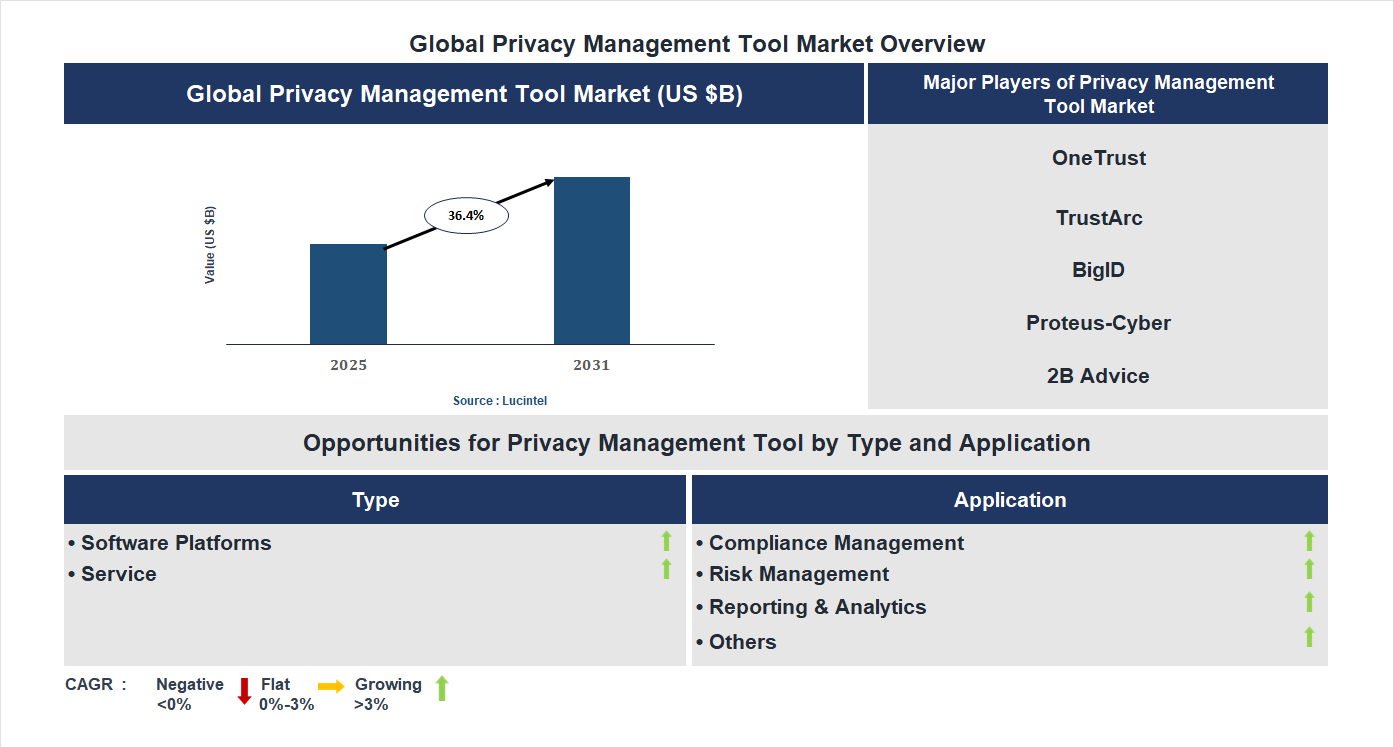
Key data points: The growth forecast = 36.4% annually for the next 7 years. Scroll below to get more insights. This market report covers trends, opportunities and forecasts in privacy management tool market to 2031 by type (software platforms and service), application (compliance management, risk management, reporting & analytics, and others), and region (North America, Europe, Asia Pacific, and the Rest of the World)
We'll send your sample report shortly.
• Lucintel forecasts that, within the type category, service is expected to witness higher growth over the forecast period.
• Within the application category, compliance management is expected to witness the highest growth.
• In terms of region, APAC is expected to witness the highest growth over the forecast period. Gain valuable insights for your business decisions with our comprehensive 150+ page report. Sample figures with some insights are shown below.
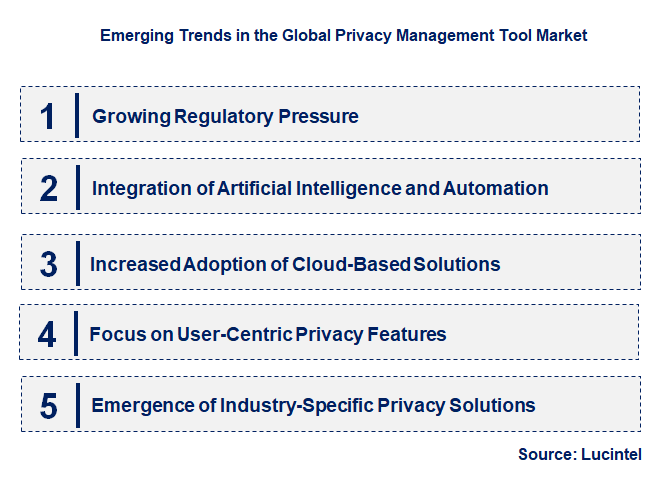
• Growing Regulatory Pressure: Increasing data privacy laws such as GDPR, CCPA, and LGPD are compelling organizations to adopt robust privacy management tools. These regulations mandate transparency, data subject rights, and breach notifications, pushing companies to implement comprehensive compliance solutions. As penalties for non-compliance rise, businesses are investing more in privacy tools to avoid legal repercussions and reputational damage. This trend is driving market growth and encouraging vendors to develop features aligned with evolving legal requirements, making compliance a central focus of privacy management strategies.
• Integration of Artificial Intelligence and Automation: AI and automation are transforming privacy management by enabling real-time data monitoring, risk assessment, and automated compliance reporting. These technologies help identify vulnerabilities, manage consent, and respond swiftly to data breaches, reducing manual effort and human error. AI-driven tools can analyze vast datasets to ensure privacy policies are consistently applied across systems. This integration enhances efficiency, accuracy, and scalability, allowing organizations to proactively manage privacy risks and meet regulatory demands more effectively, thus shaping a more intelligent and responsive privacy management landscape.
• Increased Adoption of Cloud-Based Solutions: Cloud-based privacy management tools offer scalability, flexibility, and ease of deployment, making them attractive to organizations of all sizes. These solutions facilitate centralized data governance, real-time monitoring, and seamless updates, which are crucial in dynamic regulatory environments. Cloud platforms also support integration with other enterprise systems, enhancing overall data management. As remote work and digital transformation accelerate, cloud-based tools are becoming the preferred choice for privacy management, enabling organizations to adapt quickly and maintain compliance across diverse operational contexts.
• Focus on User-Centric Privacy Features: Consumer demand for greater control over personal data is prompting vendors to develop user-centric privacy features. These include simplified consent management, transparent data practices, and easy-to-use privacy dashboards. Empowering users with control over their data builds trust and aligns with regulatory requirements emphasizing data subject rights. Companies adopting these features can differentiate themselves in competitive markets by demonstrating commitment to privacy. This trend emphasizes transparency and user empowerment, fostering stronger customer relationships and enhancing brand reputation in an increasingly privacy-conscious world.
• Emergence of Industry-Specific Privacy Solutions: As different sectors face unique privacy challenges, specialized privacy management tools are emerging for industries such as healthcare, finance, and retail. These solutions address sector-specific regulations, data types, and security needs, providing tailored compliance frameworks. Industry-specific tools enable more precise data governance, risk mitigation, and audit readiness. This trend allows vendors to target niche markets effectively and helps organizations meet complex regulatory standards more efficiently. The development of these specialized solutions signifies a move toward more customized, effective privacy management strategies aligned with sector-specific requirements. In summary, these trends are fundamentally reshaping the privacy management tool market by fostering more sophisticated, integrated, and user-focused solutions. They are driving increased compliance, operational efficiency, and consumer trust, positioning privacy management as a strategic priority for organizations navigating the digital age. As these developments continue, the market is poised for significant growth and innovation, ultimately enhancing data protection standards worldwide.
• Growing Regulatory Pressure: Increased data privacy laws such as GDPR and CCPA have driven demand for privacy management tools. Organizations seek compliance solutions to avoid hefty fines and legal repercussions, leading to market expansion and innovation in compliance features.
• Adoption of AI and Automation: Integration of artificial intelligence and automation in privacy tools enhances data monitoring, risk assessment, and incident response. This reduces manual effort, improves accuracy, and accelerates compliance processes, making privacy management more efficient.
• Rise of Cloud-Based Solutions: Cloud deployment offers scalability, flexibility, and cost-effectiveness. Vendors are increasingly offering cloud-based privacy tools, enabling organizations of all sizes to implement robust privacy measures without significant infrastructure investments.
• Enhanced User Privacy Features: Privacy tools now incorporate advanced features like consent management, data anonymization, and user rights management. These features improve user trust and ensure organizations meet evolving consumer expectations and legal requirements.
• Strategic Partnerships and Acquisitions: Major players are forming alliances and acquiring startups to expand their product portfolios and technological capabilities. This trend accelerates innovation and consolidates market position, benefiting end-users with comprehensive privacy solutions. The recent developments in the privacy management tool market are fostering a more compliant, efficient, and user-centric environment. Increased regulatory demands and technological innovations are driving market growth, while cloud adoption and strategic collaborations are broadening access and capabilities. Overall, these trends are positioning the market for sustained expansion, helping organizations better manage privacy risks and build consumer trust in an increasingly digital world.
• Healthcare Sector: Enhanced Patient Data Privacy Management : The healthcare industry is increasingly adopting privacy tools to safeguard sensitive patient information, ensuring compliance with regulations like HIPAA. This reduces data breaches and builds patient trust, ultimately improving healthcare delivery and operational efficiency.
• Financial Services: Regulatory Compliance and Risk Mitigation : Financial institutions are leveraging privacy management tools to meet stringent regulations such as GDPR and PCI DSS. This minimizes legal risks, prevents data breaches, and enhances customer confidence, supporting sustainable growth in a highly regulated environment.
• Retail and E-commerce: Customer Data Protection and Personalization : Retailers utilize privacy tools to protect customer data while enabling personalized marketing strategies. This balance improves customer loyalty, enhances brand reputation, and drives revenue growth through targeted engagement.
• Technology and SaaS Providers: Data Governance and User Consent Management : Tech companies are integrating privacy management solutions to streamline data governance and manage user consents efficiently. This ensures compliance across platforms, reduces legal liabilities, and fosters trust among users.
• Government and Public Sector: Data Privacy Policy Implementation : Governments are adopting privacy tools to enforce data privacy policies and secure citizen data. This enhances public trust, ensures legal compliance, and supports national cybersecurity initiatives. In summary, these growth opportunities are significantly impacting the privacy management tool market by expanding its application scope, driving innovation, and ensuring compliance across diverse sectors. As organizations prioritize data security and regulatory adherence, the market is poised for sustained growth, fostering a more secure digital ecosystem worldwide.
• Technological Advancements: The continuous development of sophisticated privacy management solutions, including automation and AI-driven tools, enhances data handling efficiency and compliance. These innovations enable organizations to monitor, manage, and protect personal data more effectively, reducing manual efforts and errors. As technology evolves, privacy tools become more integrated with existing IT infrastructure, facilitating seamless compliance and risk mitigation. This ongoing innovation attracts organizations seeking robust, scalable, and user-friendly privacy solutions, thereby fueling market growth.
• Regulatory Landscape: Increasing global data privacy regulations such as GDPR, CCPA, and LGPD compel organizations to adopt comprehensive privacy management tools. These regulations mandate strict data handling, breach notification, and user consent protocols, making compliance essential. Privacy management tools help organizations automate compliance processes, generate audit reports, and ensure adherence to legal standards. The evolving regulatory environment creates a sustained demand for advanced privacy solutions, encouraging vendors to innovate and expand their offerings to meet diverse legal requirements.
• Growing Data Volumes: The exponential increase in data generated by digital activities necessitates effective privacy management. Organizations handle vast amounts of personal and sensitive data, which require secure storage, processing, and compliance measures. Privacy management tools assist in data classification, access controls, and monitoring, reducing risks of data breaches and non-compliance penalties. As data volumes continue to grow, the need for scalable and efficient privacy solutions becomes critical, driving market expansion and technological innovation.
• Rising Awareness and Demand: Organizations are increasingly aware of the importance of data privacy for customer trust and brand reputation. Consumer demand for transparency and control over personal data encourages companies to implement privacy management tools proactively. This heightened awareness fosters a competitive advantage, prompting businesses across industries to invest in privacy solutions. The demand is further amplified by media coverage of data breaches and privacy scandals, which underscores the necessity for robust privacy management strategies.
• Digital Transformation Initiatives: The shift towards digital business models and cloud-based services accelerates the need for comprehensive privacy management. As organizations migrate to cloud platforms and adopt IoT, AI, and big data analytics, managing privacy risks becomes more complex. Privacy management tools facilitate secure data sharing, compliance across multiple jurisdictions, and integration with digital workflows. This integration supports digital transformation efforts while ensuring privacy and security, thereby propelling market growth. The challenges facing this Market include:
• Evolving Compliance Complexities: The dynamic nature of data privacy regulations across different regions creates significant compliance challenges. Organizations must continuously update their privacy practices to align with new laws, which can be resource-intensive and complex. Non-compliance risks hefty fines and reputational damage. Privacy management tools must adapt quickly to changing legal requirements, but the complexity of global regulations often hampers seamless compliance, posing a persistent challenge for vendors and users alike.
• High Implementation and Maintenance Costs: Deploying comprehensive privacy management solutions can be costly, especially for small and medium-sized enterprises. These costs include software licensing, integration, staff training, and ongoing maintenance. The financial burden may deter organizations from adopting advanced privacy tools, limiting market penetration. Additionally, the need for continuous updates and monitoring adds to operational expenses, making cost management a critical challenge for widespread adoption.
• Data Security Concerns: While privacy management tools aim to enhance data security, they themselves can become targets for cyberattacks. Ensuring the security of these tools is vital, as vulnerabilities could lead to data breaches and compromise sensitive information. Organizations worry about the potential for privacy tools to introduce new attack vectors, which complicates their deployment and management. Maintaining the integrity and security of privacy solutions remains a significant challenge in the market. In summary, the privacy management tool market is driven by technological innovations, regulatory pressures, increasing data volumes, rising awareness, and digital transformation initiatives. However, it faces challenges such as compliance complexities, high costs, and security concerns. These factors collectively influence market dynamics, requiring stakeholders to innovate continuously and address operational hurdles. The market's growth prospects depend on balancing technological advancements with effective management of regulatory and security challenges, ultimately shaping a resilient and adaptive privacy ecosystem.
• OneTrust
• TrustArc
• BigID
• Proteus-Cyber
• 2B Advice
• Securiti.ai
• Osano
• WireWheel
• VeraSafe
• PrivacyPerfect
• Software Platforms
• Service
• Compliance Management
• Risk Management
• Reporting & Analytics
• Others
• North America
• Europe
• Asia Pacific
• The Rest of the World
• United States: The US market has seen rapid adoption of advanced privacy management solutions driven by stringent regulations like CCPA and GDPR compliance requirements. Major tech firms are investing heavily in AI-powered privacy tools to automate data governance and risk assessment processes. Additionally, increased enforcement actions have prompted organizations to prioritize privacy compliance, fostering innovation in data protection technologies. The rise of privacy-as-a-service offerings and integration with cloud platforms further boost market growth.
• China: China’s privacy management market is expanding amid evolving data security laws such as the Personal Information Protection Law (PIPL). Domestic companies are focusing on developing localized privacy solutions tailored to regulatory requirements. The government’s emphasis on data sovereignty and cybersecurity has led to increased investments in privacy tools that facilitate compliance and data localization. Additionally, collaborations between tech giants and local authorities are accelerating the deployment of privacy management platforms across various sectors.
• Germany: As a leading European market, Germany emphasizes strict adherence to GDPR, prompting organizations to adopt comprehensive privacy management tools. Recent developments include the integration of AI and machine learning to enhance data breach detection and risk mitigation. German companies are also investing in privacy training and certification programs to ensure compliance. The market is witnessing a shift towards more transparent data handling practices and the adoption of privacy impact assessment tools to meet regulatory standards.
• India: The Indian market is witnessing rapid growth driven by the implementation of the Personal Data Protection Bill and increasing digital adoption. Companies are investing in privacy management solutions to ensure compliance with emerging regulations and to build consumer trust. Startups and local vendors are developing affordable, scalable privacy tools tailored to small and medium-sized enterprises. The focus is on data audit, consent management, and secure data sharing, with government initiatives encouraging the adoption of privacy frameworks.
• Japan: Japan’s privacy management market is evolving with a focus on strengthening data security and compliance with the Act on the Protection of Personal Information (APPI). Recent developments include the adoption of advanced encryption and anonymization techniques. Japanese firms are also emphasizing cross-border data transfer compliance and integrating privacy management into broader cybersecurity strategies. The market is characterized by increased collaboration between government agencies and private sector players to develop standardized privacy protocols and tools.


• OneTrust
• TrustArc
• BigID
• Proteus-Cyber
• 2B Advice
• Securiti.ai
• Osano
• WireWheel
• VeraSafe
• PrivacyPerfect Q5. Which privacy management tool market segment will be the largest in future? Answer: Lucintel forecasts that, within the type category, service is expected to witness higher growth over the forecast period. Q6. In privacy management tool market, which region is expected to be the largest in next 5 years? Answer: In terms of region, APAC is expected to witness the highest growth over the forecast period. Q7. Do we receive customization in this report? Answer: Yes, Lucintel provides 10% customization without any additional cost.


Choose a license that fits your team. Instant PDF delivery.
Prices exclude taxes. Instant delivery. Custom licensing available on request.
Market Report · July 15, 2026
Market Report · June 26, 2026
Market Report · June 24, 2026
Trusted partner for strategic intelligence and business growth


Receive a complimentary market analysis tailored to your industry. Our analysts will identify key growth opportunities and competitive dynamics specific to your business.

Market size, growth rate, and key trend analysis for your specific sector.

Top competitor positioning and market share analysis.

Strategic recommendations backed by data-driven insights.
Get curated market intelligence and competitive moves straight to your inbox.
By subscribing, you agree to receive our monthly insights. Unsubscribe anytime.
Receive a complimentary market analysis tailored to your industry. Our analysts will identify key growth opportunities and competitive dynamics specific to your business.
Market size, growth rate, and key trend analysis for your specific sector.
Top competitor positioning and market share analysis.
Strategic recommendations backed by data-driven insights.
Get curated market intelligence, emerging trends, and competitive moves straight to your inbox each month.
By subscribing, you agree to receive our monthly insights. Unsubscribe anytime.
We'll send your sample report shortly.