
Market Report · July 15, 2026

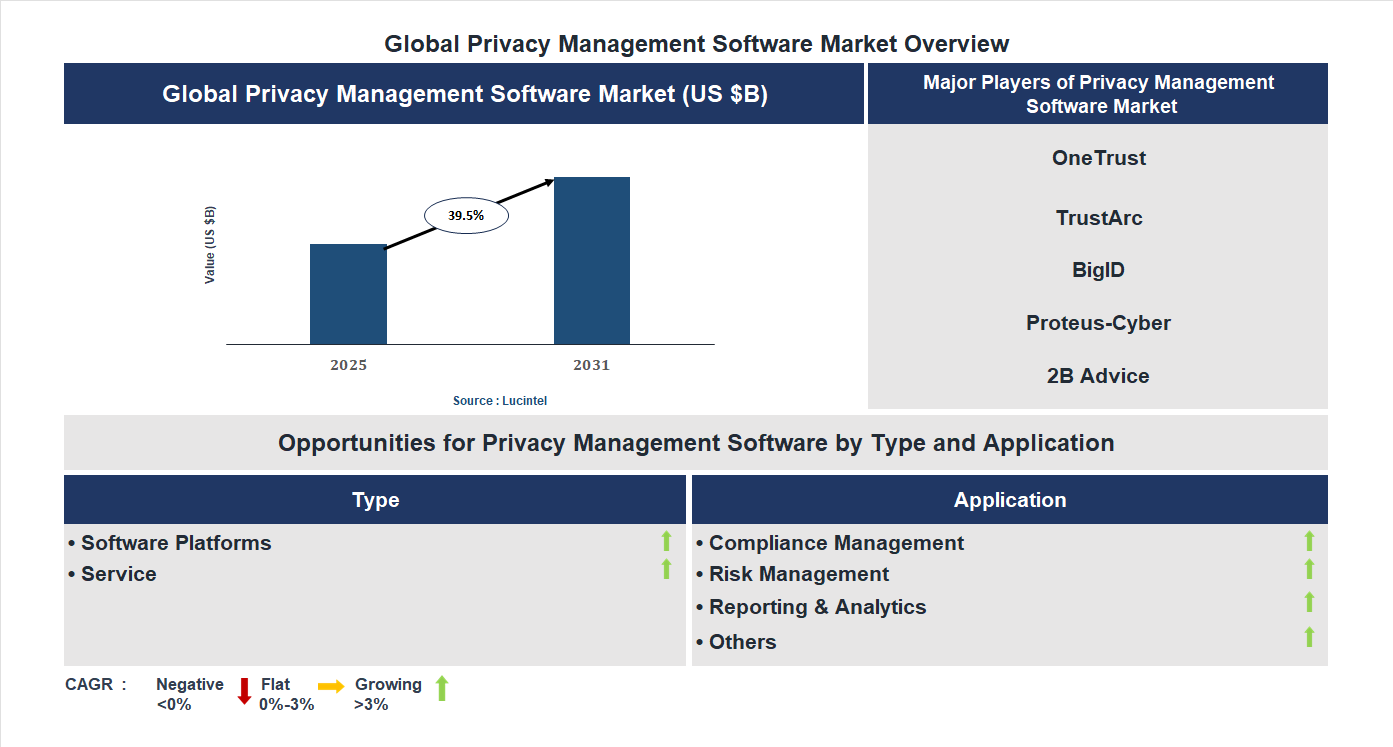
Key data points: The growth forecast = 39.5% annually for the next 7 years. Scroll below to get more insights. This market report covers trends, opportunities and forecasts in privacy management software market to 2031 by type (software platforms and service), application (compliance management, risk management, reporting & analytics, and others), and region (North America, Europe, Asia Pacific, and the Rest of the World)
We'll send your sample report shortly.
• Lucintel forecasts that, within the type category, service is expected to witness higher growth over the forecast period.
• Within the application category, compliance management is expected to witness the highest growth.
• In terms of region, APAC is expected to witness the highest growth over the forecast period. Gain valuable insights for your business decisions with our comprehensive 150+ page report. Sample figures with some insights are shown below.
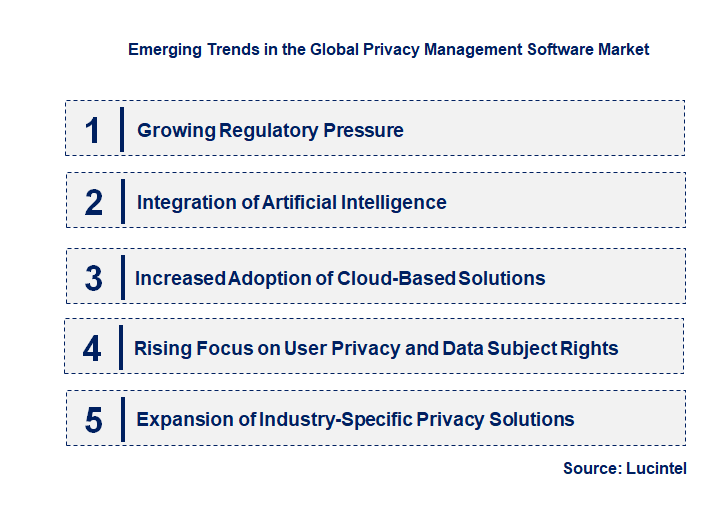
• Growing Regulatory Pressure: Increasing data privacy laws such as GDPR, CCPA, and LGPD are compelling organizations to adopt robust privacy management solutions. These regulations mandate transparency, data subject rights, and breach notifications, pushing companies to implement comprehensive privacy frameworks. As compliance becomes a competitive differentiator, demand for specialized software that simplifies adherence is surging. This trend encourages vendors to develop tools that automate compliance processes, reduce risks, and ensure organizations stay ahead of evolving legal requirements, ultimately fostering a more privacy-conscious business environment.
• Integration of Artificial Intelligence (AI): AI-powered privacy management tools are transforming how organizations monitor, detect, and respond to data privacy issues. Machine learning algorithms enable real-time risk assessment, automated data classification, and anomaly detection, significantly enhancing efficiency. AI also facilitates predictive analytics to identify potential vulnerabilities before they escalate. This integration reduces manual effort, minimizes human error, and accelerates compliance activities. As AI technology advances, privacy management software becomes more intelligent, proactive, and capable of handling complex data ecosystems, thereby improving overall data governance and security.
• Increased Adoption of Cloud-Based Solutions: Cloud-based privacy management software offers scalability, flexibility, and cost-effectiveness, making it attractive for organizations of all sizes. These solutions enable centralized data governance, real-time monitoring, and seamless updates, which are crucial in dynamic regulatory environments. Cloud deployment also supports remote work and distributed teams, ensuring consistent privacy practices across geographies. As cloud technology matures, more companies are migrating to cloud-based privacy tools to enhance agility, reduce infrastructure costs, and improve compliance management, thereby accelerating market growth and accessibility.
• Rising Focus on User Privacy and Data Subject Rights: Consumers are increasingly aware of their data rights, demanding greater transparency and control over their personal information. Privacy management software now emphasizes features that facilitate data subject access requests, consent management, and data portability. This shift influences organizations to prioritize user-centric privacy practices, fostering trust and loyalty. Software solutions that streamline these processes help companies demonstrate compliance and build stronger relationships with customers. As user privacy becomes a core business value, the market is evolving to support more transparent and user-friendly privacy management frameworks.
• Expansion of Industry-Specific Privacy Solutions: Different sectors face unique privacy challenges, prompting vendors to develop tailored solutions for industries such as healthcare, finance, retail, and telecommunications. These specialized tools address sector-specific regulations, data types, and security requirements, providing more effective privacy management. Industry-specific solutions enable organizations to meet compliance standards more efficiently while addressing unique operational needs. This trend encourages innovation and diversification within the market, ensuring that privacy management software remains relevant and effective across various domains, ultimately fostering more secure and compliant industry practices. In summary, these trends are reshaping the privacy management software market by fostering greater compliance, leveraging advanced technologies, and emphasizing user-centric privacy practices. The market is becoming more dynamic, innovative, and tailored to meet the complex needs of modern organizations, ultimately enhancing data security and trust in the digital economy.
• Adoption of AI and Machine Learning: Integration of AI and ML technologies enhances data privacy management by automating compliance processes, identifying vulnerabilities, and enabling real-time monitoring. This reduces manual effort and improves accuracy, leading to more effective privacy controls and faster response to data breaches.
• Regulatory Framework Expansion: New privacy laws and regulations, such as GDPR, CCPA, and others, are prompting vendors to update their software offerings. These developments ensure that privacy management solutions remain compliant with evolving legal standards, helping organizations avoid penalties and reputational damage.
• Strategic Partnerships and Collaborations: Companies are forming alliances with technology providers, consulting firms, and regulatory bodies to develop comprehensive privacy solutions. These collaborations facilitate the integration of best practices, expand market reach, and accelerate innovation in privacy management tools.
• Cloud-Based Privacy Solutions: The shift towards cloud computing has driven the development of cloud-native privacy management software. These solutions offer scalability, flexibility, and ease of deployment, enabling organizations of all sizes to implement robust privacy controls without significant infrastructure investments.
• Increased Market Penetration in Emerging Regions: Growing awareness and regulatory requirements in regions like Asia-Pacific and Latin America are expanding the market footprint. Vendors are customizing solutions to meet local needs, resulting in increased adoption and market growth in these areas. These developments are collectively transforming the privacy management software market by enhancing technological capabilities, ensuring regulatory compliance, and broadening geographic reach. As a result, organizations are better equipped to manage data privacy risks, build customer trust, and maintain competitive advantage in an increasingly data-driven world.
• Healthcare: Enhanced Patient Data Privacy : Privacy management software helps healthcare providers comply with regulations like HIPAA, ensuring patient data confidentiality and reducing breach risks, ultimately improving trust and care quality.
• Finance: Regulatory Compliance and Risk Reduction : Financial institutions leverage privacy solutions to meet GDPR, CCPA, and other standards, minimizing penalties and safeguarding customer information, which boosts market confidence.
• Retail: Customer Data Protection and Personalization : Retailers utilize privacy tools to secure consumer data, fostering trust and enabling personalized marketing while adhering to privacy laws, thus driving customer loyalty.
• Government: Data Security and Public Trust : Governments adopt privacy management solutions to protect citizen data, ensure transparency, and comply with legal mandates, strengthening public trust and operational integrity.
• Telecommunications: Securing Communications and Data Flows : Telecom companies deploy privacy software to safeguard communication channels and user data, supporting regulatory compliance and enhancing service reliability. These growth opportunities are significantly impacting the privacy management software market by expanding its scope across diverse sectors, fostering innovation, and emphasizing compliance. As organizations prioritize data privacy, demand for sophisticated solutions increases, propelling market growth and encouraging technological advancements. This evolution ultimately enhances data security, builds consumer trust, and ensures regulatory adherence, positioning the market for sustained expansion.
• Increasing Data Privacy Regulations: The implementation of strict data privacy laws like GDPR, CCPA, and LGPD compels organizations to adopt privacy management solutions. These regulations mandate transparency, data handling, and breach notifications, creating a significant demand for software that ensures compliance. As regulatory frameworks expand globally, organizations seek reliable tools to manage compliance efficiently, reducing legal risks and penalties. This regulatory pressure accelerates market growth, especially among multinational corporations aiming to meet diverse legal requirements.
• Growing Awareness of Data Privacy and Security: Consumers and businesses are becoming more aware of data privacy issues, leading to increased demand for privacy management tools. Organizations recognize that protecting customer data enhances trust and brand reputation. This heightened awareness drives investments in privacy software to proactively identify vulnerabilities, manage consent, and ensure data security. As data breaches and cyber threats become more prevalent, companies prioritize privacy solutions to mitigate risks and demonstrate accountability, fueling market expansion.
• Digital Transformation and Cloud Adoption: The rapid shift towards digital platforms and cloud computing necessitates robust privacy management. Cloud environments pose unique privacy challenges, requiring specialized tools to monitor, control, and secure data across distributed systems. As organizations migrate to the cloud, they seek integrated privacy solutions that can adapt to complex architectures. This trend promotes the adoption of scalable, cloud-compatible privacy management software, supporting compliance and operational efficiency in a digital-first world.
• Technological Advancements in AI and Automation: Innovations in artificial intelligence and automation enhance the capabilities of privacy management software. AI-driven tools enable real-time data monitoring, automated compliance reporting, and threat detection, reducing manual effort and increasing accuracy. These technological improvements make privacy solutions more effective and user-friendly, encouraging broader adoption. As AI continues to evolve, privacy management software becomes more sophisticated, offering predictive analytics and personalized privacy controls that meet the dynamic needs of modern organizations. The challenges facing this privacy management software market include:-
• Technological Complexity and Integration Issues: Implementing privacy management software often involves complex integration with existing IT infrastructure. Organizations face difficulties in aligning new solutions with legacy systems, leading to increased deployment time and costs. Additionally, the rapid pace of technological change requires continuous updates and customization, which can strain resources. This complexity hampers adoption, especially among small and medium-sized enterprises lacking technical expertise, thereby limiting market growth.
• High Implementation and Maintenance Costs: Deploying comprehensive privacy management solutions can be expensive, involving licensing fees, customization, staff training, and ongoing maintenance. For many organizations, especially startups and SMEs, these costs pose significant barriers. The financial burden may deter adoption or lead to partial implementations that do not fully leverage the software’s capabilities. Consequently, high costs restrict market penetration and slow down overall growth.
• Regulatory Uncertainty and Evolving Legal Frameworks: The dynamic nature of data privacy laws creates uncertainty for organizations trying to stay compliant. Frequent updates, differing regional regulations, and ambiguous legal interpretations complicate compliance efforts. Companies may hesitate to invest heavily in privacy solutions without clear guidance, fearing obsolescence or non-compliance. This regulatory unpredictability hampers strategic planning and can delay market expansion, posing a significant challenge for vendors and users alike. In summary, the privacy management software market is driven by increasing regulatory requirements, rising awareness of data privacy, digital transformation, and technological innovations. However, it faces challenges such as technological complexity, high costs, and regulatory uncertainties. These factors collectively influence market growth, with opportunities for innovation and expansion tempered by operational and financial hurdles. Stakeholders must navigate these dynamics carefully to capitalize on emerging trends and ensure compliance in an evolving digital landscape.
• OneTrust
• TrustArc
• BigID
• Proteus-Cyber
• 2B Advice
• Securiti.ai
• Osano
• WireWheel
• VeraSafe
• PrivacyPerfect
• Software Platforms
• Service
• Compliance Management
• Risk Management
• Reporting & Analytics
• Others
• North America
• Europe
• Asia Pacific
• The Rest of the World
• United States: The US market has seen rapid adoption of privacy management solutions driven by regulations like GDPR and CCPA. Major tech firms are investing heavily in AI-powered privacy tools to ensure compliance and enhance data governance. The rise of remote work has also increased demand for cloud-based privacy solutions. Several startups are emerging with innovative approaches, and mergers and acquisitions are common as companies seek to strengthen their privacy portfolios. Government agencies are updating policies to align with international standards, fostering a more competitive and dynamic market environment.
• China: China’s privacy management market is expanding amid tightening data regulations such as the Personal Information Protection Law (PIPL). Domestic companies are focusing on developing localized privacy solutions to meet strict compliance requirements. The government encourages the integration of privacy management into broader cybersecurity initiatives, promoting innovation in AI-driven privacy tools. Large tech giants are investing in comprehensive privacy platforms to safeguard user data and maintain market trust. The market is also witnessing increased collaboration between private firms and government bodies to develop standardized privacy practices.
• Germany: Germany, as part of the European Union, is heavily influenced by GDPR regulations, which have spurred the growth of privacy management software. Companies are prioritizing data protection and transparency, adopting advanced tools for risk assessment and compliance monitoring. The market is characterized by a focus on data minimization and user rights management. Several local startups are innovating in privacy automation and breach detection. Regulatory authorities are actively enforcing compliance, encouraging organizations to invest in sophisticated privacy solutions to avoid penalties and build consumer trust.
• India: The Indian market for privacy management software is rapidly evolving, driven by increasing digitalization and data protection laws like the Personal Data Protection Bill. Businesses are adopting privacy solutions to comply with new legal frameworks and address rising cyber threats. The market is witnessing a surge in local startups offering affordable, scalable privacy tools tailored to small and medium enterprises. Government initiatives promoting digital security are also fostering growth. Additionally, multinational corporations are implementing global privacy standards locally, further boosting demand for advanced privacy management solutions.
• Japan: Japan’s privacy management market is growing steadily, influenced by the Act on the Protection of Personal Information (APPI). Companies are investing in privacy automation and risk management tools to ensure compliance and protect consumer data. The market is characterized by a focus on data security, with an emphasis on integrating privacy solutions into broader cybersecurity strategies. Japanese firms are also adopting international standards to facilitate cross-border data flows. The government is actively promoting privacy awareness and enforcement, encouraging organizations to enhance their privacy management capabilities through innovative software solutions.


• OneTrust
• TrustArc
• BigID
• Proteus-Cyber
• 2B Advice
• Securiti.ai
• Osano
• WireWheel
• VeraSafe
• PrivacyPerfect Q5. Which privacy management software market segment will be the largest in future? Answer: Lucintel forecasts that, within the type category, service is expected to witness higher growth over the forecast period. Q6. In privacy management software market, which region is expected to be the largest in next 5 years? Answer: In terms of region, APAC is expected to witness the highest growth over the forecast period. Q7. Do we receive customization in this report? Answer: Yes, Lucintel provides 10% customization without any additional cost.


Choose a license that fits your team. Instant PDF delivery.
Prices exclude taxes. Instant delivery. Custom licensing available on request.
Market Report · July 15, 2026
Market Report · June 26, 2026
Market Report · June 24, 2026
Trusted partner for strategic intelligence and business growth


Receive a complimentary market analysis tailored to your industry. Our analysts will identify key growth opportunities and competitive dynamics specific to your business.

Market size, growth rate, and key trend analysis for your specific sector.

Top competitor positioning and market share analysis.

Strategic recommendations backed by data-driven insights.
Get curated market intelligence and competitive moves straight to your inbox.
By subscribing, you agree to receive our monthly insights. Unsubscribe anytime.
Receive a complimentary market analysis tailored to your industry. Our analysts will identify key growth opportunities and competitive dynamics specific to your business.
Market size, growth rate, and key trend analysis for your specific sector.
Top competitor positioning and market share analysis.
Strategic recommendations backed by data-driven insights.
Get curated market intelligence, emerging trends, and competitive moves straight to your inbox each month.
By subscribing, you agree to receive our monthly insights. Unsubscribe anytime.
We'll send your sample report shortly.