
Market Report · July 16, 2026

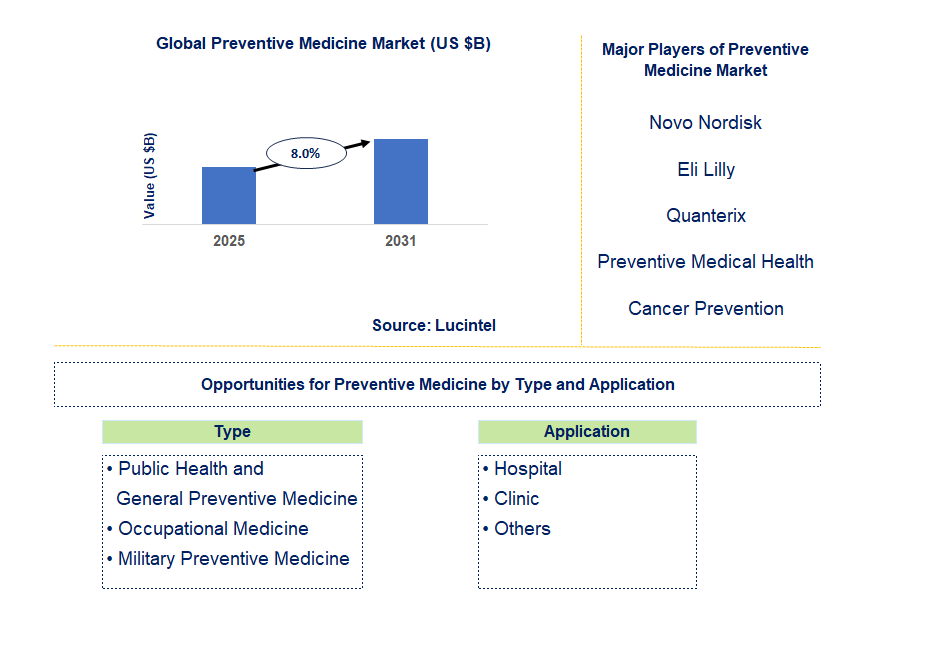
Key data points: The growth forecast = 8.0% annually for the next 7 years. Scroll below to get more insights. This market report covers trends, opportunities and forecasts in preventive medicine market to 2031 by type (public health and general preventive medicine, occupational medicine, and military preventive medicine), application (hospital, clinic, and others), and region (North America, Europe, Asia Pacific, and the Rest of the World)
We'll send your sample report shortly.
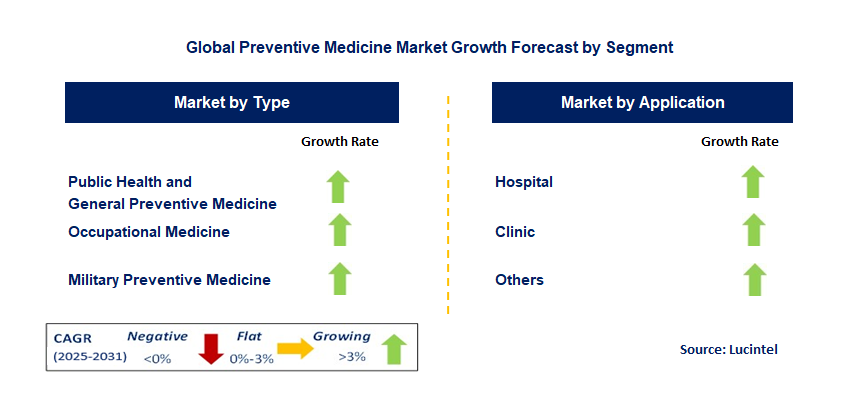
• Lucintel forecasts that, within the type category, public health and general preventive medicine are expected to witness the highest growth over the forecast period.
• Within the application category, hospitals are expected to witness higher growth.
• In terms of region, North America is expected to witness the highest growth over the forecast period. Gain valuable insights for your business decisions with our comprehensive 150+ page report. Sample figures with some insights are shown below.
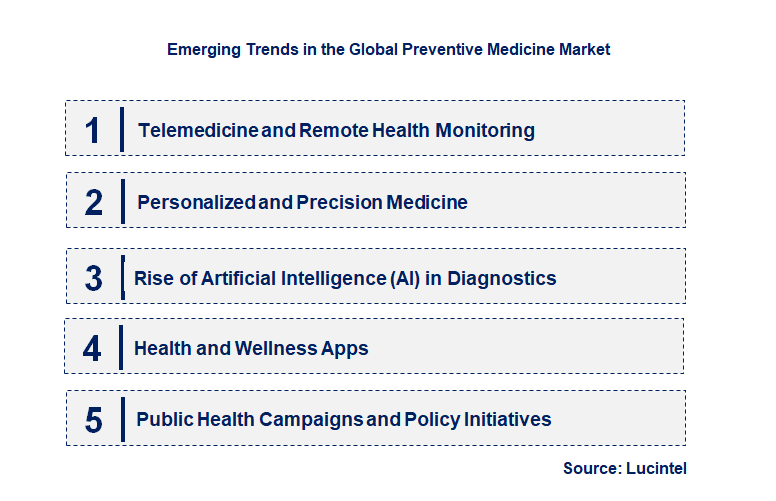
• Telemedicine and Remote Health Monitoring: Telemedicine and remote health monitoring have seen rapid adoption in the preventive medicine sector, driven by advancements in digital health technologies. Telehealth services allow patients to access preventive care remotely, enabling real-time consultations, health assessments, and follow-up treatments without the need for in-person visits. This trend is especially important in rural areas where access to healthcare facilities may be limited. Additionally, wearable devices and mobile applications help individuals track health metrics, offering valuable data for early disease detection and lifestyle modifications.
• Personalized and Precision Medicine: Personalized and precision medicine are revolutionizing preventive care by tailoring healthcare interventions to individual genetic, environmental, and lifestyle factors. Advances in genomics and molecular diagnostics allow for more accurate predictions of disease risks, enabling early interventions before symptoms manifest. Personalized medicine is particularly beneficial in preventing conditions like cancer, cardiovascular diseases, and diabetes. By providing targeted treatment and prevention strategies, precision medicine offers the potential for improved health outcomes and reduced healthcare costs by preventing costly and complex treatments in the future.
• Rise of Artificial Intelligence (AI) in Diagnostics: Artificial intelligence (AI) is playing a crucial role in enhancing the effectiveness of preventive medicine. AI-powered diagnostic tools are being used to detect diseases at earlier stages by analyzing vast amounts of data from medical imaging, genetic tests, and patient history. AI algorithms can predict individual health risks, recommend preventive actions, and even assist in developing personalized treatment plans. As AI technology continues to evolve, its application in preventive care will expand, leading to more efficient and accurate disease prevention strategies.
• Health and Wellness Apps: The increasing popularity of health and wellness apps is transforming how individuals approach preventive healthcare. These apps track a wide range of metrics, from physical activity and diet to sleep patterns and mental health, providing users with actionable insights to improve their well-being. Some apps offer features like symptom checkers, vaccination reminders, and mental health support, further promoting holistic preventive care. As consumer interest in self-care grows, the demand for these apps is expected to continue rising, driving the expansion of the preventive medicine market.
• Public Health Campaigns and Policy Initiatives: Governments worldwide are prioritizing preventive healthcare through public health campaigns and policy initiatives aimed at promoting healthier lifestyles, reducing smoking, and preventing chronic diseases. For instance, the United States and the European Union have launched nationwide campaigns to reduce tobacco consumption, improve diet, and encourage physical activity. These initiatives, supported by increased government funding and incentives, are fueling the growth of preventive medicine by fostering public awareness and encouraging early disease detection and healthier behaviors. These emerging trends are transforming the global preventive medicine market by making healthcare more accessible, personalized, and data-driven. The integration of telemedicine, AI, and health monitoring tools is making preventive care more efficient and convenient, while public health campaigns and personalized medicine are ensuring that interventions are tailored to individual needs. These trends collectively are shifting healthcare from a reactive to a proactive model, promoting long-term health outcomes and reducing the burden on healthcare systems worldwide.
• Government Investment in Preventive Healthcare Programs: Governments worldwide are increasing investments in preventive healthcare programs. For example, the U.S. government’s focus on expanding coverage for preventive services under the Affordable Care Act (ACA) has resulted in greater access to screenings, vaccinations, and wellness checkups. Similarly, China’s “Healthy China 2030” initiative emphasizes the importance of preventive measures, aiming to reduce the incidence of chronic diseases through early intervention. These investments are fostering the growth of the preventive medicine market by making preventive care more accessible to a broader population.
• Advancements in Preventive Vaccination Programs: Vaccination programs have seen significant advancements, especially with the introduction of vaccines for diseases like COVID-19 and various cancers. Preventive vaccines are a critical part of reducing the burden of infectious diseases and chronic conditions worldwide. The rapid development and deployment of vaccines during the COVID-19 pandemic highlighted the importance of prevention in public health. Ongoing research and development in vaccine technologies are expected to play a crucial role in combating both emerging infectious diseases and preventing conditions like cancer and heart disease.
• Integration of Artificial Intelligence in Preventive Medicine: AI and machine learning are increasingly being used in preventive medicine to predict, detect, and manage diseases more effectively. AI algorithms can analyze large datasets from medical records, wearables, and imaging tools to identify early signs of diseases such as diabetes, cardiovascular disease, and cancer. By enabling earlier intervention, AI is helping to reduce the severity and cost of these diseases. This technological advancement is enhancing the ability of healthcare providers to offer more accurate and effective preventive care, driving market growth.
• Increased Use of Wearables and Remote Monitoring Tools: Wearables and remote health monitoring devices are becoming integral to preventive healthcare by allowing individuals to track vital health metrics like heart rate, activity levels, sleep patterns, and blood sugar levels. These tools help identify potential health risks early and allow for proactive interventions. The growing popularity of wearable devices, such as fitness trackers and smartwatches, is expected to drive the demand for preventive medicine, as they provide real-time data for both users and healthcare providers to make informed decisions.
• Expansion of Telemedicine Services for Preventive Care: The expansion of telemedicine has significantly impacted the delivery of preventive healthcare services, especially in remote and underserved areas. Telemedicine platforms allow patients to access consultations with healthcare providers, participate in wellness programs, and receive preventive screenings without the need for in-person visits. This has made preventive care more accessible, especially for those who may not have easy access to healthcare facilities. The growing adoption of telemedicine is expected to continue driving the market for preventive medicine by improving accessibility and convenience. Recent developments in the global preventive medicine market, such as increased government investments, advancements in vaccination programs, and the integration of AI and wearable technologies, are shaping the future of healthcare. These developments are enhancing early detection, improving patient outcomes, and making preventive care more accessible and effective. As these trends continue to unfold, the global focus on preventive medicine is expected to grow, leading to better health outcomes and reduced healthcare costs.
• Chronic Disease Prevention: Preventive medicine plays a crucial role in managing and preventing chronic diseases like diabetes, cardiovascular disease, and obesity. Early diagnosis through screenings, lifestyle changes, and vaccination programs can significantly reduce the prevalence and severity of these diseases. With rising global healthcare costs associated with chronic conditions, there is an increasing focus on preventive measures to reduce the long-term economic burden on healthcare systems, creating a significant growth opportunity in this area.
• Vaccination Programs: Vaccination is one of the most effective forms of disease prevention. The growing demand for vaccines for both infectious diseases (like COVID-19, influenza) and chronic conditions (such as cancer) offers substantial growth potential. Governments and healthcare providers are focusing on expanding immunization coverage, particularly in emerging economies where vaccine access remains limited. Advancements in vaccine technology, including mRNA vaccines, are expected to accelerate growth in this sector, offering opportunities for pharmaceutical companies and healthcare providers.
• Mental Health and Wellness: Preventive medicine is increasingly focusing on mental health as a key aspect of overall well-being. Programs targeting stress management, depression prevention, and mental health awareness are becoming integral to preventive care strategies. The growing recognition of the link between mental and physical health is driving demand for mental health screenings and therapies as part of preventive healthcare, presenting new opportunities in this market.
• Aging Population Care: As populations age globally, there is a growing demand for preventive medicine tailored to older adults. Preventive strategies for aging-related conditions like dementia, osteoporosis, and arthritis are gaining prominence. Healthcare systems are increasingly focusing on long-term care solutions and preventive measures to improve the quality of life for the elderly. This demographic shift presents a significant growth opportunity for companies offering preventive services, diagnostics, and therapeutics for aging populations.
• Corporate Wellness Programs: Corporate wellness programs are becoming a popular way for employers to promote preventive healthcare among their employees. These programs typically focus on physical activity, healthy eating, stress management, and regular health check-ups. Companies are increasingly investing in wellness initiatives to improve employee health, reduce absenteeism, and increase productivity. This presents a growing opportunity for preventive medicine providers to collaborate with businesses to deliver tailored health solutions and programs for the workforce. Strategic growth opportunities in the global preventive medicine market are driven by expanding preventive programs across various sectors, including chronic disease prevention, vaccination, mental health, aging population care, and corporate wellness. These opportunities are reshaping the market by promoting early interventions, enhancing overall health outcomes, and reducing healthcare costs. As these trends continue, the demand for preventive medicine is set to grow, with significant implications for healthcare providers and stakeholders worldwide.
• Novo Nordisk
• Eli Lilly
• Quanterix
• Preventive Medical Health Care
• Cancer Prevention Pharmaceuticals
• Public Health and General Preventive Medicine
• Occupational Medicine
• Military Preventive Medicine
• Hospital
• Clinic
• Others
• North America
• Europe
• Asia Pacific
• The Rest of the World
• United States: In the United States, the preventive medicine market is witnessing significant developments, largely driven by increased government spending on healthcare and rising public awareness. The U.S. government’s Affordable Care Act (ACA) has expanded access to preventive services, including screenings and vaccinations. Additionally, advancements in digital health technologies are playing a pivotal role, with wearables and mobile health applications helping individuals monitor their health in real-time. The growing adoption of telemedicine has also facilitated access to preventive care, especially in rural areas. With an increasing focus on chronic disease management, preventive measures like lifestyle counseling and early disease screening are becoming standard practice.
• China: The Chinese preventive medicine market is rapidly evolving due to its growing urban population, aging demographics, and rising healthcare demands. The Chinese government has introduced numerous initiatives aimed at improving public health, such as the Healthy China 2030 plan, which emphasizes disease prevention, health promotion, and access to care. These initiatives focus on early detection, vaccination programs, and reducing lifestyle-related diseases. Innovations in telemedicine and mobile health platforms are improving accessibility to preventive care, especially in underserved regions. Additionally, China is investing heavily in research for preventive vaccines and treatments, further boosting the market's growth.
• Germany: The German preventive medicine market is well-established, benefiting from a strong healthcare infrastructure and a highly efficient healthcare system. The government’s focus on preventive care is evident through public health campaigns aimed at reducing smoking, alcohol consumption, and promoting healthy diets. Moreover, Germany has been advancing in genetic screenings and personalized medicine, which are crucial for early disease detection and prevention. Germany's healthcare system promotes the integration of preventive services into routine care, and digital health innovations, including AI-driven health monitoring tools, are expected to drive further growth. The German market is also witnessing a rise in employer-based preventive healthcare programs.
• India: The Indian preventive medicine market is experiencing rapid growth, driven by the increasing burden of non-communicable diseases (NCDs) like diabetes, cardiovascular diseases, and cancer. The Indian government has launched several national programs targeting preventive healthcare, such as the National Health Policy and the Ayushman Bharat Scheme, which aim to increase access to screening and preventive services. With rising disposable incomes and health awareness, more Indians are opting for lifestyle interventions, regular check-ups, and immunization programs. India is also seeing increased use of mobile health platforms and telemedicine, which is improving access to preventive care in rural areas, where healthcare facilities are limited.
• Japan: Japan has a robust preventive medicine market, supported by one of the highest life expectancies in the world. The Japanese government has been promoting preventive healthcare measures for decades through initiatives like the Specific Health Checkups and Specific Health Guidance program, which aims to reduce the prevalence of lifestyle-related diseases such as obesity, hypertension, and diabetes. Japan is also a leader in aging population healthcare, focusing on geriatrics and preventive care tailored to older adults. With technological innovations, such as AI for early disease detection and robotic surgeries, Japan is reinforcing its preventive medicine market to improve long-term public health outcomes.


• Novo Nordisk
• Eli Lilly
• Quanterix
• Preventive Medical Health Care
• Cancer Prevention Pharmaceuticals Q5. Which preventive medicine market segment will be the largest in future? Answer: Lucintel forecasts that, within the type category, public health and general preventive medicine are expected to witness the highest growth over the forecast period. Q6. In preventive medicine market, which region is expected to be the largest in next 5 years? Answer: In terms of region, North America is expected to witness the highest growth over the forecast period. Q7. Do we receive customization in this report? Answer: Yes, Lucintel provides 10% customization without any additional cost.


Choose a license that fits your team. Instant PDF delivery.
Prices exclude taxes. Instant delivery. Custom licensing available on request.
Market Report · July 16, 2026
Market Report · July 15, 2026
Market Report · July 15, 2026
Trusted partner for strategic intelligence and business growth


Receive a complimentary market analysis tailored to your industry. Our analysts will identify key growth opportunities and competitive dynamics specific to your business.

Market size, growth rate, and key trend analysis for your specific sector.

Top competitor positioning and market share analysis.

Strategic recommendations backed by data-driven insights.
Get curated market intelligence and competitive moves straight to your inbox.
By subscribing, you agree to receive our monthly insights. Unsubscribe anytime.
Receive a complimentary market analysis tailored to your industry. Our analysts will identify key growth opportunities and competitive dynamics specific to your business.
Market size, growth rate, and key trend analysis for your specific sector.
Top competitor positioning and market share analysis.
Strategic recommendations backed by data-driven insights.
Get curated market intelligence, emerging trends, and competitive moves straight to your inbox each month.
By subscribing, you agree to receive our monthly insights. Unsubscribe anytime.
We'll send your sample report shortly.