
Market Report · June 29, 2026

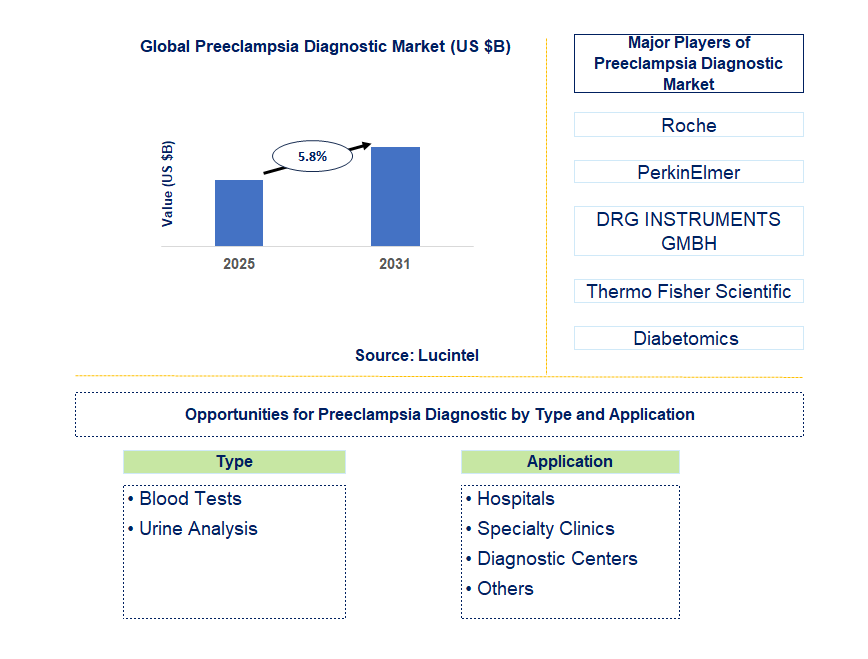
Key data points: The growth forecast = 5.8% annually for the next 7 years. Scroll below to get more insights. This market report covers Trends, opportunity and forecast in preeclampsia diagnostic market to 2031 by type (blood tests and urine analysis), application (hospitals, specialty clinics, diagnostic centers, and others), and region (North America, Europe, Asia Pacific, and the Rest of the World)
We'll send your sample report shortly.
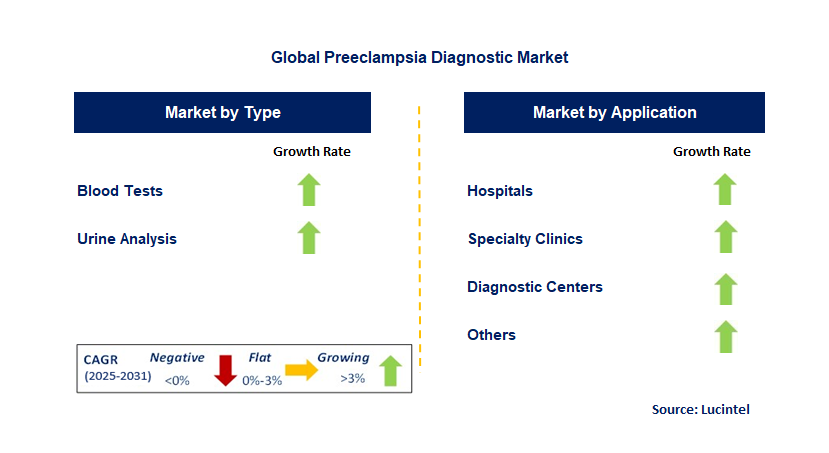
• Lucintel forecasts that, within the type category, blood tests is expected to witness higher growth over the forecast period due to blood tests have broader applications..
• Within the application category, hospitals is expected to witness the highest growth due to hospitals provide comprehensive medical services..
• In terms of region, North America is expected to witness the highest growth over the forecast period due to advanced infrastructure and healthcare investments.. Gain valuable insights for your business decisions with our comprehensive 150+ page report. Sample figures with some insights are shown below.
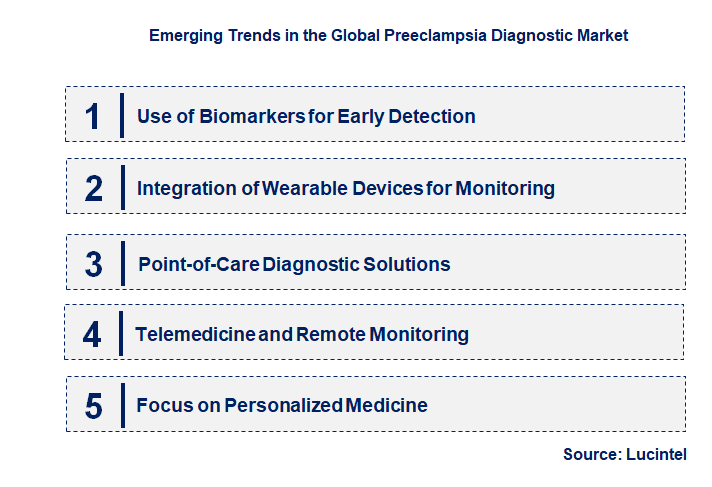
• Use of Biomarkers for Early Detection: Biomarker testing has become a crucial trend in preeclampsia diagnostics, enabling earlier detection and more accurate risk prediction. The use of biomarkers like sFlt-1 and PLGF in blood tests allows healthcare providers to assess a woman’s risk of developing preeclampsia before the onset of symptoms. This trend is leading to earlier intervention, improved outcomes for both mother and child, and a reduction in preeclampsia-related complications.
• Integration of Wearable Devices for Monitoring: The integration of wearable health devices is an emerging trend in the preeclampsia diagnostic market. These devices, which track blood pressure, heart rate, and other vital signs, enable continuous monitoring of pregnant women. Wearables provide real-time data that can help detect early signs of preeclampsia, facilitating timely interventions. This trend is particularly important for remote areas where access to healthcare facilities is limited, improving accessibility to vital diagnostic tools.
• Point-of-Care Diagnostic Solutions: The demand for point-of-care (POC) diagnostic solutions is increasing, particularly in settings where laboratory facilities are unavailable or limited. POC diagnostic tests, which allow immediate results at the patient’s side, are crucial for preeclampsia management. The growing focus on developing POC devices that can quickly assess biomarkers, blood pressure, and other indicators of preeclampsia is helping improve timely diagnosis and treatment. This trend is especially important for low- and middle-income countries.
• Telemedicine and Remote Monitoring: The integration of telemedicine and remote monitoring technologies is transforming the preeclampsia diagnostic market. Through telemedicine platforms, healthcare providers can offer consultations, monitor patient progress, and review diagnostic results remotely. This trend is essential for managing pregnancies, especially for patients in rural areas or those unable to visit healthcare centers frequently. The ability to diagnose and monitor preeclampsia remotely can lead to better healthcare delivery and improved maternal and fetal health outcomes.
• Focus on Personalized Medicine: Personalized medicine is becoming a key trend in preeclampsia diagnostics. By tailoring diagnostic tests and treatment plans to individual patients based on their unique genetic makeup and health data, personalized medicine allows for more precise management of preeclampsia. This trend is leading to the development of targeted therapies and more effective treatment regimens that reduce the risks associated with preeclampsia for both mother and child. These emerging trends are reshaping the preeclampsia diagnostic market by promoting innovation in diagnostic tools, improving accessibility to care, and enhancing the precision of diagnostics and treatment strategies.
• Development of Non-Invasive Diagnostic Tools: Non-invasive diagnostic tools are gaining traction in the preeclampsia diagnostic market. The introduction of blood-based biomarker tests, such as sFlt-1 and PLGF, allows for the detection of preeclampsia risk without the need for invasive procedures. These tools are revolutionizing prenatal care by enabling early diagnosis, improving maternal and fetal health outcomes, and reducing the risks associated with the condition. Non-invasive diagnostic tests are becoming a preferred choice due to their ease of use and patient comfort.
• Government Funding for Maternal Health Research: Governments worldwide are increasing investments in maternal health research, which is contributing to the development of better diagnostic solutions for preeclampsia. Funding is supporting research into new biomarkers, diagnostic technologies, and interventions aimed at improving early detection and treatment of preeclampsia. These efforts are expected to lead to more advanced, affordable, and effective diagnostic tools, enhancing the overall healthcare infrastructure for pregnant women globally.
• Rise in Telemedicine Adoption: The adoption of telemedicine in maternal healthcare is expanding rapidly, especially in the wake of the COVID-19 pandemic. Telemedicine platforms are being used to monitor preeclampsia risk factors, review diagnostic results, and consult with healthcare providers remotely. This trend is increasing accessibility to preeclampsia diagnostics, particularly in rural and underserved regions where healthcare resources are limited. Telemedicine is improving patient care by offering more convenient and timely access to diagnostic services.
• Integration of Artificial Intelligence in Diagnostics: Artificial intelligence (AI) is being integrated into preeclampsia diagnostic tools to improve accuracy and efficiency. AI algorithms can analyze complex datasets from diagnostic tests, such as biomarkers and ultrasound images, to assist healthcare providers in detecting early signs of preeclampsia. This development is expected to reduce diagnostic errors, enhance decision-making, and improve outcomes for both mothers and babies.
• Increased Focus on Point-of-Care Testing: Point-of-care testing devices for preeclampsia are gaining attention as they allow for immediate, on-site results, making them ideal for remote or resource-limited settings. The development of POC devices that can assess key indicators of preeclampsia, such as blood pressure and proteinuria, is a significant advancement in maternal healthcare. This trend is particularly beneficial for regions with limited access to specialized medical facilities, as it enables quicker diagnosis and intervention. These recent developments are driving the preeclampsia diagnostic market forward, improving the early detection of the condition, and increasing access to essential healthcare services worldwide.
• Advancement of Biomarker-Based Diagnostics: The development of biomarker-based diagnostics presents significant growth opportunities in the preeclampsia diagnostic market. Biomarkers such as sFlt-1, PLGF, and others are increasingly being used to predict preeclampsia risk early in pregnancy. Companies that focus on advancing biomarker testing technologies have the potential to drive market growth by offering more accurate and cost-effective diagnostic solutions.
• Growth in Point-of-Care Diagnostics: The growing demand for point-of-care diagnostics presents an opportunity to expand market offerings, especially in underserved areas. Point-of-care testing devices that enable rapid detection of preeclampsia-related risk factors, such as blood pressure and proteinuria, are becoming more sought after. This trend offers significant potential for companies to innovate and improve diagnostic accessibility.
• Telemedicine and Remote Monitoring Solutions: The rise of telemedicine and remote monitoring is opening new opportunities in the preeclampsia diagnostic market. Remote monitoring tools that track vital signs, such as blood pressure, offer convenience and accessibility, particularly for women in rural areas. This presents growth potential for companies focused on providing telehealth solutions for pregnant women at risk of preeclampsia.
• Personalized Medicine and Targeted Therapies: The trend toward personalized medicine provides opportunities for developing targeted therapies and diagnostic tests tailored to individual patient needs. Advances in genetic testing and patient-specific diagnostics enable healthcare providers to offer more precise and effective management of preeclampsia, thus opening avenues for growth in this segment.
• Emerging Markets and Affordable Solutions: Emerging markets, particularly in developing countries, present significant growth opportunities for affordable preeclampsia diagnostic solutions. Companies that can offer cost-effective, accurate, and non-invasive testing options will find new avenues for growth in these regions, where access to healthcare is often limited. These growth opportunities highlight the potential for innovation and market expansion in the preeclampsia diagnostic market. By focusing on advancements in diagnostics, improving access, and addressing the needs of underserved populations, the market is poised for significant growth in the coming years.
• Roche
• PerkinElmer
• DRG INSTRUMENTS GMBH
• Thermo Fisher Scientific
• Diabetomics
• Blood Tests
• Urine Analysis
• Hospitals
• Specialty Clinics
• Diagnostic Centers
• Others
• North America
• Europe
• Asia Pacific
• The Rest of the World
• United States: In the United States, recent developments in the preeclampsia diagnostic market focus on the increasing use of non-invasive screening tests and biomarker-based diagnostics. Innovations such as the PLGF (placental growth factor) and sFlt-1 (soluble fms-like tyrosine kinase-1) tests have shown promise in predicting preeclampsia risk. The U.S. market is also witnessing a rise in home-based testing kits, driven by growing consumer demand for self-monitoring and early detection. Furthermore, collaborations between research institutions and diagnostic companies are accelerating the development of new technologies aimed at improving diagnostic accuracy and reducing healthcare costs.
• China: China’s preeclampsia diagnostic market has been expanding due to a growing emphasis on maternal health and improving prenatal care. The Chinese government has been increasing its focus on reducing maternal and infant mortality rates, which has led to greater investment in diagnostic tools. The market is seeing a surge in the adoption of advanced screening techniques such as Doppler ultrasound and biomarker testing. Additionally, China’s large population has created demand for affordable, accessible diagnostic solutions. Local companies are innovating in cost-effective diagnostic products to meet the needs of a broad patient base, enhancing market growth prospects.
• Germany: Germany has established itself as a key player in the preeclampsia diagnostic market, thanks to its strong healthcare infrastructure and technological advancements. The German market is seeing the integration of advanced diagnostic tools like proteinuria tests, blood pressure monitoring devices, and laboratory-based biomarker testing for more accurate preeclampsia detection. German healthcare providers are also adopting mobile and remote monitoring technologies to enhance patient care. Moreover, government support for research and development, as well as the implementation of national health policies focused on maternal health, is expected to drive further advancements in diagnostic solutions.
• India: In India, the preeclampsia diagnostic market is evolving rapidly, driven by the growing awareness of maternal health issues and the need for early intervention. The adoption of low-cost, non-invasive diagnostic tests such as blood pressure monitoring and biomarker screening is on the rise, especially in rural and underserved areas. India’s healthcare system is focusing on improving the availability of diagnostic tools to reduce maternal mortality rates. Local manufacturers are also innovating affordable diagnostic solutions to cater to the large and diverse population. Government initiatives to enhance maternal care services are further propelling market growth in India.
• Japan: Japan’s preeclampsia diagnostic market is influenced by its well-established healthcare system and technological prowess. The country is witnessing increased use of advanced diagnostic methods like urine protein testing, blood pressure monitoring, and ultrasound in the early detection of preeclampsia. Japan is also leading in the development and implementation of automated diagnostic solutions, including wearable health devices that can monitor vital signs and predict potential complications during pregnancy. With a growing elderly population and a focus on reducing healthcare burdens, Japan is expected to continue driving innovations in preeclampsia diagnostics, particularly in the field of predictive analytics and remote monitoring.


• Roche
• PerkinElmer
• DRG INSTRUMENTS GMBH
• Thermo Fisher Scientific
• Diabetomics Q5. Which preeclampsia diagnostic market segment will be the largest in future? Answer: Lucintel forecasts that blood tests is expected to witness higher growth over the forecast period due to blood tests have broader applications.. Q6. In preeclampsia diagnostic market, which region is expected to be the largest in next 5 years? Answer: North America is expected to witness the highest growth over the forecast period due to advanced infrastructure and healthcare investments.. Q7. Do we receive customization in this report? Answer: Yes, Lucintel provides 10% customization without any additional cost.


Choose a license that fits your team. Instant PDF delivery.
Prices exclude taxes. Instant delivery. Custom licensing available on request.
Market Report · June 29, 2026
Market Report · May 18, 2026
Trusted partner for strategic intelligence and business growth


Receive a complimentary market analysis tailored to your industry. Our analysts will identify key growth opportunities and competitive dynamics specific to your business.

Market size, growth rate, and key trend analysis for your specific sector.

Top competitor positioning and market share analysis.

Strategic recommendations backed by data-driven insights.
Get curated market intelligence and competitive moves straight to your inbox.
By subscribing, you agree to receive our monthly insights. Unsubscribe anytime.
Receive a complimentary market analysis tailored to your industry. Our analysts will identify key growth opportunities and competitive dynamics specific to your business.
Market size, growth rate, and key trend analysis for your specific sector.
Top competitor positioning and market share analysis.
Strategic recommendations backed by data-driven insights.
Get curated market intelligence, emerging trends, and competitive moves straight to your inbox each month.
By subscribing, you agree to receive our monthly insights. Unsubscribe anytime.
We'll send your sample report shortly.