
Market Report · May 18, 2026

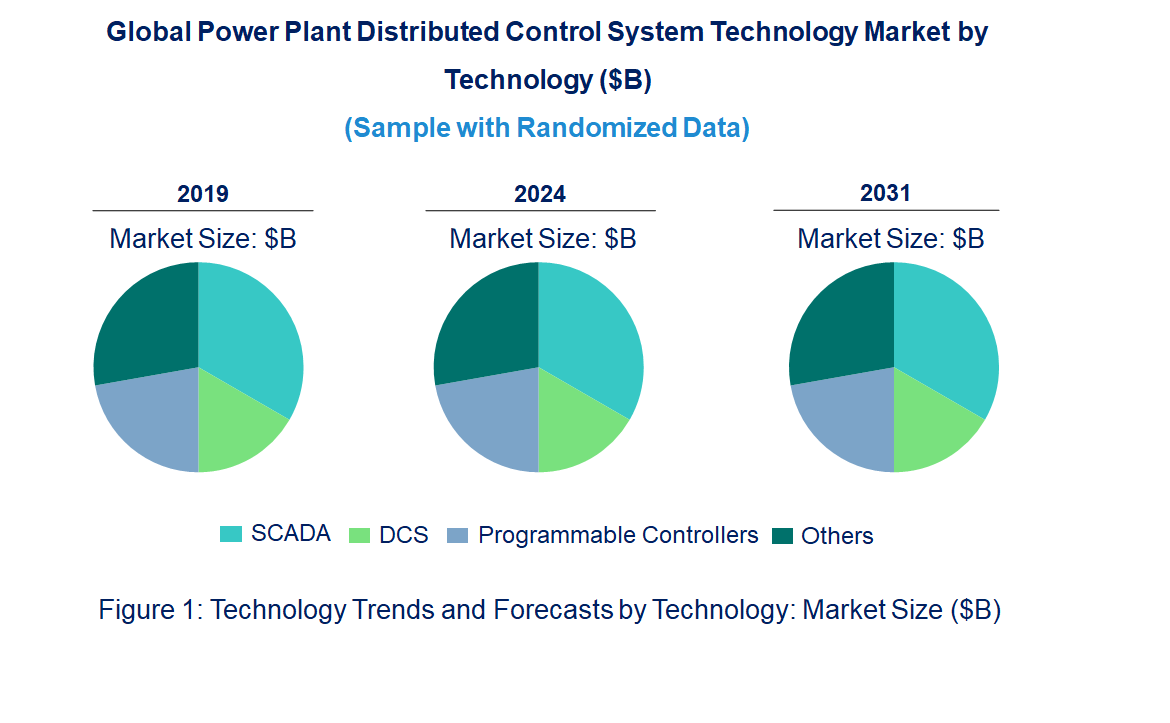
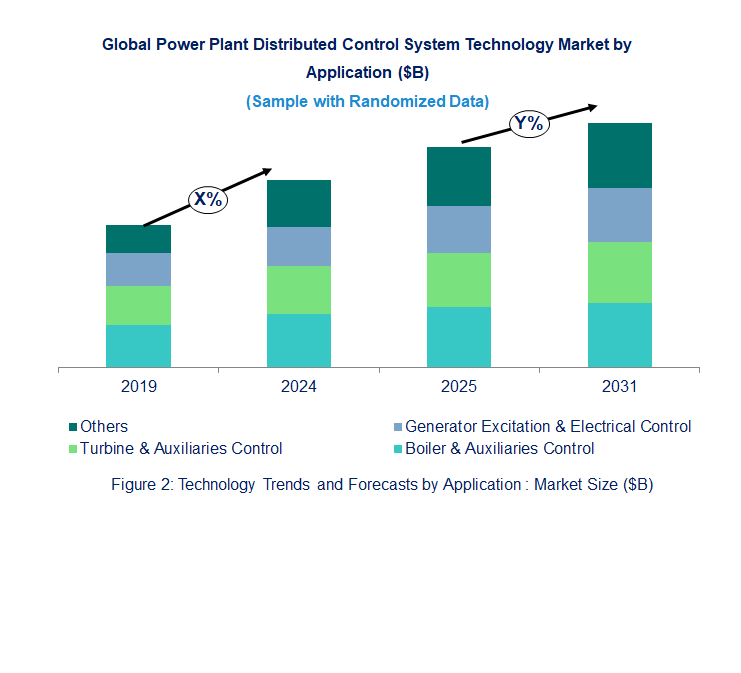
This market report covers trends, opportunities, and forecasts in the global power plant distributed control system market to 2031 by technology (scada, dcs, programmable controllers, and others), application (boiler & auxiliaries control, turbine & auxiliaries control, generator excitation & electrical control, and others), and region (North America, Europe, Asia Pacific, and the Rest of the World)
We'll send your sample report shortly.
• Integration of IoT and Cloud Technology: Power plants are adopting IoT-enabled SCADA and cloud-based distributed control system solutions for enhanced remote monitoring and predictive maintenance, improving operational efficiency.
• Adoption of Advanced Analytics and AI: AI-driven algorithms are being used to optimize control systems, enabling real-time decision-making and reducing downtime in power generation processes.
• Increased Focus on Cybersecurity: With the growing digitization of control systems, robust cybersecurity measures are being integrated to protect critical infrastructure from threats.
• Shift Toward Open Architecture Systems: Open architecture in distributed control systems and SCADA systems facilitates interoperability, allowing seamless integration with third-party devices and software.
• Advancements in Programmable Controllers: The use of programmable logic controllers (PLCs) is expanding due to their flexibility, scalability, and ability to handle complex automation tasks. The emerging trends in the power plant distributed control system market are revolutionizing the industry by enhancing operational efficiency, flexibility, and security. Integration of IoT and cloud-based systems, adoption of AI and advanced analytics, and a focus on cybersecurity are driving significant advancements. The shift toward open architecture systems and advancements in programmable controllers further enables seamless operations and adaptability to evolving demands.
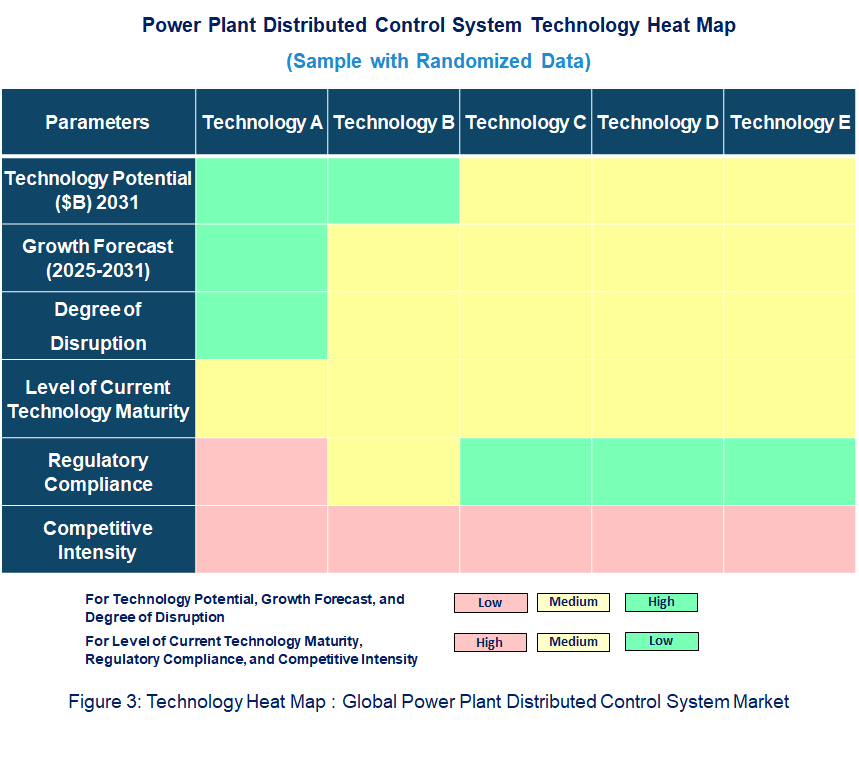
• Technology Potential: The potential is high, especially with IoT, AI, and cloud integration, enabling smarter and more efficient control systems.
• Degree of Disruption: The transition to SCADA, cloud platforms, and AI introduces significant disruption, challenging traditional distributed control system solutions and transforming operational paradigms.
• Level of Current Technology Maturity: distributed control system and PLC systems are well-matured; however, IoT and AI-enabled SCADA are still developing, offering substantial room for innovation and adoption.
• Regulatory Compliance: Compliance with standards like ISO, IEC, and NERC CIP is critical. Regulations emphasize operational safety, reliability, and cybersecurity, driving advancements in secure and reliable control technologies.
• Siemens Energy: Siemens Energy launched an advanced distributed control system platform featuring AI-powered analytics to optimize power plant operations and improve decision-making. This innovation helps utilities achieve higher efficiency and supports the integration of renewable energy sources into the grid.
• ABB: ABB introduced a cloud-based distributed control system solution that enhances remote monitoring and maintenance capabilities. This development reduces operational downtime and offers real-time insights, ensuring reliable and efficient plant operations.
• Emerson: Emerson expanded its distributed control system portfolio with enhanced cybersecurity features to protect critical power infrastructure from cyber threats. This initiative addresses the growing concerns over data breaches and operational disruptions in the energy sector.
• Rockwell: Rockwell Automation unveiled a modular distributed control system framework that enables scalable solutions for power plants of various sizes. This innovation supports cost-effective upgrades and aligns with the growing demand for flexible automation systems.
• GE: GE launched a hybrid distributed control system solution tailored for power plants that use multiple energy sources. This system optimizes the performance of conventional and renewable energy systems, catering to the global shift toward cleaner energy.
• Schneider Electric: Schneider Electric introduced an energy-efficient distributed control system platform incorporating IoT connectivity for smart monitoring and predictive maintenance. This enhances operational efficiency and extends the lifespan of critical equipment.
• Honeywell: Honeywell developed a distributed control system with advanced simulation capabilities for operator training, improving workforce readiness and reducing operational risks. This addresses the industry’s growing need for skilled operators in increasingly complex environments.
• Transition to Renewable Energy Sources: The shift toward renewable energy, including solar, wind, and hydropower, is driving demand for advanced distributed control system solutions capable of managing complex, decentralized energy grids and integrating variable energy sources effectively.
• Rising Demand for Operational Efficiency: Power plants are increasingly adopting distributed control systems to optimize operations, reduce energy wastage, and achieve higher efficiency, aligning with global sustainability goals and cost-saving initiatives.
• Advancements in Digital Technologies: The integration of IoT, AI, and machine learning in distributed control system solutions enhances real-time monitoring, predictive maintenance, and automation, driving the adoption of next-generation control systems.
• Growing Focus on Grid Reliability and Stability: Distributed control systems play a critical role in maintaining grid stability by enabling precise control of power generation and distribution, which is crucial amid increasing energy demand and intermittent renewable sources.
• Government Regulations and Incentives: Policies promoting energy efficiency, decarbonization, and modernization of power infrastructure are pushing utilities to invest in advanced distributed control system technologies to meet regulatory requirements and benefit from incentives. Major Challenges in the power plant distributed control system market are:
• High Initial Investment Costs: The deployment of advanced distributed control system solutions requires significant upfront investment, which can be a barrier for small and medium-sized power plants, particularly in developing regions.
• Interoperability and Integration Issues: The coexistence of legacy systems with modern distributed control system solutions often leads to compatibility challenges, increasing the complexity and cost of integration.
• Cybersecurity Threats: As distributed control systems become more digital and connected, they are increasingly vulnerable to cyberattacks, posing risks to operational safety and continuity.
• Skilled Workforce Shortage: The complexity of modern distributed control systems requires a skilled workforce for operation and maintenance. However, a shortage of qualified professionals remains a significant challenge for the industry.
• Uncertain Economic Conditions: Fluctuations in global economic conditions and energy prices can impact investments in power infrastructure, potentially slowing the adoption of new distributed control system technologies. The power plant distributed control system market is driven by advancements in technology, a focus on renewable energy integration, and regulatory support. However, challenges such as high costs, cybersecurity risks, and integration complexities persist. Addressing these obstacles through innovation and collaboration will unlock the market’s full potential and ensure its sustained growth.
• Siemens Energy
• Abb
• Emerson
• Rockwell
• Ge
• Schneider Electric
• Technology Readiness and Key Applications: SCADA systems demonstrate high readiness, especially for real-time data acquisition and remote plant operations, making them competitive in large-scale utilities. The distributed control system is equally mature, excelling in process automation and integration across diverse power generation systems while meeting regulatory standards. Programmable controllers, though more application-specific, are ready for advanced automation in modular and small-scale power setups. Emerging technologies like IoT and AI are in early adoption phases, with competitive advantages in predictive analytics and optimization, but requiring more robust compliance mechanisms. Each technology serves critical roles, from grid stability to energy management, ensuring tailored solutions for diverse power plant needs.
• Competitive Intensity and Regulatory Compliance: Competitive intensity in the Power Plant distributed control system market is high due to the presence of established players and continuous innovation in SCADA, distributed control systems, and programmable controllers. SCADA and distributed control systems face stringent compliance requirements, particularly in cybersecurity, to meet industry standards and safeguard critical infrastructure. Programmable controllers, though adaptable, often require adherence to niche regulatory protocols tailored to specific industries. The push for energy efficiency and decarbonization adds pressure on all technologies to innovate within compliant frameworks. This competitive landscape fosters collaboration and competition among vendors to deliver more secure, efficient, and cost-effective solutions.
• Disruption Potential: The disruption potential of technologies such as SCADA, distributed control systems, programmable controllers, and others in the Power Plant Distributed Control System (distributed control system) market varies significantly. SCADA systems offer real-time monitoring and remote operation capabilities, revolutionizing plant efficiency and reliability. The distributed control system provides centralized control and seamless integration, enabling smarter decision-making in complex operations. Programmable controllers excel in flexibility and customization, allowing plant-specific automation that challenges traditional systems. Emerging technologies like IoT and AI-integrated platforms are reshaping predictive maintenance and data analytics. Together, these technologies are driving digitization, reducing downtime, and enhancing operational efficiency, positioning the market for transformative growth.
• SCADA
• DCS
• Programmable Controllers
• Others
• Boiler & Auxiliaries Control
• Turbine & Auxiliaries Control
• Generator Excitation & Electrical Control
• Others
• North America
• Europe
• Asia Pacific
• The Rest of the World
• Latest Developments and Innovations in the Power Plant Distributed Control System Technologies
• Companies / Ecosystems
• Strategic Opportunities by Technology Type


Choose a license that fits your team. Instant PDF delivery.
Prices exclude taxes. Instant delivery. Custom licensing available on request.
Market Report · May 18, 2026
Market Report · May 18, 2026
Market Report · May 18, 2026
Trusted partner for strategic intelligence and business growth


Receive a complimentary market analysis tailored to your industry. Our analysts will identify key growth opportunities and competitive dynamics specific to your business.

Market size, growth rate, and key trend analysis for your specific sector.

Top competitor positioning and market share analysis.

Strategic recommendations backed by data-driven insights.
Get curated market intelligence and competitive moves straight to your inbox.
By subscribing, you agree to receive our monthly insights. Unsubscribe anytime.
Receive a complimentary market analysis tailored to your industry. Our analysts will identify key growth opportunities and competitive dynamics specific to your business.
Market size, growth rate, and key trend analysis for your specific sector.
Top competitor positioning and market share analysis.
Strategic recommendations backed by data-driven insights.
Get curated market intelligence, emerging trends, and competitive moves straight to your inbox each month.
By subscribing, you agree to receive our monthly insights. Unsubscribe anytime.
We'll send your sample report shortly.