
Market Report · May 18, 2026

This market report covers trends, opportunities, and forecasts in the global poultry monitoring system market to 2031 by technology (sensors, cameras, audio monitoring, automation, data analytics and ai, and others), end use industry (broiler chicken breeding, layer breeding, and others), and region (North America, Europe, Asia Pacific, and the Rest of the World)
We'll send your sample report shortly.
• Integration of IoT for Real-Time Monitoring: IoT-enabled sensors and devices provide real-time data on parameters like temperature, humidity, and ammonia levels. This integration ensures swift corrective actions, reducing mortality rates and optimizing environmental conditions for healthier flocks. IoT also allows seamless connectivity between devices, enhancing overall farm management efficiency.
• AI-Powered Behavior and Health Analysis: AI algorithms analyze data from cameras and sensors to detect anomalies in bird behavior, health, or movement patterns. Early detection of diseases or stress enables timely intervention, reducing losses and improving productivity. This trend promotes data-driven decision-making in poultry farming.
• Adoption of Audio Monitoring Systems: Audio monitoring technology uses sound analysis to identify distress signals from poultry. Machine learning models process vocalizations to detect environmental discomfort or potential illnesses. This non-invasive approach ensures better welfare while minimizing manual observations.
• Blockchain for Traceability and Food Safety: Blockchain technology is gaining traction to improve traceability and ensure compliance with food safety standards. It enables transparent recording of every stage of production, from farm to table, building trust among consumers and meeting regulatory requirements.
• Automation in Monitoring and Control: Automated systems integrate monitoring with control mechanisms, such as adjusting ventilation, feeding schedules, or lighting. This trend reduces labor dependency, ensures consistent operations, and improves overall farm efficiency. These emerging trends are revolutionizing poultry monitoring by enhancing precision, sustainability, and compliance. As these technologies continue to evolve, they promise to reshape the poultry industry, meeting the growing demand for efficient and humane farming practices.
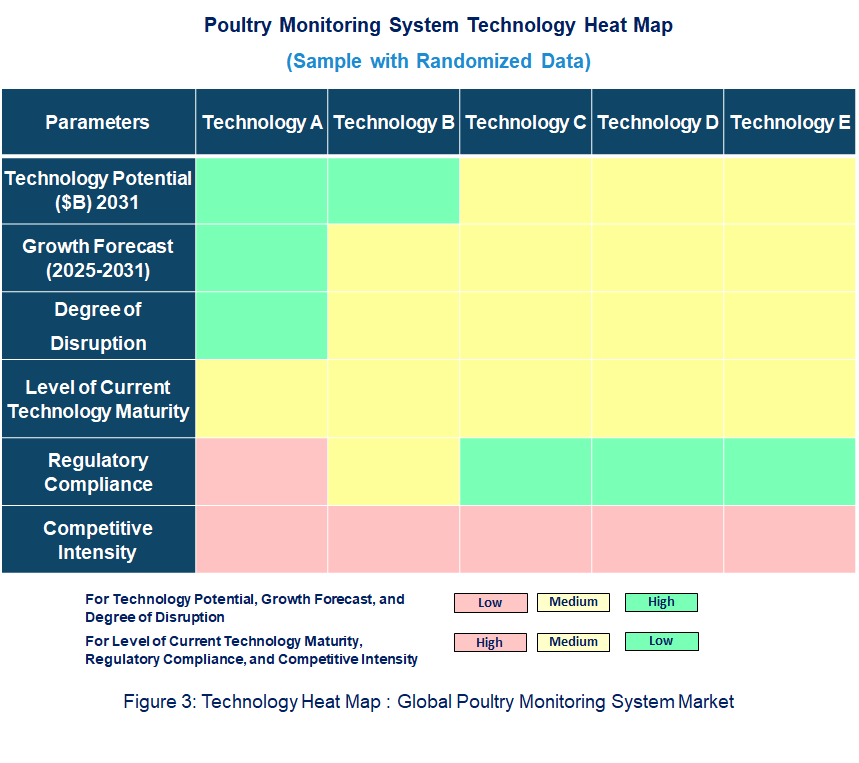
• Technology Potential: The poultry monitoring system technology demonstrates significant potential to revolutionize the poultry farming industry by enhancing precision, efficiency, and animal welfare. Advanced systems like IoT-enabled sensors, AI-powered cameras, and data analytics are enabling real-time monitoring of environmental parameters, bird health, and behavior. These technologies optimize operations, reduce mortality rates, and increase productivity, making them highly impactful.
• Degree of Disruption: The degree of disruption from these technologies is substantial, as they are transforming traditional practices into data-driven operations. AI and machine learning facilitate predictive analysis, while automation minimizes human intervention, reducing labor costs and errors. Blockchain technology further disrupts the supply chain by ensuring traceability and transparency, fostering consumer trust.
• Current Technology Maturity Level: In terms of maturity, technologies like sensors and automated systems are well-established and widely adopted. AI, audio monitoring, and blockchain applications, while rapidly advancing, are still emerging and require further integration to reach full potential.
• Regulatory Compliance: Regulatory compliance plays a pivotal role, particularly concerning food safety, environmental impact, and animal welfare standards. Technologies must align with strict guidelines, including data security for IoT and AI systems, ensuring ethical and legal operations. Overall, poultry monitoring technology is reshaping the industry, balancing innovation with regulatory adherence, and paving the way for a more sustainable and efficient future.
• Aranet: Aranet has introduced advanced wireless environmental monitoring solutions for poultry farms, focusing on IoT-enabled sensors that track key parameters such as temperature, humidity, and CO₂ levels. These systems ensure optimal conditions for poultry health, improve productivity, and provide real-time alerts for farmers to take immediate corrective actions.
• Big Dutchman: Big Dutchman has integrated cutting-edge technologies such as AI and automation into its poultry monitoring systems. Their solutions include automated climate control and advanced feeding systems, which use data from sensors to optimize resource use and create ideal environments for poultry, thereby improving overall operational efficiency and reducing costs.
• Weltech Monitoring System: Weltech’s innovation lies in its comprehensive poultry monitoring systems that combine real-time data collection and analysis with smart alerts. Their focus on sustainability through energy-efficient monitoring solutions helps farmers optimize farm conditions while reducing their carbon footprint, promoting environmental responsibility.
• Cumberland Poultry: Cumberland has developed a robust system that offers comprehensive data analysis and remote monitoring features, including health assessments, feed management, and environmental control. Their system allows farmers to monitor the entire poultry production cycle from anywhere, improving efficiency and reducing manual oversight. These developments are significantly enhancing poultry farm management, ensuring better environmental control, reduced labor costs, and improved bird welfare. The continuous integration of advanced technologies by these key players is reshaping the poultry industry for greater efficiency and sustainability.
• Increasing Demand for Efficiency and Productivity: Farmers are under pressure to improve production efficiency, reduce costs, and maximize output. Poultry monitoring technologies enable real-time data collection and analysis, optimizing operations and helping farmers make data-driven decisions to improve productivity. This demand for more efficient systems drives technology adoption.
• Rising Focus on Animal Welfare: With growing consumer concerns over animal welfare, there is a strong push for humane farming practices. Advanced poultry monitoring systems that track bird health, behavior, and stress levels are crucial for ensuring optimal living conditions. These technologies support ethical farming practices and are aligned with regulatory trends.
• Technological Advancements in IoT and AI: The integration of IoT, AI, and machine learning enables more precise and predictive monitoring of environmental conditions, bird health, and farm operations. This technology has the potential to transform farm management, increase automation, and improve the efficiency of resources like feed, water, and climate control. Challenges
• Regulatory Compliance and Food Safety Standards: Increasing regulations related to food safety and traceability require poultry farmers to adopt monitoring systems that ensure compliance with standards. Blockchain and other technologies offer solutions to maintain transparency in the supply chain, supporting consumer confidence and meeting legal requirements.
• High Initial Investment Costs: The high cost of deploying advanced poultry monitoring systems remains a significant barrier to adoption, especially for small-scale farmers. These systems require significant capital for installation and integration, which can deter investment despite the long-term benefits of increased productivity and resource efficiency. The key drivers of the poultry monitoring system market, such as the demand for efficiency, animal welfare, and technological advancements, are reshaping the industry. However, challenges such as high costs and regulatory compliance need to be addressed to ensure widespread adoption. These opportunities are driving innovation and sustainability in poultry farming, ultimately transforming farm management globally.
• Aranet
• Big Dutchman
• Weltech Monitoring System
• Cumberland Poultry
• Trotec
• Fancom Bv
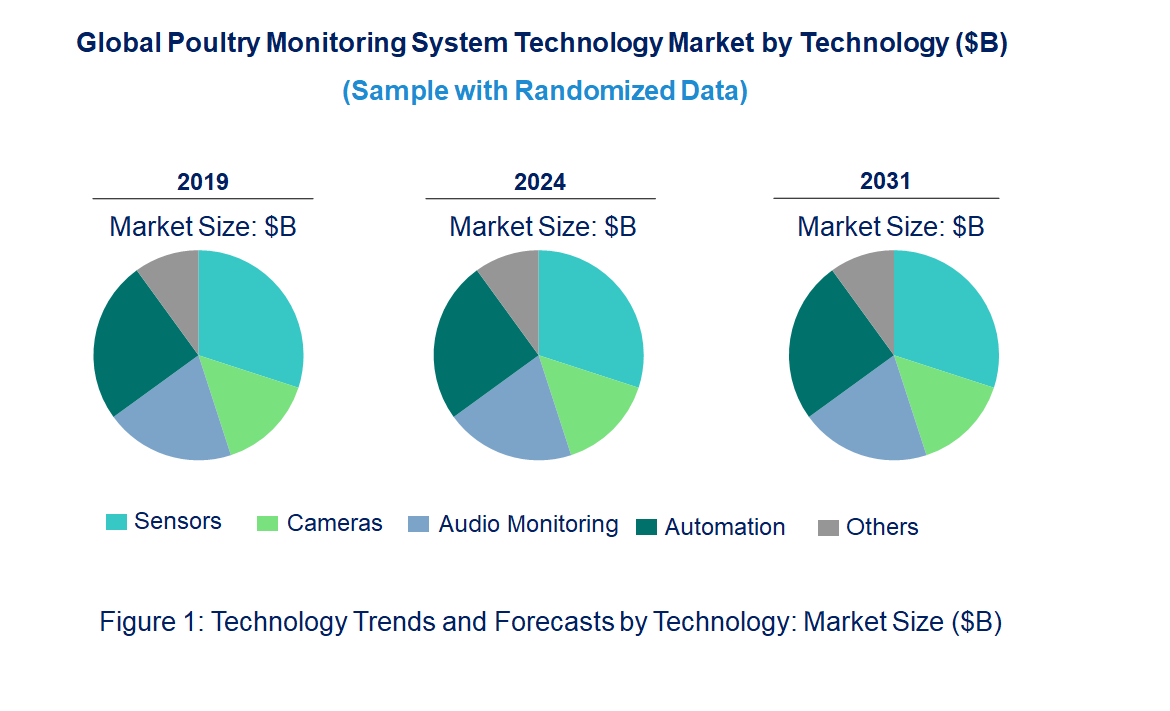
• Technology Readiness by Technology Type for Poultry Monitoring Systems: Sensors are highly mature and widely used, providing crucial real-time data on temperature, humidity, and ammonia levels, ensuring optimal farm conditions. Cameras are increasingly deployed for health and behavior monitoring, with AI-driven software improving accuracy. Audio monitoring is emerging but offers unique advantages in early disease detection. Automation technologies are advancing in climate control and feeding systems, but their full integration across farms is still in progress. Data analytics and AI technologies are rapidly evolving, with robust applications in predictive health analysis and performance optimization, although they require advanced integration with existing systems. Overall, each technology has varying levels of readiness but collectively, they are shaping the future of poultry farming with growing sophistication and efficiency.
• Competitive Intensity and Regulatory Compliance of Different Technologies: The competitive intensity for technologies like sensors, cameras, audio monitoring, and AI in poultry monitoring systems is escalating as multiple players compete to innovate and provide the most advanced solutions. As these technologies evolve, companies are striving to differentiate themselves through performance, data integration, and cost-effectiveness. Regulatory compliance is crucial, especially for food safety, animal welfare, and environmental standards. Technologies must align with increasing global regulations, such as traceability requirements and humane farming practices, which ensures proper monitoring of bird health, conditions, and traceability in the supply chain.
• Disruption Potential of Different Technologies for Poultry Monitoring Systems: Technologies such as sensors, cameras, audio monitoring, automation, data analytics, and AI have high disruption potential in the poultry monitoring system market. Sensors and cameras enable real-time data collection on environmental conditions, bird health, and behavior, transforming farm management into a more efficient and data-driven process. Audio monitoring offers non-invasive health assessments, detecting stress or distress signals from birds. Automation further enhances efficiency by reducing labor dependency and ensuring optimal conditions consistently. Data analytics and AI process vast amounts of real-time data to predict and prevent diseases, optimize feeding schedules, and improve farm productivity. Collectively, these technologies are revolutionizing how poultry farms are operated, creating smarter, more efficient, and more sustainable farming practices.
• Sensors
• Cameras
• Audio Monitoring
• Automation
• Data Analytics and AI
• Others
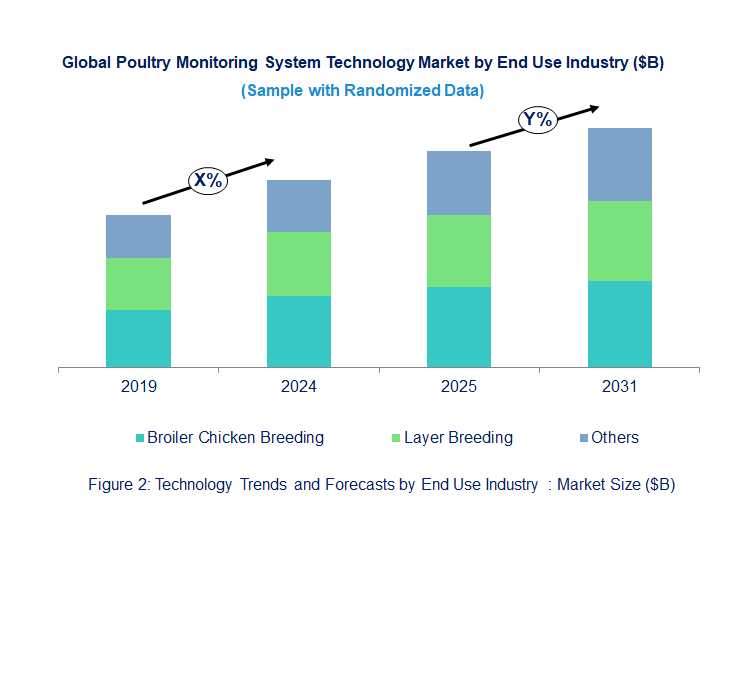
• Broiler Chicken Breeding
• Layer Breeding
• Others
• North America
• Europe
• Asia Pacific
• The Rest of the World
• Latest Developments and Innovations in the Poultry Monitoring System Technologies
• Companies / Ecosystems
• Strategic Opportunities by Technology Type


Choose a license that fits your team. Instant PDF delivery.
Prices exclude taxes. Instant delivery. Custom licensing available on request.
Market Report · May 18, 2026
Market Report · May 18, 2026
Market Report · May 18, 2026
Trusted partner for strategic intelligence and business growth


Receive a complimentary market analysis tailored to your industry. Our analysts will identify key growth opportunities and competitive dynamics specific to your business.

Market size, growth rate, and key trend analysis for your specific sector.

Top competitor positioning and market share analysis.

Strategic recommendations backed by data-driven insights.
Get curated market intelligence and competitive moves straight to your inbox.
By subscribing, you agree to receive our monthly insights. Unsubscribe anytime.
Receive a complimentary market analysis tailored to your industry. Our analysts will identify key growth opportunities and competitive dynamics specific to your business.
Market size, growth rate, and key trend analysis for your specific sector.
Top competitor positioning and market share analysis.
Strategic recommendations backed by data-driven insights.
Get curated market intelligence, emerging trends, and competitive moves straight to your inbox each month.
By subscribing, you agree to receive our monthly insights. Unsubscribe anytime.
We'll send your sample report shortly.