
Market Report · May 18, 2026

This market report covers trends, opportunities, and forecasts in the global poultry automation system market to 2031 by technology (robotic systems, conveyor systems, climate and environmental control systems, feeding and watering systems, and others), application (broiler chicken breeding, layer breeding, and others), and region (North America, Europe, Asia Pacific, and the Rest of the World)
We'll send your sample report shortly.
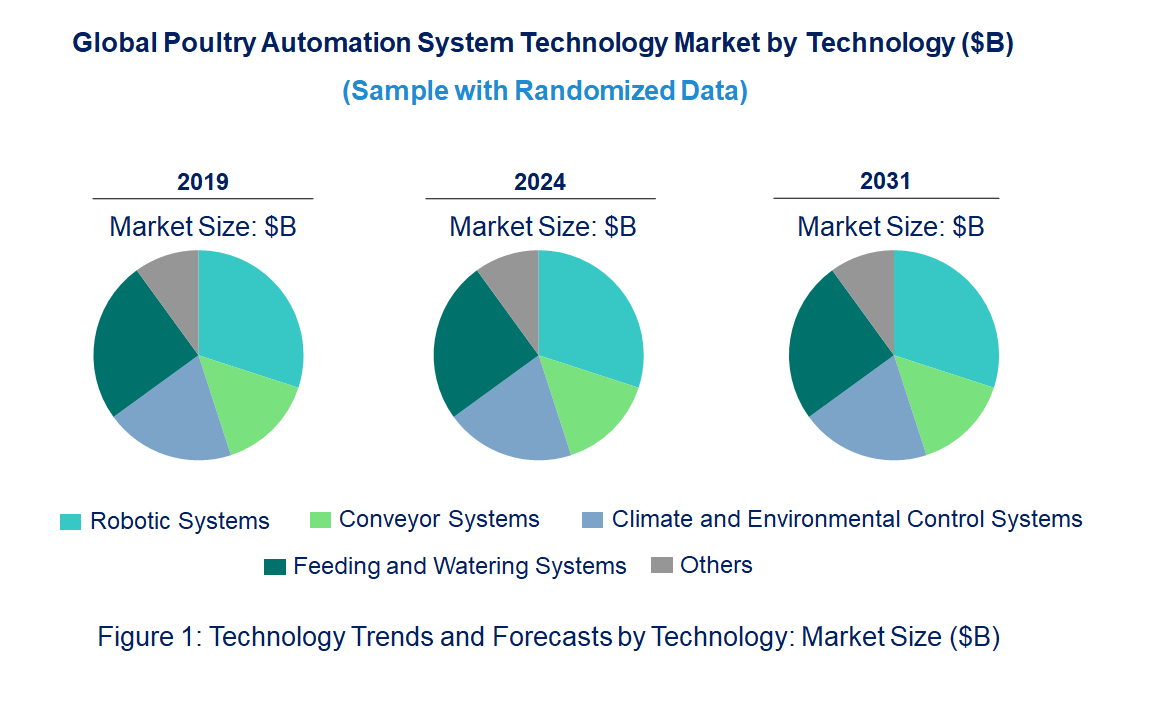
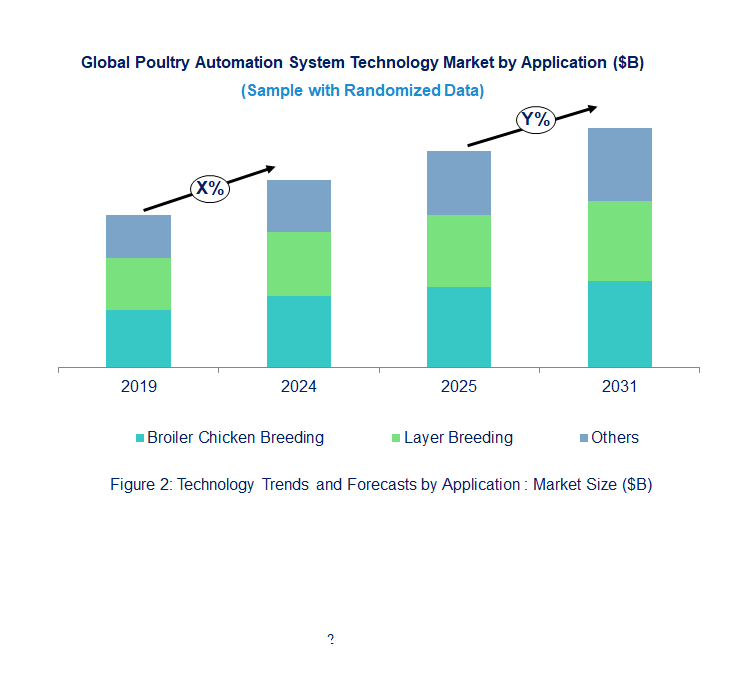
• Integration of AI and Machine Learning: Artificial Intelligence (AI) and Machine Learning (ML) are enabling predictive analytics for poultry farming. These technologies monitor data from sensors, detecting anomalies in bird behavior, feed consumption, or environmental conditions. This facilitates early disease detection, better feed optimization, and overall productivity improvement, minimizing losses and operational costs.
• Adoption of IoT for Real-Time Monitoring: IoT-enabled systems are providing real-time visibility into farm operations by connecting climate control, feeding, and watering systems. Farmers can remotely access performance metrics, analyze data trends, and make informed decisions via mobile or cloud-based platforms, enhancing precision and efficiency in poultry management.
• Focus on Sustainability and Energy Efficiency: With increasing environmental concerns, automation systems now prioritize energy-efficient designs and sustainable practices. Solar-powered equipment, automated waste management systems, and climate controls that optimize resource usage are reducing the carbon footprint of poultry operations.
• Advanced Robotic Applications: Robotics is expanding beyond basic egg collection to include functions like bird vaccination, cleaning, and sorting. These innovations reduce dependency on labor, ensuring faster and more hygienic processes while improving scalability for large farms.
• Blockchain for Traceability and Transparency: Blockchain technology is emerging as a tool for ensuring traceability in poultry supply chains. It enables secure recording of data related to bird health, feed sources, and processing details, meeting regulatory requirements and building consumer trust through transparency. These emerging trends underscore how poultry automation systems are evolving to address challenges like labor shortages, rising operational costs, and sustainability goals. By integrating AI, IoT, robotics, and blockchain, the industry is transitioning to more efficient, transparent, and eco-friendly operations. These advancements not only boost productivity but also align poultry farming with modern standards of ethical and sustainable food production.
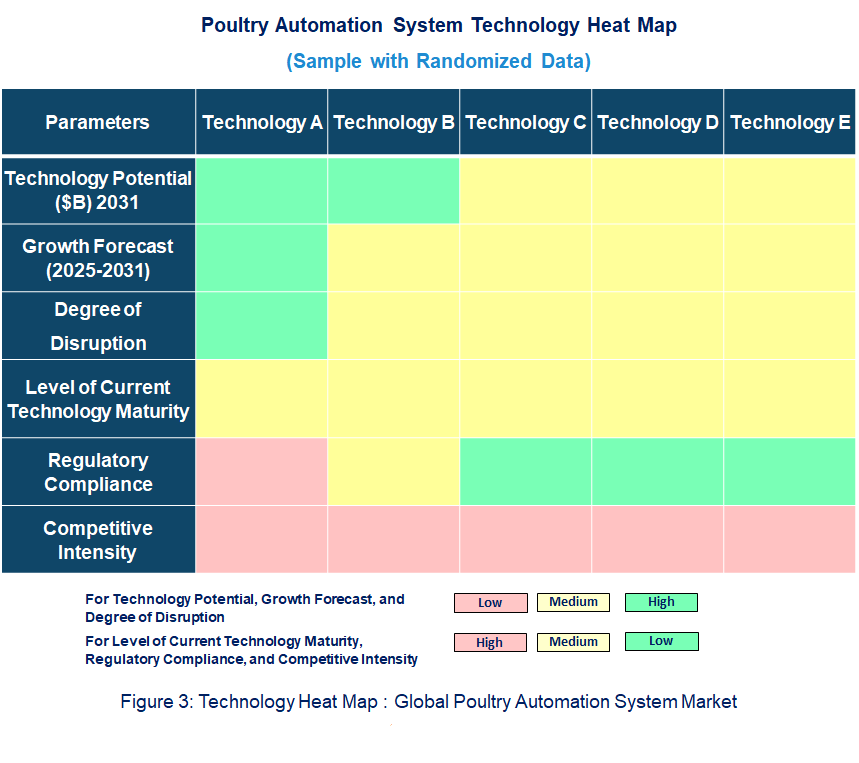
• Technology Potential: Poultry automation systems hold immense potential to revolutionize the poultry industry by optimizing processes, reducing costs, and improving animal welfare. Technologies like robotic systems, IoT-enabled climate control, and AI-driven monitoring deliver enhanced productivity and resource efficiency. Automation minimizes manual labor, addresses skill shortages, and ensures precise execution of tasks like feeding, vaccination, and egg collection, leading to consistent quality and higher yields.
• Degree of Disruption: These technologies are highly disruptive, fundamentally altering traditional poultry farming practices. Robotics and IoT are replacing labor-intensive tasks, while AI and blockchain ensure predictive insights and traceability. This shift not only improves operational efficiency but also enhances transparency and consumer trust, meeting modern market demands.
• Level of Current Technology Maturity: The maturity level of poultry automation technologies varies. Feeding and watering systems, as well as climate control solutions, are well-established. However, advanced robotics, AI integration, and blockchain applications are in the growth stage, with ongoing innovations and pilot implementations driving their adoption.
• Regulatory Compliance: Automation systems must adhere to strict regulatory standards concerning food safety, traceability, and animal welfare. Blockchain supports compliance by ensuring data accuracy, while IoT and AI help maintain regulatory benchmarks through real-time monitoring, fostering trust across stakeholders.
• TerraCom: TerraCom has launched an IoT-integrated climate control system designed for poultry farming. The system monitors and adjusts temperature, humidity, and ventilation in real time, optimizing bird health and productivity. This advancement addresses sustainability and energy efficiency concerns by minimizing resource wastage.
• Pancomp: Pancomp has introduced advanced RFID-enabled feeding systems that allow precise tracking and dispensing of feed. This technology enhances resource management, reduces wastage, and improves feed-to-growth ratios, helping farmers achieve better profitability and operational control.
• GuardMetrics: GuardMetrics has developed a cloud-based monitoring platform that integrates real-time data from multiple automation systems on poultry farms. By offering centralized access to analytics and performance metrics, this platform enables better decision-making and quick responses to anomalies, boosting farm efficiency.
• Guard Patrol Products: Guard Patrol Products has expanded into robotic solutions for poultry farms, including automated egg handling and cleaning systems. These innovations reduce labor dependency, enhance hygiene standards, and scale operations for large farms. These advancements by key players are significantly enhancing the poultry industry’s ability to adapt to modern challenges, emphasizing sustainability, precision, and operational scalability.
• Growing Demand for Poultry Products: The rising global population and increasing preference for protein-rich diets are driving the demand for poultry. Automation technologies enable farmers to scale operations efficiently, ensuring consistent supply while reducing operational bottlenecks.
• Labor Shortages and Rising Costs: Automation addresses labor shortages by mechanizing labor-intensive tasks like egg collection and feeding. It reduces dependency on human labor, cutting long-term costs and ensuring consistent performance in high-demand scenarios.
• Focus on Sustainability and Resource Efficiency: With environmental concerns gaining prominence, automation systems are designed to optimize resource use and reduce waste. Solar-powered systems and IoT-enabled waste management solutions improve sustainability, aligning poultry farming with eco-friendly practices. Major Challenges
• High Implementation Costs: Initial investment in advanced systems like robotics and IoT infrastructure is significant, creating barriers for small-scale farmers. Although long-term benefits outweigh costs, affordability remains a challenge for widespread adoption.
• Regulatory Compliance and Data Privacy: Meeting stringent animal welfare and food safety regulations requires advanced tracking and monitoring systems. Moreover, IoT and cloud-based solutions must adhere to data security and privacy laws, adding complexity. The drivers and challenges in the poultry automation system technology market highlight a pivotal shift toward efficiency, sustainability, and scalability. While drivers promote innovation and adoption, challenges necessitate strategic solutions, fostering a dynamic market environment poised for continued transformation.
• Big Dutchman
• Dynamic Automation
• Fancom
• Fortica
• Hebei Weizhengheng Animal Husbandry Machinery Equipment Co.,Ltd
• Hotraco Agri
• Technology Readiness and Key Applications: Robotic systems are in a growth phase, finding applications in egg handling, vaccination, and cleaning. Conveyor systems are mature, widely used for efficient transport of materials and products. Climate and environmental control systems are technologically advanced, employing IoT and AI for real-time adjustments in poultry houses. Feeding and watering systems are highly developed, with smart systems ensuring precise resource management. Other technologies, such as blockchain for traceability and AI-driven disease detection, are emerging with pilot deployments. These technologies collectively enhance productivity, sustainability, and operational scalability in poultry farming, with varying levels of maturity tailored to specific applications.
• Competitive Intensity and Regulatory Compliance: The competitive intensity in poultry automation technology is high, with players innovating in robotic systems, conveyor solutions, and environmental controls. Advanced feeding and watering systems add further differentiation. Regulatory compliance is critical, particularly concerning animal welfare and food safety standards. For example, robotic systems must ensure humane handling, while climate control and feeding technologies adhere to stringent environmental and quality regulations. Compliance with regional data privacy laws also poses challenges for IoT-enabled and cloud-based solutions, intensifying competition as companies balance innovation with legal requirements. This fosters an environment of rapid development, encouraging differentiation and adherence to global standards.
• Disruption Potential: Robotic systems, conveyor systems, climate and environmental control systems, feeding and watering systems, and other emerging technologies are transforming the poultry automation sector. Robotic systems streamline tasks like egg handling and cleaning, minimizing labor costs and boosting efficiency. Conveyor systems optimize material flow, reducing bottlenecks in large-scale operations. Climate control systems ensure ideal living conditions for birds, improving health and productivity. Feeding and watering systems enable precision dispensing, minimizing waste and enhancing growth rates. Combined with AI and IoT, these technologies offer unprecedented levels of automation, transparency, and resource optimization, disrupting traditional methods and driving industry-wide innovation.
• Robotic Systems
• Conveyor Systems
• Climate and Environmental Control Systems
• Feeding and Watering Systems
• Others
• Broiler Chicken Breeding
• Layer Breeding
• Others
• North America
• Europe
• Asia Pacific
• The Rest of the World
• Latest Developments and Innovations in the Poultry Automation System Technologies
• Companies / Ecosystems
• Strategic Opportunities by Technology Type


Choose a license that fits your team. Instant PDF delivery.
Prices exclude taxes. Instant delivery. Custom licensing available on request.
Market Report · May 18, 2026
Market Report · May 18, 2026
Market Report · May 18, 2026
Trusted partner for strategic intelligence and business growth


Receive a complimentary market analysis tailored to your industry. Our analysts will identify key growth opportunities and competitive dynamics specific to your business.

Market size, growth rate, and key trend analysis for your specific sector.

Top competitor positioning and market share analysis.

Strategic recommendations backed by data-driven insights.
Get curated market intelligence and competitive moves straight to your inbox.
By subscribing, you agree to receive our monthly insights. Unsubscribe anytime.
Receive a complimentary market analysis tailored to your industry. Our analysts will identify key growth opportunities and competitive dynamics specific to your business.
Market size, growth rate, and key trend analysis for your specific sector.
Top competitor positioning and market share analysis.
Strategic recommendations backed by data-driven insights.
Get curated market intelligence, emerging trends, and competitive moves straight to your inbox each month.
By subscribing, you agree to receive our monthly insights. Unsubscribe anytime.
We'll send your sample report shortly.