
Market Report · May 18, 2026

This market report covers trends, opportunities, and forecasts in the global pocket microscopes market to 2031 by technology (led illumination, optical magnification, digital microscopy, wireless connectivity, and others), application (botany, chemistry, electronic, embryology, medical, industrial, and others), and region (North America, Europe, Asia Pacific, and the Rest of the World)
We'll send your sample report shortly.
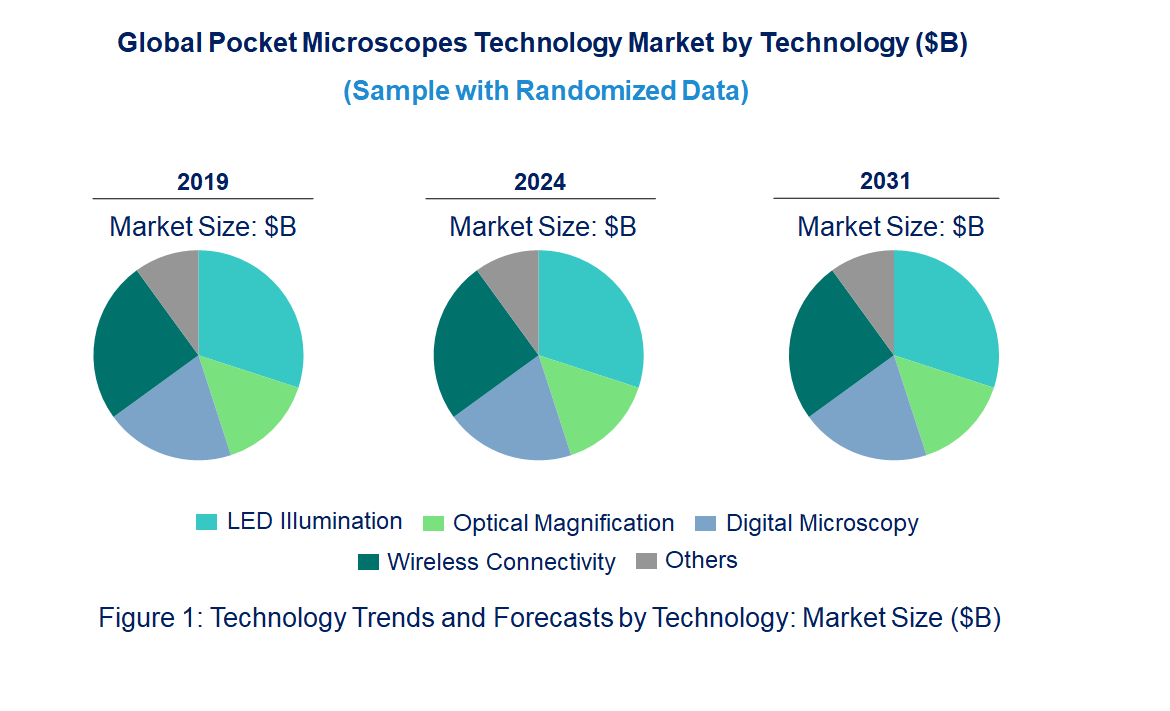
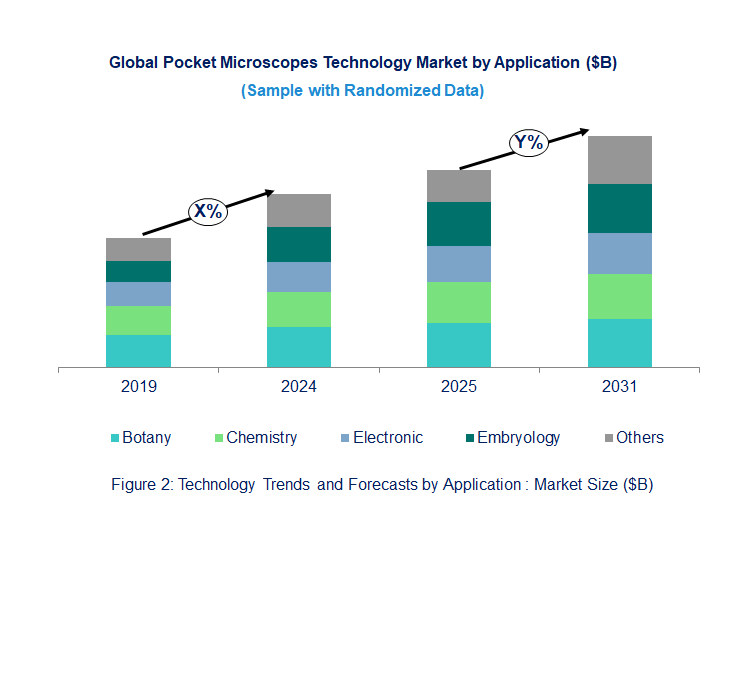
• Increased Use of Wireless Connectivity: Pocket microscopes are integrating wireless technology, allowing users to connect to smartphones, tablets, and computers for enhanced image processing and sharing.
• Advancements in Digital Microscopy: Digital microscopes are becoming more popular due to their ability to capture and store images digitally, offering better precision and ease of use.
• Shift to LED Illumination: The use of LED lighting has become a standard in pocket microscopes, providing brighter, more consistent illumination with lower energy consumption.
• Integration with Mobile Applications: Many pocket microscopes are now designed to work seamlessly with mobile applications for real-time analysis and data sharing.
• Growth in Educational and Medical Applications: Pocket microscopes are increasingly being used in educational settings and medical diagnostics, offering portability and functionality in these sectors. These trends highlight the market’s shift toward more advanced, portable, and user-friendly microscopes, reshaping its potential and expanding usage.
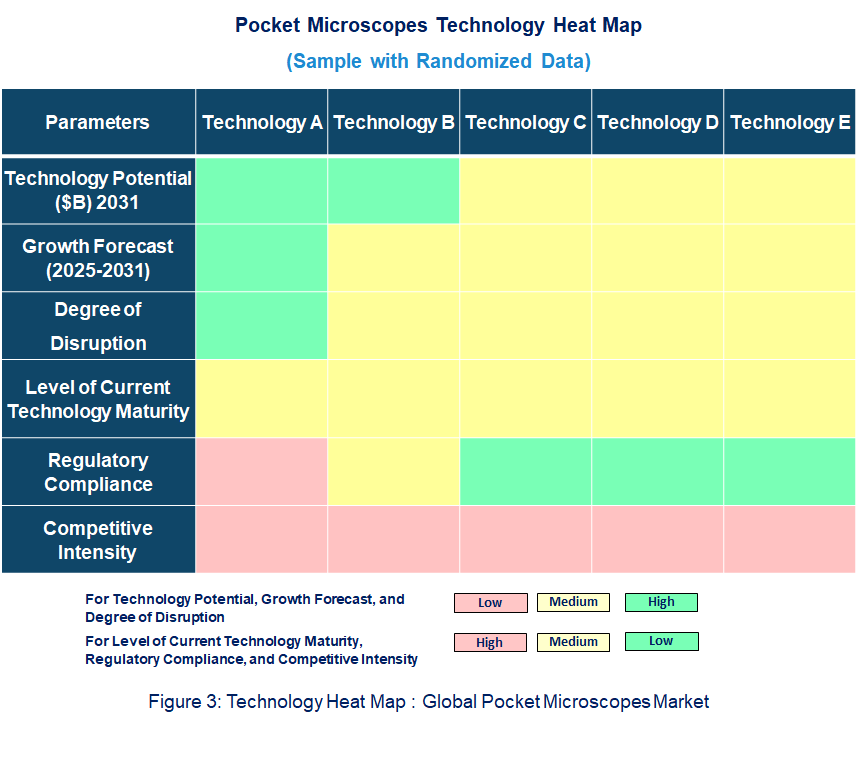
• Technology Potential: The technology potential for pocket microscopes is vast, driven by advances in digital microscopy, LED illumination, and wireless connectivity. These innovations enhance portability, image clarity, and user accessibility, making pocket microscopes more effective in various applications, including education, medical diagnostics, and industrial inspection. Digital microscopy, in particular, allows for high-resolution imaging with easy data storage and sharing, significantly improving workflow and analysis efficiency.
• Degree of Disruption: The degree of disruption is considerable, especially in sectors like healthcare and education, where traditional microscopes are being replaced by compact, more accessible alternatives. The move from optical to digital technology has transformed how users interact with microscopic images, enabling real-time analysis and remote viewing, a departure from conventional, bulky systems.
• Current Technology Maturity: The current technology maturity is high, with digital and LED microscopes becoming mainstream. Wireless connectivity is becoming standard, allowing for seamless integration with smartphones and tablets. However, there is still room for improvement in aspects such as battery life, resolution, and integration with advanced AI or cloud-based systems for data analysis.
• Regulatory compliance: It is crucial in markets like healthcare, where pocket microscopes must adhere to standards like FDA regulations for medical devices and CE marking in Europe. These regulations ensure safety and effectiveness, especially when the devices are used for diagnostic or educational purposes.
• Carson has introduced more advanced pocket microscopes with high magnification capabilities and built-in LED lights, providing users with a more portable and powerful tool for outdoor use and hobbyists.
• Nikon has advanced its pocket microscope offerings by integrating digital cameras, enabling users to easily capture and store images for analysis, particularly benefiting scientific research and education.
• AmScope has expanded its product line to include models with improved ergonomic designs and better image resolution, making them ideal for industrial inspections and lab applications.
• Celestron has focused on making microscopes more accessible by introducing models with wireless connectivity, allowing users to connect to mobile devices for enhanced functionality.
• Kingmas has developed budget-friendly, compact pocket microscopes with built-in lighting, providing affordable options for educational institutions and hobbyists.
• Educational Insights has targeted the educational sector with microscopes designed for students, featuring user-friendly interfaces and mobile app compatibility for interactive learning.
• Lee Valley offers high-quality pocket microscopes that cater to nature enthusiasts, combining portability with high magnification for field studies.
• Elcometer has introduced rugged pocket microscopes designed for industrial applications, with dust- and water-resistant features for tough environments.
• Starna Scientific has focused on providing precise pocket microscopes for scientific and laboratory applications, particularly those requiring high optical clarity and accurate measurements.
• American Science & Surplus has expanded its portfolio to include a variety of pocket microscopes suited for general use, offering options for different magnifications and lighting conditions. These developments demonstrate the market’s commitment to enhancing portability, performance, and accessibility in microscopy tools.
• Portability and Convenience: The increasing need for portable and easy-to-use tools in fields such as education, healthcare, and industrial applications is driving the demand for pocket microscopes. Their compact design allows users to perform detailed analyses in remote or on-the-go environments.
• Technological Advancements: Advances in LED illumination, digital microscopy, and wireless connectivity are enhancing the functionality and ease of use of pocket microscopes. These technologies allow for clearer images, more accurate measurements, and the ability to connect to mobile devices for data sharing and analysis.
• Growing Educational Demand: The adoption of pocket microscopes in educational settings, particularly for hands-on learning, is increasing. The ability to integrate with mobile apps and digital tools has made them appealing for both students and teachers, enhancing science education and engagement.
• Demand for Diagnostic Tools in Healthcare: In the medical sector, the use of pocket microscopes is growing due to their portability and ease of use in diagnostics, particularly for mobile clinics and fieldwork in underserved areas.
• Expansion of Industrial Applications: Pocket microscopes are increasingly used in industrial settings for quality control, inspection, and maintenance, providing an affordable and portable solution for on-site evaluations. Challenges in the pocket microscopes market are:
• Maintaining High Performance in Compact Design: One of the main challenges is ensuring that pocket microscopes, while small and portable, still offer high image resolution and clarity. Balancing portability with performance requires technological innovation and advanced materials.
• Regulatory Compliance: Pocket microscopes, especially those used in medical or educational settings, must comply with regulatory standards, such as FDA approval for medical devices and CE certification. These regulations can slow down product development and market entry.
• Cost vs. Quality Trade-Off: In a highly competitive market, manufacturers must find ways to offer affordable models without compromising on quality. Low-cost models might have limited features or lower performance, which could deter professional users.
• Market Fragmentation: The pocket microscope market is highly fragmented, with a variety of players offering different models for various applications. This can make it difficult for consumers to choose the right product and create challenges for companies in differentiating their offerings.
• Technological Integration Issues: Despite the advances in wireless connectivity and mobile app integration, not all models are compatible with the latest devices or platforms, limiting their usability in some settings. Ensuring seamless integration across different operating systems is an ongoing challenge. Overall, while the pocket microscope market is driven by technological advances and increasing demand across multiple sectors, addressing performance, regulatory challenges, and competition will be crucial for sustained growth.
• Carson
• Nikon
• Amscope
• Celestron
• Kingmas
• Educational Insights
• Technology Readiness by Technology Type: The readiness of various technologies in the pocket microscopes market is at different stages of development. LED illumination technology is well-established, with widespread adoption across most models, providing efficient and bright lighting for users. Optical magnification technology has seen continuous improvement, with higher magnification capabilities now achievable in compact designs, making it competitive for industrial and educational applications. Digital microscopy is gaining momentum, with increasing integration of high-resolution cameras, but its widespread use in consumer-grade products is still evolving. Wireless connectivity is advancing rapidly, allowing for greater flexibility in accessing and sharing data, but compatibility across different devices and platforms is still being optimized. Other emerging technologies, such as augmented reality and AI-based analysis, are in the early stages but hold great potential. In terms of regulatory compliance, LED illumination and optical magnification are well-established, while digital microscopy and wireless connectivity are subject to increasing scrutiny, especially in medical applications. Each technology has applications in education, healthcare, and industry, and its development is driven by ongoing innovation and market demands.
• Competitive Intensity and Regulatory Compliance: The competitive intensity in the pocket microscopes market is high, as companies strive to offer superior functionality, performance, and affordability. Technologies such as LED illumination and optical magnification are becoming increasingly standardized, intensifying competition. Digital microscopy and wireless connectivity are more differentiated, creating unique value propositions for companies in the educational and medical sectors. Regulatory compliance is a critical factor, particularly for medical-grade microscopes that must meet FDA and CE certification standards. As the technology becomes more advanced, ensuring compliance with health, safety, and privacy regulations becomes more complex. Companies must navigate these regulatory requirements while maintaining a competitive edge, particularly with the increasing trend towards portable diagnostic tools. The regulatory landscape, combined with technological advances, makes the market challenging but full of opportunities for innovation.
• Disruption Potential: The pocket microscopes market has the potential to be significantly disrupted by advancements in various technologies. LED illumination is making microscopes more energy-efficient and portable while improving image clarity, especially in low-light conditions. Optical magnification continues to evolve, allowing for higher magnifications and better image quality in compact devices. Digital microscopy is transforming the market by enabling the capture and sharing of high-quality images through integrated cameras, enhancing research and diagnostics. Wireless connectivity adds a layer of versatility by enabling remote viewing and data sharing, broadening the applications of pocket microscopes. Other technologies, such as augmented reality (AR) integration and advanced sensor technologies, are also poised to reshape the market by improving interactivity and ease of use, making pocket microscopes more versatile and accessible across industries like healthcare, education, and industrial inspection. These innovations are likely to drive the future development of the market and expand the range of applications.
• LED Illumination
• Optical Magnification
• Digital Microscopy
• Wireless Connectivity
• Others
• Botany
• Chemistry
• Electronic
• Embryology
• Medical
• Industrial
• Others
• North America
• Europe
• Asia Pacific
• The Rest of the World
• Latest Developments and Innovations in the Pocket Microscopes Technologies
• Companies / Ecosystems
• Strategic Opportunities by Technology Type


Choose a license that fits your team. Instant PDF delivery.
Prices exclude taxes. Instant delivery. Custom licensing available on request.
Market Report · May 18, 2026
Market Report · May 18, 2026
Market Report · May 18, 2026
Trusted partner for strategic intelligence and business growth


Receive a complimentary market analysis tailored to your industry. Our analysts will identify key growth opportunities and competitive dynamics specific to your business.

Market size, growth rate, and key trend analysis for your specific sector.

Top competitor positioning and market share analysis.

Strategic recommendations backed by data-driven insights.
Get curated market intelligence and competitive moves straight to your inbox.
By subscribing, you agree to receive our monthly insights. Unsubscribe anytime.
Receive a complimentary market analysis tailored to your industry. Our analysts will identify key growth opportunities and competitive dynamics specific to your business.
Market size, growth rate, and key trend analysis for your specific sector.
Top competitor positioning and market share analysis.
Strategic recommendations backed by data-driven insights.
Get curated market intelligence, emerging trends, and competitive moves straight to your inbox each month.
By subscribing, you agree to receive our monthly insights. Unsubscribe anytime.
We'll send your sample report shortly.