
Market Report · May 18, 2026

This market report covers trends, opportunities, and forecasts in the global pet-ct scanner device market to 2031 by technology (analog and digital), end use industry (hospital, research institute, diagnostic center, and ambulatory surgical centers), and region (North America, Europe, Asia Pacific, and the Rest of the World)
We'll send your sample report shortly.
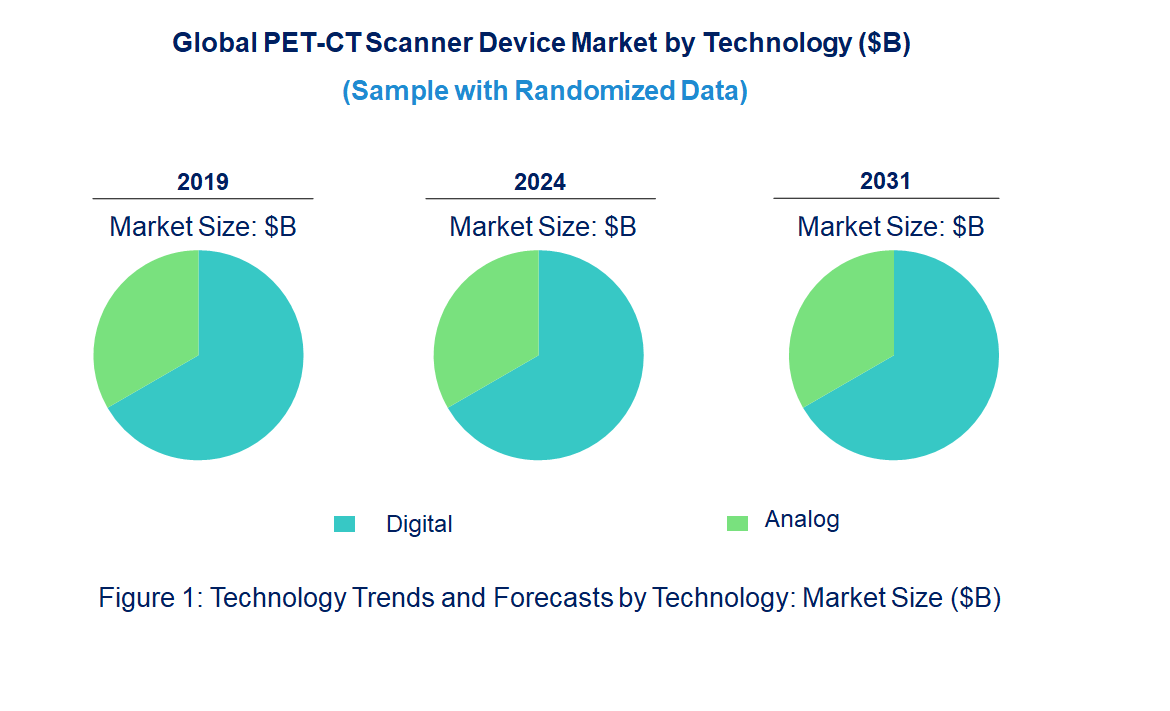
• Shift from Analog to Digital Technology: Digital PET-CT scanners are replacing analog systems, offering higher image resolution and faster data processing. This shift significantly improves diagnostic accuracy and patient throughput, essential for modern medical facilities.
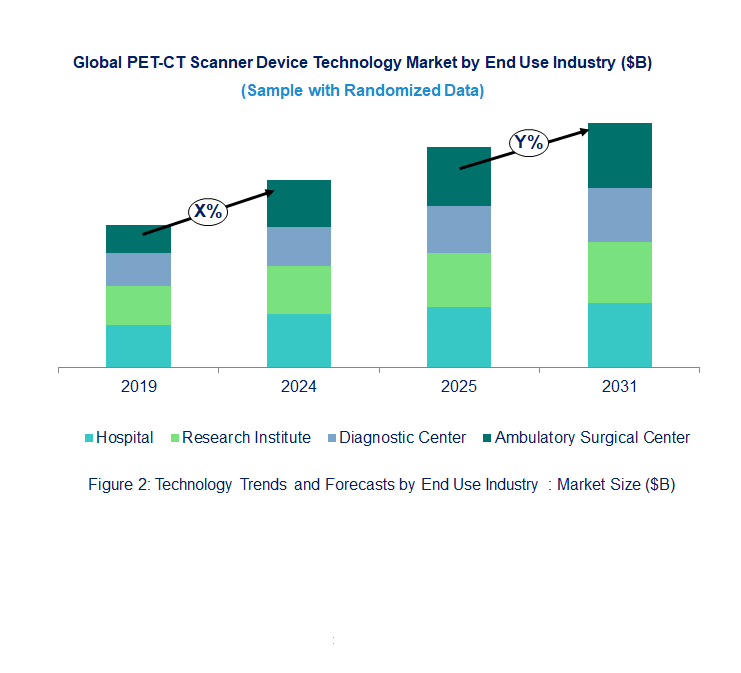
• Increased Adoption in Outpatient Settings: PET-CT devices are increasingly being used in diagnostic centers and ambulatory surgical centers due to their ability to provide fast, accurate, and non-invasive diagnostic imaging at lower costs compared to hospital settings.
• Integration with Artificial Intelligence (AI): AI-powered PET-CT scanners are improving image interpretation and automating analysis, enabling faster and more accurate diagnoses. This trend is expected to increase efficiency and reduce the risk of human error in interpreting complex imaging data.
• Enhanced Patient Comfort: Manufacturers are focusing on designing PET-CT scanners with enhanced patient comfort features, such as shorter scan times, less radiation exposure, and quieter machines, to improve the overall patient experience.
• Compact and Portable Systems: Advances in miniaturization are leading to more compact and portable PET-CT scanners, making it easier to use in smaller settings and mobile healthcare units, broadening access to these advanced diagnostic technologies. These trends are transforming the PET-CT Scanner Device Market by improving imaging quality, expanding accessibility, and enhancing patient care. The transition to digital systems, AI integration, and increased comfort features are reshaping how healthcare providers utilize PET-CT scanning technology.
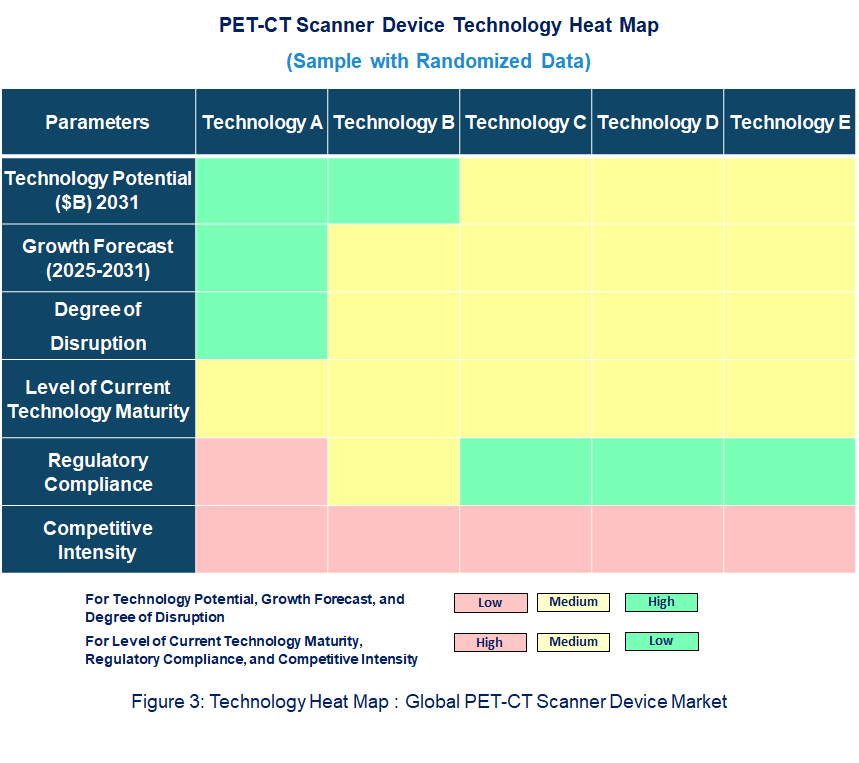
• Technology Potential: Digital PET-CT scanners offer immense potential for improving the accuracy of cancer detection, cardiac evaluations, and neurological imaging. The ability to combine functional and anatomical information into one scan enables more precise diagnoses and better clinical outcomes.
• Degree of Disruption: The move from analog to digital technologies has been disruptive in improving scanner speed, image quality, and overall operational efficiency. AI integration further enhances the disruption by automating and improving the interpretation of scan results.
• Level of Current Technology Maturity: Digital PET-CT technology is highly mature, with widespread adoption in hospitals and diagnostic centers. While the technology is established, new advancements in AI integration and miniaturization continue to push the boundaries of what is possible.
• Regulatory Compliance: Regulatory bodies such as the FDA and European Medicines Agency (EMA) set strict guidelines on medical devices. PET-CT devices must comply with these regulations to ensure patient safety, proper calibration, and accurate diagnosis. Ongoing adherence to safety protocols is essential for manufacturers to maintain certifications and market access.
• General Electric: GE Healthcare has introduced advanced digital PET-CT scanners with enhanced image quality and reduced scan times. Their innovative systems provide faster and more accurate diagnosis, enhancing workflow efficiency in clinical settings.
• Mediso: Mediso has been focusing on developing hybrid PET-CT devices that offer flexibility, precision, and enhanced imaging capabilities. The company’s efforts aim to address the growing demand for multi-modality imaging solutions in cancer diagnostics.
• Toshiba Corporation: Toshiba Medical Systems (now a part of Canon Medical) has introduced high-resolution PET-CT scanners with enhanced diagnostic features. Their systems are designed for better patient throughput while maintaining high image quality, making them ideal for busy medical environments.
• Siemens Healthineers: Siemens has rolled out its cutting-edge PET-CT scanners, emphasizing high performance, improved precision in imaging, and AI-driven features to enhance diagnostic confidence. These innovations are expected to streamline workflows and provide quicker results.
• Positron Corporation: Positron’s focus has been on creating highly sensitive PET-CT systems that cater to the needs of hospitals and research institutes, particularly for oncology and cardiac imaging. Their developments enhance both the quality and affordability of imaging services.
• Shimadzu Corporation: Shimadzu has focused on developing cost-effective and compact PET-CT systems, making high-quality imaging more accessible to smaller clinics and hospitals, contributing to expanding the availability of PET-CT technology worldwide.
• Perkin Elmer: Perkin Elmer’s PET-CT scanners integrate advanced image processing technology to provide clearer, more detailed images for diagnosis, particularly in oncology. The company is also exploring advancements in AI integration to improve diagnostic outcomes.
• Fujifilm Holdings: Fujifilm’s entry into the PET-CT market involves high-performance systems focused on providing excellent imaging while enhancing patient comfort. Their systems are integrated with smart technologies for better user experience and workflow efficiency.
• Koninklijke Philips: Philips has been a leader in developing advanced hybrid imaging systems, with its latest PET-CT scanners offering AI-assisted diagnostic features and high-definition imaging for improved cancer and cardiovascular disease detection.
• Carestream: Carestream’s PET-CT devices focus on ease of use and high resolution, enabling doctors to make better-informed decisions quickly. Their systems are designed for ease of integration with healthcare IT systems, improving workflow efficiency.
• Technological Advancements: Ongoing innovations, such as the shift from analog to digital PET-CT scanners and the integration of AI for enhanced image processing, have led to significant improvements in image quality, speed, and diagnostic capabilities. This enhances the overall value of PET-CT scanners in clinical settings.
• Rising Demand for Early Diagnosis: With increasing awareness of the importance of early detection of diseases such as cancer, cardiovascular issues, and neurological disorders, the demand for advanced diagnostic tools like PET-CT scanners is growing, fueling market expansion.
• Integration of Artificial Intelligence (AI): AI technology improves image analysis and diagnostic precision, reducing human error, speeding up workflows, and providing better clinical outcomes. The adoption of AI in PET-CT scanners is driving market growth by offering advanced functionalities.
• Aging Population: The global rise in the aging population has increased the incidence of chronic conditions that require advanced imaging for diagnosis and management. This demographic shift boosts demand for PET-CT scanners, which are essential for accurate disease detection and monitoring.
• Healthcare Infrastructure Development: Expansion of healthcare infrastructure, especially in developing regions, has led to an increase in the adoption of advanced imaging technologies like PET-CT scanners. This expansion improves access to high-quality healthcare and diagnostic services globally. Challenges facing the global IPET-CT scanner device market are:
• High Costs: PET-CT scanners are expensive both to purchase and maintain, which limits their adoption, especially in smaller healthcare settings or developing countries. The high cost of the devices and their associated maintenance expenses can be a barrier to wider accessibility.
• Regulatory Compliance: The PET-CT scanner market is heavily regulated due to the high stakes of patient safety and diagnostic accuracy. Meeting regulatory requirements for medical devices can be a lengthy and costly process, delaying market entry for new products and innovation.
• Specialized Training and Expertise: Operating PET-CT scanners requires specialized training for technicians and radiologists. The need for skilled personnel to interpret PET-CT scans limits the availability and utilization of these devices, particularly in regions with fewer trained professionals. These drivers and challenges shape the dynamics of the PET-CT scanner device market, influencing the rate of innovation, adoption, and growth in this sector.
• General Electric
• Mediso
• Toshiba Corporation
• Siemens
• Positron Corporation
• Shimadzu Corporation
• Disruption Potential of Analog and Digital Technologies in PET-CT Scanner Devices: The disruption potential of digital PET-CT technology far surpasses that of traditional analog systems. Digital PET-CT scanners leverage advanced detectors such as silicon photomultipliers (SiPMs) to deliver superior image resolution, faster scan times, and reduced radiation doses. This transition enhances early disease detection, particularly in oncology, neurology, and cardiology, significantly improving diagnostic precision. While analog systems laid the groundwork for hybrid imaging, they lack the efficiency, detail, and integration capabilities of digital platforms. Digital systems also support AI-powered imaging analytics and cloud-based workflows, offering new levels of operational efficiency and personalized care. As healthcare systems seek precision and scalability, digital PET-CT is reshaping the standards of clinical performance and imaging infrastructure, signaling the phase-out of analog technologies.
• Competitive Intensity and Regulatory Compliance of Analog and Digital PET-CT Technologies: The PET-CT scanner market is highly competitive, with digital systems dominating new installations due to their clinical and operational advantages. Major players like Siemens Healthineers, GE Healthcare, and Philips are investing heavily in digital innovation, incorporating AI and big data analytics. Analog systems are losing ground, primarily sustained in budget-constrained settings or for legacy compatibility. Regulatory compliance is strict for both, governed by bodies like the FDA and EMA, but digital systems face added scrutiny for software validation, cybersecurity, and interoperability. They must also meet data protection standards (e.g., HIPAA, GDPR) and rigorous performance testing for AI integration. Continuous post-market surveillance and quality control are essential to maintain certifications, adding complexity to digital system regulation.
• Technology Readiness for PET-CT Scanner Device Market by Technology Type: Digital PET-CT is at an advanced readiness level, with widespread adoption in major hospitals and cancer centers, offering high diagnostic performance and system integration. Analog PET-CT, though still operational in many facilities, is nearing obsolescence, with limited innovation and vendor support. Time-of-Flight (TOF) PET technology, now integrated into digital platforms, is highly mature and enhances signal clarity and speed, especially for small lesion detection. These technologies compete on factors like image resolution, scanning speed, and workflow automation. Regulatory compliance remains a cornerstone, especially for AI-enabled imaging and data handling. Key applications span oncology staging, neurological assessments, and cardiological diagnostics. As demand for precision medicine grows, digital and TOF-based technologies are set to dominate, supported by increasingly rigorous global compliance standar
• Analog
• Digital
• Hospital
• Research Institute
• Diagnostic Center
• Ambulatory Surgical Centers
• North America
• Europe
• Asia Pacific
• The Rest of the World
• Latest Developments and Innovations in the PET-CT Scanner Device Technologies
• Companies / Ecosystems
• Strategic Opportunities by Technology Type


Choose a license that fits your team. Instant PDF delivery.
Prices exclude taxes. Instant delivery. Custom licensing available on request.
Market Report · May 18, 2026
Market Report · May 18, 2026
Market Report · May 18, 2026
Trusted partner for strategic intelligence and business growth


Receive a complimentary market analysis tailored to your industry. Our analysts will identify key growth opportunities and competitive dynamics specific to your business.

Market size, growth rate, and key trend analysis for your specific sector.

Top competitor positioning and market share analysis.

Strategic recommendations backed by data-driven insights.
Get curated market intelligence and competitive moves straight to your inbox.
By subscribing, you agree to receive our monthly insights. Unsubscribe anytime.
Receive a complimentary market analysis tailored to your industry. Our analysts will identify key growth opportunities and competitive dynamics specific to your business.
Market size, growth rate, and key trend analysis for your specific sector.
Top competitor positioning and market share analysis.
Strategic recommendations backed by data-driven insights.
Get curated market intelligence, emerging trends, and competitive moves straight to your inbox each month.
By subscribing, you agree to receive our monthly insights. Unsubscribe anytime.
We'll send your sample report shortly.